

Infectious Diseases Physician, Microbiologist and Research Fellow @UQMedicine. Views all my own.
Brisbane, QLD, Australia
Joined September 2011
- Tweets5.6K
- Following1.9K
- Followers2.8K
- Likes5.7K



Patrick Harris retweeted

🆕💥🔴 Review Article @PharmacoJournal
Cefepime-Zidebactam:
Leveraging β-Lactam Enhancement Against Difficult-to-Treat and Metallo-β-Lactamase-Producing Gram-Negative Pathogens #idxposts
accpjournals.onlinelibrary.w…

Patrick Harris retweeted
🆕🔥Excellent Review by @ErinMcCreary
+ many 🌟s
Global epidemiology and treatment of metallo-β-lactamase-producing gram-negative pathogens #idxposts #NDM #MBL academic.oup.com/jacamr/arti…


Patrick Harris retweeted

As an Editor, in past ~6mo, we are receiving an avalanche of unsolicited review articles (“scoping” “systematic”, narrative, NOS) on topics and ?s NO ONE EVER has asked and clearly with heavy AI lift. Even the cover letters all read the same…alarming and sad. #publishing
Patrick Harris retweeted

🧫🟢 ¿Por qué un hongo puede ser "susceptible" en el laboratorio 🔬, pero el paciente no mejora? 🏥🤔
📖 The Lancet Infectious Diseases explica por qué la concentración mínima inhibitoria (CMI) no predice por sí sola la respuesta clínica.
#Micología #Antifúngicos
🍄🧬 La respuesta depende de múltiples factores:
🔬 Especie fúngica
💊 Exposición al antifúngico
📍 Foco de infección
🦠 Biopelículas y persistencia
🛡️ Inmunidad del paciente
📊 Los autores proponen un algoritmo para investigar las discrepancias entre laboratorio y evolución clínica.
🩺🔍 ¿Qué hacer?
✅ Integrar datos clínicos y farmacocinéticos.
💊 Monitorizar el antifúngico cuando esté indicado.
🎯 Controlar el foco infeccioso.
💡 👇🏻 doi.org/10.1016/S1473-3099(2…
#Microbiología #InfeccionesFúngicas @SEMicrobiologia

Disruption of cAMP Signalling and RNA Regulation Confers Cefiderocol Resistance in Acinetobacter baumannii - more complexities in susceptibility testing and treatment of these tricky pathogens ... @fordebm @LabSchembri @davidantibiotic biorxiv.org/content/10.64898…

Patrick Harris retweeted

Apparently Russian servers have been hit by a Ukrainian strike and immediately massive online hard right chatter has collapsed.
This particular chatter was in support of Germany’s AFD, their equivalent to Reform, but similar patterns are being seen in hard right movements everywhere, including the UK.
If anyone needed anymore evidence that Russia are driving a massive wave of hard right propaganda in Europe, this is it.
So, all you “patriots” - you’ve been duped by Russia, and you are about as far from patriotic as anyone can be. You are easily brainwashed though. This is how propaganda works.

Patrick Harris retweeted

When Ukraine destroys Russian data centers, hoards of aggressive right-wing bots disappear, and Twitter becomes much friendlier. Isn’t that interesting? So much of our politics is driven by the internet, and so much of the internet is driven by Russians who want to hurt us. Shouldn’t we do something about that, given that we know it?
Cross-species convergence of surface polysaccharides shapes the virulence of an atypical carbapenem resistant uropathogenic E coli clone. @LabSchembri @UQ_News @fordebm
biorxiv.org/content/10.64898…


Patrick Harris retweeted

Incredible work [and nice to see my Bristol NHS colleagues names in the NEJM]. It seems shorter is better in this setting [quite a lot of AE in longer duration pop]

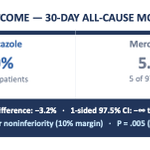
In a randomized trial involving adults who received local antibiotics during surgery for orthopedic infection, a short duration of systemic antibiotics was noninferior to a long duration regarding treatment failure at 12 months. Full SOLARIO trial results: nej.md/4dgrqwY

ALT This image shows a forest plot showing the robustness of the primary analysis results. Subgroups include definite treatment failure, definite or probable treatment failure, and definite, probable, or possible treatment failure. Hazard ratios with 95% confidence intervals are displayed, indicating whether a short duration is better than a long duration. A red line indicates the noninferiority margin.
Patrick Harris retweeted

How good are LLMs at antimicrobial stewardship (AMS)?
Wrong question. We wanted to know where they fail.
So we built 30 scenarios mapped to the ESCMID prescribing and AMS competencies, and we designed them to break the models (traps). 🧵
clinicalmicrobiologyandinfec…
1/17

Patrick Harris retweeted

📢 Register now for CRE RESPOND's upcoming seminar:
Early Diagnostics: An Update on Metagenomics
Featuring: 🧬 Dr Mariana Liborio 🧬 Dr Cameron Buckley 🎤 Chair: A/Prof Patrick Harris (@padstamundo)
Explore how metagenomics is transforming infectious disease diagnosis and patient care.
📅 15 October 2026 | 12pm-1pm
📍Frazer Institute, Herston or online via Zoom
Register now: bit.ly/4zUu70P
#Metagenomics #Diagnostics #AntimicrobialResistance #Research

Patrick Harris retweeted

How much does AMR cost in lives and have we been underestimating it?
Across 41 hospitals in 19 Asian countries/regions, 74% of 9,642 HAI episodes involved resistant bacteria. Mortality reached 51% with CRAB.
ACORN-HAI: pubmed.ncbi.nlm.nih.gov/4262…
#AMR #IDxPosts #stewardship
Patrick Harris retweeted

A Clinical Case of Treatment-Emergent Acinetobacter baumannii Non-Susceptibility to Sulbactam-Durlobactam
🔁 Repost
🔗 bit.ly/4pCI4fm

Patrick Harris retweeted

Banho diário com clorexidina em UTI reduz infecções nosocomiais?
O CLEAN-IT testou essa estratégia em quase 16 mil pacientes de 22 UTIs brasileiras.
O resultado é menos óbvio do que parece — e traz uma discussão importante sobre resistência antimicrobiana.
Segue o fio... 🧵
Patrick Harris retweeted
The third RCT on rapid diagnostics today!
Rapid diagnostics ≠ automatically better clinical outcomes.
🆕💥🔴Open-label multicenter RCT, adding FilmArray Pneumonia Panel to conventional microbiology did not significantly increase targeted antimicrobial therapy at 24 h in suspected VAP/vHAP.
But look closer: 35.1% vs 23.6% — an absolute difference of 11.5% (95% CI −3.0 to 26.2; P=0.13).
With only 146 patients, the study may have been underpowered to detect a clinically meaningful difference.
Interestingly, among culture-confirmed pneumonia, the difference was 55.3% vs 31.0% (24.2%; P=0.048).
So is this a negative trial—or simply a small trial showing a potentially meaningful signal?
And importantly, No significant differences in 28-day mortality, ICU mortality, ventilator-free days, or MDR acquisition.
#idxposts
link.springer.com/article/10…

Patrick Harris retweeted
🆕🔥🟢 PROGRESS Trial | Prospective multicenter RCT
1,373 patients randomized 3:1 to droplet digital PCR (ddPCR) vs standard care for suspected sepsis.
🔺Pathogen detection: 54.1% vs 21.6% (P < 0.0001)
🔺Higher sensitivity: Gram-negative 87.8% vs Gram-positive 35.8% or fungi 47.8%
🔺Positive results → antibiotic modification: 14.54% vs 6.49% (P = 0.0087)
🔺Negative results → no significant difference in subsequent antibiotic management
🔺Effective pathogen coverage: 12.89% vs 6.06% (P = 0.0039)
🔺Turnaround time: 6.6 h vs 5 days for blood culture
🔺Pathogen load declined faster than CRP/PCT, suggesting an earlier marker of infection control
🔺Pathogen-covering therapy within 0–3 days was associated with better outcomes (P = 0.026)
🔺Clinical outcomes: No significant differences in 28-/90-day mortality, SOFA change, hospital/ICU stay, organ-support requirements, or EQ-5D-5L
💡 Bottom line: ddPCR enabled faster, more sensitive pathogen detection and earlier targeted antimicrobial optimization, but did not improve overall clinical outcomes.
#IDXPosts
nature.com/articles/s41467-0…

Patrick Harris retweeted
🆕💥🟢 Prospective RCT #CID
Integrating the BioFire BCID2 panel + antimicrobial stewardship into SOC testing for bloodstream infections reduced the median time to the first effective antimicrobial modification by 41.3 h (23.2 vs. 64.5 h; P < 0.001).
⛔ No significant differences in 30-day mortality or length of stay.
🔺 Gram-negative: 54.0% overall
🔺 Gram-positive: 45.2% overall
🔺 ESBL Enterobacterales: 21.4% overall
🔺 CRE: 8.3% overall #IDXposts academic.oup.com/cid/article…


Patrick Harris retweeted
The guidance on interpreting single-positive S. lugdunensis blood cultures remains inconsistent!
🆕💥🟢Clinical implications of a single Staphylococcus lugdunensis-positive blood culture: true bacteremia vs. contamination
This retrospective review spanning 9 years at a large health system
Using the Souvenir criteria, a single-positive blood culture set with S. lugdunensis is likely to represent contamination compared to the multiple-positive set group (81.3% vs. 32.6%, P < 0.01)
Of patients categorized as having significant bacteremia by the Souvenir criteria, 96.8% had an intravascular device, while only 7.9% of those categorized as contamination had a device
journals.asm.org/doi/10.1128…

Patrick Harris retweeted

📢 Our Rapid Diagnostics Open Call for AMR closes on 16 August 2026
If you have a rapid diagnostic product—or one in development—that fits our Open Call, share with us by submitting your interest before the deadline: lnkd.in/gr9qWbDD
More info: ad-id.co/dt

Patrick Harris retweeted

Sheesh
sadly not surprising to anyone who works in an academic medical center, and/or large hospital system

I kept track of the compliance modules I was required to complete @UNC_SOM over the last year. 45 modules, including several modules completed more than once for different hospitals *in the same health system* …
1/2
