





Zeus Ω ((3,3), P) retweeted
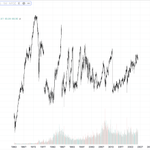
yes just like the share price of coca cola stock is down 50% from its all time high in 1972. but since then it has split so that 1 share is now 372
for ohm, 1 token became 270
only difference is stock charts get adjusted by default, ohms does not
but you can see it here: dune.com/queries/4155905/699…


Zeus Ω ((3,3), P) retweeted
let's start with what OHM is and work our way there.
OHM is non-sovereign digital money. it falls into the same category as BTC ETH or ZEC. it's purpose is to store value. it is trustless+censorship resistant in ownership, transacting, and utilization. it is credibly scarce. high level similarities continue with market-driven price and algorithmic supply emissions, though their implementation is where we start to see differences.


Zeus Ω ((3,3), P) retweeted

I recorded an audio version of the article here: youtu.be/DjzYjQAroiw
lmk if this is helpful + something you’d like to see more of 🤍


bitcoins greatest strength has always been that if you apply any existing valuation framework, it’ll tell you its value should be zero. and many, warren buffett etc, have said exactly that
but they’re fundamentally discredited by the fact that it doesn’t trade at zero
it creates a paradigm in which any value is arbitrary bc true value in the conventional sense is 0. same dynamic as 21m / ∞ but inverted
eth does not have this dynamic. for better or worse, effort was made to imbue intrinsic value a la “REV” and so now there’s the ability to apply valuation frameworks. the problem: theyll all tell you it’s overvalued by an order of magnitude. i know this better than anyone imo — backing creates the exact same dynamic
i think the answer is: if you want to be valued as money, communicate why you are good money. it’s truly that simple. and it’s why i’m bearish eth and sol: i don’t believe they have a strong answer to that question. the best they can do is “marginal improvement to bitcoin”, which not only punts to question to “why is bitcoin good money?”, but history also shows conclusively that marginal improvement fails in a context requiring network effect — you need to be 10x better or you’re cooked
unfortunate reality as i see it is these assets expanded to tremendous valuations via speculative expectations of moneyness that have failed to materialize (saying it’s money a bunch of times won’t inherently make it money — applies to ohm too — the foundation matters and the social aspect can only build network effect) and so now it’s floundering about unfavorable valuation frameworks and all of this nonsense
tough pill but i expect to be right (brings me no joy but doesn’t change reality)

The argument that REV doesn't matter because Bitcoin has no REV is a bad one.
But there's a good argument that current REV is a bad proxy for expected future REV (and future aggregate economic value on a chain).
Objectively, we can see this has been true for Ethereum and Solana. Ethereum monthly REV peaked at $21.6 billion annualized (!) while Solana peaked at $6.6 billion annualized. Solana is down 85% while Ethereum is down, uhh, a bit more than that.
There are two interpretations of this. The first is that Ethereum is dying as Solana takes over, due to lack of execution on Ethereum and brilliant execution on Solana, or the Rollup-Centric Roadmap, or whatever.
The second is that short-term REV is primarily a function of:
- the wealth effect of the L1 token,
- the volatility of assets issued on the chain,
- the immaturity of MEV infra.
In 2024, Solana had all 3, and Ethereum had none. This doesn't imply that Ethereum as an economy had died. In fact, the opposite is true. Etherum still has 10x the stablecoin market cap, 3x the DEX TVL. L1 and L2s combined have much higher DEX volumes than Solana.
Certain forms of activity (gambling on highly volatile assets) disproportionately generate MEV and REV.
When Solana peaked in REV, there was a 40x delta between the median and average transaction fees. This indicates an extreme right-hand skew and high levels of MEV.
The problem is that this form of activity doesn't appear to be sustainable. MEV infra matures. Wealth effects level off. Issuance of memecoins and memecoin-like assets migrate elsewhere.
REV is an interesting thing to optimize for, but not at the expense of user growth. MEV infra should mature, tx fees should come down (Dencun was a huge drop in REV), even if it means that REV decreases in the short term.
for posterity, given i will be posting more articles in the coming days, the goal is to put things out, not to sway “CT”
CT’s consistently proved unserious and extractive, a tragic combo
reason for X is simply that i have 60k followers here and 7 on medium


the btc-ohm barbell
institutional lower risk mid upside basic money and non-consensus low risk high upside smart money
it is what it is
Zeus Ω ((3,3), P) retweeted
not your fault since it got heavily watered down and perhaps improperly communicated in the first place but (3,3) wasn’t/isn’t as simplistic as you’re saying and doesn’t apply to much else
simplistic: (3,3) = buy (+stake) and hold — can apply to anything, really
reality: buy *from protocol* (+stake) and hold
this is why it doesn’t apply to much else. in 99%+ of cases, for you to buy, someone else must sell to you. therefore (3,3) is by definition impossible. it’s only because you have the protocol acting as a counterparty (abstracted through bonds) that it can exist for Olympus
realistically the format is incomplete: it is ((3,3), P), where P is the protocol as the other player. this creates a dynamic in which coordination amongst individuals a la simplistic (3,3) interpretation *actively strengthens the system*, versus its use in meme and other contexts where nothing tangible/persistent is accomplished via that coordination
the P side is crucial because of its implication when you flip to (-3, -3), because it remains ((-3,-3), P) where the protocol now flips to the bid. this makes (3,3) the only long term sustainable equilibrium for Olympus uniquely, since the -3’s have finite coins that the protocol will ultimately exhaust (as it did 2022-2023).
with no protocol involvement, you’re just doing the dumb ponzi “if we all buy and hold number will go up” that people rightfully criticize because no shit, and defection is the long term equilibrium in such a system (with the hope that you get the timing right).
i’m maybe beating a dead horse but it’s a shame this is so misunderstood bc it’s imo quite significant and the thesis of cooperative dominance (3,3) for Olympus has proven valid (though participation is far far lower today — probably in part bc this is so misunderstood/was co-opted!)
Zeus Ω ((3,3), P) retweeted
Cooler Loans V2 has been submitted to Olympus On-Chain Governance.
The proposal activates perpetual, fixed-rate borrowing, free from price-based liquidations and powered by the Olympus reserves, all managed through a single dynamic position.
Vote starts in 2 days: app.olympusdao.finance/#/gov…
Stay tuned for today’s detailed breakdown of Cooler Loans V2.

i think that many directions on not just capital but talent and attention allocation took several years to manifest but ultimately created this
hot take but the fat protocol thesis was the most harmful idea in crypto history
if TCP/IP captured all the value like crypto thought L1s would, the internet 10y ago would probably be as bad as “web3” today

part of it is if you moralize/socially enforce that rent seeking infrastructure should capture the majority of the value from value producers, the ones who dispel this fallacy will be immoral

make communism great again
Milady
Readers added context they thought people might want to know
The post relates to an old blog Vitalik wrote on April's fool
x.com/VitalikButerin…