

@periodiclabs & adjunct prof at UdeM, @Mila_Quebec. Past: Research Manager, Froggy Team (Coding Agents), MSR.
Montréal
Joined March 2010
- Tweets678
- Following1.8K
- Followers1.4K
- Likes7.1K


Pinned Tweet
Data is usually considered outside of the learning algorithm, but it does not need to be.
You can think about environment creation and parameter update as one (test-time) learning algorithm. If that loop runs quickly enough, it might look like true generalization.

The jaggedness of LLMs, and the excuse that their capabilities emerge from RL on environments curated for revenue potential, is proof enough to me that there is no such thing as RL generalization. It makes me very bearish on RL being the algorithm that gets us to AGI.
And if we do get there, it will be a disgustingly inefficient and unsatisfying success, because we will have done so by mobilizing the world economy to create environments for every fucking task, such that nothing is out of distribution. If every new task needs its own environment, what exactly is generalizing?
If that’s the path, environment/data selling companies will be the most valuable in existence, second only to the labs. This is stupid. The concept of RSI is stupid. Intelligence, by definition, is generalization...but all we have is omniscience.
Alessandro Sordoni retweeted

Excited to see Bespoke Labs build on our ROFT work for autonomous ML research!
Their recipe combines context distillation, self-generated retrospections, and action replay -- improving Nemotron’s AutoResearchExam score by ~25% vs. base.
Learning to explain → learning to do 🧠

We are excited to announce that we post-trained NVIDIA Nemotron-3.5-Super-VL to be an autonomous ML researcher. We show that our post-trained model goes from 28% to 35% on AutoResearchExam, matching Qwen 3.8 Max, a model with 20× the total parameters.
The tasks are long horizon, open ended AI and ML research: building a faster executor for a transformer compute graph, training a RL control policy, creating new uncertainty quantification methods, etc. The model gets to submit once, and it doesn't see its score until the end.
We curated SFT data using Self-context distillation. This means that we let the Nemotron model to solve a problem with hints, then we SFT on these trajectories but without the hints. This gave us +11% on AutoResearchExam.
As a next step, we added reflection: We ask the Nemotron model to review its own past attempts and writes concrete lessons learned. Then we SFT on these reflections.
Surprisingly, training on these lessons improved the performance to +25% compared to the base model.
The hardest part was choosing the right data. We selected traces based on task scores, completion checks, and runtime, then refined the sampling across training rounds to address failures in the base and fine-tuned models. We removed hints and filtered out steps that relied on information available only in those hints. The goal was to teach decisions supported by the task and history the model would actually see at inference.
Full write-up:
bespokelabs.ai/blog/teaching…
Thanks to @NVIDIAAI for early access and collaborating on this.

Alessandro Sordoni retweeted

After 11 years at Maluuba and Microsoft Research Montréal, yesterday was my last day. Grateful to everyone I got to build with along the way, especially the Froggy team 🐸.
I'm starting something new with a good friend. Can't say much yet, but it's the most excited I've been in years. More soon.
Alessandro Sordoni retweeted

Before you run off thinking you need 2k agents to rewrite your codebase in rust, consider that there’s no counter factual here for what it actually would have taken maybe a handful of agents to accomplish the same feat.
Agent swarms are real but they’re incredibly wasteful

Over two weeks, Prime Agent orchestrated a swarm of over 2,000 agents to rewrite itself in Rust.
With 10,000+ sandboxes, 200B+ GLM-5.3 tokens, and 16,000 agent-to-agent messages, this was our largest test yet of Prime Agent’s multi-agent capabilities and our infrastructure powering these agent swarms.
Prime Agent now reaches usable input ~13× faster and uses 83% less startup memory than before.
Alessandro Sordoni retweeted

I love this work. Compaction enables agents to think in more tokens than the max context permits in thinking chunks, like in Markovian Thinker. This work provides an elegant way not to pay the pre-fill cost, just one KV-stream. This is very cool.

Want to train your SWE agents 2× faster 🏎️💨?
We introduce KV-streams, which, rather than flushing the KV cache on agentic compaction, we preserve it and keep generating. This avoids the re-prefill cost on both the inference engine and the trainer.
Unlike other works that assume a fixed compaction strategy, we show that KV-streams can work with any compaction method in agentic tasks.
Using what we learn from experiments in text-based games. We scale KV-streams to SWE tasks, where we match the performance of re-prefill compaction and full context in half the time 🚀
arxiv.org/pdf/2609.35750
🧵
Alessandro Sordoni retweeted

It is here now ! Enjoy our 4B model 🐸
huggingface.co/microsoft/Fro…


Alessandro Sordoni retweeted
Today we open-weights FrogNano 🐸, as well as the minimal Leaf harness plus inference scripts. Enjoy!
huggingface.co/microsoft/Fro…
github.com/microsoft/FrogNan…
Why would you throw away KV states of compaction summaries, if you can just keep them, avoid re-prefill cost and train end-to-end?
Great work @emilianopp_ , massive SGLang hacker
Want to train your SWE agents 2× faster 🏎️💨?
We introduce KV-streams, which, rather than flushing the KV cache on agentic compaction, we preserve it and keep generating. This avoids the re-prefill cost on both the inference engine and the trainer.
Unlike other works that assume a fixed compaction strategy, we show that KV-streams can work with any compaction method in agentic tasks.
Using what we learn from experiments in text-based games. We scale KV-streams to SWE tasks, where we match the performance of re-prefill compaction and full context in half the time 🚀
arxiv.org/pdf/2609.35750
🧵
Cannot agree more! How to make models create interesting problems and ask good questions is the frontier.

Alessandro Sordoni retweeted

Periodic is hiring SWE's for physics simulations, scientific data, and lab robotics
These are hard problems that codex/cc can't one-shot, because they require interfacing with the real world and collaborating with scientists
Science experience is a + but not required! Apply ⬇️

Alessandro Sordoni retweeted

🤖 How far are coding agents from working like human developers?
GPT-6 Astra has made big advances in many areas, including coding.
❓ So, can Astra replace a human developer? Our new benchmark says ❗we’re about 49% of the way there.❗
Developers don’t build apps from written requirements alone. They constantly use references—existing apps, UI/UX mockups, prototypes—to see how things should look and work. Then they build it and check their work against the reference.
✨ Introducing ProgramDistill, a benchmark and synthetic task-generation pipeline for testing coding agents on this workflow at scale.
Alessandro Sordoni retweeted

never been a better time to work on something great 🤝
@tacitlabsco joined by many excellent companies and friends

I made a list of great startups to join. It's called the Breakout List.
The list has 92 companies. These are the 20 with 25 or fewer employees:
- Hone (@moritz_stephan, @CarloWillem, @oqbrady)
- Normal (@ansonyuu, @hudzah)
- Standard Intelligence (@G413N, @devanshpandey)
- Tacit Labs (@ninklefitz, @AmDroste)
- American Terawatt (@atroyn, @rslparker, @aranibatta)
- Conduit (@clemvonstengel, @riopopper)
- Convergent (Omkar Savant, Vivek Katara, @debnilsur)
- Core Automation (@MillionInt, @_arohan_)
- Engram (@dan_biderman, @EyubogluSabri, @realJessyLin)
- Instinct (@noahrshinn)
- Keenable (@styskin, Matthias Petri)
- Lumaril (Mark Elliot, Ben Duffield)
- Neion Bio (@Dimkell, Sam Levin)
- Pangram Labs (@max_spero_, @bradley_emi)
- Quadrillion (@echinaceous)
- Re (@karnsaroya, @AnandDhillon, @thecliffwhite, @benaneesh)
- Ricursive (@annadgoldie, @Azaliamirh)
- Sail Research (@neilmovva, @blintzbase)
- Trajectory (@rronak_, @michaelelabd, @QuantumArjun)
- Watney Robotics (Sean Cheong, Ryan Gannon)
Picks from Elad Gil, Charlie Songhurst, Keith Rabois, Mike Vernal, Alana Goyal, Sonya Huang, Ramtin Naimi, Marc Bhargava, Cory Levy, Aashay Sanghvi, Konstantine Buhler, John Luttig, Varun Gupta, Ray Tonsing and Avichal Garg.
Disclosure: I'm a small investor in American Terawatt, Convergent, Standard Intelligence and Trajectory (in this post), and in Factory, Physical Intelligence and SF Compute (elsewhere on the list). I didn't vote.
The full list is on Breakout List.

Alessandro Sordoni retweeted

Might be biased but @tacitlabsco *is* a great startup to join! We are hiring across research and engineering, we're growing very fast, we have fun.
Thank you @alanaagoyal for the shoutout!
I made a list of great startups to join. It's called the Breakout List.
The list has 92 companies. These are the 20 with 25 or fewer employees:
- Hone (@moritz_stephan, @CarloWillem, @oqbrady)
- Normal (@ansonyuu, @hudzah)
- Standard Intelligence (@G413N, @devanshpandey)
- Tacit Labs (@ninklefitz, @AmDroste)
- American Terawatt (@atroyn, @rslparker, @aranibatta)
- Conduit (@clemvonstengel, @riopopper)
- Convergent (Omkar Savant, Vivek Katara, @debnilsur)
- Core Automation (@MillionInt, @_arohan_)
- Engram (@dan_biderman, @EyubogluSabri, @realJessyLin)
- Instinct (@noahrshinn)
- Keenable (@styskin, Matthias Petri)
- Lumaril (Mark Elliot, Ben Duffield)
- Neion Bio (@Dimkell, Sam Levin)
- Pangram Labs (@max_spero_, @bradley_emi)
- Quadrillion (@echinaceous)
- Re (@karnsaroya, @AnandDhillon, @thecliffwhite, @benaneesh)
- Ricursive (@annadgoldie, @Azaliamirh)
- Sail Research (@neilmovva, @blintzbase)
- Trajectory (@rronak_, @michaelelabd, @QuantumArjun)
- Watney Robotics (Sean Cheong, Ryan Gannon)
Picks from Elad Gil, Charlie Songhurst, Keith Rabois, Mike Vernal, Alana Goyal, Sonya Huang, Ramtin Naimi, Marc Bhargava, Cory Levy, Aashay Sanghvi, Konstantine Buhler, John Luttig, Varun Gupta, Ray Tonsing and Avichal Garg.
Disclosure: I'm a small investor in American Terawatt, Convergent, Standard Intelligence and Trajectory (in this post), and in Factory, Physical Intelligence and SF Compute (elsewhere on the list). I didn't vote.
The full list is on Breakout List.
Alessandro Sordoni retweeted
As I wrap up my internship, I'm excited to share what I worked on this summer at Microsoft Research Montréal.
Before this summer, most of my research focused on improving LLM training algorithms. This summer reinforced for me how much data matters. I spent a lot of time thinking about how to synthesize high-quality data and use it effectively for LLM training, evaluation, and diagnosis with @Zhengyan_Shi.
I learned an incredible amount. As a PhD student, I feel very lucky to have had such an intense and concentrated learning experience.
Special thanks to @Zhengyan_Shi, @ericxyuan, and @murefil for all the guidance, insights, and thoughtful discussions throughout the summer.
And thanks to MSR for providing the resources and support that made all of this possible. 😆

Excited to share our work, ProgramDistill.
We give coding agents access to a working reference app, but not its source code. They have to figure out how the app behaves and then reimplement the missing functionality.
The tasks go from simple behaviors to longer multi-step workflows, so we can test how well agents can understand software through interaction instead of relying on a written spec.
One broader motivation is continuous self-improvement. As models become stronger, especially beyond human-level capability in some areas, a key question is how we keep constructing useful training data. Longer term, I’m excited about a closed loop where we use models itself to, identify where a model still fails, generate new tasks around those weaknesses, and turn them into RL environments for the next round of improvement.
ProgramDistill is one step toward making that loop scalable.
Alessandro Sordoni retweeted

Science is built by standing on the shoulders of giants. Today we're releasing the Scientific Contribution Graph, a massive dataset of how current technologies and scientific results were built upon previous results, with applications in AI-4-Science and Science-of-Science.
Paper: arxiv.org/abs/2605.15011
Data and API (80GB): github.com/cognitiveailab/sc…
Live demo: huggingface.co/spaces/pajans…
Couldn't have hoped for a better moment to join @periodiclabs.
Scientists, experimental labs and frontier RL infra come together in unique ways, and offer the chance to dream and move the needle on some very hard problems that could change the world!
Congrats to all the team for the release!

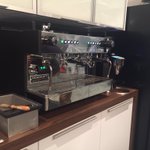
We built high-throughput materials labs in Menlo Park to create a loop between experiments and models. The labs generate fresh data, the models learn from it, and then help us decide what to try next.
Using only 1,300 H200s, plus months of our experimental data, we mid-trained and RL’d an open-source model to surpass GPT-6 Astra on our analysis benchmark. We call it Neon.
This is real footage from our lab. We’re focusing first on hard problems in materials science, including superconductors, magnets, and semiconductor materials.
Read our blog posts below.