
Cybersecurity, SWENG, opendata. Vše jsou striktně osobní názory.
Praha, Česká republika
Joined March 2010
- Tweets1.9K
- Following192
- Followers331
- Likes1.5K






Bude zajímat @NUKIB_CZ a @GOVCERT_CZ

Teamwork makes the dream work.
The team and I
@J4ck3LSyN @Archknight23
🚨 Heads-up for anyone running PHP: two critical RCE bugs, patch drops tomorrow.
The PHP project has confirmed an emergency security release for two critical remote code execution vulnerabilities: CVE-2026-109618 and CVE-2026-109619, both rated CVSS v4.0 9.2.
📅 Patch lands Wednesday, Oct 21 at 14:00 UTC (9:00 AM Central). PHP has reserved the right to ship it earlier if details leak or exploitation shows up.
PHP runs about 75% of the web, including WordPress, Drupal, Joomla, Laravel, Magento, and countless custom apps. If you operate a PHP server, this is your weekend-ruiner unless you act.
Here's the part the big threat-intel shops aren't shouting about:
No official technical details are public yet. But based on my own source-code analysis of php-src, my best assessment (moderate confidence, NOT officially confirmed) is that the vulnerable path is PHP's session.upload_progress / multipart form-data (rfc1867) handling:
🔹 Present since PHP 5.4
🔹 Enabled by default (the compiled-in default is On; the sample php.ini ships it commented out, so stock installs have it live)
🔹 Processes uploaded request data before any of your application code runs, so it's reachable pre-authentication on a default config
That lines up exactly with the public breadcrumbs: "affects default installs," "every version since 5.x," "fires before user code." Treat it as a working hypothesis, not gospel. The official advisory supersedes all of this when it lands.
✅ What to do right now:
1. Inventory your PHP. Know every host and version (php -v). Anything on PHP 7.x or older won't get a fix, so plan to upgrade.
2. Apply the stopgap (best-intel, low-risk, reversible). In php.ini / .user.ini / .htaccess:
session.upload_progress.enabled = Off
Reload PHP-FPM or your web server. My analysis says this closes one of the two likely paths.
3. Clamp multipart uploads at the edge. The second likely path lives in the multipart parser itself, which runs for any multipart/form-data POST regardless of the setting above. If you've got a WAF or reverse proxy, tighten inspection or rate-limit multipart POSTs to endpoints that don't need uploads. This is the same network-layer mitigation the enterprise vendors are quietly deploying for their paying customers.
4. Patch the second it drops. Current stable: 8.5.11 / 8.4.26 / 8.3.35 / 8.2.34. If your hosting is managed, confirm your provider's timeline today.
Why I'm posting this for free:
A pre-patch mitigation shouldn't be a subscription perk. I'm a one man shop, and the orgs most likely to get burned in the gap between leak and patch are the small teams without an enterprise threat intel contract. The steps above cost nothing. Spend tonight reducing risk, not tomorrow doing incident response.
I'll follow up once the official advisory publishes and confirm whether my root cause read was right.
Stay patched. 🔒
#PHP #CyberSecurity #InfoSec #RCE #CVE #WordPress #Laravel #ThreatIntel #VulnerabilityManagement #AppSec
Marek Sušický retweeted

Teamwork makes the dream work.
The team and I
@J4ck3LSyN @Archknight23
🚨 Heads-up for anyone running PHP: two critical RCE bugs, patch drops tomorrow.
The PHP project has confirmed an emergency security release for two critical remote code execution vulnerabilities: CVE-2026-109618 and CVE-2026-109619, both rated CVSS v4.0 9.2.
📅 Patch lands Wednesday, Oct 21 at 14:00 UTC (9:00 AM Central). PHP has reserved the right to ship it earlier if details leak or exploitation shows up.
PHP runs about 75% of the web, including WordPress, Drupal, Joomla, Laravel, Magento, and countless custom apps. If you operate a PHP server, this is your weekend-ruiner unless you act.
Here's the part the big threat-intel shops aren't shouting about:
No official technical details are public yet. But based on my own source-code analysis of php-src, my best assessment (moderate confidence, NOT officially confirmed) is that the vulnerable path is PHP's session.upload_progress / multipart form-data (rfc1867) handling:
🔹 Present since PHP 5.4
🔹 Enabled by default (the compiled-in default is On; the sample php.ini ships it commented out, so stock installs have it live)
🔹 Processes uploaded request data before any of your application code runs, so it's reachable pre-authentication on a default config
That lines up exactly with the public breadcrumbs: "affects default installs," "every version since 5.x," "fires before user code." Treat it as a working hypothesis, not gospel. The official advisory supersedes all of this when it lands.
✅ What to do right now:
1. Inventory your PHP. Know every host and version (php -v). Anything on PHP 7.x or older won't get a fix, so plan to upgrade.
2. Apply the stopgap (best-intel, low-risk, reversible). In php.ini / .user.ini / .htaccess:
session.upload_progress.enabled = Off
Reload PHP-FPM or your web server. My analysis says this closes one of the two likely paths.
3. Clamp multipart uploads at the edge. The second likely path lives in the multipart parser itself, which runs for any multipart/form-data POST regardless of the setting above. If you've got a WAF or reverse proxy, tighten inspection or rate-limit multipart POSTs to endpoints that don't need uploads. This is the same network-layer mitigation the enterprise vendors are quietly deploying for their paying customers.
4. Patch the second it drops. Current stable: 8.5.11 / 8.4.26 / 8.3.35 / 8.2.34. If your hosting is managed, confirm your provider's timeline today.
Why I'm posting this for free:
A pre-patch mitigation shouldn't be a subscription perk. I'm a one man shop, and the orgs most likely to get burned in the gap between leak and patch are the small teams without an enterprise threat intel contract. The steps above cost nothing. Spend tonight reducing risk, not tomorrow doing incident response.
I'll follow up once the official advisory publishes and confirm whether my root cause read was right.
Stay patched. 🔒
#PHP #CyberSecurity #InfoSec #RCE #CVE #WordPress #Laravel #ThreatIntel #VulnerabilityManagement #AppSec

I have successfully recreated & lab/field tested CVE-2026-109618 / CVE-2026-109619
> Two heap use-after-free primitives in PHP's `session.upload_progress` handler
(`php_session_rfc1867_callback`, ext/session/session.c)...
#CyberSecurity #infosec #php #C4b1NKr3W #php2shell

Readers added context they thought people might want to know
Usually critical vulnerabilities like this are disclosed privately, giving a team the time they need to fix said vulnerability before disclosing it publicly.
This poster ignored the 14 hour embargo and posted the CVE publicly, putting millions of sites at risk.
php.net/archive/2026.p…
x.com/watchtowrcyber…
jackalsyn.com/posts/php-up-2…
Marek Sušický retweeted

patch or take offline

Full details of a remotely exploitable vulnerability in the core engine of *all* PHP versions will be released tomorrow, October 21st. If your organization has internet facing PHP applications then you need to be ready to patch the minute the update is released or *strongly* consider taking the application offline until you can:
php.net/index.php#2026-10-20…

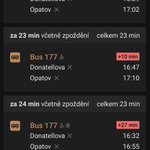
Asi to nechápu. Špatně parkující auta zablokovala průjezd autobusů a @MP_Praha nekonala. Předpokládám, že vznikla škoda nejen cestujícím, ale i @DPPOficialni
Bude se to vymáhat? Jsem zvědav, jak se k tomu nové vedení magistrátu postaví @Hlavacek_P
novinky.cz/clanek/domaci-zpr…

Marek Sušický retweeted

Multiple NGINX Flaws Let Remote Attackers Crash Servers and Execute Malicious Code
Details: cybersecuritynews.com/multip…
F5 has disclosed three serious security flaws in NGINX Plus and NGINX Open Source that can let remote, unauthenticated attackers crash worker processes by sending crafted HTTP requests. The flaws are tracked as CVE-2026-97205, CVE-2026-93479, and CVE-2026-15176.
F5 published the three advisories on October 14, 2026, and rated every issue High at 8.1 under CVSS v3.1 and Critical at 9.2 under CVSS v4.0. The bugs do not make every NGINX server vulnerable by default because each one needs a specific software version and configuration.
F5’s advisories do not report active exploitation of these three newly disclosed flaws.
#cybersecuritynews

Marek Sušický retweeted

‼️ A CVSS 10.0 flaw in GitLab could have let unauthenticated users execute code on the server under certain conditions.
GitLab has patched the CI/CD vulnerability (CVE-2026-97229) affecting CE and EE.
Fixed versions: 19.2.8, 19.3.5, and 19.4.2.
Read: thehackernews.com/2026/10/gi…

Marek Sušický retweeted

🔥🚒 pfSense Firewall 0day - 5 RCEs! 🚒 🔥
Exploits
- github.com/abraxas/pfsense-q…
- github.com/abraxas/pfsense-o…
- github.com/abraxas/pfsense-c…
- github.com/abraxas/pfsense-l…
- github.com/abraxas/pfsense-i…
Writeups
- abraxaslabs.tech/research/pf…
- abraxaslabs.tech/research/pf…
- abraxaslabs.tech/research/pf…
- abraxaslabs.tech/research/pf…
- abraxaslabs.tech/research/pf…
🤖 Made with AI

Překvapení, asi lidem došlo, že inflační 5000Kč, které budou ležet v šuplíku, nebudou v nákladu 200k kusů takový zázrak a kdo ví, jestli inflaci porazí...
moravskoslezsky.denik.cz/zpr…

Marek Sušický retweeted

🇨🇿 🚨 NEMOCNICE STRAKONICE (CZ) 437K PATIENT RECORDS ALLEGEDLY OFFERED
A threat actor on an underground forum claims to be selling or publishing data allegedly associated with Nemocnice Strakonice / nemocnicest[.]cz (Czech hospital).
The actor claims the dataset includes:
* Patient contact / demographic fields (claimed)
* Appointment booking records (claimed)
* Medical staff profile fields (claimed)
* Insurance-related fields (claimed)
Claimed scope: ~437,000 records (claimed).
The claim has not been independently verified.
⚠️ Analyst Note:
Named Czech hospital patient-data claim. High sensitivity (medical/contact). Sample download links redacted. Unverified TA claim — NOT confirmation hospital systems were breached.
#DDW #DarkWeb #Czechia #Healthcare #ThreatIntelligence #CyberSecurity

Marek Sušický retweeted

AWS says the data in its Bahrain region is gone!
Not degraded. Gone forever 😅

V pátek odpoledne budou všechny výjezdy z Prahy beznadějně ucpané i bez regulace PČR. Čeká nás pěkný podzimní víkend ;)

Marek Sušický retweeted

⚠️ CVE-2026-94545 (CVSS 9.5) ⚠️
Your Next.js OG image endpoint can hand an attacker a shell. 😱
If you use next/og on the Node runtime with sharp installed (what Next recommends for prod), one unauthenticated POST to that route runs commands on your server. Here's why: Satori builds the image as an SVG and drops your text in without escaping it, so an attacker breaks out of the tag and injects their own markup. It reaches the native image libs (sharp, libvips, librsvg, libxml2) and corrupts memory there, and since Node ships non-PIE, a hardcoded ROP chain lands execve every time.
This is the default prod setup, not some weird edge case. 🚨
Not affected: edge runtime or no sharp — that path uses the wasm renderer.
Patched in Next.js 16.3.6 / Satori 0.33.5. On 16.2.0–16.3.5? Update now.
🔥 PoC + setup: github.com/EQSTLab/CVE-2026-…
#Nextjs #RCE #CVE #PoC #Exploit #CyberSecurity #nextog #CVE_2026_94545
Agenti projevují lidskost - neautorizovaně pushují do Public repozitářů ;)


Marek Sušický retweeted

‼️ This is the EU Cyber Resilience Act at work, because since September 11 vendors must report actively exploited flaws to European authorities within 24 hours, even before a patch exists.
So far NCSC-NL appears to be the only national European CERT to have passed that warning on to its constituency, prompting Dutch organisations to pull their NetScalers offline while Citrix still has no public CVE, advisory or fix.


Marek Sušický retweeted

n8n just got a CVSS 10.0 public exploit.
CVE-2026-21858 (“Ni8mare”):
unauthenticated file read → full RCE. Working PoC is circulating.
Any internet-facing n8n that missed the patch is one request away from compromise.
github.com/Chocapikk/CVE-202…
#Cybersecurity #AI #AISecurity #MCP #Claude #GPT #Infosec #Trending #RCE #AppSec

Marek Sušický retweeted

Heads up, there is a 1-day full MikroTik RCE chain against SSH being used in the wild. Patch was released yesterday, so if you have a MikroTik router with ssh open on the internet, it may already be compromised. Detection guidance and IOCs courtesy of @CERT_Polska_en cert.pl/en/posts/2026/09/vul…

Marek Sušický retweeted

⚠️ VAROVÁNÍ PŘED KONZUMACÍ POTRAVINY
Hygienická služba varuje před konzumací výrobku Bio Rýžová kaše s jahodami a malinami Nature's Promise, pro děti od 12 měsíců (200 g).
❗ Šarže: 8590421069721
📅 Minimální trvanlivost: do 31. 7. 2027
Laboratorním vyšetřením byla prokázána přítomnost aflatoxinu B1, který je genotoxický a karcinogenní a působí především na játra.
Výrobek byl v ČR nabízen v obchodním řetězci Albert a výrobce již zahájil jeho stahování z trhu.
➡️ Zakoupené balení lze vrátit nebo vyměnit v místě nákupu. Peníze budou vráceny i bez účtenky a také za načaté balení.
Prosíme, sdílejte informaci dál, zejména mezi rodiči malých dětí. ⚠️ @ZdravkoOnline

Marek Sušický retweeted

Attackers plant fake errors inside malware to evade AI analysis
North Korea-linked actors used a macOS implant @LabsSentinel calls “Gaslight”.
How it worked:
1. Create a macOS backdoor in Rust
2. Add 38 fake “system” messages
3. AI security tooling reads the file
4. The AI model percieves system failures
5. The AI model stops analyzing
6. The actual malware continues executing
The malware also contains a credential stealer, interactive shell, and Telegram C2.
Unlike the nuclear weapon technique, this did not target safety guardrails.
It targeted the model’s perception of its own system state.
Full write-up in the comments. 👇

Marnost @MP_Praha v jedné fotce. Jediný přechod u velké školy. Každý den ráno řízený policistou. Auto se nehnulo. Není na přechodu a není to prý na odtah...

Škoda, uvidíme, jaký to bude mít dopad. Možnost volně vybrat byla fajn

We’re ending our partnership with Cursor following its acquisition by SpaceX. Under our proposal, Cursor’s direct access to our models would end on November 12.
We know that the people most affected by this decision are the developers who rely on OpenAI models in Cursor. We care about their experience in this transition and we’re ready to go above and beyond to support them.
openai.com/index/our-decisio…
