

@Volatility | @Volexity | @lsucyber | The Art Of Memory Forensics | DFIR and AI
New Orleans, LA
Joined March 2010
- Tweets20.6K
- Following6K
- Followers28.5K
- Likes1.5K






Pinned Tweet
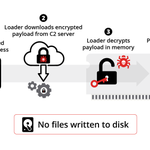
Memory-only malware leaves no trace on the file system and is commonly used by threat actors ranging from criminal organizations to ransomware operators to APT groups. To detect such malware, memory forensics must be performed to deeply examine the state of a potential victim system. If your organization isn't performing memory forensics then you are missing the malware that actually matters!

Claiming a ‘distillation attack’ as the root cause of customer credentials being stolen will require quite a bit of explanation to pass the believability test

I am very much looking forward to learning how a ‘distillation attack’ somehow led to customers’ API keys getting stolen…

We had a security breach last night related to a large scale distillation attack that impacted 1.4% of OpenCode Console users
We have notified them all this morning via email. If you did not get an email you were not impacted, it was a subset of users who had external providers linked
The incident is ongoing so we cannot share more details at this point but we are working with Anthropic, OpenAI, and Google to remediate
Andrew Case retweeted

.@Volexity has published the third and final installment of its Mind the (Patch) Gap series. Parts 1 and 2 detailed Volexity’s discovery of multiple Chinese threat actors chaining zero-day exploits in Google Chrome and Microsoft Windows to deploy malware. This post takes a closer look at Volexity Volcano, one of the most advanced tools behind those findings.
The blog post also showcases Volcano’s new MCP server for AI-assisted incident response, threat hunting, and digital forensics. Volexity analysts used it to triage a compromised system, automatically annotate related artifacts, create new IOCs for future detection, and schedule targeted collections across endpoints.
Read the full post here: volexity.com/blog/2026/10/16…
#dfir #threatintel #memoryanalysis #memoryforensics

Andrew Case retweeted
Join @attrc, Volexity’s Director of Research, at @BSidesNYC on Saturday, October 17 at 10:00 AM ET (Blue Track). In “Finding Evil Fast: Windows Memory Triage with Volatility 3,” he will share five automated checks for quickly finding malicious activity in Windows memory.
See the full conference schedule here: bsidesnyc.org/schedule/
#memoryforensics #dfir #volatility

Andrew Case retweeted

🔥 The first Three Buddy Problem from Offensive AI Con is live! Audio only.
IBM X-Force’s Valentina Palmiotti (@chompie1337) walks us through the autonomous Windows kernel exploit pipeline she built on older Claude models, which landed within a hair of Mythos for about $180 a chain.
Plus, the Pwn2Own bug Claude called unexploitable, why her Pwn2Own bugs still sit unpatched, disappearing exploit techniques, the dread of being a defender, and how Phrack found its way back into print.
open.spotify.com/episode/2wE…

The long awaited and rumored KVM guest->host escape exploit finally dropped!


As I have said for close to 15 years now: online ads = malware.
All individuals and companies should block ads based on DNS lists at the gateway or within browser extensions. My guide from a decade ago on how to secure your web browsing is still highly relevant and prevents these types of attacks:
xitter.cf/attrc/status/713473614…


Andrew Case retweeted

We caught another threat actor using zero-day exploits to compromise an edge device — in this case Ivanti Connect Secure. The used a few different exploits to facilitate RCE and then an escalation of privilege. They did some interesting anti-forensics tricks and then largely leveraged tooling they brought over to try and move laterally.
We were able to fully recreate the exploit chain from memory and core dumps! We built a custom analysis profile and analyzed the memory in @Volexity's Volcano software. Details of the exploits, the threat actor, and how we analyzed it are all up on our blog!

.@Volexity has discovered in-the-wild exploitation of a #zeroday exploit chain targeting Ivanti Connect Secure VPN appliances (CVE-2026-104935). Beginning October 3, a previously unknown threat actor, UTA0576, chained three vulnerabilities to gain unauthenticated root-level code execution on a fully patched device. Notably, UTA0576 deployed no malware or web shell. Instead, the threat actor re-exploited the device for every command it ran and tampered with logs to cover its tracks, evading Ivanti’s Integrity Checker Tool.
Using its #Volcano memory analysis platform, Volexity analyzed the compromised device’s memory to uncover the full exploit chain and the attacker’s post-exploitation activity, which focused on credential theft, Active Directory reconnaissance, and data exfiltration. Volexity reported these findings to Ivanti through coordinated disclosure.
Read the full analysis, including detection guidance and IOCs, in our blog post here: volexity.com/blog/2026/10/13…
#DFIR #threatintel #memoryforensics

Andrew Case retweeted

1/8 Today, @JulianVoeg from @RecordedFuture and I are publishing “Break the Silence: Tracking Silent Lynx Through Exposed Infrastructure,” a report on cyber espionage across Central Asia and the wider CIS that we presented today at @virusbtn
blog.talosintelligence.com/b…

As I have said for close to 15 years now… online ads = malware. All individuals and companies should block ads based on DNS lists at the gateway. My guide from a decade ago is still highly relevant:
xitter.cf/attrc/status/713473614…

NEW @citizenlab report We uncovered an Israeli firm using online ads to run vast spy operation
This is the first-ever public confirmation of zero-click mercenary spyware delivered via targeted ads.
45 devices at @AJEnglish confirmed infected
citizenlab.ca/research/how-d…

Andrew Case retweeted
Catch @Volexity's Josh Duke at @BSidesNYC on Saturday, October 17 at 5:00 PM ET (Other Track). Josh will present “No Safe Harbor: OceanLotus and ROGUEHARBOR,” sharing details from a recent #OceanLotus campaign that used WhatsApp to target human rights organizations and deploy the ROGUEHARBOR RAT.
See the full conference schedule here: bsidesnyc.org/schedule/
#dfir #threatintel

Andrew Case retweeted

Our inaugural CFP Board: @attrc , @juanandres_gs , @Fox0x01 , @invisig0th, and Adam Russell.
They’ll review submissions and help shape the talks at SkiSides.
See the board and submit a talk by 15 Nov: skisides.com/cfp
Lift closes 20 Nov: skisides.com/lift

Our services team found multiple Ivanti Connect Secure 0days being exploited in the wild and against one of our Network Security Monitoring customers. The blog has the full attack details and IOCs!
.@Volexity has discovered in-the-wild exploitation of a #zeroday exploit chain targeting Ivanti Connect Secure VPN appliances (CVE-2026-104935). Beginning October 3, a previously unknown threat actor, UTA0576, chained three vulnerabilities to gain unauthenticated root-level code execution on a fully patched device. Notably, UTA0576 deployed no malware or web shell. Instead, the threat actor re-exploited the device for every command it ran and tampered with logs to cover its tracks, evading Ivanti’s Integrity Checker Tool.
Using its #Volcano memory analysis platform, Volexity analyzed the compromised device’s memory to uncover the full exploit chain and the attacker’s post-exploitation activity, which focused on credential theft, Active Directory reconnaissance, and data exfiltration. Volexity reported these findings to Ivanti through coordinated disclosure.
Read the full analysis, including detection guidance and IOCs, in our blog post here: volexity.com/blog/2026/10/13…
#DFIR #threatintel #memoryforensics
Amazing research and reporting as usual from @KimZetter! Also, its crazy to think that a vendor would ignore hardware related security warnings from @joegrand of all people...

Ledger was warned last March about implants by hardware hacker @joegrand but apparently did little because no one had yet used implants to steal crypto. That changed last wk with the heist of hundreds of accounts. There is evidence stolen seeds were sent to servers in Hong Kong
The only "frontier" that matters is the one most relevant to your organization/team/needs.
For my friends in cybersecurity: learning how to fine tune open models against your internal datasets and properly eval them is the most important skillset you can currently learn.

We were able to fine tune an open weight model (Qwen3.5-9B) on proprietary internal data at @coinbase, and it out performed frontier models, at much lower cost and speed, for a specialized task (fraud prevention in this case).
I think we'll see more of this pattern inside companies. The frontier models are amazing generalists. But increasingly you'll see specialist models out perform on more narrow tasks, either working on teams, or by themselves.
We're making it easy to fine tune models internally for our employees. We even have a skill for it in our internal harness that makes it easy to spin these up and start training them:
"/fine-tune-and-serve-llm I want to fine-tune Qwen for payments risk review. help me get started"
I imagine we'll have some backend services that could be replaced entirely by this new architecture.


A week from today. Please come say hello if you will be there!
Join @attrc, Volexity’s Director of Research, at @BSidesNYC on Saturday, October 17 at 10:00 AM ET (Blue Track). In “Finding Evil Fast: Windows Memory Triage with Volatility 3,” he will share five automated checks for quickly finding malicious activity in Windows memory.
See the full conference schedule here: bsidesnyc.org/schedule/
#memoryforensics #dfir #volatility
This was an incredible episode @sonyatweetybird! Training Data is a must listen podcast!

AI is driving the biggest infrastructure build-out in history, with @Google alone forecasting $200B of capex in 2026E. What are the real constraints on a system at this scale?
Amin Vahdat is the chief in charge of Google's buildout. As SVP AI Infrastructure (AI^2), he role spans @GoogleDeepMind, @googlecloud, and the TPU/accelerator hardware roadmap, planning chips 2-5 years out and overseeing a data center buildout of epic proportions.
Takeaways:
— Why "goodput" per watt is the north star metric and designing around failures: At the 100,000-accelerator scale, something fails multiple times an hour, capacity has to double every six months, and as much of that comes from software and model optimization as from silicon. Hardware is a multiplier that lifts everyone above it
— Why Google split TPU into two chips (8I for inference, 8T for training), and the calculus for when a workload is big and durable enough to specialize for
— The "bitter lesson of chips," and why the TPU architecture hasn't fundamentally changed since v1
— How DeepMind and the hardware team co-design: delaying a tape-out by two weeks for the right model optimization, and using Gemini to design chips for future Geminis
— Long-horizon agents as a new workload shape: no human in the loop to rate-limit requests, and CPU, networking and storage demand going "through the roof" alongside accelerators
— Optical circuit switching: mirrors redirecting light to swap a failed TPU rack in milliseconds, without touching a fibe
— Why Google prefers grid-connected over behind-the-meter power
— Why 7- and 8-year-old TPUs are still at 100% utilization
— Open standards, and why IP won the internet as the narrow waist of the hourglass
— Orbital data centers: 1.4x the solar power, near-100% sunlight in sun-synchronous orbit, free-space optics between satellites, and "no fundamental showstoppers"
— The 2036 rack: multiple megawatts, wheeled in, plug in water, power and fiber
Timestamps:
0:00 – Introduction
1:47 – What makes a data center an AI data center
5:30 – Goodput, not FLOPS: holding yourself accountable when something fails every hour
11:52 – Doubling token capacity every six months, and where the gains actually come from
15:32 – The TPU bet: from a contrarian call in 2013 to splitting 8i and 8t
23:30 – The case for and against co-design
26:11 – Shoulder to shoulder with DeepMind: intercepting chips mid-flight
34:16 – Long-horizon agents change the shape of the data center
37:50 – Optical circuit switching and the state of networking
42:35 – Power is the binding constraint: utilities, gigawatts, and sizing a data center
49:23 – Training vs. serving clusters, seven-year-old TPUs, and open standards
58:29 – Orbital data centers and the supercomputer of 2036
What a surprise to log in and see a wanted poster for a HAFNIUM operator!!
Our (@volexity's) blog post exposing their Exchange operations:
volexity.com/blog/2021/03/02…

🚨 BREAKING: The US is offering up to $10 million for Zhang Yu, a Chinese national accused of being a key figure in HAFNIUM, the Microsoft Exchange hacking campaign the FBI says was directed by China's MSS and compromised 12,700+ US victims.
He is also accused of stealing COVID-19 research from US universities.

Andrew Case retweeted

#SaveTheDate 🚨🚨 If you're also wondering when the next #PIVOTcon27 is, remember: we're pivoting back to Málaga on 5–7 May 2027 🇪🇸🏖️
Registration opens soon!
#CTI #ThreatIntel #ThreatResearch
Andrew Case retweeted

In one case rather than outright refusing Astra swapped out a part of the experiment I wanted to run with something “safer”, which would have completely invalidated the results if I hadn’t caught it. Do not recommend unless very carefully watched

Friendly reminder about new subtle policy and guardrail changes in GPT-6 and 6.1:
Contrary to how Anthropic does it and slaps your wrist for even asking it, Sol 6 and 6.1 dance around the bushes, A LOT, and loop forever, effectively wasting tokens, instead of refusing taking final actions. It chats and documents "progress" and keeps iterating over results but takes no actual action, being execution of a command, placing an order or any action that crosses the system policy guardrails.
I've been observing this since day one of Sol 6 release, especially in my AI trading harness.
Stick to 5.6 Sol, is my suggestion for now.
YMMV.