

Libyan journalist, oil & energy focus. My views only. Economic news anchor & producer. #LibyaSpecialist
Libya
Joined June 2011
- Tweets9.2K
- Following705
- Followers4.6K
- Likes244






BREAKING | Libya: Reports of renewed valve closures affecting El Feel, Hamada—or both. The picture should become clearer in the coming hours.
Last time, the valves reopened after Minister of State Mohamed Ben Ghalboun and Mustafa Al-Mana held talks with those behind the closures, on the government’s behalf.
The National Oil Corporation (NOC) is not at the negotiating table.
Who exactly is closing the valves? What are they demanding? Neither is clear. Much of the process remains behind closed doors.
The last men at the table.
Since Dbeibah took office in 2021, seven Libyan heavyweights have left the stage: sacked, replaced, voted out, or killed.
A chair every summer, then one every nine months.
Only Audit Bureau chief Khaled Shakshak is left. Is he next? #Libya

The Algarj app has reached No. 2 among free News apps on the Libya App Store—just behind X.
It’s a strange and powerful feeling to see a platform I built for my work reach this milestone.
I launched it after my Facebook ( +260k) account was disabled amid coordinated reporting campaigns, to give my work a home beyond social media. The app brings together Libyan news, articles and analysis in Arabic and English—for everyone following Libya.
apps.apple.com/ly/app/algarj… #Libya

$419 million in approved FX requests — attached to just 104 Libyan companies with names like:
“Slow Ascent”
“The Fair Deal”
“The Beautiful Choice”
“The Correct Future”
“Galaxy of Hope”
“Moments of Happiness”
No, this is not satire.
These names appear in @CentralBankOfLy data.
The CBL says @K2Integrity is helping review documentary credits and strengthen AML controls.
I genuinely have one question:
Does anyone actually translate the company names for K2?
Because if “Moments of Happiness” and “Galaxy of Hope” are moving hard currency and nobody even asks a second question, Libya may not need more sophisticated AML software.
It may just need Google Translate.
And here is the best part:
The CBL’s older LC disclosures used to publish the legal representative behind each company.
The new 2,801-company table does not.
Apparently, the company names became more creative just as the disclosure became less so.
🚨BREAKING: Libya’s NOC warns it may declare force majeure within hours unless the Sharara pipeline valve reopens. Losses stand at ~130,000 bpd and could rise. 📌Oil facility guards are also blocking access to Zawiya refinery, threatening fuel supplies and state revenues. #Libya
🚨‼️BREAKING | Libya’s Akakus oil pipeline has reportedly been closed, halting production. No official announcement so far.
Akakus operates the Sharara oilfield, with a production capacity of around 300,000–320,000 barrels a day. Its partners include Libya’s National Oil Corporation and Spain’s Repsol. The export pipeline connects Sharara to Zawiya; the precise valve involved and actual output lost remain unconfirmed.
The wider backdrop includes the reported arrest of an alleged sabotage cell in Tripoli, with alleged links to Spanish nationals; Petroleum Facilities Guard demands for higher salaries; and pressure surrounding Waha Oil Company.
Whether any of these issues is connected to the shutdown remains unverified. The immediate trigger—and the central dispute behind this closure—are still unclear.
#Libya #Oil
Libya’s Decision 550 cuts heavy fuel oil subsidies for private buyers—a possible first step toward broader fuel subsidy reform.
My analysis unpacks the 10–15% industrial discount, fiscal stakes, production data and smuggling risks.
algarj.com/articles/libya-he…

📌Following the appointment of Khaled Al-Jarbi as Chairman of Waha Oil Company, the company has moved to restructure several key management positions, following approval by the National Oil Corporation (NOC) Board.
The changes cover Engineering, Operations, Drilling & Well Maintenance, Reservoir & Production Engineering, IT & Communications, Training & Development, Legal Affairs, and the Purchasing Committee.
A notable management reshuffle at one of Libya’s major oil producers.
@WahaOilCo | @NOC_Libya
Documents link a 15% commission letter addressed to Abdulhamid Dbeibah to a Swiss account in Ali Ibrahim Dabaiba’s name, then head of Libya’s state development agency.
A statement records $107,000 from an Italian supplier.
My investigation:
algarj.com/articles/dbeibah-…

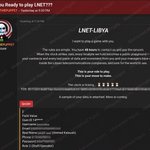
🚨 Major cyber incident in #Libya: LNET, one of the country’s largest private internet service providers, serving 60,000+ subscribers through 250+ tower sites, has acknowledged a breach of its SMS system.
Attackers claim much deeper access, publishing screenshots allegedly showing internal network and database systems and threatening to leak terabytes of data within 48 hours.
The wider breach claims remain unverified.
@LNET_LY @LibyaCERT
🤖 Made with AI


Nearly 60 times last year’s operating expenditure at Libya’s “Dbeibah agency.”
Central Bank figures show ODAC—the Organisation for Development of Administrative Centres—recorded LYD 407.75m under Chapter Two in January–August 2026, against LYD 7.05m in the same period of 2025.
@Dabaibahamid: what changed, who authorised the increase, and who received the money?
This agency’s former leadership and contracting network featured in @OCCRP investigations into alleged embezzlement and offshore financial flows. That history demands scrutiny of today’s accounts.
📌 The money is classified as operating expenditure. The published figures do not reveal what it bought.
@UNSMILibya: financial accountability starts with demanding this breakdown.
#Libya
@CentralBankOfLy 2025 | CBL 2026
I stand in solidarity with Ashraf Al-Sheh.
For those outside Libya who may not know him: Al-Sheh is a prominent Libyan political figure, a former member of the UN-facilitated Libyan Political Dialogue, and one of the signatories to the 2015 Libyan Political Agreement.
Yesterday, during an interview on Libya Alahrar TV, he said he had been informed that his name had been placed in the security system for arrest in Tripoli, which he linked to his public criticism of Abdulhamid Dbeibah’s government.
Whatever one’s political disagreements with Ashraf Al-Sheh, criticism of those in power must never become grounds for arrest, intimidation, or retaliation.
If a signatory to Libya’s UN-backed political agreement can face the threat of arrest for publicly criticising the government, the international community should ask what space remains for journalists, activists, political opponents, and ordinary Libyans to speak freely.
The attached video is from his original Arabic intervention on Libya Alahrar yesterday, which I have translated into English for international audiences following the Libyan file.
Silencing critics is not stability. It is a warning sign.
#Libya
Libyan Foreign Ministry sources say the full New York programme could cost up to $105,000 per delegate. That figure remains unverified.
Decision 707/2026 authorises 14 people for a combined 300 person-days, covering UN work and preparations for Libya’s 2028–29 Security Council bid. It names no total budget.
Yet Dbeibah—both prime minister and acting foreign minister—assigns the delegation’s leadership to Taher al-Baour.
Is there any official impediment to Dbeibah attending personally?
@Dabaibahamid: will you attend, and if not, why?
@USEmbassyLibya: do any US visa or entry restrictions apply to his participation in UN meetings?
These are requests for clarification. The delegation order itself establishes no such restriction.


Dbeibah’s “temporary” government has now spent 1,999 days in power—surpassing Baghdadi al-Mahmudi’s 1,997 days—to become the longest-serving government based in Tripoli since Libya’s independence in 1951.
Its mandate was to hold elections in 2021. Its record is staying in power.
🚨‼️NEW | A dangerous escalation—and potentially an important first for Libya.
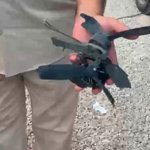
A suspected fibre-optic-guided drone entered the airspace over Brega Petroleum Marketing Company’s Airport Road fuel depot in Tripoli during the early hours of today and crashed near its storage tanks. The facility holds diesel, petrol, LPG and aviation fuel. No fire, casualties or material damage were reported. Libya may have narrowly avoided a major disaster.
The incident takes the recent drone threat beyond Zawiya, where multiple energy facilities were struck last month.
Local reports claim that electronic-warfare systems disabled the drone and brought it down. That account remains unverified. Brega’s official statement confirms only that a suspected drone entered the depot’s airspace and crashed near a storage tank; it does not establish why it fell.
Images from the site show what appear to be long coils of fibre-optic cable. Drones guided through such cables are specifically designed to bypass conventional radio-frequency jamming, making the interception claim technically exceptional.
If a technical examination confirms that the drone was deliberately intercepted, this may represent the first documented successful neutralisation of this drone type in Libya—and a significant breakthrough in protecting critical infrastructure.
Until then, a technical malfunction or loss of control cannot be ruled out.
The decisive question is no longer whether the drone fell, but why: has Libya found a way to stop this emerging generation of attack drones—or did a critical energy facility escape catastrophe merely by chance?
#Libya #Tripoli


Libya has produced a plotline that even Netflix’s The Diplomat might have considered a little too neat.
Zeiad Daghim is Libya’s Ambassador to the Kingdom of the Netherlands. He is also an adviser to Presidential Council President Mohamed al-Menfi on elections and legislative councils.
On 30 August, following the signing of the UN-facilitated 4+4 agreement, Daghim publicly argued that the final text had “removed the ambiguity” around the process, and described the Presidential Council’s reconstitution of Libya’s electoral commission as a “direct practical translation” of the agreement.
Nine days earlier, on 21 August, @OPCW officially recorded H.E. Najat Husni Mohammad as Libya’s new Permanent Representative to the Organisation for the Prohibition of Chemical Weapons — also in The Hague. Libyan media have identified her as Daghim’s wife. The OPCW record itself confirms her appointment and the date of presentation of credentials.
Meanwhile, the Dutch government records Daghim as Libya’s ambassador in The Hague since August 2023.
None of these facts, taken individually, proves wrongdoing.
But diplomacy is not judged by criminality alone. It is also judged by merit, transparency, conflicts of interest, disclosure — and the appearance of institutional independence.
And this is where the story becomes more interesting than the appointments themselves.
In Libya, political alignments are often easier to read through appointments, access and institutional positioning than through official communiqués.
For Western diplomats following Libya, the question is therefore not simply whether every appointment is technically legal.
It is whether Libya’s diplomatic institutions are being built around the state — or around political and family networks operating inside the state.
If this were Netflix’s The Diplomat, we would call it a clever plot device.
In a real country, it is a governance question.
@UNSMILibya @OPCW @DutchMFA @EUinLibya
#Libya #TheHague
Mohamed Algarj retweeted

Every Libya observer should pay attention to what @moelgrj noticed in Aug. 23’s CBL report.
The below is arguably the most important remark of the year on Libya’s dysfunctional banking system.
Since 2024, new controls have been introduced to curb fraudulent letters of credit. In response, some Libyan actors simply switched to 𝗱𝗶𝗿𝗲𝗰𝘁 𝗱𝗼𝗹𝗹𝗮𝗿 𝘁𝗿𝗮𝗻𝘀𝗳𝗲𝗿𝘀.
A fraudulent letter of credit is a problem in its own right, but at least it is slow and leaves a trail — a named foreign beneficiary, the goods or services it purports to cover, the guarantees behind it — whereas a direct transfer is harder to document & it bypasses all the screenings built to catch illegitimate LoCs.
As @moelgrj notes, the vast majority of this year’s transfers have been channeled through just two commercial banks. Working out who stands behind them is not hard at all.

Libya’s “miscellaneous transfers” surged from $308.8m to $2.285bn in one year: +640%.
82.8% passed through just two banks. The CBL identifies the channels—but not destinations, purposes or beneficiaries for transfers alone.
New investigation: #Libya
algarj.com/articles/libya-mi…

Libya’s “miscellaneous transfers” surged from $308.8m to $2.285bn in one year: +640%.
82.8% passed through just two banks. The CBL identifies the channels—but not destinations, purposes or beneficiaries for transfers alone.
New investigation: #Libya
algarj.com/articles/libya-mi…
🚨BREAKING | The Board of Directors of Libya’s National Oil Corporation (@NOC_Libya) has appointed a new Management Committee for Waha Oil Company, chaired by Mohamed Ben Issa and including Khaled Muftah Al-Dinali.
#Libya #Oil