Mo Azam, MD, MBA (@moeed_azam) header
Mo Azam, MD, MBA (@moeed_azam) profile picture

#anesthesiologist, healthcare+business, Tweets my own & not advice, not employer's; RT/Follows not endorsement

Orlando, FL
Joined March 2015
Photo by Mo Azam, MD, MBA (@moeed_azam)Photo by Mo Azam, MD, MBA (@moeed_azam)Photo by Mo Azam, MD, MBA (@moeed_azam)Photo by Mo Azam, MD, MBA (@moeed_azam)Photo by Mo Azam, MD, MBA (@moeed_azam)Photo by Mo Azam, MD, MBA (@moeed_azam)
Mo Azam, MD, MBA retweeted
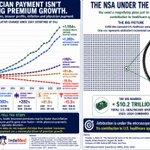
Insurers say federal arbitration under the No Surprises Act is driving up premiums. Congressman Pallone’s Lower Premiums, Faster Payments Act would end arbitration and pay physicians a fixed rate tied to the insurer’s own median. But the states are a laboratory of public policy. Some have used arbitration for years. Others skipped it and set a fixed rate. So we have the data. Nobody had studied it. IndeMed did. We compared employer premiums from 2017 to 2025 and marketplace premiums from 2019 to 2026 across all 50 states and DC. What we found: · Employer premiums in federal-arbitration states and state-law states rose almost exactly the same. The gap was 0.1 points, not the 4 points insurers predicted. · From 2021 to 2025, marketplace premiums rose 9.5% in federal-arbitration states and 22% in fixed-rate states. · California has used a fixed rate since 2017. Its employer premiums went from below the national average to above it. Arbitration did not raise premiums. A fixed rate did not lower them. More from IndeMed: indemed.org/premium-trends-b…
🤖 Made with AI
1
2
2
4
1,365
Senator Sanders @SenSanders I'm a surgeon. Let me tell you what Medicare for All means from inside the operating room. Medicare already pays doctors 33% less than it did in 2001, adjusted for the cost of running a practice. It cut us again for 2027. Third year in a row. That one payer is why private practice fell from 80% of doctors to less than 20%. Why your doctor now works for a hospital system with a quota. Why I spent six hours last Friday trying to get one patient seen. Medicare for All takes the payer that did that and makes it the only one. Nobody to negotiate with. Nowhere else to send the patient. One rate, set in Washington, for every surgeon in America. CBO looked at it. Their words: demand for care would rise faster than the supply of doctors and hospitals. Universal coverage is not universal access. A card in your wallet is not an appointment. And the 68,000 deaths? That's a computer model, not a body count. Here's a number that isn't a model: Medicare Advantage denied 200 of 207 of the sickest patients at one hospital system last year. Government-contracted. Government-paid. I'm not defending insurance companies. I've spent two weeks on this feed showing what they do. But the answer to a bad insurer isn't one insurer with no competition and a 33% pay cut baked in. The answer is a system where the doctor can still say "send her to me." Medicare for All is the last system where that's possible, and the first where it isn't. @Doctor4Patients #MedicareForAll
At a time when 68,000 people a year die unnecessarily because they can’t afford to get to a doctor on time, we need to develop a sense of urgency. Healthcare is a human right. We must pass Medicare for All.
1,645
7,180
567
23,247
943,873
Mo Azam, MD, MBA retweeted
If ever there was a checklist for self-insured ERISA plan employer groups to ask their TPA if the out of network shared savings is being credited back to the employer, Dr. Yoo has published the road map here. @mcuban The implication and actual allegations are in multiple lawsuits (case cited in Dr. Yoo’s report + the Federal Provider Antitrust MDL [MDL No. 3121]) is that no, actually, the “shared savings” are being retained by the health plans as a TPA, and that Claritev (f/k/a) MultiPlan (as the OON repricing firm) assisted the TPAs in breaching their fiduciary duties to employers (as in the MDL case). In the MDL case, the federal judge this summer rejected the defendants’ arguments to limit damages and allowed 17 additional health plans to be added as defendants. Trial is slated to begin in Dec.’27–should be very interesting. lnkd.in/p/eMz_GAh5
1
6
17
922
Mo Azam, MD, MBA retweeted
As point out previously here, The Employee Benefits Research Institute (EBRI) estimates that the No Surprises Act IDR awards have contributed .063% of the estimated $1.34T in national employement-based health plan costs, based on 2025 CMS Public Use File (PUF) data. Yet, the health plan execs on their earingings calls are blaming the NSA in part for premium increases—how can less than 1% of incremental costs achieve that result? This assumes that these IDR awards are being paid and there is more than ample evidence that they are systemically not being paid. EDPMA studies this week and in April of ‘26 showing CY 2025 data show systemic non compliance with IDR awards payment across over 1M claims in the combined studies. The Nov. 3, 2026 New York Times article has Anthem BCBS admitting in effect that they are in wholesale non compliance with federal law. Anthem has in its unilateral discretion determined that a high percentage of awards are not legitimate despite that a neutral third party licensed CMS contractor has determined that the claims are eligible and made the award against Anthem. As a former O lineman, it would be tantamount to me telling the ref that I was not guilty of holding after being flagged and refusing to accept the 10 yard penalty (not that I ever was flagged, purely a hypothetical). share.google/ZqDfFCyuVq6oYcl…
6
4
1
16
1,857
1/ Insurers have a new story for why your premium went up 9%: "greedy doctors" and the No Surprises Act. A study out today puts a number on it. The entire arbitration system costs 63 cents per $100 of your plan. The other $8.37 of your increase? Not us. 🧵
Both parties are looking hard at arbitration. On Nov 2, Energy and Commerce Chair Brett Guthrie and ranking Democrat Frank Pallone jointly asked the Congressional Budget Office to re-score whether No Surprises Act arbitration is raising premiums and the deficit. Their letter cites about $15B in awards in 2025, providers winning more than 85% of cases, and awards running about 6x local in-network rates. With both committee leaders signed on, an overhaul could ride in a year-end package. news.bgov.com/bloomberg-gove…
11
9
20
2,029
Mo Azam, MD, MBA retweeted
Replying to @RepGregMurphy
@RepGregMurphy thank you for your outstanding representation of the physician community during your terms in Congress and we wish you all the best in your next endeavors. The physician advocacy and supporting community will continue to advance your H.R. 4710, The No Surprises Act Enforcement Act, along with your bi-partisan co-sponsors. wral.com/news/nccapitol/greg…
3
3
17
1,855
Mo Azam, MD, MBA retweeted
“Emergency physicians are gaming No Surprises Act (NSA) arbitration and driving up your premiums.” It’s a popular claim from the health plans and their proxies, e.g. Paragon Health Institute, who recently called for caps on ED physician awards. Since its inception, ED physicians have been the #1 physician specialty cohort filing NSA IDR claims. But facts are stubborn things and the payment data tells a different story. EDPMA surveyed member practices that serve about 60% of U.S. ED visits, and followed the actual dollars through every phase of the law: 📉 Initial payments were cut nearly in half. The average Level 4 (CPT 99284) out-of-network payment fell 49.7%, from $567 pre-NSA to $285 pos-NSA. A 2025 RAND study found a similar 47.7% drop. ⚖️ IDR awards don’t keep pace with inflation. The average Level 4 award was $649, or 98% of the inflation-adjusted pre-NSA rate of $661. 💵 Across all visits, practices are paid less than before the law. Even counting every IDR award as paid, cash per visit is $417.52, below the pre-NSA $421.51 and 15% below the inflation-adjusted $490.93. 🚫 Many awards are never paid. $78.3 million in awards owed to survey respondents was still unpaid in August 2026, and $22.2 million of it is more than a year old. How can IDR awards systemically not paid impact the affordability of health insurance as health plan executives have stated on their quarterly earnings conference calls? And only 26% of out-of-network visits ever reach IDR. The underpayments on the other 74% outweigh any gains in arbitration. None of this includes IDR fees. “Clinicians win 85% of disputes” is a count of disputes, not a measure of dollars. If policymakers and CBO want to know what the NSA is really doing, they should measure actual dollars against pre-NSA rates and inflation. And they should enforce the 30-day payment deadline plans already have. #NoSurprisesAct #EmergencyMedicine #HealthPolicy @ACEPAdvocacy @RadiologyACR @ASALifeline
New EDPMA data: In real dollars, emergency physicians are paid less today than before the No Surprises Act, even after IDR awards. Initial out-of-network payments for a Level 4 visit fell 49.7%. Read the full release here or share it from our website: bit.ly/4iK7Ivo
2
9
2
41
2,523
Mo Azam, MD, MBA retweeted
The incoming chair of @EDPMA and managing partner of Wake Emergency Physicians PA (WEPPA), in central and eastern NC, one of the largest independent ED groups in the Southeast, Dr. Jenn Raley, explains how the lack of enforcement of the #NoSurprisesAct (NSA) IDR awards has caused major negative impacts on their practice. Jenn was recently highlighted in the @NYT article regarding the health plans’ systemic refusal to pay IDR awards and rampant non-compliance w/ federal law. nytimes.com/2026/11/03/us/in… WEPPA was in network w/ all of the BUCA payors, most for over a decade, until the NSA was passed and the health plans attempted to foist ~30-40% cuts for their in network rates. The group could not financially accept those cuts and went out of network. She calls on Congress during the Lame Duck session beginning on 11/9/26 to pass H.R. 4710, The No Surprises Act Enforcement Act, that would increase penalties for non-compliance with payment of awards and provide additional enforcement authority to CMS. Dr. Raley goes beyond the headlines, explaining how insurers' failure to negotiate in good faith hurts independent physician practices. acep.org/news/acep-newsroom-…
4
5
16
818
Mo Azam, MD, MBA retweeted
1/This lawsuit could be significant and yes (hope you’re sitting down) it is by 6 large ERISA plan employers against @UHC. While important & significant, there are allegations that UHC acting as a “third party administrator” of the employees’ claims used AI/bots to deny claims illegally and compensated its own physician owned practices better than the independent practices. The most important allegations come from the plaintiffs allegations on “shared savings.” Shared savings occur when an out of network (OON) claim is administered by a 3d party, e.g. formerly Multiplan, now called Claritev, it negotiates or recommends a lower fee for the OON services and Claritev then shares the “savings” (the delta between the charges and initial payment) w/ UHC. One might ask—“why should this occur under the NSA as the QPA (initial payment) is set at the 2019 median allowed amount for that CPT adjusted by a +28% CPI-U?” That is what the NSA requires but we know from 3 CMS audits (2 released in the last 2 weeks) that the health plans are manipulating the QPAs downward (perhaps for shared savings), are not in compliance w/ QPA fee setting regs and not complying with QPA disclosure regs. So, this case may importantly prove the axiom of the late great Charlie Munger: “Show me the incentive and I’ll show you the result.” Kraft Heinz, Ralph Lauren among large employers suing UnitedHealth over alleged improper claim approvals beckerspayer.com/legal/kraft…
9
20
6
89
39,206
Mo Azam, MD, MBA retweeted
One new-to-me detail we learned in the course of our reporting: when Congress wrote the No Surprises Act, it ported over many parts of federal arbitration law. It did not, however, bring over key enforcement provisions. Without an enforcement mechanism, supposedly binding arbitration decisions are being ignored. nytimes.com/2026/11/03/us/in…
Arbitrators are ordering insurers to pay for emergency care, like airlifts by helicopters and ER visits. Health plans are refusing. The latest in the No Surprises Act saga from me and @sangerkatz. A large new data set we obtained shows that 30 percent of awards are going unpaid, as insurers flout the consumer protection law.
6
50
9
169
19,898
Mo Azam, MD, MBA retweeted
Today in the @nytimes, @sangerkatz and @sarahkliff write an exceptional investigative report on how health insurance companies are refusing to pay binding No Surprises Act arbitration awards, thereby flouting federal law. This excellent story lifts up the hood on insurers' egregious behavior in the IDR process. And it offers eye-popping examples of their conduct and how their deliberate nonpayment is hurting patients and the medical providers who care for them. What first caught our attention is the reporting that "Anthem defends its nonpayment policies as intentional. In a 13-page report, it estimated that 60 percent of its cases that arbitrators had decided should never have qualified." So, Anthem admits it is intentionally flouting the law. Binding arbitration, however, cannot be binding only when it's convenient. Refusing to pay an arbitration award is the equivalent of agreeing to the rules of the game, losing, and then refusing to honor the score. That's not dispute resolution. It's a rejection of the very system Anthem agreed to participate in. As @Katie_Keith at Georgetown was quoted as rightfully saying, the insurer is "not the final decider." Additionally, "She described Anthem’s strategy as 'high-risk' because it flouts binding arbitration decisions." Every member of Congress, federal regulator, and employer nationwide needs to read this story. Here's a 🧵on what else jumped out at us. (1/7)
2
3
7
694
Mo Azam, MD, MBA retweeted
In a new blog post today, we dive into @CMSGov’s two new audits of health insurers’ compliance with the No Surprises Act. To no one’s surprise, insurers are failing to comply with the law at almost every turn. We argue that enforcement here by federal regulators is needed quickly. And we also highlight why @FrankPallone’s new legislative proposal calling for annual audits as a “fix” to the NSA is laughable (i.e., they already exist statutorily, and, at this current rate with zero teeth, this is just another handout to Big Insurance).
1
2
2
236
Mo Azam, MD, MBA retweeted
I use a similar graph when discussing the NSA. When insurers say that the NSA is driving costs, look at this graph. It’s a near straight line change from 2000. The spike after 2020 is the COVID utilization spike. If anything, it’s actually slightly slowing here in 2026. NSA is a convenient scapegoat for insurers who want complete pricing control but it’s not the driver of healthcare premium or cost increases no matter what you hear.
US healthcare costs are rising at an alarming rate: Medical care prices have surged +132% since 2000, the largest increase among major consumer spending categories. Over the same period, shelter costs have risen +127%, while food prices have soared +112%. Price increases across all these spending categories have outpaced overall CPI, which is up +99% since 2000. As a result, ~30% of insured US adults have skipped or delayed getting healthcare they needed due to costs over the last 12 months, according to a KFF survey. Healthcare costs have never been higher.
1
6
2
12
2,189
Mo Azam, MD, MBA retweeted
NEW: Ten health insurer PACs gave $4.2 million directly to candidates in 287 of the 470 House and Senate midterm races on the Nov. 3 ballot. About 97% went to incumbents. In just two races did both candidates get money.
4
26
3
35
1,642
Mo Azam, MD, MBA retweeted
STAT is looking to learn, from people with direct knowledge, how Epic's actions impact hospitals' technology choices. Share your story with us. trib.al/IITJvID
1
4
1
6
2,525
Incredible investigation by @caseymross and @brittanytrang: The company that controls access to YOUR electronic health records is making it nearly impossible for other vendors to compete, which is a problem amid the AI boom. statnews.com/2026/10/28/epic…
1
1
11
756
Mo Azam, MD, MBA retweeted
“It’s very clear Epic owns the market. Its prices are extraordinary. It has killed innovators left and right — it’s time for a change.” A must-read story from Casey Ross and @brittanytrang, who are investigating the electronic health records giant Epic. statnews.com/2026/10/28/epic…
33
103
11
422
111,873
Mo Azam, MD, MBA retweeted
Epic- The monster in the room.
“It’s very clear Epic owns the market. Its prices are extraordinary. It has killed innovators left and right — it’s time for a change.” A must-read story from Casey Ross and @brittanytrang, who are investigating the electronic health records giant Epic. statnews.com/2026/10/28/epic…
2
6
1
26
1,340
Mo Azam, MD, MBA retweeted
Wise words from @JahangirAsgha10 Employed docs think they’re immune to the NSA discussions, but as @FixnBones has said for years, private practice has always been the FMV for determining employed salaries. If the IDR process set up under the NSA goes away, the FMV goes down even more. ALL docs should voice their support for the IDR process that Congress set up to protect patients and give doctors a forum to have their fees reimbursed. Remember, the IDR process exists because INS got rid of OON benefits and has tried to force all docs in network for low rates. INS gets to determine the IN Network rate, not the doctor. Networks should be abolished, they drive up, not down healthcare costs. The large systems who employ many docs are, IN Network and you’ll pay a lot more having care there. When no US Trained docs will work for the rates, here come the IMGs to the rescue and increased scope of practice of Mid Levels. This should concern every American.
I would love for our employed colleagues to pay more attention to what’s going on with the No Surprises Act. Many of these conversations get so complicated that everyone outside of out-of-network medicine tunes out. So we assume it doesn’t affect us. However, you do need to look at how your compensation is set. Your salary and your dollars per RVU are influenced by surveys and fair market value analyses that examine what other physicians are being paid. Out-of-network physicians’ ability to negotiate influences payment rates across the market. If you weaken that leverage by eliminating independent dispute resolution, you can put downward pressure on reimbursement. If that translates into lower physician earnings, those lower numbers can become part of the benchmarking used to set your compensation. That is why this matters to everyone. Your salary should not be the default answer to everything that is wrong with healthcare. Advocating for yourself and your compensation is your responsibility. Being employed does not make this someone else’s problem
1
7
20
1,200