

IndeMed is a physician-led organization dedicated to protecting the integrity and fair implementation of the No Surprises Act.
Washington, DC
Joined November 2025
- Tweets185
- Following211
- Followers354
- Likes111








IndeMed retweeted

UnitedHealth Group’s profits just jumped 75% to *$4.1 BILLION* in a single quarter.
Earlier this week, I dug into its latest earnings report and what executives said on their call with Wall Street analysts.
Here's what stood out:
healthcareuncovered.substack…

IndeMed retweeted

Health insurance companies should work for patients, not stand in the way of their care. As a physician, I’ve seen how insurance denials can delay treatment and put patients in difficult positions. Our health insurance system needs serious reform that puts patients first and ensures Americans can access the care their doctors recommend.
IndeMed retweeted

The insurance companies pushed through the no surprises act on the false premise that it was for patients. It was all about improving negotiating leverage for insurance companies. Now that it’s not going how they want it they are putting on massive pressure to change the way in which pricing disputes are handled. Abhorrent

I love IDR.
Apparently, an insurance company having to defend what it pays a physician is a national affordability crisis.
Meanwhile, a hospital can buy that physician’s practice and collect more for the same care.
Washington built a financial reward for changing the name on the door.
Start there.
Start with the tax-exempt hospital corporations buying their competitors while taxpayers subsidize the enterprise.
Start with Section 6001, which restricts physician-owned hospital entry and expansion.
Congress actually wrote a law protecting incumbent hospitals from physicians who want to compete with them.
Then everybody sits around wondering why healthcare costs so much.
I build healthcare businesses.
When you subsidize the incumbent, restrict its competition, and pay it more for owning the building, you have engineered an expensive market.
@HHS and @CMSGov: enforce price transparency.
Stop paying a premium for hospital ownership. Congress: repeal Section 6001.
Let physicians build. Let employers buy directly from them.
And keep a process that lets physicians challenge an insurer’s payment without handing the patient a surprise bill.
I’m tired of a healthcare affordability debate that keeps arriving at the independent physician’s paycheck while the subsidized hospital buys another ZIP code.
IndeMed retweeted

In a new op-ed for @CrainsNewYork today, our President Christopher Sheeron explains how health insurance plans are driving healthcare costs.
He also argues that Albany’s removal of Medicaid Managed Care disputes from the state's IDR process deserves scrutiny. Undoing this budget failure will keep patients—rather than health insurers’ financial incentives—at the center of Albany’s healthcare policy.
crainsnewyork.com/opinion/co…

IndeMed retweeted

Insurers caused 9 of every 10 defaults in federal arbitration in 2025. They offered $1 or less 278,807 times. Half the time, they offered their own artificially low number or less.
Now Representative Pallone's bill would let them skip the arbitrator altogether.
Keep the referee.
Read more here: indemed.org/keep-the-referee
@IndeMedAction

IndeMed retweeted

I sat down with the @TPPF to talk about what is really driving up the price of health care in Texas: uncompensated care, federal mandates and the gaps taxpayers end up paying for.
This is one of my top priorities going into the 90th #txlege. #HD130
Listen to the full conversation: bit.ly/4i9FDi4

‼️Congressman Pallone’s new bill doesn’t fix the No Surprises Act. It guts it.
The bill abolishes arbitration, pays every out-of-network physician the insurer’s own 2019 rate and bars the courts from providing any oversight. It hands insurers the pen and fires the referee.
The fallout won’t stop at payment. When insurers set the price with no one to check them, independent practices can’t survive. Physicians will be pushed into insurer- and hospital-owned systems, accelerating the consolidation that already drives up costs and narrows patient choice.
✅ IndeMed’s full analysis: indemed.org/keep-the-referee…

IndeMed retweeted
Just seems like no matter what doctors do under this law it’s seen as gaming the system.
The point of the NSA was to
(1) prevent patients from receiving surprise bills
(2) drive doctors and insurers/employers into contracts
Now we get reporting that an employer and physician group negotiated a contract out of the results of the NSA and it is seen as a problem.
So…
(1) take claims to arbitration and win - gaming the system
(2) negotiate contracts with employers based on fair market value, not what the insurer unilaterally says is fair - gaming the system
It’s pretty clear what many wanted out of the NSA… for the government to once again put their thumb on the scale in favor of large conglomerates who have driven costs up exponentially. When the government instead chose to let an independent third party to decide, predictably doctors won on the small (5%) of claims that went into arbitration. The system is fine. It’s just not what the insurers wanted.

High arbitration awards under the No Surprises Act should give providers leverage to demand higher contract prices.
This looks like TeamHealth beginning to use that leverage in direct deals with employers.
Good reporting from @Marketplace:
marketplace.org/story/2026/1…

IndeMed retweeted

You can change the name, but the same shady insurance company tactics persist.
A New York neurosurgery practice has filed a complaint in federal court challenging Elevance Health's policy of penalizing hospitals for working with out-of-network physicians.... even those complying with the No Surprises Act.
For those unfamiliar, @ElevanceHealth was formerly Anthem, which faced years of lawsuits, regulatory scrutiny, and controversy before rebranding in 2022.
It ranks #18 on the Fortune 500 list.
If insurers offer rates that don't cover the cost of delivering care, and hospitals are penalized for working with out-of-network physicians, how does that protect patient access or choice? Who has the leverage here? Who is getting squeezed? Who is contributing to consolidation? 👏Follow 👏the 👏money.
Read the full story from Elizabeth Casolo at: beckerspayer.com/legal/eleva…
@CNS_Update @AANSNeuro @councilsns @spinesection @MSSNY_YPS @MedSocietyNYS @IndeMedAction @GNYHA

CMS met with the certified IDR entities.
Want to know who they are and how the process works? IndeMed's IDR 101 breaks down all 17 certified entities, who owns them and why physicians prevail: insurer QPAs ran below market in 60.6% of disputes. indemed.org/IDR-101/


CMS brought together leaders from across federal agencies and all certified Independent Dispute Resolution (IDR) entities to address rising costs tied to out-of-network payment disputes and identify ways to strengthen the federal IDR process.
We’re working together to improve the fairness and efficiency of the program while continuing to protect patients from surprise medical bills.
Learn more: go.cms.gov/47DRUoV

ALT A large group of people in formal attire stand together in a conference room. Behind them are several flags and a screen displaying text about a convening of certified independent dispute resolution entities. The setting is professional, with tables and chairs arranged for a meeting.
IndeMed retweeted
If you utilize the IDR in your practice for any percentage of your claims, you should tune in to the latest webinar regarding the new IDR Gateway (portal)

In late 2026, the Federal Independent Dispute Resolution (IDR) process will transition from single-use web forms to the new IDR Gateway, which will provide a secure, centralized platform that parties can use to manage disputes.
This Thursday, CMS's webinar will provide IDR Gateway users an opportunity to get assistance with questions about account set up, organization creation and administration, and dispute mapping.
Learn more about the October 8, 2026, webinar from 3:00 p.m. to 4:00 p.m. ET, for an office hours session on the IDR Gateway:
myemail.constantcontact.com/…
IndeMed retweeted
This is a terrible idea as it will without a doubt accelerate consolidation in medical practices as well as guarantee that physicians will be employed by hospitals or health plans.

IndeMed retweeted
They’ve played their hand so many times. “Look… we’re reducing prior authorization.”
Those in the know understand this is just a sleight of hand. Their bottom line depends too much on patients and physicians not fighting back.
Great read by @wendellpotter

UnitedHealthcare says it's cutting prior authorization by 30% for 1,700 codes. But a closer look finds heavy duplication across plan lists, many rarely-used codes, and new prior auth requirements being added the same day.
See the breakdown here: healthcareuncovered.substack…


IndeMed retweeted
Spot on here…. Sometimes solutions sound good on paper but make no practical sense. This was a terrible but well intentioned proposal from Cato
IndeMed retweeted
So we should be clear that employers and insurers started this mess.
The insurers consolidated their power first which led to an imbalance in negotiation power. Doctors took reductions in pay and slowly consolidated. Hospitals rapidly consolidated and grew to scale with insurers. Meanwhile insurers kept their costs lower by paying doctors less (and employers were happy to go along for the slower premium increase).
Doctors couldn’t consolidate fast enough and the government and insurance payment cut so hard that they had no choice but to become employed by the already consolidated hospitals. Employers didn’t quickly embrace any of the many offers from physician groups to bundle or reduce cost through direct to employer options, becoming fully reliant on insurers.
Now insurers and employers want the government to intervene. I’m not saying we don’t need intervention, but I am saying this:
1) insurers and employers need to take some responsibility for destroying the private practice of medicine
2) any changes need to impact insurers in addition to hospitals or we will just be handing insurers more money for their shareholders


Why is health insurance getting so expensive?
One major reason: the prices charged across the health care industry.
STAT’s Bob Herman examines how rising hospital and pharmaceutical prices are driving up premiums — and why more employers are looking to the government to intervene.
Read the latest installment of “Out of Pocket, Out of Reach.”bit.ly/4edjsFi

ALT Graphic titled “Prescription drugs, outpatient services drove jump in health spending,” showing percent growth in per-person spending from 2021 to 2026. Prescription drug spending increased 77%, hospital outpatient spending 41%, physician care 25%, and hospital inpatient spending 18%.
2/
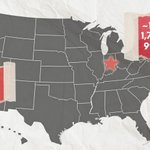
One physician group billed 1,700 health plans last year and holds contracts with 99% of them.
If its hospital accepts ~1,683 of those plans, the odds of matching every one: about 1 in 22 million. Each of the ~17 gaps becomes a compliance failure for the physician.

There's a better way. Indiana's SEA 189 bans insurer penalties tied to out-of-network clinicians and requires both sides to negotiate when disputes pile up. Bipartisan, signed in March, first in the nation.
More from IndeMed: indemed.org/the-1-in-22-mill…