

Builder & PE advisor with a bent for anthro & philosophy. AI, energy, AR/VR, and hardware.
Lisbon & SF
Joined April 2009
- Tweets1.4K
- Following1.3K
- Followers996
- Likes33.7K





The Wright brothers flew in 1903. Five years later, people still thought they were bluffing.
Then Wilbur flew around a racetrack in France. Less than two minutes in the air turned skeptics into believers.
The art of a product demo publicity stunt.

Any business that thrives on the opacity and friction associated with a particular space (eg healthcare, taxes, dark patterns, etc) is going to get wiped out by commodified AI.

Miroslav Lysyuk retweeted

after switching our approach to building a "FirmOS", I'm increasingly confident that the future of agent collaboration within organizational settings is going to be a "company operating system" or CompanyOS, designed for agent and human collaboration
instead of a "company brain" that holds everything, the OS is for storing rules, processes, decisions made, which tools to use and how. it can mirror some data, but the source of truth is often best held in your existing tools (CRM, etc.). it's continuously updated and used by your agents
i think of this as a "flipped playbook" where instead of writing down the company rules first and following them (which is kind of like waterfall development), you're constantly updating the playbook as you decide or learn new things day-to-day running the business
I think a severely under explored part of the hardware space is electronics and machinery that never need plug in charging.
Imagine a whoop style health tracker that never needed charging.
We peaked here at automatic and solar watches.
Miroslav Lysyuk retweeted
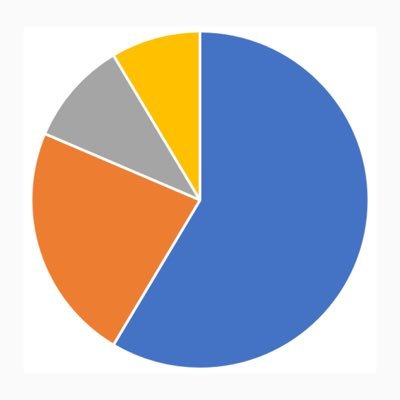
75% of the world’s food is generated from only 12 plants and 5 animal species.
TIL you can 3D print a QR code and it works!

Showtime. Ghost in the Shell is now on the streets of Lisbon. A graffiti AI project that tracks trends from a street corner for the community by the community.
A couple of optimizations: Removed the eink display since it’s redundant to using the QR code to communicate with Ghost. Now it should be able to stay alive for months before accounting for solar.
See more at ghostintheshell.art
I made this weird idea I find interesting: What if a random street corner had intelligence and memory? A year ago I built v1 of Ghost in the Shell, a self-contained AI “spirit” of a place.
Solar powered. Internet connected. Stick it somewhere and it lives there.
The first version was interesting, but it was missing something: it couldn’t actually experience the place it inhabited.
So I came back to it a year later and gave it eyes.
Every so often, it wakes up, looks around, and takes a photo. Those observations become its memories.
Scan the QR code and you can talk to the ghost of that place.
Ask it what’s changed.
What happened yesterday.
What it keeps seeing.
What’s interesting lately.
Basically: a public-facing camera you don’t watch, you talk to its memory.
First ghost hits the streets of Lisbon this week.
ghostintheshell.art
Who would have thought 10 years ago that the cold start content hurdle that kept VR from succeeding would get solved by AI decompiling the entirety of the global gaming catalogue from other consoles via a chat window ask.


Miroslav Lysyuk retweeted

it’s honestly insane how much of the modern tech tree has been unlocked because of a single guy
thanks to Elon we have
- online payments
- mass market electric cars
- batteries and grid-scale energy storage
- self driving cars and robotaxis
- humanoid robots
- advanced brain computer interfaces
- next generation tunneling
- reusable rockets
-global satellite internet
- basically the modern space industry
- Moon and Mars transportation
- orbital compute and space data centers
- frontier AI
- gigantic AI supercomputers
- physical world AI
and the wildest part is that these branches are now starting to merge
there is a very real chance that this one guy ends up being the reason humanity reaches Kardashev II
genuinely the man of the millennium
Miroslav Lysyuk retweeted

Cool eval. Simply ask an LLM “Land or Water?” and give it a latitude and longitude coordinate as text. Ask 16,200 times, plot as image. The models know. From compressing the internet.


Today’s 3D printed watch complication exploration - a flying tourbillon. This one gets about a minute of time keeping.
Really makes you appreciate the achievement that multi-day mechanical watches are.
Seeing a lot of new products trying to splinter a viable business off something that already lives as a consolidated experience on your phone. @newmatterinc @meadow_so
I suspect we’re one AI device form factor away from reversing Jobs: “an iPod, a phone, and an Internet communicator… These are not three separate devices. This is one device, and we are calling it iPhone.”

Miroslav Lysyuk retweeted

Some background:
If you’re plugged into the discourse in Silicon Valley, you’ll know that it’s currently in the grip of an obsession with words like “taste” and “beauty”.
The fintech billionaire Patrick Collison and economist Tyler Cowen recently ran an open call offering grants of up to $250,000 for people working on “new aesthetics for the 21st century.” Meanwhile the Peter Thiel-backed Praxis, which calls itself “the world’s first digital nation”, is attempting to build a physical city in Uruguay that its founder describes as a “fusion of Gothic elements and space-age futurism.”
Last summer, within the space of a month, the Trump Administration unveiled its AI Action Plan, titled “Winning the Race”, and issued an executive order stating that all new federal architecture should be built in classical and traditional styles.
I have been interested in the entanglement of progress and nostalgia, novelty and tradition, for a long time, and these developments have fascinated me. I couldn’t work out how to give that interest a tangible form, but I decided that I wanted to start by making something for the tech community that shows how their concerns are part of a much longer history of Western modernity. That desire became this film, which chronicles how these tensions have played out in architecture and design, from the mid-nineteenth century up to the present day.
I made it very quickly, in four days, with Opus and dozens of rounds of edits, but I’m quite pleased with how it turned out.

I made a film.
Every chapter of technological modernity has searched for an aesthetics adequate to its time.
Time and again, the pursuit of the new and the beautiful has involved looking back to the past.
There has never been progress without nostalgia, or novelty without tradition.
The film tells this story through the history of architecture and design, from the mid-nineteenth century to present-day Silicon Valley.