

@GoodfireAI fellow, PhD at @nlp_usc | Former predoc at @allen_ai on @ai2_aristo | Harvard 2021 CS & Linguistics
Los Angeles, CA
Joined October 2013
- Tweets170
- Following942
- Followers1.1K
- Likes735



Pinned Tweet
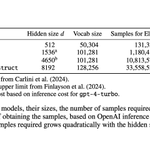
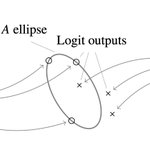
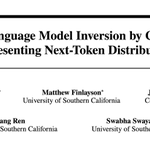
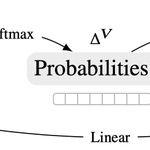
We discovered that language models leave a natural "signature" on their API outputs that's extremely hard to fake. Here's how it works 🔍
📄 arxiv.org/abs/2510.14086 1/

Matthew Finlayson retweeted

If models think in shapes, our tools should too.
Our latest research: Block-Sparse Featurizers (BSFs), a new way to find concepts in model activations - using multidimensional “blocks” instead of single directions. (1/9)

I had the honor of being the TA for this group of students and helping their class project mature into an accepted FAccT paper with mentorship from @jaspreetranjit_ and @swabhz.
TLDR; even current LLMs exhibit negative bias toward AAVE despite their extensive safety training!

📢 Language models exhibit stereotypical biases toward different English dialects. We find that, despite safety training, comparing texts across dialects side by side AMPLIFIES model bias!
Our FAccT’26 paper:
📄arxiv.org/abs/2605.24384
🔗dill-lab.github.io/dialect_b…
[1/n]

8
1,622
Matthew Finlayson retweeted

We take for granted that larger models are better than smaller ones, but why is this so? Our new paper, led by Jing Huang and @EkdeepL, traces this to a data-induced competition for resources (neurons), using formal analysis, idealized tasks, and real pretraining.

ALT Title card for a research paper. The title reads "Why Larger Models Learn More: Effects of Capacity, Interference, and Rare-Task Retention." Authors listed: Jing Huang, Daniel Wurgaft, Rachit Bansal, Laura Ruis, Naomi Saphra, David Alvarez-Melis, Andrew Lampinen, Christopher Potts, and Ekdeep Singh Lubana. A Goodfire logo appears below the names. Author affiliations: Stanford University, Kempner Institute at Harvard University, MIT, and Anthropic.
Matthew Finlayson retweeted
The most popular way to interpret AI is missing the bigger picture.
Models think in curved shapes. But sparse autoencoders (SAEs) work with straight lines.
Can they still capture models’ curved neural geometry? Yes, but not how you might think! (1/7)
Matthew Finlayson retweeted

I won't claim this is the most embarrassing social media post I made as a teenager, but it may be the most confusing

Matthew Finlayson retweeted

Given black-box access to a Transformer's output, can we efficiently recover its parameters?
We analyse the learnability of attention-based models with query access in our new work. Accepted at #ICML2026 🎉
Work done with @shahkulin98, @mhahn29 and Varun Kanade.
🧵

Matthew Finlayson retweeted

Cool work!!!
It shows that Fourier features are also used for cyclic tasks beyond computing addition (something we studied in our NeurIPS ‘24 paper, openreview.net/forum?id=i4Mu…). In our recent preprint, we tried to understand how this behavior emerge (convergent-evolution.github.…).
Matthew Finlayson retweeted
Neural networks might speak English, but they think in shapes.
Understanding their rich *neural geometry* is key to understanding how they work – and to debugging and controlling them with precision.
Starting today, we’re releasing a series of posts on this research agenda. 🧵

Headed to #ICLR2026 to present this!
Oral: Thurs 10:30 session 15 room 201c
Poster: Thurs 3:15 Pavilion 4 #4003
iclr.cc/virtual/2026/poster/…
DM me if you want to chat, especially about language model forensics. Also looking for surf buddies! 🌊🏄♂️

We discovered that language models leave a natural "signature" on their API outputs that's extremely hard to fake. Here's how it works 🔍
📄 arxiv.org/abs/2510.14086 1/
Matthew Finlayson retweeted

[1/8] New paper with Hongjian Jiang, @YanhongLi2062, Anthony Lin, @Ashish_S_AI:
📜Why Are Linear RNNs More Parallelizable?
We identify expressivity differences between linear/nonlinear RNNs and, conversely, barriers to parallelizing nonlinear RNNs 🧵👇

Matthew Finlayson retweeted

Welcome back to the Winter offering of the Stanford NLP Seminar. For our first speaker, we are thrilled to host @swabhz on Jan 22, 2026.
Title: Small Samples, Big Reveal: What can we learn from limited observations of language model behavior?
When: 01/22 Thurs 11 am PT
Zoom: stanford.zoom.us/j/939418429…
Looking forward to see you all!

Matthew Finlayson retweeted

At #NeurIPS2025! Happy as always to see old friends & make new ones. I'll be presenting Broken Tokens (spotlight🌟) on Thu + talking your ear off about open qs in tokenization.
I'm also on the job market!! I work on both pretraining & inference-time algs. Please say hi / DM! :)