








Pinned Tweet
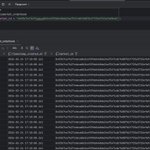
I just published a data dump of full order book data from @Polymarket
The data is maximally granular. There is no filtering whatsoever. Every order book change and trade is saved. Across all markets
Updates are hourly. Each snapshot contains ~30M rows. Snapshots are downloaded as parquet files. Each file is approx. 500MB-1GB large.
The data dump is already 2B+ rows large and growing fast. But this is just part 1/3. Coming soon is a much bigger dump that also includes @Kalshi / @opinionlabsxyz / @trylimitless etc
I started collecting this data because I noticed I couldn't get it from Dome API. Their historical order book data was filtered limiting its usefulness. Also now with the acquisition there's a lot of uncertainty about whether they will continue operating

with a year-plus of us collectively outsourcing our brains to AI - it must be extra rough now for juniors looking to get into the field - never having had the experience of being forced to use your brain to ship

Tech recruitment is the last place left where you still have to write code by hand
Did it when i job hopped six months ago and thought surely it'll have changed by now. Nope
Mates going through it now are doing live leetcode, 2 hour pair programming sessions, writing code in a Google Doc
Then you get the job and Claude writes every line
I get it tbh. If you can still write good code by hand under pressure in 2026 you're probably a solid hire
just seems weird
Retail with $IBKR OR greenhood:native accounts won't be bothered to move onchain
Volumes have slowed down quite a bit over the last few months, and retail adoption (outside of crypto natives) has been functionally nonexistent.
All of my friends outside of crypto that trade stocks don't see any compelling reasons for why they should be trading stocks onchain.
Despite that, I am still ultra bullish the future of trading being onchain, simply because it's SO SO SO much easier to launch something onchain than on traditional rails.
Consider what it takes to build a trading platform on traditional rails. You need a way for users to deposit their money onto your platform. You then custody this money and use it to buy and sell stocks (and other assets) on their behalf.
In order for you to do that, you need to be a licensed broker dealer. There are work arounds. You can, for example, use embedded brokers like Alpaca, but it comes at a cost. Ideally, like Robinhood, you want to be able to operate like a broker dealer.
But this requires licenses. For every geography you want to serve (US, EU, etc.), you need to set up a subsidiary and obtain the appropriate license. This is expensive (high capital requirements) and takes a long time. Robinhood took between one and two years to obtain each of its U.S. and EU brokerage licenses, independently.
There is also the problem is that no two licenses are the same. The EU license can enable you to offer products you can't with the US license and vice versa.
Compare this to what it looks like to build onchain. There's no need to custody user funds or handle settlement. These two things alone allow you to sidestep some of the most annoying and expensive licensing requirements, capital requirements, and intermediaries. Just look at Uniswap and Hyperliquid. Both facilitate billions in trading volume, yet neither holds a traditional brokerage or exchange license.
If you're a founder looking to build trading apps, I think the choice is obvious: you build onchain. And I think where founders go to build, demand will follow.
This is why, despite demand for tokenized stocks being lackluster at the moment, I think the future of finance being onchain is inevitable.

Understanding the eMudhra CA compromise and its risks
If you’re like me, your first reaction was, “Damn. I don't completely understand the repercussions of this and how do I protect myself?
Here's what happened
What happened is that this Indian certificate authority, eMudhra, had 8 of its CA private keys compromised. Basically their keys were created with too little randomness, making them easy to guess.
When you visit a website over HTTPS, your browser (or any other client) uses certificates issued by CAs to check that the server you're connecting is actually authorized to represent the domain.
If an authority’s signing key is compromised, an attacker can create fake certificates. If they can also intercept or redirect your connection, they can send you to a malicious server that presents what looks like valid proof of identity.
Your computer effectively gets told, “Hey, you’re visiting the legitimate website,” while you’re connected to an attacker.
So what are the risks?
The compromised certificates expose all of us to man-in-the-middle attacks. The consequences can be pretty severe. In essence an attacker can access an otherwise password-gated website and steal your data.
What to do to stay safe
The first thing to do is to make sure that every browser you use has been updated to block the eMudhra certificates. For a lot of browsers like Chrome the update should have happened automatically, but you should double check.
The bigger problem is if you're a developer you use many non-browser clients that won't automatically update their block lists.
For every program you use (Python, Go, Node, Docker, etc.), you need to make sure any clients that make HTTPS requests have been updated. Of course, you'll need to ensure that the latest version has the fix added.
It's good to keep in mind that for you to be vulnerable an attacker will still need to be able to intercept your connection. At home and using a trusted ISP this is unlikely to happen. However, if you're using public Wifi the risk is much higher.

private keys from 8 intermediate CA certs have been compromised (eMudhra)
Happy "Update everything" day to all my pager-carrying friends
emudhra.we-have-a-problem.co…

developers are bad traders
the moment we spot a pattern we think gives us an edge we want to start collecting data and run a backtest
or when researching a topic to form a thesis. during the process we spot 1000 things we could have done faster if we just had automated some of the process
instead of acting on a thesis we decide to spend 95% of our time writing code to collect data and automate our processes
so laser focused on code we end up missing the actual opportunities
to my fellow developers: don't do this
resist the urge to make things more efficient. the same advice applies as with startups: do things that dont scale first
the best trades i have made came from reading enough to understand the major trends at play. then deciding which ones i wanted exposure to and finding the few assets that best expressed them. then going in with size
blockchain data
even with llms it takes too much time it takes too much time to process it into something useful
llms are great for coding up things where feedback is fast or when the size of a problem is small enough for performance not to matter much
blockchain data is very large. for example solana in its raw form takes up more than 300tb. this takes forever to download and process. it’s also a headache to maintain
teams that want to move fast will prefer to pay for immediate access to processed data. even in the age of ai. at least for now!

i don’t think this is a thing. or if it’s a thing i don’t think this meaningfully affects founders
this is only a problem if we assume vcs are going through cold inbound decks. there is close to 0 chance this is happening
vcs only read decks of founders they are interested in
this happens because either they reach out to the founder. or the founder managed to get a warm intro
in this case vcs will hop on a call with the founder and might ask for a deck to share with partners. at this stage it makes 0 sense to run the deck through ai
the whole job of a vc is to use their judgement to evaluate opportunities. it’s super suboptimal to rely on an llm to do that for you
if vcs are actually using ai for pre screening you could argue this is actually better for founders reaching out cold. it implies greater odds of a response because cold pitches recommended by ai are now getting reviewed vs not at all before

or just focus on having traction
everything else can be done online
if you have traction it’s unlikely you’ll need to move to raise imo
and if you don’t have traction it’s better to focus on building and getting users than moving and wasting time networking with VCs that won’t be interested anyway
it’s true SF has a high concentration of VCs and it’ll be easy to meet lots of them. but it won’t matter without traction
if you have traction you'll get lots of inbound anyway
also if B2B (most of you) lots of your users will be funded themselves and will be happy to refer you to their network.
it’s so much better to get a warm intro from a company that loves your product than meeting with a VC you met cold in SF

there is an ungodly amount of time wasted signing up to new platforms and getting everything ready to start using a product
enter email, generate password, set up 2FA, enter payment information, generate API keys + usually a bunch more company specific steps to complete
i wish it could just be a single CLI command to get an account set up
i want to be able to tell my agent to just create an account and start using the damn product without me having to spend 5-15 minutes doing the set up
is someone working on this?
honestly even just a public repo of skills for browser agents to complete a sign up flow would be a godsend
Martin retweeted

Hermes shipped a desktop app earlier this month. I wanted it on my phone, so I built the iOS client
This would go hard as an open source project.
Neobank but private + full control. You can extend it however you want. I'd also be a lot more comfortable hooking up my agents to it that way
Now that we have Claude Fable please someone one shot this and do us all a favor

I felt bored and vibe-coded a neobank in a week. The best part? You don’t even realize it runs entirely on crypto rails under the hood.
Main functionalities:
- On/off-ramp fiat to stables via BridgeXYZ
- Send, receive, and request stablecoin payments on Base
- Deploy funds to selected blue-chip DeFi protocols
- Get a free Gnosis Pay crypto debit card
All of this is powered by account abstraction and non-custodial wallets.
Users receive a Privy wallet upon registration and never have to worry about signing transactions or approvals.
Transactions are sponsored and batched via EIP-7702, so no separate token approvals are required either.
In a nutshell: one-click access to stablecoin transactions sent directly to users via email, plus seamless entry into DeFi.
Tech stack:
- BridgeXYZ – on/off-ramp fiat to stables
- Privy – non-custodial wallets
- EIP-7702 – transaction batching and sponsoring
- iOS app built with React Native
- LIFI API – swapping between USDC and EURC
- Resend – email notifications
- DeFi protocols: Aave, Morpho, Compound, and YO
- Gnosis Pay API – virtual crypto debit cards
- NodeJs Backend
Inspired by @alliance's request for startups.
If you want to check it out, let me know so I can add you to TestFlight.
Martin retweeted
"Prediction markets are efficient" is one of those things everyone says and nobody checks.
We checked.
Across 2,991 prediction markets, traders overpay ~50% of the time vs. the best available price.

Big update: @opinionlabsxyz is now available in @devpmxt!
You can now use PMXT's unified API to get data and place trades on Opinion
Also PMXT is now at 1.2K+ Github stars and almost at 100K downloads

Update: The Polymarket order book data dump is now much faster!
I am getting 40 MB/s download speeds now
I decided to migrate everything to @Cloudflare R2. This was the simplest solution to scale to many users.
Cloudflare handles a lot out of the box. I don't have to worry about how to manage bandwidth. The other nice thing about R2 is that it charges per request and not per GB of egress.
Thanks to @beckerrjon as well as @mihiir for initially suggesting it
We are still planning on using RustFS for even faster downloads. Up to 1.25GB/s. But these will be dedicated servers.
We are also planning on providing dedicated @ClickHouseDB servers. A lot of people just wanna be able to fetch data on a specific market. And this would make that easy

I didn’t expect this to blow up so much
Clearly, there’s a lot of demand for this type of data and I now need to scale up the backend
We got a few people reaching out, offering to help host data. This is super welcome!
If anyone else wants to help out we can add you as a sponsor to our website and give you a back link to drive traffic to you
Feel free to DM me or drop a message in the @devpmxt Discord
Right now, the first step for us is to improve the current set up
The current set up is not able to handle the load and yesterday it was crashing a lot, and even now the downloads are quite slow
The plan is to migrate the data to @RustFSofficial and upgrade the server NIC. Those two change should help us handle 5-10X more downloads
I didn’t expect this to blow up so much
Clearly, there’s a lot of demand for this type of data and I now need to scale up the backend
We got a few people reaching out, offering to help host data. This is super welcome!
If anyone else wants to help out we can add you as a sponsor to our website and give you a back link to drive traffic to you
Feel free to DM me or drop a message in the @devpmxt Discord
Right now, the first step for us is to improve the current set up
The current set up is not able to handle the load and yesterday it was crashing a lot, and even now the downloads are quite slow
The plan is to migrate the data to @RustFSofficial and upgrade the server NIC. Those two change should help us handle 5-10X more downloads
I just published a data dump of full order book data from @Polymarket
The data is maximally granular. There is no filtering whatsoever. Every order book change and trade is saved. Across all markets
Updates are hourly. Each snapshot contains ~30M rows. Snapshots are downloaded as parquet files. Each file is approx. 500MB-1GB large.
The data dump is already 2B+ rows large and growing fast. But this is just part 1/3. Coming soon is a much bigger dump that also includes @Kalshi / @opinionlabsxyz / @trylimitless etc
I started collecting this data because I noticed I couldn't get it from Dome API. Their historical order book data was filtered limiting its usefulness. Also now with the acquisition there's a lot of uncertainty about whether they will continue operating