
Promoting homeownership. Defending private property and our other inalienable rights and freedoms, especially free speech. The views expressed here are mine.
North Carolina, USA
Joined March 2009
- Tweets2.3K
- Following719
- Followers427
- Likes5.5K


“Freedom from want must not be purchased by freedom from freedom" - Soon to be Beatified Bishop Fulton Sheen

“The basic struggle today,” wrote Sheen, “involves above all else whether man shall exist for the state, or the state for man.”
My latest: Fulton Sheen’s Message Shines On wsj.com/opinion/free-express… via @WSJFreeEx

Mark Zimmerman retweeted

We agree! Last year we recommended @UNC require a similar statement on all syllabi. Too many students self-censor. They need to be encouraged to speak out & feel confident they can do so without reprisal. In every class.

With the new academic year approaching, I encourage professors who teach on controversial matters to include on their syllabi a statement like the one I include on mine:
"As set forth in Rights, Rules, Responsibilities section 1.1.3, Princeton University strictly respects the right to free speech of everyone in our community of scholars and learners. That right is sacrosanct in this class and is possessed by faculty and students alike. With the aim of advancing and deepening everyone’s understanding of the issues addressed in the course, students are urged to speak their minds, explore ideas and arguments, play devil’s advocate, and engage in civil but robust discussions. There is no thought or language policing. We expect students to do business in the proper currency of intellectual discourse—a currency consisting of reasons, evidence, and arguments—but no ideas or positions are out of bounds."
Mark Zimmerman retweeted

The more comprehensive statement from my course website:
Welcome to our course. The precepting team and I look forward to exploring with you the broad range of principles, issues, and arguments that are its substance.
Precepts are longer than is typical in Princeton courses: 1 hour and 50 minutes. This will enable us to dig deeply into the complex and difficult issues we will be addressing. Precept participation is important. Please be an active participant in the discussions.
Please don't be reluctant to speak your mind in precept! Even if you hold an unpopular view, please be willing to share and defend it. Also, please be willing to be "devil's advocate" on behalf of views that you do not hold or aren't sure whether you should hold. By robustly defending a controversial position to see whether, in the end, it can be successfully defended, or how far it can be defended, you will be doing all of us in the course a service.
On freedom of speech in our discussions, please see the statement on the syllabus, referencing the University's free speech policies set forth in Rights, Rules, Responsibilities. Princeton students and faculty enjoy the broadest possible free speech protections in all courses and other university activities, but surely free speech should be especially sacrosanct in a course on the Constitution and the rights and liberties it enshrines. At the same time, we value civility--but that does not mean or require that anyone hold or decline to hold any particular view, or that one submit to anyone else's ideas about the language in which issues are to be framed, the terms in which they are to be discussed, or the assumptions on which the discussion will proceed. What it does mean and require is that we all do business in the proper currency of intellectual discourse--a currency consisting of evidence, reasons, and arguments.
Some of the issues we will be discussing are not only controversial, but also sensitive and, to some people, personal. We nevertheless need to discuss them frankly. As Dean Jill Dolan says, we need to be "resilient and brave" in discussing matters that engage our emotions. One thing I can guarantee is this: Whatever your political, moral, religious, and other opinions happen to be, you will encounter in our readings and discussions challenges to them. You may even be offended or scandalized by what some authors or some participants in the course believe and say. Please bear in mind that, as Cornel West has stated, "the very point of a liberal arts education is to disturb and unsettle us."
I have deliberately chosen readings representing radically opposed positions on the issues we explore. There is not an official position in the course about who is right and who is wrong about anything. All positions and points of view, no matter how radical or even unjust or immoral they may seem to people who oppose them, are on the table for discussion, scrutiny, and assessment on equal terms. There is no orthodoxy in the course; there are no dogmas. There is no censorship or policing of thought. I hope there will be no self-censorship.
My philosophy of teaching is straightforward and rather simple: My job is not to tell students what to think or induce or encourage them to think as I do; it is, rather, to help students to think more deeply, more critically, and for themselves. What I ask of students is open-mindedness, tolerance of those whose opinions differ from yours, a willingness not only to challenge others but to be challenged in turn, and a genuine and deep desire to learn--and to learn by seriously engaging authors and fellow students whose ideas differ, even radically differ, from your own.
There is never a bad time to study and think hard about the meaning of the Constitution and its guarantees; but this is an especially good time--indeed, an exciting time. We are in the midst of massive national disagreements about issues having to do with the separation of powers, federalism, freedom of speech, the free exercise of religion, due process of law, the equal protection of the law, and more. In my opinion, though it need not be yours, some of these disagreements do not admit of obvious or straightforward answers, no matter how deeply certain partisans on the competing sides are of the righteousness of their causes. In any case, I hope that our deliberations together will enable us all to be better, more constructive participants in the debates, no matter where we come down in them.
Mark Zimmerman retweeted
With the new academic year approaching, I encourage professors who teach on controversial matters to include on their syllabi a statement like the one I include on mine:
"As set forth in Rights, Rules, Responsibilities section 1.1.3, Princeton University strictly respects the right to free speech of everyone in our community of scholars and learners. That right is sacrosanct in this class and is possessed by faculty and students alike. With the aim of advancing and deepening everyone’s understanding of the issues addressed in the course, students are urged to speak their minds, explore ideas and arguments, play devil’s advocate, and engage in civil but robust discussions. There is no thought or language policing. We expect students to do business in the proper currency of intellectual discourse—a currency consisting of reasons, evidence, and arguments—but no ideas or positions are out of bounds."
Mark Zimmerman retweeted
Many thanks to Senior Political Correspondent @ByronYork who enlightened our Annual Dinner audience last night with insights into the events of the day. This is our 5th Anniversary and we stay as involved and relevant as ever focused on our mission to promote and defend free speech, academic freedom, and viewpoint diversity at UNC-Chapel Hill.


Mark Zimmerman retweeted
UNC retreats from statement that violated its free speech and institutional neutrality policies
Earlier this week, UNC AFSA condemned a statement released last week by Senior Vice President James Orr regarding several campus April Fools communications. (Read our statement here.) We joined other free speech supporting organizations, most notably the Foundation for Individual Rights and Expression (@TheFIREorg ), in calling for the University to retract Orr’s statement and reaffirm its support for student free expression.
Yesterday, UNC did just that.
In an update to the student affairs website, the University declared its commitment “to upholding the First Amendment rights of our students and student groups to engage in free expression.” It confirmed that it “is not investigating any student or student group” and explained that it “in no way intended to chill free speech on our campus.” The university then reiterated that “We support the First Amendment rights of all students and student groups to exercise those rights unburdened by the University. As a public university, we will both uphold the core principle of free speech and care for our community at the same time.”
The University now needs to post its update to its social media platforms and email the update to the University listserv to ensure all students and faculty receive the message. The original statement carried the full weight and visibility of the administration. A quiet website update will do little to mitigate the chilling effect the University created.
Nonetheless, we applaud the administration for heeding the calls for retraction. This is a good first step in reestablishing an environment in which students feel free to express their opinions.
We would have liked to see the University go on to apologize to the students whose speech they had castigated. In the wake of the University’s original statement, those students reportedly have received multiple death threats and may be facing career repercussions. There is a lesson there: when emotions run high about controversial subjects, the administration’s role is to act as a calming influence. It certainly should not inflame the situation.
Thank you to Chancellor Roberts and others who are working to realign the University with its model policies protecting the free speech of students and faculty and restraining the administration from inserting itself into the campus debate. We hope this mistake will be addressed with concrete steps to avoid a recurrence.
UNC AFSA’s mission is straightforward: To promote and defend free speech, academic freedom, and viewpoint diversity at UNC-Chapel Hill. We will continue to be vigilant in pursuing those principles.
Happy 250th anniversary of Adam Smith's monumental Wealth of Nations. As relevant today as it was then.

Mark Zimmerman retweeted
In case you missed John Tomasi of @HdxAcademy and Jay Greene of @Heritage debate whether federal pressure is needed to reform universities, don't fret. You can watch it here. Such a lively discussion that's sure to make you think. Thanks to all. youtube.com/watch?v=YonzSSeA…
Mark Zimmerman retweeted
On today's date in 1789, North Carolina became one of the last states to ratify the US Constitution. The delay was due to the state's insistence that the constitution be amended to include a Bill of Rights. That refusal prompted Congress to pass the first ten amendments and Carolina signed on.

Mark Zimmerman retweeted
We're excited about our next event on Nov 4. Jay Greene from Heritage and John Tomasi from Heterodox debate whether university reform needs federal pressure or not. If you're near Chapel Hill, join us. @jaypgreene @Heritage @HdxAcademy @afsaalumni @freespeechreset Register at uncafsa.org


Mark Zimmerman retweeted
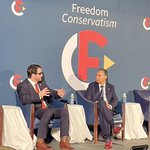
A tale of two campuses. Ilya just spoke at our event at UNC in Chapel Hill where the audience was attentive, respectful and full of questions for him after he delivered his remarks. Tarheel tolerance and civil discourse prevailed. The irony is his message needs to be heard most by those who don't want to give him the stage.
This quoted post is unavailable.
Mark Zimmerman retweeted

Our team at @UNCAFSA continues to do great work on campus at @UNC. Kudos to Mark Zimmerman (@markrzim) and Hunter Klosty, who are both quoted in the @dailytarheel piece below on their work to bring heterodox perspectives to Chapel Hill!

dailytarheel.com/article/202… Thanks to the Daily Tar Heel for its coverage of our event co-sponsored with the UNC Student Free Speech Alliance Monday night in which Ilya Shapiro spoke on the topic From Cancel Culture to Free Speech Culture, Reforming America's Universities and Law Schools. The DTH is a storied independent student run newspaper. #freespeech #freepress @ishapiro @FreeConTalk #freespeechreset

Mark Zimmerman retweeted

In October 2024, I attended a UNC Chapel Hill @UNC event featuring Charlie Kirk @charliekirk11 and @VivekGRamaswamy, alongside then-Trustee (now State Auditor) Dave Boliek @NCAuditorBoliek and NC Senator Amy Galey @amyscottgaley. The program was organized by the @TPUSA_UNC Turning Point @TPUSA USA UNC Chapel Hill student chapter.
What struck me most was the tone. Charlie set the ground rules before Q&A, noting that while the audience was “a center-right, predominantly conservative” crowd, all voices would be heard and respected.
He said:
“Do not interrupt, do not boo. If somebody says something you disagree with, please show respect to people that might have different views.”
That call for civility was honored throughout the evening. Students asked tough and often controversial questions — about housing affordability, higher-ed costs, the Electoral College, free speech, foreign policy, immigration, even Trump University and AIPAC. Both speakers answered in real time. It was not a monologue; it was a dialogue.
Charlie reminded the audience of the American system:
“We’re first and foremost a collection of states. The states created the federal government… and today seven very diverse states determine the future of America, not just LA and New York.”
On morals and family life, he was clear:
“Children are a blessing from the Lord. Not an inconvenience.”
Vivek tied the night back to civic life in a way that resonates with UNC’s School of Civic Life and Leadership:
“If we’re going to require immigrants to pass a civics test and swear an oath of allegiance, then it makes sense for every high school senior to be able to pass the same civics test… replacing DEI indoctrination with actual civic education.”
He added:
“The least we could do is demand some skin in the game — that we know the basics about our country before somebody graduates from high school.”
The event reflected something deeper: the founding of the United States itself, forged through vigorous debate, moral conviction, and a shared commitment to civic principles. Our students showed that they can disagree, push back, and challenge ideas without losing their composure or the dignity of the conversation.
Whatever one’s politics, Charlie Kirk’s emphasis on courage, respect, and the American promise is worth carrying forward. UNC should always be a place where ideas are debated vigorously but respectfully, and where civic knowledge is treated as essential to leadership.


Mark Zimmerman retweeted

In memory of Charlie, I urge every major American university, especially the Ivy League and New England’s small liberal arts colleges, to invite conservative speakers to their campuses and to welcome them. Academia cannot be a no go zone for conservatives. Charlie would welcome this.
It will help heal the country if the liberal left that dominates colleges actively reaches out and peacefully welcomes the right.
Charlie Kirk was an apostle for what makes America great. He is now a martyr.
Eternal rest grant unto him, O Lord, and let perpetual light shine upon him.
May he rest in peace. Amen.
Mark Zimmerman retweeted

The third line below is the percentage of college students who won’t rule out violence as an acceptable means to stop someone from speaking.
A third of students. That’s insane.

Mark Zimmerman retweeted
The Board of Directors of UNC AFSA expresses its deepest sympathy to the family and friends of Charlie Kirk, who was the victim of a brutal assassination at Utah Valley University today. At the time of the shooting, Charlie was participating in the epitome of democracy. He was engaging in civil discourse over the issues of the day, inviting all questioners to “prove him wrong.” UNC AFSA unequivocally condemns the use of violence and intimidation to stifle free speech. Charlie was a loving husband and the father of two young children. We are praying for them during this time of unspeakable grief.