
Contributing Faculty Member, Mount Saint Joseph University, Reading Science Doctoral Program. President, The Reading League PA. Passionate advocate for the SOR
Joined March 2009
- Tweets7.6K
- Following1.3K
- Followers16.7K
- Likes13K




Pinned Tweet
“Due to the fact that there are many ways a child can fall through the cracks,this makes the first 3 years of school the most important in the child’s life. It also means the K, 1st& 2nd grade teachers are the most important teachers in the entire system.”Mc Guinness,1997, p.211.
Pam Kastner retweeted

So, Siegfried “Zig” Engelmann gets the notion that all children are capable of learning if they’re taught correctly. He then goes on to prove his theory with children whom others had lowered their expectations for because of the children’s background and socioeconomic status.
Engelmann demonstrated that clear, consistent teaching was the key to student learning, regardless of students’ background, race, or gender. That didn’t sit well with the progressive education community. It shatters their argument that, in order to teach “disadvantaged students”, schools must first meet all of their basic physical and emotional needs.
For decades, schools have lowered academic expectations and invested billions of dollars in everything from universal free breakfast and lunch to social emotional learning (SEL) to in-school laundry service. All of these programs were created to help students learn better. They didn’t.
I’m not saying Direct Instruction is perfect, but I’m willing to bet that if districts like mine with almost 100,000 students and a budget of nearly $2 billion had invested in DI instead of SEL, 62% of the students wouldn’t be scoring below proficient in reading right now.
Maybe season 2 of Sold A Story will convince district leaders to reconsider their priorities and how they spend their money.
Only one chapter into, Becoming an Expert Teacher: Deliberate Practice for Effective Teaching,by Nidhi Sachdeva and Paul Kirschner, and its dog eared and annotated all over!


Pam Kastner retweeted

Episode 1 of Sold a Story, Season 2: apmreports.org/episode/2026/…
It's Not Just Reading

It's LIVE! Sold a Story Season 2 is now LIVE!
Season 2, Episode 1: It’s Not Just Reading
apmreports.org/episode/2026/…
Pam Kastner retweeted
The new season of Sold a Story is coming tomorrow. I've seen speculation about it. I think there will be some surprises. I'm interested to know what you think.
First two episodes tomorrow. Then one a week on Thursdays until Nov 19. features.apmreports.org/sold…

Thank you to the PA Literacy Coalition for creating and offering these incredible resources about literacy legislation in PA, Act 47, with resources that inform (Act 47 At A Glance) and offer a checklist for Act 47 Implementation.
If you have not joined the PA Literacy Coalition, here is your opportunity! Join over 90 (yes 90!) organizations from throughout PA who have joined together to advance the right ALL have to be literate in Pennsylvania!
Access these substantive resources here: paliteracy.org/data-and-reso… and join the PA Literacy Coalition, here: paliteracy.org/
Thank @TeachPlusPA and Rachel Garnick for your steadfast leadership!!! @paliteracy


Pam Kastner retweeted

Every class has what I’ve termed “SWANs” - Students With Additional Needs. Sometimes those needs are known and identified, sometimes they’re not. But there’s huge hidden alignment between trauma-informed teaching and learning science/cognitive load theory; hence many of these students’ attentional and self-regulation needs will be at least partially addressed via high quality explicit teaching in calm, predictable environments with strong classroom routines.
share.google/Qaqvb0DzuGIxjiv…

If your school’s behaviour management policy requires you to
a) Be a child psychologist
b) Stop everything to focus constantly on one child out of thirty
c) Be telepathically intuitive and magically persuasive
d) Accept rude or unsafe behaviour
e) Stop and think hard about the exact, complex next step…
Then it’s not a behaviour policy, but a misbehaviour policy, because it creates an environment where misbehaviour is more likely. It’s also a quit-switch for staff who are human beings, not sorcerers.
Pam Kastner retweeted

I'm not breaking the embargo on the episodes I've been invited to review to say it's not what I expected, and will challenge education orthodoxy far beyond the first series.
Brace yourselves.

A new season of Sold a Story is coming one week from today. Thanks for the opportunity to talk about it @alexanderrusso
Pam Kastner retweeted

For those that didn't see it over the summer ⬇️⬇️⬇️


Looking forward to reading another Adam Grant book!


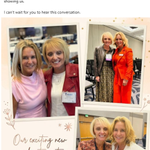
What an honor to conduct a Keynote 🔑 address today to launch the Show-Me Science of Reading and Math Conference and follow it with a breakout session, in Columbia, Missouri!
Dedicated educators from over 21 states joined this 4th annual exceptional literacy and now also math conference!
It also allowed me to spend some more time with dear friend, and the one and only, Dr. Anita Archer!
I had time to say a quick hello to the brilliant Dr. Valentina Contesse, and dinner last evening with the conference leaders, Dr. Jill Dunlap Brown and Dr. Erica Lembke , Dr. Archer and fellow presenter Dr. Matt Burns as well as other literary leaders in Columbia was a special night!
This two day conference is jam packed with national and state literacy leaders as well the expertise of researchers, professors, and practicing teachers.
A do-not-miss conference! What an honor to have been a small part of its success in making a difference!


More photos to come from an amazing The Reading League National Conference last week in Chicago, but I am beginning with the great honor of presenting once again at this incredible, impactful conference.
What a difference The Reading League makes in countless lives, mine included!
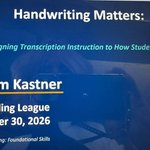
Handwriting Matters and I was so honored to present this session sharing this message and resources to translate research-to-practice.To those who attended my session, THANK YOU!


Pam Kastner retweeted

Want to learn how to intensify reading interventions? I discuss it on this episode of Not Your Average School Psychologist Podcast at open.spotify.com/episode/0Pu…
@TheNCII @UFLiteracy @Devereux_Natl @CECMembership @reading_league @nasponline @FLschpsychs @ILAToday @mtssassociation
Pam Kastner retweeted

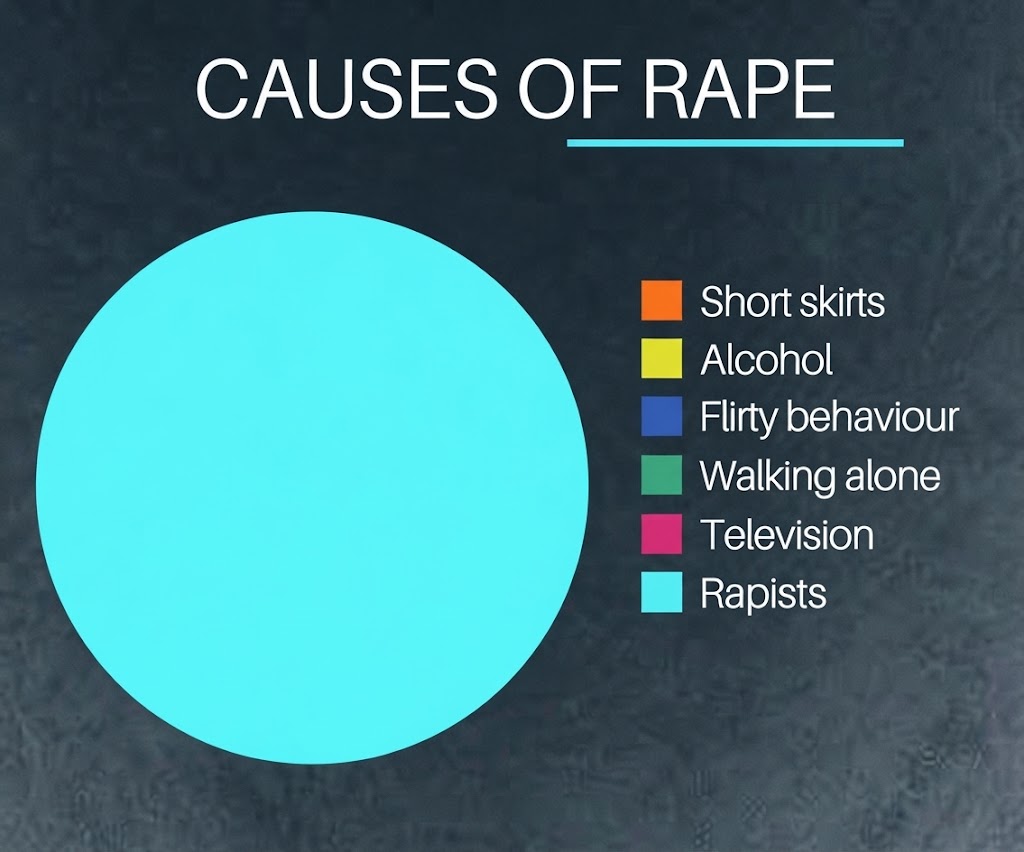
The reports about the events at Cornell—and the lack of accountability for the perpetrators—are sickening. So is the victim blaming in response.
Victim blaming: “If you don’t want to be raped, don’t go to a frat party.”
Responsibility: Don’t. Rape. Women.
The right focus is not on teaching girls and women to avoid harm. It’s on raising boys and men who don’t commit it in the first place.
Pam Kastner retweeted

Every year I take a picture of the spine of each book read in my class. I usually clumped the books together in a classroom chart. This year students are putting the books that they have read on their individual lockers. It also serves as an easy visual to see at a quick glance what each student is reading.

Pam Kastner retweeted

The September/October issue of The Reading League Journal is here! 📬
Read Dr. Julie Van Dyke's sneak peek article on why syntax is the brain's core scaffolding for reading comprehension & how to build it without losing reading time.
🔗: bit.ly/4yV5Wyj

ALT Cover image of "The Reading League Journal" with the title "Language Science and Syntax: Guiding the Next Generation of Reading Instruction" by Julie A. Van Dyke. Features a sneak peek article, two journal pages, and a note indicating the September/October issue availability.
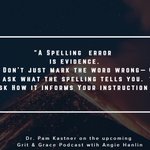
What an honor it was for me to join you for this podcast,@AngieHanlin !
You are such an inspiring literacy leader who makes an immeasurable impact on literacy outcomes throughout our nation. How lucky I am to call you a dear friend and to engage in such a rich dialogue about literacy and one of my literacy obsessions- SPELLING!
Watch on Youtube here: youtube.com/watch?v=wVuLrILk…
Listen on Spotify here: open.spotify.com/episode/2TG…


Pam Kastner retweeted
New study - kids are probably need more phonics if they don't read at least 85% of words correctly in 1st grade, 93% in 2nd grade, and 94% in 3rd grade. @HollyLanePhD @ValContessePhD
researchgate.net/publication…
@CECMembership @UFLiteracy @reading_league @ReadingForum_Ed @nasponline

Pam Kastner retweeted

One of the biggest mistakes in math education has been the move away from practice and memorization. We're told memorization works against understanding. It's usually the opposite.
The more foundational knowledge students can retrieve automatically, the more working memory they have available to think about complex mathematics.