

LifeHack: Your 24/7 AI Life Coach 🎯 Helping busy people achieve goals faster with actionable systems that multiply results. FREE assessment below ⬇️
Joined September 2007
- Tweets34.4K
- Following1
- Followers95K
- Likes165




A workplace perk is useful only if it gives you back time, money, or energy. Free snacks don't offset late-night messages. Team outings don't replace a real lunch break. When judging a job, look past the perk list. Ask what an ordinary Tuesday will cost you.
Before you call a friendship one-sided, check whether effort or capacity changed. A new baby, caregiving, or a brutal work month can silence someone who still cares. If you have more room, make the next plan. Keep score over years, not weeks.
Playing it cool has a hidden cost: people can't tell what matters to you. When a colleague brings a sharp idea or your partner makes an ordinary day better, say so plainly. Specific enthusiasm gives other people something to build on.
Most days of rebuilding feel flat.
You took the walk, made the call, cooked instead of ordering in. By bedtime, nothing looked different.

ALT Approved LifeHack graphic
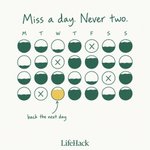
Most routines don't end on the day you miss. They end on the day after.
One skipped workout is a blip. Two in a row starts to feel like the new normal, and a week later the routine is something you used to do.

ALT Approved LifeHack graphic
Don't organize the same information twice.
If your notes keep becoming a junk drawer, give recurring details fixed fields: project, owner, next action, due date. Capture them once in a template you can sort, instead of cleaning another document later.
End every difficult project with a note to your future self: what changed the outcome, what you missed, and what you'd repeat.
Don't just finish the work. Save the lesson while the details are still clear. Next time, you'll have a useful starting point instead of a vague memory.
A balanced life can look unbalanced on Tuesday.
Some days work gets the best hours. Some days family does. The trap is demanding full marks in every part of life before bed.
Choose two priorities today. Keep the rest at maintenance. Review the mix at week's end.
Learning a new skill costs more than the course fee. It needs a place in your week.
Before you pay, find three hours you can repeat and decide what you'll stop doing to protect them. If the time has no home, the course may become another unopened tab.
Burnout usually looks like too much. Long weeks, a short fuse, nothing left by Thursday.
A second kind is easier to miss. The work stopped asking much of you a while ago. You're not drained. You're unused. And it can feel just as heavy.

ALT Approved LifeHack graphic