

The rank-and-click era is ending. I write about what replaces it. | Director of SEO @bluehost @yoast @hostgator | AEO + Vector based growth
Toronto, Ontario
Joined July 2009
- Tweets10.1K
- Following3K
- Followers3.9K
- Likes11.1K





Krinal Mehta retweeted

AI didn't kill content marketing. Lazy marketers did 🤷
AI just gave them the ability to flood the internet with mediocre content at scale.
More articles. Less thinking. Zero differentiation.
Have we become so obsessed with publishing that we've forgotten why anyone should read our content?
Know more on today's #SEOTalk Spaces, live in just over couple of hours.
Join our hosts @parthsuba77, @MalharBarai live and share your thoughts


On #SEOTalk this week:
Did AI Kill Content Marketing, or Did We?
We chased keywords, traffic, and publishing volume. AI just made it easier to produce more of the same.
Is AI the problem, or is our content strategy broken?
Join the conversation with our hosts @parthsuba77, @MalharBarai, @sksahin03, @ShwetaUk05 today and share your thoughts
Live at 9:30PM India time
xitter.cf/i/spaces/1XxygwDMmykGM
Krinal Mehta retweeted
Most brands are still treating distribution like it’s 2023.
But AI Search is pulling signals from a much wider ecosystem.
If your brand isn’t showing up where the conversations, citations and recommendations happen, your content may exist without really travelling.
We learn more about it later today on #SEOTalk Spaces along with our hosts @parthsuba77, @MalharBarai at 9:30PM

I just cleared 20 years of inbox anxiety in a single weekend. 217,000 emails going back to 2005 — sorted, archived, and cleaned without me lifting a finger. Here's how 🧵
If your inbox is also a 20-year time capsule, stop scrolling and start delegating. @Muse
This is what people miss about AI agents: it's not a chatbot that tells you HOW to clean your inbox. It's a coworker that actually DOES it — with your approval gates, on a schedule, while you sleep.
The old me would have spent YEARS on this. The realistic me would have rage-deleted everything and lost something important. Instead I handed it to @Muse — an AI agent with its own computer — and said "handle it."
Once you figure out building agents that legit deliver high quality work, the question quickly becomes how do you optimize for costs?
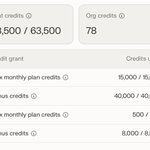
Tested Perplexity Computer, Grokbot, both are good/have their own pros and cons. Ran out of computer max plan credits.
Any resources ?

Musk trained Grok with their models?

We’re ending our partnership with Cursor following its acquisition by SpaceX. Under our proposal, Cursor’s direct access to our models would end on November 12.
We know that the people most affected by this decision are the developers who rely on OpenAI models in Cursor. We care about their experience in this transition and we’re ready to go above and beyond to support them.
openai.com/index/our-decisio…

Krinal Mehta retweeted
AI Watermarking is talk of the town and SEOs can't ignore this chatter.
But should it really become part of your SEO Strategy?
We talk about this and much more on today's #SEOTalk Spaces live at 9:30PM
Do join our hosts @parthsuba77, @MalharBarai, @sksahin03, @ShwetaUk05
xitter.cf/i/spaces/1qxoNYbbLAkJv



Krinal Mehta retweeted
Less than 2 hours to go.
Most SaaS AI search audits stop at the website.
But AI recommendations are also shaped by reviews, comparison pages, communities, citations and third-party mentions.
Join our hosts @parthsuba77, @MalharBarai for an exciting conversation
SaaS AI Search Audit: Why Your Own Site Isn’t Enough?
#SEOTalk Spaces

On #SEOTalk Ep. 139 today:
SaaS AI Search Audit: Why Your Own Site Isn’t Enough?
Because your SaaS website may be perfectly optimized but is AI finding enough evidence beyond it to trust, cite and recommend your brand?
Join us as we look beyond traditional SEO audits along with our hosts @parthsuba77, @MalharBarai, @sksahin03, @ShwetaUk05
Live at 9:30PM India time on:
xitter.cf/i/spaces/1yGBeegWPeLKN
Krinal Mehta retweeted
Bloggers were taught to write for rankings.
Now AI Search is forcing a different question:
Is your content actually useful, original and worth citing?
This week on #SEOTalk, we examine which old SEO habits need to stay and which ones need to go
Join our host @parthsuba77, @MalharBarai at 9:30PM today and share your thoughts

What if the SEO rules that once helped bloggers rank are now making their content invisible in AI Search?
This week on #SEOTalk Spaces Ep. 138:
Are Old SEO Rules Killing Bloggers in AI Search?
Join us as we challenge what still works, what needs to change, and what bloggers should do next.
Share your thoughts with our hosts @parthsuba77, @MalharBarai, @sksahin03, @ShwetaUk05 at 9:30PM India time
xitter.cf/i/spaces/1qKVmmPevZMxB
Not picking a single lane is resonating the most in what I have been experiencing at work over the last 6 months or so

My biggest takeaways from @Netflix's Chief Product and Technology Officer Elizabeth Stone:
1. Elizabeth believes that “systems thinking” is becoming the most important skill in the AI era. In engineering and product, this means people who can see across business domains and build the common capabilities that let many teams move quickly. In design, it means experience designers who create templates and design systems so that non-designers can ship work that stays coherent and on-brand. The underlying driver is velocity: when more people are doing more types of work at higher speed, you need to be good at building common scaffolding.
2. Systems thinking is learnable: zoom out one level from your specific problem. Given a task, step back one click—what bigger problem does this serve the business, will it scale across the product surface areas, should it become a platform capability? The companion habit: do your job in a way that helps your manager do theirs. This will force you to think about how all the pieces fit together.
3. Expect a storming phase before a forming phase. The role confusion people feel right now (“What is my job anymore?”) is the predictable middle of any transformative technology. Elizabeth’s advice: focus on high-quality source-of-truth data, guardrails on what ships, and constant internal reinforcement that humans own what they create.
4. The top AI labs converged on Netflix’s culture. High agency, high talent density, top-of-market pay, bottom-up thinking, fast experiments—the traits Lenny hears constantly from AI labs were in Netflix’s early culture deck. Elizabeth’s explanation: excellence comes from hiring exceptional people, trusting them to do great work, and holding them accountable.
5. Netflix’s culture is centered around building “excellence as an operating system.” High talent density, radical transparency, context not control, and the keeper’s test. These work together to create an environment of trust and accountability, without bureaucracy. But it’s also uncomfortable. It requires tolerating people making decisions you’d make differently, resisting the reflex to add process when things go wrong, and letting people carry the weight of their own choices. Elizabeth describes the hardest part as “being comfortable in that discomfort.”
6. The keeper’s test is as much about recognizing great people as it is about removing the wrong ones. The test—“If this person told me they were leaving, would I fight to keep them?”—is often cited in its difficult form: the moment you realize someone isn’t the right fit. But Elizabeth uses it predominantly as an entry point for honest performance conversations that are deeply positive. Most of the time the answer is “I would fight so hard to keep you,” which creates the opening to articulate strengths, discuss impact, and name what’s working. Good feedback hygiene needs a forcing function; the keeper’s test provides one.
7. Specialization is trending down—adaptable generalists are trending up. We’re shifting away from narrow stack-layer specialists (pure frontend, pure backend) toward people who can navigate fluidly across layers. The same logic applies to business domain knowledge: the mindset of “I’m a payments expert, full stop” is less valuable than “I know payments well enough and I’m willing to imagine what the future version of this looks like.” The meta-skill is learning to learn, not locking into a single lane.
8. Netflix’s approach to AI fluency is a universal principle, not a level-specific expectation. Rather than rewriting career ladders to specify what AI competence looks like at each level, Netflix added a single aspiration across all roles and levels: AI fluency. What fluency means varies by function and seniority, but the non-negotiable minimum is the same everywhere—an open-minded, experimental mindset, genuine curiosity, and comfort with ambiguity.