

Environmental and Digital Engineer. Data Scientist and technology enthusiast. Slaying Moloch
Joined June 2020
- Tweets1K
- Following1.8K
- Followers115
- Likes24.7K







Gottlieb Freudenreich 🦇🔊 | 🔴 retweeted

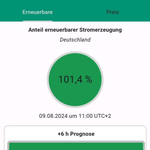
Das Desaster war vollkommen absehbar, danke CDU.
In 16 Jahren nichtmal 20% der selbstgesteckten Ziele beim Netzausbau erreicht.
Jetzt bekommt Deutschland die Quittung für das eklatante Versagen der Union.

Gottlieb Freudenreich 🦇🔊 | 🔴 retweeted
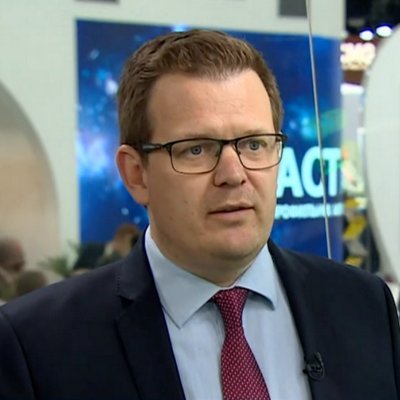
12 years ago, before all critical debate was smeared and censored as "Russian propaganda"

Gottlieb Freudenreich 🦇🔊 | 🔴 retweeted

Fact: ALL the metals and minerals the energy transition needs between now and 2050 weigh less than the coal the world mines in ONE single year

Gottlieb Freudenreich 🦇🔊 | 🔴 retweeted

EU gas is above €90/MWh, its highest since Dec 2022. Brent is above $115, its highest since June 2022.
The EU has already paid €100bn+ extra for oil and gas since Hormuz closed. Not one extra molecule.
Best defence: electrify.
janrosenow.substack.com/p/eu…

Gottlieb Freudenreich 🦇🔊 | 🔴 retweeted
What most people don't know: when you fill up a petrol car most of the energy never moves it.
Petrol car: 13–21% of the crude oil's energy reaches wheels.
Electric car on today's UK grid: 43–45%.
Electric car on wind+solar: 77–80%.

Gottlieb Freudenreich 🦇🔊 | 🔴 retweeted

I made a visualization of EIP-8288 aka "recursive mempool aggregation," my new favorite EIP of all time because it perfectly encapsulates the thesis of the "cryptographic world computer" -- a system whose scalability *increases*, not decreases, with the level of decentralization.
In a previous tweet I explained how EIP-8288 achieved this seemingly impossible feat, but one gif is worth a thousand words.
Essentially, EIP-8288 leverages Ethereum's decentralized mempool as a parallel ZK proving cluster. Clients send signatures and proofs to the mempool, which over multiple rounds progressively aggregate them into fewer and fewer proofs, until the block builder finally aggregates them into one SINGLE proof.
This design accomplishes five things at once:
- The more nodes we add to the decentralized mempool, the more signatures/proofs Ethereum can process as a whole. This is obvious if you look at the animation and imagine more nodes in the mempool ring, which would "fan out" to more signatures/proofs.
- By aggregating over multiple rounds (aka "recursive aggregation"), the bandwidth consumed by proofs remains constant for each node even as the network processes more proofs. As a result, the network stays decentralized even as capacity increases.
- By aggregating proofs before one final aggregation by the builder, as opposed to requiring the builder to aggregate everything, the network can process more proofs without increasing hardware requirements for the builder.
- By aggregating everything to a single block-level proof, validators can verify thousands of signatures/proofs by checking just one aggregated proof. Hardware requirements for validators can therefore stay low, keeping the network decentralized.
- By aggregating not just native signatures but also STARKs, Ethereum can support any signature scheme by wrapping them in STARKs.
So once again, this is how Ethereum will:
- scale to process tens of thousands of PQ and private transactions per second
- charge a tiny amount of gas to validate each txn, even though the original signature/proof may be huge (up to hundreds of KBs in size)
- all while decentralizing even MORE.
You are not bullish enough.

Ultimately, precompiles and EVM are both the wrong place to put most cryptography support into Ethereum. The reason is that precompiles and EVM both operate on data that has to be included into the ethereum chain somehow, which realistically means included in a block as calldata. That space is limited - even with PeerDAS and blocks-in-blobs, there's a practical cap of ~8 MB/s before it starts getting uncomfortable.
Remember: it's not a blockchain. It's a cryptographic world computer. Any data/computation that does not need to be in the "main thread" of data/execution should not be put into the main thread.
Instead, the correct solution is... EIP-8288 maximalism.
If you have any heavy computation that's self-contained, compute it and STARK it client-side (this is quickly getting faster and faster, even on phones), and push the STARK through the EIP-8288 recursive aggregation mechanism. The chain sees the fact that the computation was done and what the result is; it never needs to see the actual data and computation.
This way everyone can use whatever cryptography they want, the Ethereum chain can be lean, and we never need to add more precompiles again.
Gottlieb Freudenreich 🦇🔊 | 🔴 retweeted

🚀 Introducing DeepInfer, our in-house inference framework, now fully open source!
Powering DeepSeek-V4.1-Flash at scale with high throughput and low latency. We’re sharing our production stack to help the community lower compute costs, reduce energy use, and make AI more affordable.
🔗 github.com/deepseek-ai/DeepI…
1/4


Gottlieb Freudenreich 🦇🔊 | 🔴 retweeted

🇨🇭❄️ Pour la première fois en 90 années de mesure, aucune neige au sol entre juillet et septembre sur le site expérimental de l'institut pour l'étude de la neige (SLF) à 2536 m dans les Grisons
Vidéo via @subfossilguy
Gottlieb Freudenreich 🦇🔊 | 🔴 retweeted

Today I call upon the blockchain industry to calmly begin planning for "bunker mode". My personal recommendation is to set in motion a controlled mass migration of assets to fresh addresses, i.e. addresses whose pubkeys remain hidden behind a hash.
Holders, starting with large and sophisticated ones, should consider moving the bulk of their funds to addresses that have never signed a transaction. And when they do sign one, they should also move remaining funds to a new address (possibly generated from the same seed phrase).
Don't rush. While I believe there is cause for action a rushed migration would do more harm than good. Don't panic either. Moving assets to protected addresses is a simple, preventative step which does not require new cryptography or new wallets.
IMO it is now reasonable to brace for the possibility that ECDSA breaks before qday, in the worst case in months not years. By "break" I mean fast private key recovery (e.g. in one week) on available hardware (e.g. a large GPU cluster).
Recent days have been humbling for human mathematical intuition. Long-held, unquestioned hypotheses have fallen. This includes the n log(n) bound for integer multiplication and the 3SUM conjecture. In hindsight, May's unexpected disproof of the Erdős unit distance conjecture was our warning shot.
Yesterday's OpenAI drop made it clear that mathematical superintelligence is upon us. They say there are weeks where decades happen. We are about to live through weeks where centuries of mathematical progress happen. Could our magic 64-byte ECDSA signatures be too good to be true? Was it just security through obscurity all this time?
Elliptic curves feel especially vulnerable to superintelligence. Curves carry rich structure, with room for fancy tricks like Schoof, Frobenius, pairings. (By contrast, hashes are designed to minimise algebraic structure.)
Separately, as Ewin Tang can attest, an efficient quantum algorithm sometimes foreshadows an efficient classical one. We should be open to the possibility of a classical counterpart to Shor that breaks elliptic curves and RSA at once.
Also noteworthy is the striking under-representation of cryptographic breakthroughs among the 722 mathematical results OpenAI published. I've witnessed first-hand the US government censoring academic quantum cryptanalysis results. Backroom interventionism is my base case.
I urge large, sophisticated actors to lead by example. Project11's "risq list" (bitcoin-risq-list.projecteleven[.]com) is a great tracker of exposed BTC pubkeys. Binance, Bitbank, Robinhood, Bitfinex, and Tether have an opportunity to harden their cold storage. Next month I'll address institutions in London in a live Q&A (forum.ethereuminstitutional[.]org/london-2026).
Again, please do not rush. Wallets holding under 50 BTC enjoy partial cover from "Satoshi's shield", i.e. his 20K exposed addresses that hold 50 BTC each. Load-bearing signers like oracles and L2 security councils should consider rotating ECDSA pubkeys with every signed message and/or multi-signing with a hash-based schemes like SPHINCS.
Exiting bunker mode safely will require post-AI cryptography. My inclination is to go all-in on hash-based cryptography and avoid structured mathematical assumptions entirely, whether from curves, lattices, or isogenies. A single battle-tested hash (e.g. from the SHA or BLAKE families) yields plausible post-AI security.
The Ethereum roadmap on strawmap[.]org fully embraces hash-based cryptography with end-to-end formal verification as a response to the quantum threat. Those timelines must now be revisited and accelerated in light of mathematical superintelligence. I'll be pushing for maximum defensive acceleration.
Gottlieb Freudenreich 🦇🔊 | 🔴 retweeted

I am the British whistleblower who reported evidence concerning Howard Lutnick, his links to Jeffrey Epstein, and Cantor Fitzgerald and BGC to the FBI in 2020–21.
Listen to the BBC File on 4 documentary about my whistleblower story:
bbc.com/audio/play/m002yx47
BBC News:
bbc.com/news/articles/c9q28d…
I later shared evidence with the House Oversight Committee, which subsequently questioned Lutnick behind closed doors.
My disclosures also contributed to regulatory action in the US and UK, including a £96m HMRC tax assessment relating to BGC’s partnership scheme. I believe the true tax exposure is substantially higher.
I also reported to the FBI and financial regulators matters involving Cantor Fitzgerald’s Relief Fund and BGC/Cantor’s annual 9/11 Charity Day.
The personal consequences of whistleblowing, and the retaliation I say followed, have been devastating for my family and me.
Mother Jones previously reported that documents I uncovered revealed a years-long business tie between Howard Lutnick, Cantor Fitzgerald and Jeffrey Epstein through AdFin, including a 2018 exchange in which Lutnick and Epstein discussed the company directly:
motherjones.com/politics/202…
motherjones.com/politics/202…
Follow me here on X and on LinkedIn. I intend to share more of the evidence and the story behind what happened.

Gottlieb Freudenreich 🦇🔊 | 🔴 retweeted

The cryptographic world computer:
vitalik.eth.limo/general/202…
My attempt to express in somewhat concise terms the true meaning of basically everything planned to happen to Ethereum starting from the fork after Hegota. It's really not just a blockchain anymore. It's a hybrid architecture that combines together blockchains and modern cryptography, to enable much more powerful properties.
FOCIL, EIP-8288, Lean consensus, state management, formal verification, advanced mempool improvements (including privacy), and the longer-term specter of obfuscation all mentioned.
Gottlieb Freudenreich 🦇🔊 | 🔴 retweeted

Tree bark is secretly eating methane.
Scientists discovered that the world’s forests absorb 25–50 million tons of atmospheric methane every year through their bark.
Trees just got 7–12% better for the climate than we thought. Nature’s been quietly saving us this whole time.

Gottlieb Freudenreich 🦇🔊 | 🔴 retweeted

This is Ethereum.
There are 291 projects, companies, protocols and communities in this image. It is still only a fraction of what has been built.
What makes this remarkable isn't just the scale. It's how that scale was created.
There is no parent company behind all of this. No CEO allocating capital across these projects, no central entity deciding who gets to build or what the ecosystem should become. Thousands of independent teams, communities and individuals have built their own piece of Ethereum, often with completely different goals, while sharing the same underlying infrastructure.
Finance, credit, stablecoins, payments, RWAs, privacy, identity, gaming, social applications, infrastructure, culture and public goods are increasingly becoming parts of the same composable economy.
That structure matters.
Value isn't concentrated in one company at the top. It is distributed across protocols, builders, users, communities and assets. Yet they can still reinforce each other because they share Ethereum as common infrastructure.
And underneath that economy sits ethereum:native.
ethereum:native secures Ethereum, pays for its blockspace and is used throughout the ecosystem as collateral, liquidity and money. As more applications, assets and economic activity settle on Ethereum, the economic role of ETH grows with it.
This is why we believe ETH remains heavily undervalued.
The market often looks at ETH as another crypto asset. We look at what is actually being built around it.
291 logos in one image, with many more still missing. And most of the world's people, assets and economic activity haven't even moved onchain yet.
Ethereum is no longer just an experiment in decentralized technology.
It is becoming an entire economy, built by many, owned by no one, with ETH at its core.
BOOElieve in the future of Ethereum and ethereum:native

Gottlieb Freudenreich 🦇🔊 | 🔴 retweeted

Reminder of how little we understand about the #biodiversity we are fast trashing
#PlanetaryBoundaries – at Taipei City, Taiwan


Gottlieb Freudenreich 🦇🔊 | 🔴 retweeted

We got an important step closer towards unified liquidity between L2s and Ethereum via @etheconomiczone.
Here is a @CoWSwap trade settled on L2 while using liquidity from L1. Bridging tokens out and receiving other tokens back all happens atomically!
Public testnet soon!
🤖 Made with AI

Gottlieb Freudenreich 🦇🔊 | 🔴 retweeted

Aus Wüste wird Weideland: Im Solarpark Gonghe (Talatan) in der Provinz Qinghai erzeugen Millionen PV-Module nicht nur sauberen Strom, sondern spenden auch Schatten. Zusammen mit dem Waschwasser der Module senkt das die Verdunstung – und plötzlich wächst üppiges Gras mitten im Sand.
Weil das Gras die Module überragte und zur Brandgefahr wurde, holte man die Lösung auf vier Beinen: Tausende „Solar-Schafe“ halten die Wiesen kurz, düngen den Boden und unterstützen lokale Hirten.
Ökostrom, Wüstenbegrünung und natürliche Rasenmäher in einem. ☀️🐑🌱 xitter.cf/Noelle_198/status/2099…
Gottlieb Freudenreich 🦇🔊 | 🔴 retweeted

To be 100% clear: the climate news is bad. Absent radical action, there will be radical ecological breakdown.

Thank you @hausfath for putting this together. The new Climate change scenarios, CMIP7. In short: It narrows the range of future warming. But the medium is still where most scientists have thought it would be by 2100… high 2’s, low 3’s (degrees C of warming from pre-industrial) . Right now we are basically at 1.5. And some of these scenarios rely on aggressive carbon removal. I’m wary of both CDR’s potential and the fact that the pace at which we are reaching these thresholds (1.5, 2, etc…) is faster than earlier assumed. But I’m not the expert on this. So I’ll defer to them…

Gottlieb Freudenreich 🦇🔊 | 🔴 retweeted

Ethereum is for shipping.
Here are 35 things the Ethereum ecosystem launched, upgraded, and announced through August.
1/ GnosisDAO approved a vote to transition @gnosischain from its own L1 to a ZK-proven Ethereum L2 rollup with synchronous composability, so apps on Gnosis and Ethereum can interact in a single transaction.
2/ @BlackRock introduced the BlackRock Select Treasury Based Liquidity Fund (BSTBL) with a tokenized share class on Ethereum mainnet for managing stablecoin and digital asset reserves, and began tokenizing share classes of its $311B European money market fund series on Ethereum.
3/ @aztecnetwork launched Alpha v5, a protocol upgrade that reduced private transaction proving times and brought the first wave of privacy-preserving apps to the network.
4/ @Uniswap processed $1B+ in stock token volume and $20B+ in total volume on @RobinhoodCrypto's Robinhood Chain since its July launch.
5/ @ethPandaOps introduced the Platåberget testnet, preparing client implementations for Glamsterdam, Ethereum's next network upgrade.
6/ @Morpho crossed $880M in total deposits on Robinhood Chain in its first <2 months live and reached $5.75B in total deposits on @base.
7/ @web3privacy shared the Ethereum Privacy Ecosystem Mapping 2026, an updated map and repository covering Ethereum’s privacy ecosystem.
8/ @Revolut announced the phased rollout of its euro-denominated stablecoin EURR, live on Ethereum for eligible users.
9/ @aave v4 surpassed $525M in deposits on Ethereum.
10/ Coinbase Tokenized Stocks launched on @base for non-U.S. users, held 1:1 by a regulated custodian, owned in self-custody wallets, and usable across DeFi 24/7.
11/ @FreedomFactory opened presales for the PQ1, a fully open-source, air-gapped hardware wallet that signs with post-quantum cryptography through an Ethereum smart account.
12/ @OctantApp launched Epoch 13, its latest funding round, focused on privacy on Ethereum and across the open internet.
13/ @selfxyz and Google Cloud launched the USAT Mainnet Faucet on @Celo, letting anyone verified on Self claim USA₮.
14/ @PrivacyBoost launched the Privacy Boost App, a frontend to send private transfers from your connected wallet.
15/ @Whitechain_io, the distribution-focused network connected to the WhiteBit ecosystem, announced it is evolving from an L1 into an Ethereum L2 built on the OP Stack.
16/ @ether_fi added tokenized stocks, portfolio-backed loans through @aave, and other new features to its crypto neobank.
17/ @ethereuminsti announced its ecosystem funding round and supporter coalition, welcoming 100+ organizations to support Ethereum's institutional onboarding, and shared that Open Standard's Open USD stablecoin will launch on Ethereum on day one.
18/ @class_lambda and @gattacahq shared that their PropAMM (pAMMs) infrastructure has facilitated over $2B in total volume swapped on Ethereum.
19/ @theInterfold, an open-source protocol for confidential coordination and encrypted execution environments built on Ethereum, launched its Network Alpha production environment.
20/ @arbitrum activated ArbOS Elara, bringing more responsive fees and 4x bigger Stylus smart contracts to Arbitrum One, along with new features for chains built on the Arbitrum stack.
21/ @Uniswap launched v4 Permissioned Pools, a hook standard to enforce allowlists on swaps and liquidity deposits while the protocol itself stays permissionless, bringing regulated assets to AMM trading with launch partners @SuperstateInc, @Securitize, and Dowgo.
22/ @EthCoordinate, a new crypto-native organization building on the EthStaker community's work, was formed to support Ethereum governance coordination, facilitate stakeholder interaction, and accelerate Ethereum adoption.
23/ @MetaMask launched the MetaMask Agent Wallet, an agentic wallet with built-in spending limits, allowlists, and risk profiles.
24/ @ResearchHub, a tool for the open funding, publication, and discussion of scientific research built on Ethereum and @base, launched a new homepage to surface open research proposals and funding requests.
25/ @base opened applications for Base Batches 004, a startup accelerator program for 10 early-stage teams, and also launched Base Verify Onchain, a privacy-preserving identity layer for apps to enforce one-person-one-claim onchain distributions.
26/ @Cloudflare announced Wallets, enabling AI agents to buy APIs and content with stablecoin payments over the x402 payment standard.
27/ The @ethereumfndn launched the better[.]codes autoresearch challenge to advance post-quantum Ethereum, built with @zksecurityXYZ and @eigenlabs on @yukonresearch, putting a machine-verified security problem on a public leaderboard that anyone can push forward. @Lighter_xyz also launched the Lighter Prover challenge, an autoresearch competition to make Lighter's production exchange faster.
28/ Privacy-focused wallet @staycloakedxyz reached $650k in deposits and $1M in volume in its first 90 days live.
29/ @mtpelerin added support for @ensdomains names as sending and receiving addresses when creating personal IBANs for bank transfers in crypto.
30/ @Blockspace_ETH was announced, a company focused on out-of-protocol infrastructure for Ethereum blockspace.
31/ @0xprivacypools launched onchain payroll support, allowing employers to provide recurring wage payments with privacy for salary amounts and recipient addresses.
32/ Fake World Assets (FWA), a NFT gacha protocol by @token_works, launched the FWAir NFT distribution mechanism with an initial 111 item PFP collection.
33/ Builder @z0r0zzz launched zSwap, a fully onchain decentralized exchange built on Ethereum, with all code, including frontend and application logic, stored on mainnet smart contracts.
34/ MMO game @playcambria surpassed $10M in total game volume in August, and @LootSurvivor and Cambria launched a 72-hour onchain dungeon competition.
35/ @EFDevcon released the official Devcon 8 travel guide for Mumbai ahead of this year's Devcon 8 conference in November.
Gottlieb Freudenreich 🦇🔊 | 🔴 retweeted

"Microphones left running at 12 ecovoltaic solar farms in the Midwest heard nearly twice as many grassland bird species as the corn and soybean fields beside them, and more than 230 nests sat on the racking." ecoportal.net/en/grassland-b…
