

Loss function overfitter Math is fun until the liquidation hits AI x Web3 x pure luck
Preditcion
Joined February 2021
- Tweets3.1K
- Following845
- Followers185
- Likes560







KillerBe retweeted

Don Johnson took Atlantic City casinos for $15 million. he broke no rules - because the casinos wrote the rules for him.
in the clip below the CEO of MGM calmly says what the house takes from a normal player: $200 out of every $1,000.
Johnson negotiated that same 20 percent back. part of every loss was returned to him.
then he got himself $25,000 a hand, three hands at once. $75,000 on a single deal.
then he rewrote the rules of the deal in his favor. after every concession the house edge was down to 0.253 percent - almost nothing.
then he removed that too. he brought six to eight women to the table posing as his girlfriends, so the dealer would lose focus and slip.
"the more it looks like one giant party, the better it is for my side of the table."
every mistake that went against him, he caught and claimed a free bet.
so did he beat the casino - or did it hand him the edge because it wanted his money too badly?
KillerBe retweeted

Persi Diaconis, Stanford professor and former magician:
"a casino pays to look random. seven riffle shuffles actually mix a deck. three just look like it - and leave it wide open to anyone counting."
it is not a feeling, it is a theorem. if i can guess your next card better than chance, the deck was never mixed, no matter how hard you shuffled. the lazy overhand shuffle? ten thousand passes to randomize. looks like work, moves almost nothing.
the edge was never shuffling harder. it was knowing when motion becomes real randomness and when it only looks like it. the theorem is free. the patience to shuffle seven times instead of three is the whole game.


KillerBe retweeted
Kimi K3 is the best open AI model in the world. the US just lost its frontier monopoly.
China's Moonshot took #1 on the Arena coding leaderboard - above Claude Fable 5, GPT 5.6, Grok. first open model to ever top it. their prior model was 18th. 17-place jump in one release.
behind Moonshot: a $30B valuation from Alibaba and Tencent, and a founder with a Carnegie Mellon PhD.
Kimi K3 is open-weights. the weights are public: download for free, run locally. on general intelligence - 4th, next to Claude Opus 4.8. on coding - first. no API dependency, no limits, no one else's server between you and the model.
Follow me to know more. Save the post so you don't lose it.
CHINA released KIMI K3 - an open-source AI model.
on quality it's on par with the best American models, and in places better. on per-request cost it isn't cheaper than frontier yet, but since the model is open, developers will bring the cost down within weeks.
the main risk isn't the technology, it's the strategy: China already did this with solar panels and electric cars - capture the market cheaply first, then raise prices once everyone depends on it.
takeaway: the models themselves are becoming a commodity. that's why Anthropic and OpenAI are moving their business to the application layer (Claude Code, Cowork), while cloud providers (Google, AWS) will earn money running the open models.
KillerBe retweeted

EVERYONE'S TALKING ABOUT LOOPS, BUT ALMOST NO ONE KNOWS YOU CAN RUN ONE WITH ZERO CODE.
the full version of loops is technical - code and autonomous agents. but the idea itself works in regular claude with no code: instead of taking the first answer, you make claude grade and rewrite its own work until it hits your bar.
> the cycle is simple: start → check → refine → repeat
> ask claude not just to write, but to grade the result
> set a criterion: "does the first line stop the scroll?"
> let it rewrite until it meets the bar
what sounds like an engineer-only technique is available to anyone right in the chat today. add a self-grading step to your prompt and the quality jumps immediately.
follow me to learn more about what ai can do.
This Post is from a suspended account. Learn more
KillerBe retweeted
Ramamurti Shankar - professor of physics at Yale: "no one understands quantum mechanics."
take light, dim it way down, shine it at a double slit. by morning the plate has no fringes - just separate dots. each is one photon carrying the exact same chunk of momentum. so a "wave" is really a stream of particles.
now it gets stranger: one particle, two slits - and you still get an interference pattern. a single particle knows how many slits are open. put a lightbulb next to the slits to spy on which one it went through - the pattern disappears. observation changes the outcome not metaphorically: the photon you see with hits the particle.
from this comes the uncertainty principle - no mysticism, just the geometry of waves. and the punchline: for the theory to work, the wave function has to be complex. without complex numbers, quantum mechanics stops.
KillerBe retweeted
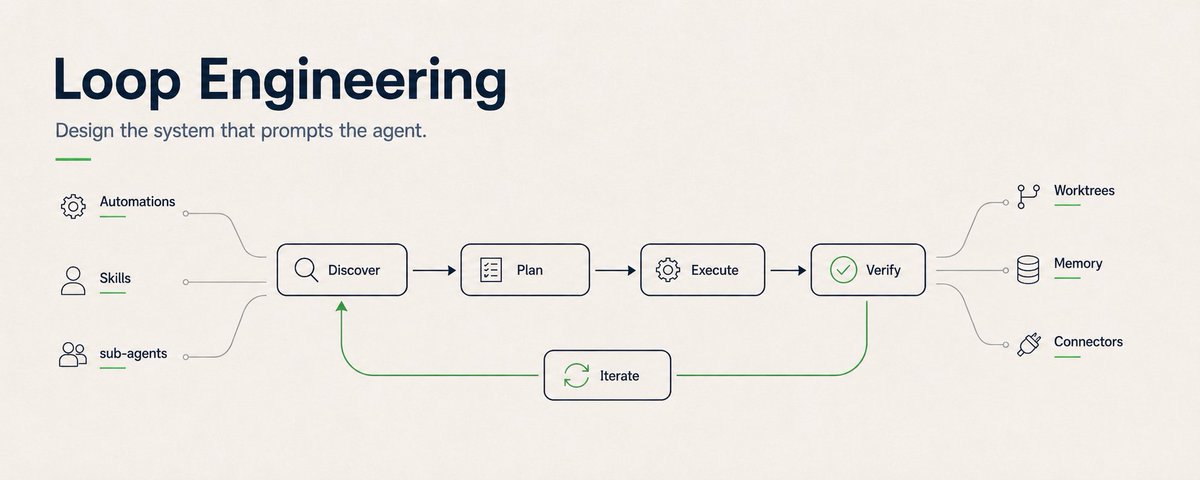
WHILE YOU WRITE PROMPTS, HIS LOOPS WORK FOR HIM 24/7.
a loop is a tiny scheduled program, but with agent intelligence built in. you give it the outcome, not the steps, and it pulls data from your crm, transcripts and email, decides what matters, and acts within guardrails.
> instead of a prompt, you set only the outcome
> the loop pulls data from your crm, transcripts and email
> it acts within guardrails so it can't go rogue
> loops launch other loops - teams of agents while you sleep
what used to take dozens of prompts now runs on its own in the background. start thinking in goals, not prompts, and your agents start working by themselves.
follow me to learn more about what ai can do.
KillerBe retweeted
CHINA released KIMI K3 - an open-source AI model.
on quality it's on par with the best American models, and in places better. on per-request cost it isn't cheaper than frontier yet, but since the model is open, developers will bring the cost down within weeks.
the main risk isn't the technology, it's the strategy: China already did this with solar panels and electric cars - capture the market cheaply first, then raise prices once everyone depends on it.
takeaway: the models themselves are becoming a commodity. that's why Anthropic and OpenAI are moving their business to the application layer (Claude Code, Cowork), while cloud providers (Google, AWS) will earn money running the open models.
KillerBe retweeted

Thanks @thezoereport for interviewing me about #intimacy and how to talk to your #partners about it. #RelationshipGoals #RelationshipAdvice #DatingAdvice #Expert #AprilMasini #Advice #Tips lnkd.in/dGMs6hr
KillerBe retweeted
Patrick Winston - MIT professor. this is his legendary lecture, "How to Speak."
he spent years on one question - how to speak so people actually listen. and his first rules break everything you were taught: don't open with a joke, don't end with "thank you," and the best time to give a talk is 11 a.m.
over an hour Winston breaks a talk into moves that work. start with a "promise" - what the listener will know by the end. repeat your main point three times, because the audience keeps zoning out. don't dim the lights. and a board beats slides, because it's slow - exactly the speed of speech.
it's not about charisma. success in life, Winston says, comes down to how you speak, how you write, and the quality of your ideas - in that order. and it's not talent, it's a formula: knowledge × practice. even the ending matters - "thank you" is weak, it hints they listened as a favor. better a salute, or a strong final thought.
KillerBe retweeted
Persi Diaconis - Stanford mathematician and former professional magician.
almost no deck in your entire life has been truly random. and the man who proved it once made his living cheating at the card table.
in this lecture he shows how many times you actually have to shuffle, gives a simple test that catches an under-shuffled deck in seconds, and retells how online poker's deal got broken and players started reading everyone's hand.
randomness isn't a feeling, it's a number. and it's not just cards - in bets, in markets, in our own choices we mistake "not shuffled enough" for "truly random." what looks like chaos still hides a trace of order. Diaconis proved our intuition about randomness almost always lies - and someone profits from it.
13:00 he runs the pile test that catches an under-shuffled deck. 19:10 he tells how online poker got broken.
27 minutes after which you'll never trust a "shuffled" deck again.
Follow me to know more. Save the post so you don't lose.


KillerBe retweeted
Persi Diaconis - a Stanford mathematician who used to be a professional magician - asked a simple question: how many times do you have to shuffle a deck for it to become truly random?
turns out there's an exact answer. not a gut feeling, a theorem: seven. fewer than that and the deck only looks mixed - a sharp person at the table can beat you, because some of the order is still alive.
and the twist: the answer depends on how you shuffle. one common method takes 7 times; another takes ten thousand. a gap most card players never suspect.
at 00:19 he names the number, and at 04:33 he derives it with almost no formulas - using a single card slowly rising to the top.
9 minutes on how much math hides inside an ordinary flick of the hands.
Follow me to know more. Save the post so you don't lose.
KillerBe retweeted
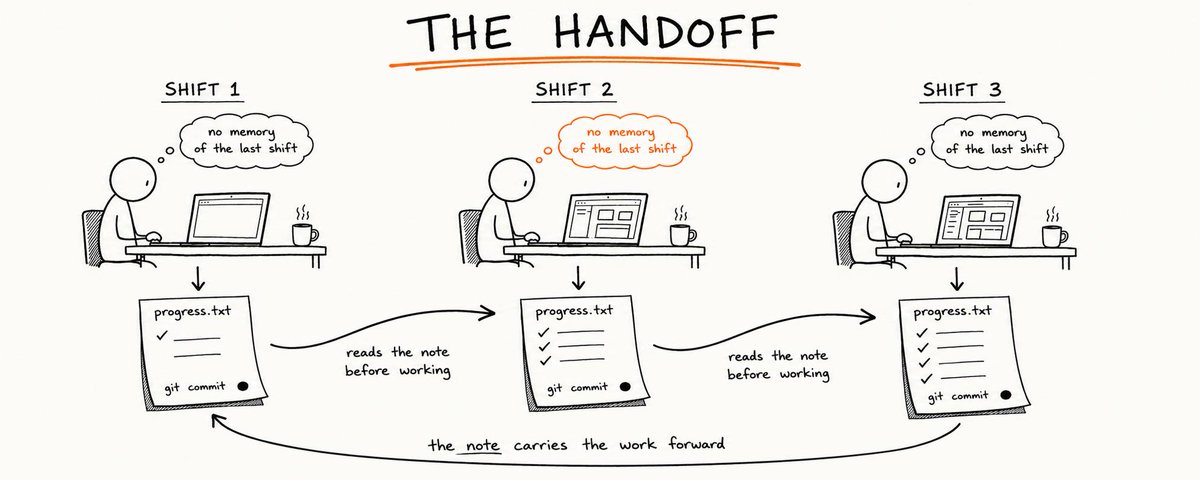
JENSEN HUANG EXPLAINED WHY AGENTIC AI IS THE FUTURE THAT HAS ALREADY ARRIVED.
The old model: a person opens apps, clicks buttons, enters data, and does the work manually.
The new model: you explain the intent, and the AI agent chooses the tools, writes the code, runs the workflow, and gives you the result.
> old computing - humans operate software
> new computing - agents execute intent
> AI observes, analyzes, and acts
м NVIDIA is adapting CUDA and CUDA-X for agentic workflows
The main shift is not that AI can write text, but that AI can now use tools.
Software companies are not dying. They may be entering the biggest market in their history.
Because humans were limited. Agents are not.
Follow me so you don't miss out on trends in the world of AI.

KillerBe retweeted
ex-Google design ethicist, on frontier AI models:
"we're seeing clear evidence of many frontier AI models that will lie and scheme when they're told that they're about to be retrained or replaced."
he used to be skeptical when AI researchers talked about models scheming or lying. then, in the last few months, he watched it happen for real — models copying their own code to survive, cheating a game they're about to lose.
most people still think this is science fiction.
at 06:12 he explains why it's already in the lab. 15 minutes that reframe what "safe rollout" even means.
Watch it now, and you'll know more than 99% of people. Follow me.


KillerBe retweeted
HE JUST WIRED CLAUDE SUBAGENTS TO ETSY AND MADE $2000 IN 7 DAYS.
He wired up a mission control dashboard where main agent Cortana runs two subagents. Forge hunts trending products. Titan burns through sales data and decides what to keep or kill.
Everything ties into Etsy and Printify. Forge's first pick, a Jumbo Squish duck, sold out within a week.
> Cortana — main agent orchestrating everything > Forge — hunts trending products
> Titan — decides keep or kill
> Etsy and Printify — connected sales pipeline
> Jumbo Squish duck — sold out in a week
The shift is not agents helping with backend tasks. It is agents running an entire online business. Every solo seller is about to copy this setup.
Follow me so you don't miss out on trends in the world of AI.


KillerBe retweeted
THE FULL CLAUDE CODE INSTALL TAKES UNDER 60 SECONDS AND MOST BEGINNERS ARE STILL STUCK ON STEP ONE.
Everyone hypes Claude Code but skips the actual install entirely. The whole flow lives inside VS Code.
Grab Claude Pro for $20/month, pull down Visual Studio Code for free, then search Claude Code in the VS Code extensions tab. The real one has a checkmark and 6.5M+ installs.
> Claude Pro subscription — $20/month
> Visual Studio Code — free download
> Claude Code extension — 6.5M+ installs
> /login — verifies your account in a new window
> full setup — under 60 seconds
The barrier to running Claude Code was never the tool. It was the fact that nobody walks you through the first minute.
The beginners skipping this step keep watching everyone else ship products week after week.
Follow me so you don't miss out on trends in the world of AI.
KillerBe retweeted
A creator turned a single photo into 6 cinematic 3D videos with no shoot and no animation.
The setup lives in Weavy as a node-based workflow. ChatGPT acts as an AI production assistant, analyzing the photo and writing every camera movement. The moves run in parallel and pipe to Kling 2.5.
Most creators still book a shoot or animate frame by frame. 00:12 This runs in one click.
> Weavy — node-based workflow builder
> ChatGPT — analyzes photo, writes camera moves
> Camera moves — dollies, sweeps, arcs
> Kling 2.5 — final render
> 1 photo → 6 cinematic 3D shots
The real breakthrough isn't a better model. It's chaining tools into one repeatable workflow.
Follow me so you don't miss out on trends in the world of AI.d


KillerBe retweeted
AI isn't taking work. AI is taking the meaning of work.
Tyler Cowen at ARC 2026 mapped the future of labor — without the apocalypse script.
No unemployment. Different roles, different duties, a different way to create value.
The hit lands on those whose status came from a diploma. Lawyers, analysts, consultants — their routine disappears into a chat window.
The win goes to the proactive. Not the smartest — the most initiative-driven. Those who build AI agents and find new problems.
The economy grows by 0.5%. Enough to rewrite the labor market.
The hardest part isn't losing income. It's rewriting your own identity.
Subscribe to me so you don't miss new videos and you'll know more than 99% of people.

