

Author of “The Miracle Manager”. Speaker. https://xitter.cf/t.co/Sm0wxwOjOg contributor. EOS Expert Implementer. Helping people get more out of their business.
Seattle, WA
Joined November 2016
- Tweets3.1K
- Following162
- Followers357
- Likes380







Pinned Tweet
At @eosworldwide, we have a Proven Process and all our implementers follow the same process when helping businesses.
Why?
Because, as the name suggests, the process is proven.
Here’s a short video explaining why this is important. #entrepreneurship #management
Great article from @Gallup on the impact of management to productivity. This line is worth thinking about: “
Tenure and strong individual performance can be valuable, but neither should determine who becomes a manager.” gallup.com/workplace/713033/…

AI is creating more fear than excitement today. But what can it actually deliver?
A great piece here from @markaodonnell. eosworldwide.com/claritybrea…

Many people think when employees are unhappy it’s because of pay. Probably true, but that’s not the complete picture.
Nobody smiles at Everest base camp. They’re cold. Nauseous. Sleeping on rock. They climb anyway, and the smiles come at the top.
3. Are they held accountable?
Great people want a standard. No standard means no respect for the work.
4. Do they get regular, specific feedback?
Not a yearly review. Not silence until something breaks.
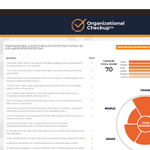
When growth starts creating more confusion instead of more control, your business may need a better system.
Great @eosworldwide article on the signs to look out for. eosworldwide.com/blog/7-sign…
#RunningOnEOS #EOSImplementer

Many businesses are racing to adopt AI – but where does that leave middle managers?
Worth thinking about. hcamag.com/ca/specialization…

For 30 years now, I've worked with the owners of over 1,000 companies.
Here's something that really surprises me a lot:
I haven't met one who could say every employee has a deliverable.
Take 2 receptionists.
The first one is Fred. His job is to answer the phone and greet people.
Every quarter, we call 5 clients at random and ask them to rate how they were treated, 1 to 10. Below 8, we have a problem. 9+ he's exceptional.

A Quarterly Conversation is important because it gives you and your direct report dedicated time to talk about things that don’t always surface during the normal workweek.
You need to make the most out of it.
Great tips on the @eosworldwide blog. eosworldwide.com/blog/10-way…

That cycle runs for weeks. Sometimes months.
Then one day he hits his limit and fires them.
The employee never got a chance to respond. Never knew it was serious. The only expectation was that they'd read the boss's mind.
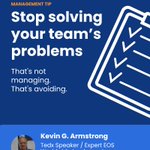
That's not managing. That's avoiding.
Here's how it usually goes. A manager sees a performance or behavior problem. He goes to raise it, then thinks "tomorrow."
By tomorrow, he's forgotten about it. Or other issues took priority. Or he's decided it's no big deal. Or he's convinced himself the person understands.