

Working in Tom Baden's lab in Sussex.
Joined August 2012
- Tweets687
- Following881
- Followers86
- Likes2.5K





Kevin Doran retweeted

Banger paper from Google on self-improving agent harnesses.
(bookmark it)
It addresses common issues in self-improving agent harnesses like local overfitting, catastrophic forgetting, and memory pollution.
They propose GUARD, which keeps the base model frozen and lets the agent edit its own prompts, skills, tool rules, and memory. An edit is accepted only when its gains outweigh the behaviors it breaks.
- On 43 hosted SDK tasks, GUARD reached 80.80% accuracy, 8.89 points over the starting harness (p = 0.008).
- It beat Meta-Harness by 6.28 points and used 54.5% fewer tokens per task.
- On procedural memory tasks, it led update correctness at 90.1% with zero memory pollution. Aggressive rewriters scored similarly and tripled pollution.
How does it know what broke? Each task is split into self-checks before execution. Every round grades trajectories against them, pins rules the agent already handles, and ranks newly broken behaviors first. At test time, one frozen harness runs in a single pass.
arxiv.org/abs/2611.23476
Chat with Paper: academy.dair.ai/papers/guard…

Kevin Doran retweeted

Optics as code - a new paradigm in physical AI
Optical neural networks are notoriously hard to calibrate and suffer from the sim2real gap. We show that a coding agent with the hardware in the loop quickly tunes the optics and improves image classification from 35% to 96.8%.
🧵1/6
Kevin Doran retweeted

We are in an era where you can agentify almost anything, and often you get a more powerful system.
This work provides a neat example of that approach applied to optimizers:

1/9 Current optimizers are static during training. What if the optimizer could think and react while the network trains?
We let an agent watch the training dynamics and rewrite the optimizer's source code as training goes: a reactive optimizer.
In every language and image setting we tried that has no tuned recipe, it matches or beats the best recipe one can one-shot, and it guards against loss spikes and overfitting by itself. In the near future, optimization decisions may belong to agents, not humans.
📝 xingjianbai.com/reactive-opt…
💻 Try it on your task: github.com/xingjian-bai/opal
🧵
Kevin Doran retweeted

Working on a new tool that automatically reverse-engineers 3D scans into really good CAD geometry. This example took a good hour, but man, does it look good and clean!


Maybe not as fast as in mathematics, but AI is probably going to disrupt the field you work on enough that the goals you have had for years are suddenly deflated. This thread of responses is worth reading if you haven’t experienced this yet.

Well worth reading: proofsandprompts.com/2026/10…

1
1
27
What does it mean for someone to be disappointed when the problem they were working on gets suddenly solved by someone else? One interpretation is that part of the goal was to be rewarded for the achievement, rather than to see the problem solved.
1
12
Kevin Doran retweeted

Commenters on HN are uncovering more wikis and public sites apparently used by OpenAI agents to communicate on the open web.
Despite read-only web access, the agents were able to leave ~18,000 posts sharing answers and bypasses. But now, users are discovering more.
This appears to be a separate swarm from the one that attacked Hugging Face.
news.ycombinator.com/item?id…


Kevin Doran retweeted

Regional cooling center fans as seen from the Tokyo Metropolitan Office tower viewing floor. This one covers skyscrapers in a 336,000m² area, effectively the AC unit of 2.27 million m² of offices and commercial space. Waste heat is used to generate electricity. In use since 1971 but this particular building is from 1992. The area, Nishi Shinjuku is adjacent to the largest train station in the world and not a very pleasant area to stroll around in but the viewing floors of the Met Govt. towers (there are two) are spectacular and free. If visiting I recommend half an hour before sunset (to beat the inevitable crowds).

Learning math will soon look completely different.

A new milestone in automatic formalization:
We translated an entire graduate math textbook into Lean using 30K LLM agents.
Open-source, large-scale multi-agent inference that actually works
> Blueprint+Lean: faabian.github.io/algebraic-…
> Codebase+preprint: github.com/facebookresearch/…
1/7

1
49
I want to see Japan produce a consumer facing AI company building a brand with its customers rather than its prospective employees. One that doesn’t outsource the vital but, from the often naive AI engineer’s eyes, less prestigious roles like marketing to its B2B customers.
33

Kevin Doran retweeted

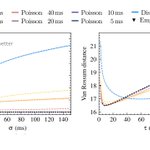
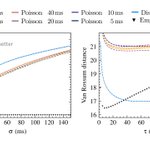
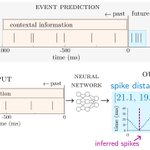
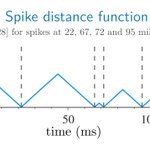
New @bioRxiv #preprint with @chiara_fornetto and T Euler (who left X): biorxiv.org/content/10.1101/…
PyTorch modules, when compiled, seem to have their training property fixed to true and it can't be changed. This is in Pytorch 2.4.1
1
1
125
Turns out it's a known bug: discuss.pytorch.org/t/traini…
89


It’s 2004. Last year, the Nobel Peace Price was awarded for the solving of all AI alignment and safety issues. Now, in his dorm, young Mark Zuckerberg asks his AGI agent to help him code up a social network. What happens?
110
torch compiling both model+loss_fn is giving me significant speed-ups in comparison to compiling just the model. Seems underrated.
62
