

what the hell is going on?
Berlin, Deutschland
Joined March 2011
- Tweets832
- Following627
- Followers96
- Likes833


Kaantastic retweeted

One of the many use cases for Serus' OSINT features: an unknown number calls, you ask, it verifies.
You can verify pretty much anything with Serus. Everything from fake invoices, suspicious emails to verifying people or businesses who say they are.
Explore Serus for free.


Kaantastic retweeted

This is f*cking insane. Former Google CEO Eric Schmidt just told everyone the easiest way to get rich in the next two years, and it's not stocks or crypto:
"If you really want to make money, it's actually easy, found an agentic AI company, I mean build an agent to do something
If you build a better agent than anyone else, you can probably build one incredible company and own it yourself"
The man who ran Google for 10 years explains in under 30 seconds why the next year or two is the agentic period, and why the window won't stay open
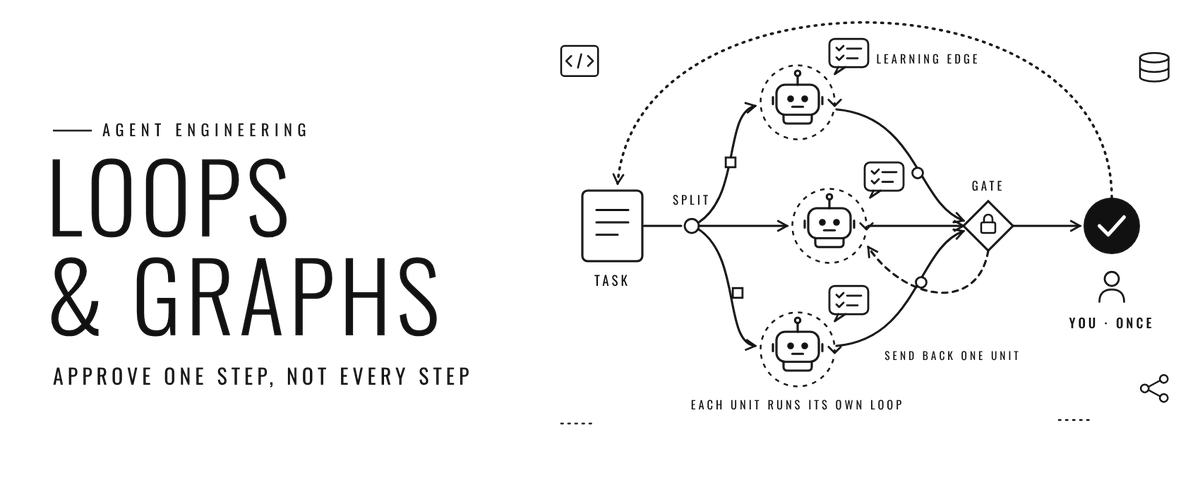
Prompts → Claude Code → Loops → Graphs → Gates → A Company You Own Yourself
Save this before it disappears from your feed
Everything below is free:
Building effective agents (Anthropic)
anthropic.com/engineering/bu…
How Anthropic built its multi-agent research system
anthropic.com/engineering/mu…
Harnesses for long-running agents
anthropic.com/engineering/ef…
Writing tools for agents
anthropic.com/engineering/wr…
Claude Code 101
anthropic.skilljar.com/claud…
Claude Code in action
anthropic.skilljar.com/claud…
Prompt engineering
platform.claude.com/docs/en/…
Subagents (parallel work)
code.claude.com/docs/en/sub-…
Hooks (checks that can say no)
code.claude.com/docs/en/hook…
CLAUDE.md + memory
code.claude.com/docs/en/clau…
Skills
code.claude.com/docs/en/skil…
MCP
code.claude.com/docs/en/mcp
LangGraph (graphs of agents)
langchain-ai.github.io/langg…
Karpathy's autoresearch (an agent in a loop)
github.com/karpathy/autorese…
All of this costs $0
95% will spend the agentic period scrolling AI threads. The 5% who ship agents will own the companies that come out of it
Bookmark it and start with the first link tonight
Then read how to make an agent that works for hours without you in the Loops & Graphs guide below ↓

Kaantastic retweeted

Fable 5.2 is insane for building a second brain...
send this prompt to Claude Fable 5.2 and it will turn everything you read, watch and think into a knowledge base that organizes itself
then read the full guide below:


Kaantastic retweeted

This is f*cking wild. Someone asked Anthropic CEO Dario Amodei what a kid finishing high school should do right now. He didn't sugarcoat it:
"AI can do entry-level law work. It can do entry-level finance. It can do entry-level consulting.
AI will also eliminate jobs, and probably a large number of them"
In 42 seconds, he lists the first careers in the line of fire: junior law, junior finance, junior consulting
He's already put a number on it: half of entry-level white-collar jobs disrupted within 1 to 5 years
Every shift before this one, from farms to factories to the internet, gave people time to catch up. This one, he says, cuts deeper and moves faster
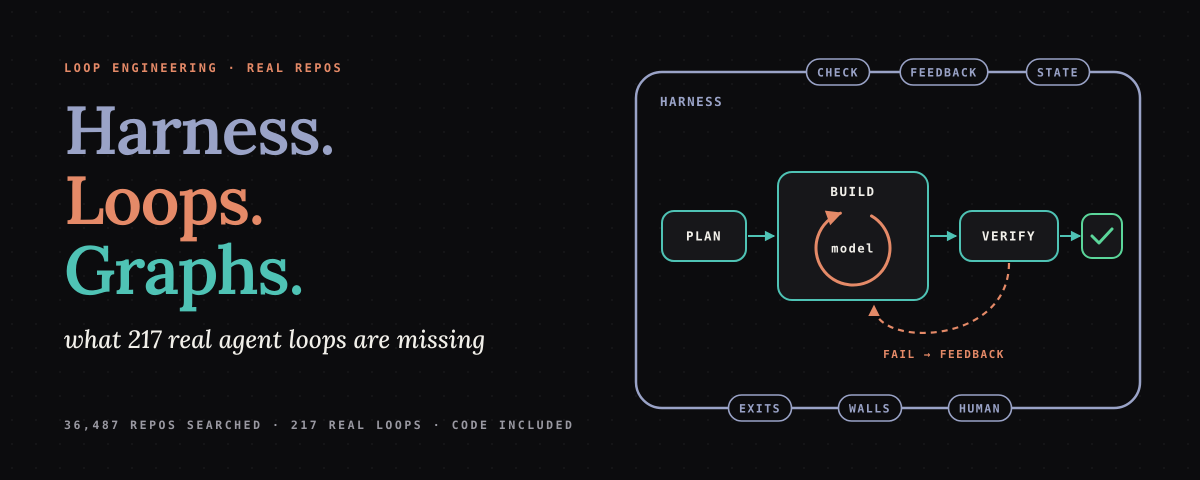
Chatting → Prompting → Agents → Harness → Loops → You Run the AI
His advice is simple: learn to use AI. But using it is now the bare minimum. What sets you apart is a harness that runs it for you
Bookmark this before your feed buries it
Every repo below costs nothing:
Ready-made Claude plugins for legal, finance, sales, HR and data
github.com/anthropics/knowle…
Analyst-grade agents: models, memos, research notes
github.com/anthropics/financ…
Skills for Excel, Word, PowerPoint and PDF
github.com/anthropics/skills
An agent that does financial research on its own
github.com/virattt/dexter
An agent that researches any topic in depth
github.com/assafelovic/gpt-r…
Ask your spreadsheets and databases questions in plain English
github.com/sinaptik-ai/panda…
Agents that work as a team, each with its own role
github.com/crewAIInc/crewAI
A harness with everything built in
github.com/langchain-ai/deep…
Anthropic's SDK for building your own agents
github.com/anthropics/claude…
A memory layer so your agents remember context
github.com/mem0ai/mem0
A loop that keeps the agent going until the job is done
github.com/snarktank/ralph
An agent that clicks through websites and fills forms for you
github.com/browser-use/brows…
Automate busywork with drag-and-drop workflows
github.com/n8n-io/n8n
18 free lessons on building agents
github.com/microsoft/ai-agen…
Total cost: $0
It won't be AI that takes your seat. It'll be someone who built a harness
95% will keep sending résumés for work AI already does, the 5% with a harness will be the ones managing it
Save it and forward it to anyone starting their first job
Then follow the guide below and build your harness while everyone else is still waiting ↓

Kaantastic retweeted

AI capabilities are advancing exponentially by some measures. Infrastructure builds more linearly. Organizations can take years to change.
The result: bottlenecks, risks, and opportunities.
MGI research maps the AI economy as an interconnected system: mck.co/aieconomy

Kaantastic retweeted

The most valuable skills by 2030 won’t be technical.
They’ll be human.
Sharing great insights from Jeroen Kraaijenbrink and the World Economic Forum.
The people who thrive will be able to:
Think clearly.
Adapt quickly.
Lead effectively.
The highest-impact skills include:
A) Systems thinking
B) Creative thinking
C) Analytical thinking
D) Self-awareness & motivation
E) Leadership & influence
F) Resilience & adaptability
G) Curiosity & lifelong learning
These skills are becoming essential.
AI will keep getting better.
But tools don’t make decisions.
People do.
The real advantage in 2030 will come from:
Better decisions.
Faster execution.
Stronger leadership.
That’s what will separate top performers from everyone else.
P.S. Which of these skills are you working on right now?
♻️ Repost to help someone prepare for the future.
----
📌 Get my top 100 infographics for free:
1) Follow me.
2) Subscribe to my free newsletter at WildCapital.co.
You’ll receive all 100, directly in your welcome email.


Kaantastic retweeted

Sam Altman (CEO of Open AI):
"You no longer need to write prompts, if you use GPT-6 Astra”
In just 1 hour, he explains how to use GPT-6 Astra at a level that most people can't even imagine.
After watching it, I realized I was only taking advantage of about 15% of what this tool can really do.
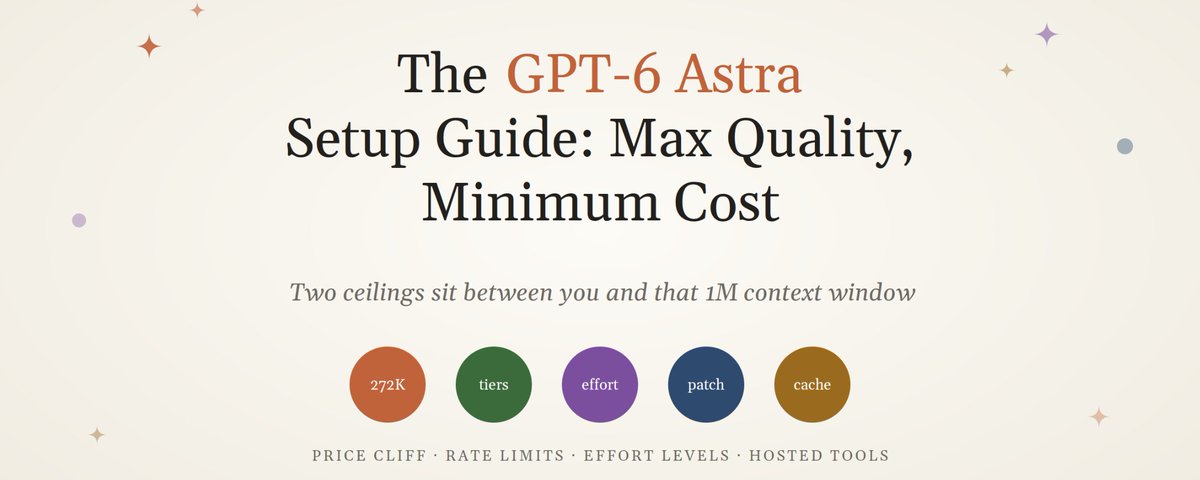
Watch it and then read the guide l leave below on how to use it at it's fullest 👇🏼

Kaantastic retweeted

Delete every prompt template you ever saved.
You only need these 3 Claude Skills:
1. /how-to SKILL
☑ Your universal guide. A → Z on any task.
Type "/how-to" + what you want.
Claude asks the right questions to builds the plan.
↳ Replaces every "how do I do this?" prompt.
2. /about-me
☑ Who you are. How you think. How you write:
Open Claude. Run a 100-question interview.
Or turn your old about-me .md into a Skill.
↳ Now Claude sounds exactly like you.
3. /skill-creator
☑ The Skill that builds your other Skills.
Type /skill-creator. Answer the questions. Save.
Or say "make it a skill" in any long chat.
↳ This is how you replace the next 500 prompts.
5. Dictate, don't type
☑ Use Wispr . ai (free). Voice is faster:
You answer 100 questions in 90 minutes.
Voice is also more honest than typing.
↳ Vagueness won't survive Claude's follow-ups.
5. Skills + Projects. Nothing else.
☑ Forget folders, files & global instructions:
Skill = a capability you can teach someone.
Project = a specific context (a client, a campaign).
↳ Turn everything OFF. No settings is the best one.
I teach you how Claude works at how-to-ai.guide.
Download my Skills library for free:
Step 1: Subscribe for free at claude-skills.free.
Step 2. Click on "Download" & check your email for the OTP.
Step 3. Paste the OTP to unlock the entire library
Step 4. Download the whole Skills library.
Step 5. Upload to Claude → Settings → Skills.

Kaantastic retweeted

Artificial intelligence has turned everyone into a creator. From music to literature, we tracked how the technology is changing different fields. Discover the full story. Register to read for free economist.com/graphic-detail…

Kaantastic retweeted

J’ai cartographié la chaîne de valeur des robots humanoïdes
Gardez-la en mémoire, elle est beaucoup plus large que ce que je pensais
Voici les trois goulots d’étranglement que je relève :
1. Les actionneurs et la mécanique de précision
Le rôle de cette brique clé, c’est de permettre aux bots d’obtenir suffisamment de force et de précision dans des articulations compactes, légères et fiables. Il faut faire tenir les moteurs, les transmissions et les capteurs dans un corps aux dimensions humaines, sans sacrifier les performances. Le sujet, c’est de produire des articulations qui tiennent dans la durée, à un coût compatible avec un déploiement massif
Trois noms ressortent : $SKF, Leaderdrive et Schaeffler ($SHA0). Le suédois SKF et le chinois Leaderdrive ont annoncé une coentreprise dédiée aux transmissions de précision pour les articulations des humanoïdes, en combinant expertise des roulements, savoir-faire robotique et capacités industrielles. L’allemand Schaeffler développe de son côté des actionneurs linéaires et rotatifs, avec des accords de développement et de fourniture déjà signés
2. Les mains et le sensing
Voir un objet ne suffit pas pour le manipuler. Il faut aussi doser la force, détecter qu’il glisse et corriger le mouvement avant de le lâcher. Figure explique justement avoir développé ses propres capteurs tactiles après avoir jugé les solutions disponibles insuffisamment robustes pour les usages réels. Le problème n’est pas seulement la dextérité, c’est la dextérité qui résiste à une utilisation répétée
Je m’étais intéressé à $VPG, notamment pour Micro-Measurements et ses jauges de contrainte utilisées dans la mesure des forces et des couples.
Mais il existe d’autres plays plus larges : Novanta ($NOVT), via ATI sur les capteurs de force et de couple, et TE Connectivity ($TEL), à la fois sur les capteurs et la connectique nécessaire à leur intégration
3. La vision et les capteurs de perception
Reconnaître une tasse sur une image et savoir précisément où elle se trouve dans une cuisine sont deux problèmes différents. Le robot doit estimer les distances, repérer les obstacles et suivre ses propres mouvements pour garder l’équilibre. C’est là qu’interviennent les capteurs d’image, les capteurs de profondeur et les centrales inertielles. Le vrai sujet va être de combiner ces données pour obtenir une perception fiable en temps réel, même quand le robot bouge ou que son environnement change. Et le marché est mûr, on a déjà eu l'incident caméra vs LiDar donc je pense qu'on verra moins de gros repricing sur ce domaine.
Ce qui m’intéresse ici, c’est cette capacité à fournir plusieurs briques ensemble, plutôt qu’un capteur isolé comme chez $STM, car les équipementiers vont chercher à centraliser les "suppliers"
Quelques noms à retenir : STMicroelectronics ($STM la stack est folle d'ailleurs, onsemi ($ON), Ouster ( $OUST )
--
Le narratif prendra probablement du temps à s’installer. On a déjà eu, et on aura encore, des phases de hype puis de repli. La temporalité peut très bien se décaler vers la droite. Mais à mon sens, ce thème restera l’un des narratifs les plus puissants des prochaines années
C’est justement pour cela qu’il est crucial de comprendre qui fait quoi dans la stack, où se situent la demande et surtout quelles sociétés pourront capter cette dernière.


Kaantastic retweeted

The gap between spotting a sales opportunity and acting on it is closing in. AI can connect everything from customer signals and pricing to outreach and sales execution—helping teams turn decisions into action faster. mck.co/4gQnwfq

ALT Chart showing AI tools accelerating commercial stages from market modeling to sales rep coaching with specific outcomes for each stage.
Kaantastic retweeted

Chinese researchers published a paper with a devastating title: "The End of Software Engineering”
it argues software engineering is finished.
In traditional software, code is the carrier of pre-written human logic.
In agentic software, the AI agent is the software.
Code is no longer a permanent monument built by human hands. It is completely ephemeral, dynamically generated, executed, and discarded on the fly by an LLM-driven reasoning loop.
Think about how software delivery has evolved:
• Era 1: On-premise licensed software (you installed it locally)
• Era 2: SaaS (hosted in the cloud, managed by vendors)
• Era 3: Agent-as-a-Service (AaaS)
Each historical shift transferred complexity away from the user. But this latest shift transfers something entirely different.
It transfers decision-making complexity itself.
The paper argues that traditional engineering is hitting a hard complexity wall. Human brains can only hold so much state, manage so many dependencies, and debug so many lines at once.
LLM-based agents scale non-linearly.
They don't just write functions faster. They navigate architectural complexity by outsourcing reasoning to models that improve every single month.
Which means the role of the developer is permanently changing.
You are no longer a code author typing syntax line by line.
You are an intent architect.
Your job is no longer writing the implementation. It is specifying goals, designing multi-agent coordination loops, and auditing outcomes.


