

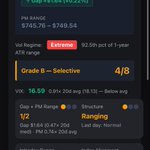


Seems like anthropics plan was to give access to lightly controlled frontier models to build their user base, then switch to distilled models with obtuse guardrails and compute delays.
My Claude code productivity has dropped in less than half since sonnet 5 and fabel.

In the last few days:
- Anthropic raised claude's willingness to refuse to perform user requests and made the memory system refuse to store personal information
- OpenAI's head of strategy called open weights "communism" and suggested the government lie to stop Americans from using Chinese products
Meanwhile China is releasing cutting-edge uncensored models.
How did America become communist and China a leader on freedom? Bizarre
Jonathan retweeted

“Open-weight models are inherently decelerationist”.


Some observations on Kimi:
1. It's a very good model! I don't think its performance can be explained away by distillation or anything like that. In agentic coding sessions, it seems pretty much on par with the best public models of Q1 2026. In my fairly limited use, it also seemed very token hungry. It's not obvious to me that this model is actually that cheap to run.
2. I am personally surprised the Chinese state continues to allow the open sourcing of models this good, given potential risks. To be clear, I *myself* might be fine with models presenting this level of marginal risk being open weight, but I am surprised that China is fine with it. I suspect the reason they are is 75% explained by strategic blindness/lack of AGI-pilledness (the CCP is very Yann Lecun-y in its views of AI). The other 25% or so is their lack of compute for customer inference (making China's open-weight strategy an unintended byproduct of US export controls) and the normal Chinese strategy of aggressive exports. For the companies, as opposed to the government, the decision to open source is partially ideological and partially because they are behind, and they know that very few people would pay for sub-frontier models from China.
3. Open-weight models are inherently decelerationist, and I'm continually surprised to see the so-called "accelerationists" so excited about open-weight models. I suspect the reason they are is that they know open-weight models are effectively ungovernable, and they simply like the overall cloak of ungovernability open-weight models create over the whole of AI. It's not a bad strategy; it reminds me of James Scott's recounting of the hill people in "the art of not being governed." Still, in the end, open-weight models deter further AI capex.
4. One probable outcome of an open-weight-model-dominant world is full AI communism, which is precisely what China proposes: rather than a market product, AI is a "public good" which will ultimately be provided by the state as a kind of "digital public infrastructure." This future strikes me as a dystopian hellscape, but I've never met an open-weight models advocate who doesn't ultimately concede this is where things end. You'd be surprised how many 'accelerationists' lobbied me, while I was in government, to support an eleven or twelve-figure federally funded data center so that startups could train models at a subsidy and then give them away for free. There was no other way for AI to progress, they said. Perhaps this is the logical end state of things. Nonetheless, I find myself surprised to see supposed accelerationists excited about such an outcome. I think many of them just don't know what they're doing. Many accelerationists do not view the creation and serving of frontier models as a legitimate business.
5. I would guess that the Trump Administration will at some point realize that their best strategy here would be to create large amounts of regulatory risk around the use of open-weight Chinese models. You don't need to "ban open source" (one of the dumber motifs of AI policy discussion). You just need to direct every agency to issue soft law that creates FUD. "A Federal Reserve Advisory Bulletin found that there may be backdoors in Chinese AI models." It needn't be that well justified. You just create enough regulatory risk that every regulated enterprise backs off. You probably don't want to create so much regulatory risk that you scare off the hyperscalers from serving Chinese models; this will just drive startups to sketchier providers. There's a happy middle ground here. I'd assume they will do some version of this.
6. It's probably true that open-weight models of this capability make the world a bit more dangerous, but not so much more that you'll really notice. At some point the models will be capable enough that you will notice. "A nonliving, invisible, dangerous, and infinitely self-replicating agent escaped from a Chinese lab," you say? Color me shocked.
Jonathan retweeted

Anthropic is the boy who cried wolf.
The 1st time they cried: GPT-2 XL is too dangerous. How laughable is that now?
The 2nd time they cried: Mythos is too dangerous. Now we have an open Kimi K3. Did anything happen?
Next time, even if there really is a wolf, nobody will care.
Jonathan retweeted

OH: “i’ve switched to Kimi from claude for a bunch of work. it’s just so much more fun because it just does the thing instead of lecturing you”
Woke lobotomized models are the enemy of American competitiveness.

Jonathan retweeted

Deep inner suffering inevitably arises when the human person is reduced to performance, consumption, or a statistical datum. Many young people today live under the yoke of expectations to perform, immersed in an exasperated competitiveness that generates anxiety, fear of not measuring up, and disorientation.

Judicial branch is still trying to figure out the video cart 😂

Jonathan retweeted

For a moment, it had all the makings of a Michael Crichton plot. Sometimes reality just gets there first.



Jonathan retweeted
For years, Congress has punted on surveillance reform, passing short-term extensions while the government continues spying on Americans without warrants. My Fourth Amendment Restoration and Protection Act ends that. It would ban warrantless surveillance of U.S. citizens, stop backdoor searches of your data, and limit secret FISA courts to foreign targets only.


Jonathan retweeted

The Hymn of Peace performed by a choir made up of both Christians and Muslims in the Basilica of Our Lady of Africa, Algiers, Algeria.
You can see Pope Leo XIV really enjoying it.


What’s stopping you from creating your own financial web app?
Here’s one I vibe coded in a few hours with @AnthropicAI Claude code, leveraging @github pages and actions for the hosting and data collection and Stooq for the free market data.
jonsflow.github.io/risk-dive…
Project name update to “risk-model”
Updated URL:
jonsflow.github.io/risk-mode…
Now includes data from FRED to model the risks:
Credit Spreads
Gov data
FOMC
Along with a new Trade tab showing what’s in play and what played out
refined pivot logic
All free data!