
Immigrant | Assistant Professor in Org Behavior @HarvardHBS. I study the experience, antecedents, and consequences of passion.
Somerville, MA
Joined May 2011
- Tweets5K
- Following697
- Followers7.3K
- Likes15.6K



Pinned Tweet
Prior work argues employees benefit from passionate teammates because passion is contagious—it spreads easily from one employee to the next.
In a new paper @ASQJournal, we find that's not quite the full story... 1/8
journals.sagepub.com/doi/10.…

Jon M Jachimowicz retweeted

Team scientist podcast roundup:
David Yeager on @MostlyAdmiring bit.ly/4mehJSf
@jonj on @HiddenBrain bit.ly/3HilgQj
@jayvanbavel on Plain English bit.ly/3HpNNTU
Jon M Jachimowicz retweeted

Follow your passion. March to your own drummer. Land your dream job.
We hear this kind of advice all the time. But what happens when the dream job doesn't bring us the satisfaction we imagine? This week, as we continue our You 2.0 series, behavioral scientist @jonj looks at how to keep our passions alive.
hiddenbrain.org/podcast/you-…

Jon M Jachimowicz retweeted

🚨 New paper alert 🚨
In my new paper out now in JPSP (w/@brianjlucas & @jonj), we show across 10 studies (including w/nurses, teachers, & PhD students) that people considering giving up a passion pursuit overestimate how harshly others will judge them 🧵 doi.org/10.1037/pspa0000455

LT is one of the kindest and most insightful scholars I have ever met. I am so glad our paths crossed at HBS, and thrilled that @KelloggSchool landed such a huge catch 🚀

Jon M Jachimowicz retweeted

Excited to share new research published @ASR_Journal with @mabelabraham and @tristanbotelho. We explore how experiencing misrecognition—getting less or more recognition than deserved—influences how people subsequently evaluate others.
journals.sagepub.com/doi/10.…

There is SO MUCH MORE in this paper—additional data and analyses, theorizing, speculating, & more. I'd strongly encourage you to read the final piece! And massive thanks to co-authors Emma, @kkrttr, & Wen for this amazing (passionate!) collaboration. 8/8

Jon M Jachimowicz retweeted

🚨 Full-Time Pre-Doc Positions in Zurich
Looking for full-time pre-docs (start date b/w June and October '25) to work with me on questions in behavioral economics, using experiments, speech data and AI methods! Link below, deadline rolling
tinyurl.com/predoc-graeber
@econ_ra
Early registration ends tomorrow (January 16, 2025) — spots are running low, sign up for the inaugural Meaning in Life and Work Preconference at @SPSPnews while you can!

Please come join us at the inaugural Meaning in Life and Work Preconference at @SPSPnews in Denver!
Hoping to bring together research across psych and OB that has often remained siloed. Schedule below!
spsp.org/events/annual-conve…
@GabriellePfund @FrankMartela @DEMelnikoff


And yes, if you're wondering, the thought that I (as the mediocre man on this author team) benefit the most from passion also crossed my mind (all research is ultimately mesearch!) :)
pubsonline.informs.org/doi/a…
7/8
For a more practicioner-friendly audience, we summarized the findings from our research in this @HarvardBiz article, including some recommendations for what organizations can do to fix the gendered passion bias.
hbr.org/2024/12/research-why…
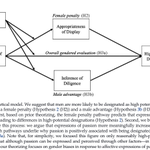
Seemingly innocuous and even beneficial stereotypes of women as more diligent create a shifting standard that begets a lower bar for “mediocre men.” Quoting Madeleine Albright: “There’s plenty of room in the world for mediocre men. There is no room for mediocre women.”
6/8
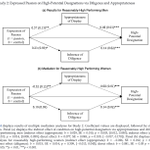
In a new paper @OrganizationSci, we find gendered responses to expressions of passion—a commonly used criterion in evaluating potential—both penalizes women and advantages (unexceptional) men in high-potential selection 1/8 w/ @joyce_c_he @ProfCeliaMoore
pubsonline.informs.org/doi/a…


