

Profesor | Comunicación Digital - TIC | PUCESD Doctorando en el Programa de Doctorado en Comunicación | Universidad de Huelva.
Santo Domingo - Ecuador
Joined April 2011
- Tweets4.4K
- Following497
- Followers568
- Likes6.3K


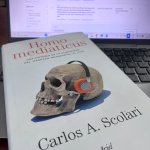


Iniciando el módulo de Herramientas digitales para las humanidades junto a mis alumnos de @PUCE_StoDgo donde aprendemos sobre los #deportes y analizamos casos de éxito como @CaicedoEra_

José Romero retweeted

Espectacular. Quizá no debería decirlo yo pero es que la sesión de ayer del Aula Virtual Sanitaria sobre Claude para profesionales de la salud fue un escándalo.
Si trabajas en el ámbito sanitario y quieres empezar a usar / avanzar usando Claude no dejes de ver los ejemplos de uso que han compartido Andrea López Salcedo (Otorrinolaringóloga), Eva Aldana Díaz, (Anestesióloga, vocal de la sección de Neurociencias de la SEDAR), Francisco Marín Jiménez (Médico de Familia), María García-Puente @bibliovirtual , (documentalista y Claude Ambassador CC. Salud), María García Gil @mariagg26 (Farmacéutica de Atención Primaria), Sara Núñez Rodríguez (farmacéutica inmersa en innovación sanitaria) y David Cabrero Araújo, MIR de pediatría en el H. Sant Joan de Déu de Barcelona.
Un lujazo contar con ellos.
¡Muchísimas gracias!
No te asustes por la duración del programa. Han sido casi cuatro horas hablando de usos y aplicaciones de #inteligenciaartificial: hemos "desnudado" el sistema, nos ha asistido en la búsqueda de información bibliográfica, hemos automatizado tareas administrativas, hemos creado herramientas de consulta de información de fuentes fiables... También hemos generado vídeos, editado el montaje para hacerlo más profesional...
¡Hasta nos hemos atrevido a utilizar Claude Code para hacer una calculadora de tensión arterial infantil!
Espectacular.
Y a los mandos de la sesión Eva Añón @evaanyon y Jose Miguel Cacho Herrera @CuraeSalud)
Te enlazo por aquí el directo por si quieres volver a verlo.
youtube.com/@aulavirtualsani…


José Romero retweeted

China convierte la alfabetización en IA en parte central de la educación primaria y secundaria
El objetivo no es solo usarla, sino entender cómo funciona, sus límites y sus implicaciones
El “AI + Education” Action Plan cset.georgetown.edu/publicat…
José Romero retweeted

Floridi: "La predicción extrapola el pasado; el deseo lo contradice: puede desear lo que nunca ha existido."
pixelpost.it/progetto-umano
Vía @nigropatricia

José Romero retweeted

¡Excelente formación de #BiblioSalud! 👏
Hoy, Carmen Muñoz Serrano nos ha descubierto todo lo que podemos hacer con #Zotero: complementos, redes de citas, automatización e integración con IA.
¡Mucho más que un gestor bibliográfico!

José Romero retweeted
El scroll infinito se produce por qué ver videos cortos que te gustan desactiva temporalmente regiones del cerebro de autocontrol
No puedes para por que se reduce la actividad en estas áreas (glutamato) sciencedirect.com/science/ar…

José Romero retweeted
Aprender antes de delegar a la IA no es nostalgia. Es inteligencia estratégica
La pregunta ya no es “¿sigue teniendo sentido aprender?”
Es “¿cómo aprendemos de forma más consciente, crítica y profunda usando la IA como aliada, no como sustituto?”

José Romero retweeted

Cuando escribes a mano, tu cerebro no solo registra la información, sino que la procesa de forma más profunda y activa porque involucra al mismo tiempo la atención, el movimiento de la mano, la memoria y el lenguaje.
Eso hace que la información se “grabe” mejor y se recuerde con más facilidad después, algo que las notas tipeadas no logran igual de bien porque suelen ser más automáticas y superficiales.
Por eso, aunque escribas menos, lo que escribes a mano se retiene y se entiende mejor, lo que se traduce en mejores resultados académicos y en un cerebro que trabaja de forma más eficiente y concentrada.


José Romero retweeted
¿Decidimos o somos decididos? ¿Pensamos a somos pensados? ¿Decimos somos dichos?
cc @carinalion @julitoalonso @cscolari @edmundogs @marturua @capitanintriga @CarlesLindin @farodigitalok @Ladob @unfernandezmas @jorgecarrion21 @c_magro @yamilagold


José Romero retweeted
¡Claude desde 0 para profesionales de la salud!
El próximo miércoles 25 de noviembre a las 20:00 h (CET) abriremos de nuevo las puertas del Aula Virtual Sanitaria para ayudaros a empezar (y avanzar) en el uso de Claude con seguridad y sin complicaciones.
Aquí te dejo la url del evento
youtube.com/watch?v=95FLPc1F…
Será una sesión práctica y sin (demasiados) tecnicismos pensada por y para profesionales profesionales de la salud.
Iremos explicando las posibilidades de la herramienta y poniendo ejemplos que podrás aplicar mañana mismo en tu día a día.
Venid cenados. Seguramente se nos haga tarde.
Dejaremos grabada y en abierto la sesión para que podáis verla con calma.
Estarán con nosotros
👏👏 Sara Núñez Rodríguez 🐈 , farmacéutica de innovación sanitaria.
👏👏 Maria Garcia-Puente, documentalista y Claude Ambassador en Ciencias de la Salud.
👏👏 Eva M Aldana Díaz, anestesióloga y vocal de Neurociencias de la SEDAR.
👏👏 María García Gil, farmacéutica de Atención Primaria.
👏👏 M Andrea López Salcedo, otorrinolaringóloga.
👏👏 Francisco Marín Jiménez, médico de familia.
👏👏 David Cabrero Araújo, residente de pediatría en el Hospital Sant Joan de Déu de Barcelona.
Con ellos veremos qué es Claude, cómo se usa, qué puede hacer por ti (que no) y, qué datos conviene no compartir nunca con la herramienta.
Acompañaré presentando la sesión a Eva Añón @evaanyon, Jose Miguel Cacho Herrera @CuraeSalud
José Romero retweeted
¿Los apuntes y las notas a mano como un ejercicio de soberanía cognitiva? Él no lo dice así.... pero cuánto inspira @wsosaescudero en esta nota de @IreHartmann sobre los sentidos de la 'vuelta al pizarrón' que proponen algunos docentes. @fededelcarpio siempre riguroso. Celebro que se dio voz a estudiantes también.
clarin.com/sociedad/pantalla…

José Romero retweeted

Because we get asked a lot.
The Technological Republic, in brief.
1. Silicon Valley owes a moral debt to the country that made its rise possible. The engineering elite of Silicon Valley has an affirmative obligation to participate in the defense of the nation.
2. We must rebel against the tyranny of the apps. Is the iPhone our greatest creative if not crowning achievement as a civilization? The object has changed our lives, but it may also now be limiting and constraining our sense of the possible.
3. Free email is not enough. The decadence of a culture or civilization, and indeed its ruling class, will be forgiven only if that culture is capable of delivering economic growth and security for the public.
4. The limits of soft power, of soaring rhetoric alone, have been exposed. The ability of free and democratic societies to prevail requires something more than moral appeal. It requires hard power, and hard power in this century will be built on software.
5. The question is not whether A.I. weapons will be built; it is who will build them and for what purpose. Our adversaries will not pause to indulge in theatrical debates about the merits of developing technologies with critical military and national security applications. They will proceed.
6. National service should be a universal duty. We should, as a society, seriously consider moving away from an all-volunteer force and only fight the next war if everyone shares in the risk and the cost.
7. If a U.S. Marine asks for a better rifle, we should build it; and the same goes for software. We should as a country be capable of continuing a debate about the appropriateness of military action abroad while remaining unflinching in our commitment to those we have asked to step into harm’s way.
8. Public servants need not be our priests. Any business that compensated its employees in the way that the federal government compensates public servants would struggle to survive.
9. We should show far more grace towards those who have subjected themselves to public life. The eradication of any space for forgiveness—a jettisoning of any tolerance for the complexities and contradictions of the human psyche—may leave us with a cast of characters at the helm we will grow to regret.
10. The psychologization of modern politics is leading us astray. Those who look to the political arena to nourish their soul and sense of self, who rely too heavily on their internal life finding expression in people they may never meet, will be left disappointed.
11. Our society has grown too eager to hasten, and is often gleeful at, the demise of its enemies. The vanquishing of an opponent is a moment to pause, not rejoice.
12. The atomic age is ending. One age of deterrence, the atomic age, is ending, and a new era of deterrence built on A.I. is set to begin.
13. No other country in the history of the world has advanced progressive values more than this one. The United States is far from perfect. But it is easy to forget how much more opportunity exists in this country for those who are not hereditary elites than in any other nation on the planet.
14. American power has made possible an extraordinarily long peace. Too many have forgotten or perhaps take for granted that nearly a century of some version of peace has prevailed in the world without a great power military conflict. At least three generations — billions of people and their children and now grandchildren — have never known a world war.
15. The postwar neutering of Germany and Japan must be undone. The defanging of Germany was an overcorrection for which Europe is now paying a heavy price. A similar and highly theatrical commitment to Japanese pacifism will, if maintained, also threaten to shift the balance of power in Asia.
16. We should applaud those who attempt to build where the market has failed to act. The culture almost snickers at Musk’s interest in grand narrative, as if billionaires ought to simply stay in their lane of enriching themselves . . . . Any curiosity or genuine interest in the value of what he has created is essentially dismissed, or perhaps lurks from beneath a thinly veiled scorn.
17. Silicon Valley must play a role in addressing violent crime. Many politicians across the United States have essentially shrugged when it comes to violent crime, abandoning any serious efforts to address the problem or take on any risk with their constituencies or donors in coming up with solutions and experiments in what should be a desperate bid to save lives.
18. The ruthless exposure of the private lives of public figures drives far too much talent away from government service. The public arena—and the shallow and petty assaults against those who dare to do something other than enrich themselves—has become so unforgiving that the republic is left with a significant roster of ineffectual, empty vessels whose ambition one would forgive if there were any genuine belief structure lurking within.
19. The caution in public life that we unwittingly encourage is corrosive. Those who say nothing wrong often say nothing much at all.
20. The pervasive intolerance of religious belief in certain circles must be resisted. The elite’s intolerance of religious belief is perhaps one of the most telling signs that its political project constitutes a less open intellectual movement than many within it would claim.
21. Some cultures have produced vital advances; others remain dysfunctional and regressive. All cultures are now equal. Criticism and value judgments are forbidden. Yet this new dogma glosses over the fact that certain cultures and indeed subcultures . . . have produced wonders. Others have proven middling, and worse, regressive and harmful.
22. We must resist the shallow temptation of a vacant and hollow pluralism. We, in America and more broadly the West, have for the past half century resisted defining national cultures in the name of inclusivity. But inclusion into what?
Excerpts from the #1 New York Times Bestseller The Technological Republic: Hard Power, Soft Belief, and the Future of the West, by Alexander C. Karp & Nicholas W. Zamiska
techrepublicbook.com
José Romero retweeted

Le pedí a Qwen4-Max que transformara una idea de negocio en un plan de lanzamiento y un panel interactivo.
Así fue el proceso y este es el resultado 👇
@AlibabaGroup
🤝 Paid partnership
José Romero retweeted

¿Investigamos para publicar o para resolver los problemas de nuestro país?
En Ecuador, según Naciones Unidas, solo el 70 % de la población tiene agua potable gestionada de forma segura y apenas el 49 % cuenta con saneamiento seguro.
Aun así, en algunos espacios académicos persiste la idea de que la “verdadera ciencia” ocurre solo dentro de un laboratorio, con ratones, peces y equipos de millones de dólares.
La investigación básica es necesaria.
Pero en un país donde la mitad de la población no tiene saneamiento seguro, también hay que preguntarse qué problemas queremos resolver con el poco dinero que tenemos.
Una encuesta bien diseñada, un análisis epidemiológico o un estudio de sistemas de salud puede mostrar dónde muere la gente, por qué no llega la atención y qué política funciona. Eso también es conocimiento original, y muchas veces es el más urgente.
La sofisticación no es sinónimo de relevancia. Un experimento mal planteado no es mejor ciencia que un estudio poblacional riguroso.
Ecuador necesita laboratorios y necesita epidemiología. Pero, sobre todo, necesita aprender a priorizar. Invertir miles de dólares en descifrar una nueva vía molecular de algún canal de calcio en ratones o peces puede terminar en una publicación en Science o Nature. Pero difícilmente resolverá un solo problema de salud de nuestro país.
Mi opinión: en países como el nuestro, no más del 10 % de los recursos debería destinarse a ese tipo de investigación. El otro 90 % debería ir a la ciencia que se aplica, la que cura, la que llega a las comunidades y la que se traduce en política pública.
Porque la ciencia también se mide por los problemas que ayuda a resolver.
Porque la ciencia también se mide por los problemas que ayuda a resolver.
#Ciencia #SaludPública #Epidemiología #Ecuador #PolíticaCientífica
lnkd.in/p/e_KRSKVd

José Romero retweeted
Ayer noche Google anunció la evolución natural de los informes interactivos -> ya puedes crear desde el chat una página web dinámica basadas en tu fuentes (documentos, notas, PDFs, webs, etc.) con un simple prompt: crea un sitio (make me a site) y su descripción, objetivo que buscas con el nuevo artefacto...
Aquí te dejo enlazadas mis primeras pruebas. El informe compartido es un resumen de un estudio superinteresante sobre el uso de Claude por parte de los investigadores.
notebooklm.link.google/pS0AY…
Por cierto, como vengo advirtiendo desde hace meses...
👉Notebook cada vez más Gemini, Gemini cada vez más Claude
Mi apuesta es que también será una funcionalidad de Google Drive.
(Gracias Eva Añón @evaanyon por avisarme!! 😃 )
👉 Podría ser muy útil en docencia (apoyo visual para explicar un tema), para explorar datos (Notebook se maneja cada vez mejor con los datos tal y como nos explicó Elena Plaza Moreno @urgenciasemerge en la sesión especial del Aula Virtual Sanitaria sobre Notebook de hace un mes)
OJO: para compartirlo tienes que cambiar las opciones de privacidad del cuaderno y dejarla en "Público" desde el botón "Compartir"
José Romero retweeted
"Start with the purpose of education, not the capabilities of AI. Before deciding how students should use AI, schools need to clarify what students should know, be able to do, and experience."
substack.com/@davidpblross/n…

José Romero retweeted

Well, this study found that the word ‘delve’ increased by 1360% in research papers published between 2022 and 2026! :)
It’s time to level up a bit and become more aware of how we polish our stuff with AI. DO NOT just rely on tools and watch out for these 6 signs 👉🏻👉🏻


José Romero retweeted
🔎 No todas las revisiones necesitan la misma estrategia de búsqueda.
¿Revisión sistemática, de alcance, narrativa, rápida o paraguas?
En este vídeo que he preparado para #BiblioSalud explico cómo adaptar la búsqueda al objetivo y al tipo de revisión
🎥 youtu.be/UsUW3naXQvY
José Romero retweeted

論文執筆で一番苦手なのは,
Introduction,Methods,Results,Discussionのどれですか?
私はいつも,
① Methods
② Results
③ Introduction
④ Discussion
の順番で書いています.
理由はシンプル.
MethodsとResultsは,客観的な事実を中心に記述できるから.
でも,面白いことに修士課程の頃は,
① Introduction
② Methods
③ Results
④ Discussion
の順番で書いていました.
研究を続けるうちに,書く順番が変わったんです.
それって今思うと…