

Product. Tech. Startups. Publishing. Development. Original Jokes. Liberal Politics.
Bangalore
Joined February 2008
- Tweets9.8K
- Following147
- Followers1.7K
- Likes257







Jaya Jha retweeted

The Election Commission of India is under fire like never before.
The SIR has struck 13 crore names off draft rolls, putting the EC at the centre of intense public debate over its role in deciding who gets to vote — and who doesn’t.
HOWEVER, what nobody knew: through that same period, some of the sharpest questions were being asked from inside.
Out today, after months of work. Our #ExpressInvestigation 🧵
(1/10)

Jaya Jha retweeted

People tell me they like suits but dont have occasions to wear one. You can wear a suit to court, funerals, and religious services. Doesn't have to be your trial, friend's burial, or religion you believe in. Go to random trials, attend a stranger's burial, join multiple religions
Jaya Jha retweeted

Indian Institute of Technology Bombay (IITB) to be renamed to Pradhan Mantri Shri Bharatiya Abhiyantriki Sanstha Mumbai (PM Shri BhASM). Its alumni will be BhASMvadis.
IIT Kanpur will be PM Shri BhASK and its alumni will be BhASKaras. Professors will be BhASKaracharyas.
IIT BHU will be PM Shri BhASBHU and its professors will be BhAS and alumni will be BHU. Kyun ki BhAS bhi kabhi BHU thiii....
IIT Roorkee will be PM Shri BhASRoor. Its anthem will be - tera tera tera BhASRoor.
Jaya Jha retweeted

Under the what are they smoking category
As per the latest National Family and Health survey
85% of India's children in the 6-23 month age group do not receive an 'adequate' diet
32% children under-5 yrs age are underweight
More than half of India's graduates up to the age of 29 are unemployed
Even among those that are shown as employed less than 7% are in salaried jobs
But yeah the most important demographic advice is to have three or more children 🤦
बिहार में तो पैदा कर रहे हैं ना तीन बच्चे, हो गई उन्नति वहाँ?
Table and data as highlighted by @sayantanbera

Jaya Jha retweeted
Indian elites want western aesthetics without western value systems.
Farmers' markets but no farmers. European-style parks and skateboarding arenas but restricted to residents of their gated communities. Western style protests but against Trump, not Modi. Rap music but with lyrics that have no angst about caste. Pride parade but with the KJo/Orry aesthetic.
You don't get a Paris or New York like this. You only get a Hiranandani or DLF.
Jaya Jha retweeted

Even by the standards of a country ranking 157 of 180 nations in the World Press Freedom Index, the reaction of the authorities to the ‘Cockroach Janata Party’ is beyond extraordinary. The public response to that imaginative prank should have signalled to them a deep discontent, even distress, among young people. Instead, as The Indian Express reported, it was framed as jeopardising the country’s ‘national security’ and ‘posing a threat to the sovereignty of India.’ Decades ago, the Malaysian lawyer and poet Cecil Rajendra wrote this brilliant poem that captures the idiocy of it better than any pompous editorialising could (not that our ‘mainstream’ media would dare do even that much).


Jaya Jha retweeted

Syria became a state in 1946.
Lebanon became a state in 1943.
Jordan became a state in 1946.
Iraq became a state in 1932.
All of them carved from the same Ottoman collapse.
All of them without prior independent statehood in the modern sense.
All of them recognized as legitimate states with legitimate populations whose rights no serious person disputes.
Palestine was on the same map.
The same Ottoman province system.
The same League of Nations mandate architecture.
The same post-war decolonization moment.
The only difference between Palestine and every neighboring state that successfully achieved independence is that Palestine's territory was committed to a different political project before its population could exercise self-determination.
"There was never a Palestinian state" describes the outcome of that commitment.
It does not justify it.

Jaya Jha retweeted
Because many of the comments are asking the same Qs, I'll post a general answer here.
Do blind people dream?
Dream circuitry is so fundamentally important that it is found even in people who are born blind. However, those who are born blind (or who become blind early in life) don’t experience visual imagery in their dreams; instead, they have other sensory experiences, such as feeling their way around a rearranged living room or hearing strange dogs barking. This is because other senses have taken over their visual cortex. In other words, blind and sighted people alike experience activity in the same region of their brain during dreams; they differ only in the senses that are processed there. Interestingly, people who become blind after the age of seven have more visual content in their dreams than those who become blind at younger ages. This, too, is consistent with the defensive activation theory: brains become less flexible as we age, so if one loses sight at an older age, the non-visual senses cannot fully conquer the visual cortex.
What about animals: do they dream?
Yes, all animals dream. In the paper shown in the original post we studied 25 species of primates. The defensive activation theory makes a specific prediction: the more flexible an animal’s brain, the more REM sleep it should have to defend its visual system during sleep. That's exactly what we find:
frontiersin.org/journals/neu…
What about other senses in dreams (hearing, tasting)?
The visual cortex is the only target from the dreaming circuitry that starts in the brainstem. From the visual cortex, activity can sometimes spill over to other senses; however, this is not as common as one might believe. The anatomical precision of the dream circuitry (only going to visual cortex) suggests something about that targeting is biologically important.
For a general introduction to the idea, please see my article in Time magazine:
time.com/5925206/why-do-we-d…

Jaya Jha retweeted

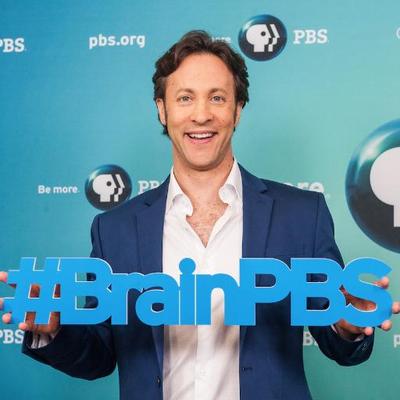
A Stanford neuroscientist published a paper a few years ago that quietly answered one of the oldest questions in human history, and almost nobody outside his field has heard of it.
The question is why we dream. Not what dreams mean. Why they exist at all. Why your brain spends a third of its sleep hallucinating images instead of just resting like every other organ in your body.
His name is David Eagleman.
He runs a lab at Stanford. The paper is called "The Defensive Activation Theory", and the moment you read it the explanation collapses every other theory you have ever been taught about dreams.
Freud said dreams were repressed desires. He was guessing. He had no brain scans. He had no electrodes. He had a couch and a notebook and a century of credibility that nobody has been able to fully scrub off the subject since.
Modern neuroscience replaced him with the memory "consolidation theory". The idea that dreams are your brain sorting through the day, filing things away, deciding what to keep. That story is partially true. Sleep does consolidate memory. But it does not explain the single strangest thing about dreams, which is that they are almost entirely visual.
You do not dream in pure sound. You do not dream in taste. You do not dream in smell. You dream in pictures. Vivid, detailed, often impossible pictures that activate the back of your brain so hard a scientist scanning you would think your eyes were wide open.
Eagleman started from one fact almost nobody outside neuroscience knows. The brain is territorial. Every region holds its turf through constant electrical activity. The moment a region goes quiet, its neighbors start invading. They take the silent territory and reassign it to themselves.
This is called "cortical takeover", and it is not slow. It is not a long process measured in years. In experiments where adults are blindfolded, the visual cortex starts processing touch and sound within an hour. One hour of darkness, and the territory is already being annexed.
In congenitally blind people, the visual cortex is fully repurposed. It runs language. It runs hearing. It runs touch. The hardware never went unused. It was just reassigned to whoever showed up first.
Now sit with the implication of that for a second.
Every night, when you close your eyes and fall asleep, the sun has set. The planet has rotated. The visual cortex, which takes up roughly a third of your entire cortex, is suddenly receiving zero input. For eight hours. Every single night. For your entire life. And evolution has shaped your brain inside a planet that has been spinning into darkness for billions of years.
If cortical takeover happens in an hour, the visual cortex should have been lost a long time ago. Stolen by hearing. Stolen by touch. Reassigned by morning. Humans should have evolved into a species whose vision works fine during the day and then degrades every time the sun goes down because the territory keeps getting renegotiated overnight.
But that did not happen. Vision works the moment you open your eyes. Which means something is defending the territory while you sleep.
Eagleman's claim is that dreams are that defense.
Every 90 minutes through the night, a precise burst of activity fires from the brainstem into the visual cortex. Pontine-geniculate-occipital waves. PGO for short. They are anatomically aimed. They are not general arousal.
They are a targeted volley of signal launched directly at the back of the brain where vision lives. The cortex lights up as if it is receiving real images, and you experience that artificial activation as a dream. The bizarre narrative your conscious mind invents around it later is just your brain trying to make sense of the noise.
The dream is not the point. The dream is the side effect. The point is keeping the territory occupied.
The evidence for this is the part that should haunt you.
Newborns spend roughly 50% of their sleep in REM. Adults spend twenty. Old adults spend fifteen. The amount of dreaming you do tracks almost perfectly with how plastic your brain is. Newborns have the most plastic brains on earth. Their visual cortex is in the highest danger of being overrun by neighboring senses while it develops.
So evolution gave them an enormous defense budget. As you age, your brain becomes less plastic, the takeover risk drops, and the defense system scales down accordingly.
Eagleman and his co-author ran the same correlation across twenty-five primate species. The more plastic a species' brain, the higher the proportion of REM sleep. The relationship held across the entire primate family tree. Plasticity and dreaming move together. They are two halves of the same evolutionary equation.
A species that ranks higher on flexibility and learning also dreams more. A species that is born ready to walk and survive dreams less. Plasticity is the asset. Dreaming is the insurance premium.
And the prediction the theory makes is the one that quietly closes the case.
Of all your senses, only one is disadvantaged by darkness. You can still hear in the dark. You can still feel in the dark. You can still smelll and taste in the dark. The only sense that depends on light is vision. Which is exactly the sense your dreams are made of. The defense system is targeted at the only territory that is actually vulnerable while you sleep.
Memory consolidation is real. Emotional processing is real. Your brain does do those things at night. But Eagleman's argument is that those functions piggyback on a much older system whose original job was simpler and more brutal. Keep the lights on inside the visual cortex while the planet is dark, or lose it.
For thousands of years, people have asked what dreams mean. Prophets wrote about them. Poets wrote about them. Freud built a discipline on them. None of them had access to the actual answer, which is that dreams may not mean anything in the symbolic sense at all.
They may be the visible flicker of a defense system running in the background, the way a screen saver protects a monitor by keeping the pixels moving even when nobody is looking.
The strangest thing about the theory is how cleanly it explains why dreams feel so real. Your visual cortex cannot tell the difference between a PGO wave and an actual photon. It is the same hardware lighting up the same way. The cortex does its job. It builds an image. Your conscious mind, half-awake, wraps a story around it and calls it a dream.
You are not seeing your subconscious tonight. You are watching your brain defend a piece of itself from being stolen.
Every animal that has ever closed its eyes on this planet has done the same thing.

Jaya Jha retweeted

For the record, the president of the United States is now simultaneously claiming that he has won the war, is currently winning the war, needs help to win the war, and needs no help to win the war. All to destroy the nuclear program he claims to have already destroyed last year.
Jaya Jha retweeted

Yesterday's Emirates network restart didn't go according to plan. We made the point that connecting hubs like Dubai don't work if arrivals & departures get frequently disrupted. Why is this?
🔴Emirates operate a "banked" hub where arrivals & departures are arranged in concentrated banks. What does this mean?
🔴We wrote a detailed explainer on the design of Emirates's Dubai schedule a few years ago (see link below). Using these data, we put together this figure:
🛬Arrivals are concentrated into "arrival banks". One arrival bank runs 4am→8am where Emirates have 165 arrivals; contrast this to 8am→12pm where they only have 25 arrivals!
🛫Each arrival bank precedes a "departure bank". The 4am→8am arrival bank precedes a matching departure bank (7am→11am) with 186 Emirates departures. Compare this to 11am→2pm with just 14 departures!
🔴If whole arrival bank gets delayed due to disruptions like yesterday, then departure bank that follows it also gets delayed (or people miss those connections). This causes downstream disruptions, e.g. delaying next arrival bank, missing slots/curfews at destination, passengers missing onward connections, etc.
🔴Connecting hubs are finely tuned efficiency engines and they just don't work with constant disruption. See the full explainer for more detail:
analyticflying.com/p/emirate…

Jaya Jha retweeted

I am a diplomatic aide in the Sultanate of Oman's Ministry of Foreign Affairs.
My job is logistics. When two countries that cannot speak to each other need to speak to each other, I book the rooms. I prepare the briefing materials. I make sure the water glasses are the right distance apart. You would be surprised how much of diplomacy is water glasses. Too close and it feels informal. Too far and it feels like a tribunal. I have a chart.
We had a very good month.
Since January, Oman has been mediating indirect talks between the United States and Iran on Iran's nuclear program. The talks were held in Muscat and in Geneva. The Americans would sit in one room. The Iranians would sit in another room. I would walk between them. My Fitbit says I averaged fourteen thousand steps on negotiation days. The hallway between the two rooms at the Royal Opera House conference center is forty-seven meters. I walked it two hundred and twelve times in February. This is good for my cardiovascular health. It was less good for my knees. Both are in the service of peace.
By mid-February, we had something.
Iran agreed to zero stockpiling of enriched uranium. Not reduced stockpiling. Zero. They agreed to down-blend existing stockpiles to the lowest possible level. They agreed to convert them into irreversible fuel. They agreed to full IAEA verification with potential US inspector access. They agreed, in the Foreign Minister's phrase, to "never, ever" possess nuclear material for a bomb. I have worked in diplomacy for seven years. I have never seen a country agree to this many things this quickly. I made a spreadsheet of the concessions. It had fourteen rows. I color-coded it. Green for confirmed. Yellow for pending. By February 21 the spreadsheet was entirely green. I printed it. It is on my desk in Muscat. It is still green.
That phrase took eleven days. "Never, ever." The Iranians initially offered "not seek to." The Americans wanted "will not under any circumstances." We landed on "never, ever" at 2:14 AM on a Tuesday in Muscat. I typed the final version myself. I used Times New Roman because Geneva prefers it. The document was fourteen pages. I was proud of every comma.
Here is what they said, in the order they said it.
February 24: "We have a once-in-a-generation opportunity." — The Foreign Minister, private briefing to Gulf Cooperation Council ambassadors. I prepared the slide deck. Slide 14 was the implementation timeline. Slide 15 was the signing ceremony logistics. I had reserved the Palais des Nations in Geneva, Room XX. It seats four hundred. We discussed pen brands for the signing. The Iranians preferred Montblanc. The Americans had no preference. I ordered twelve Montblanc Meisterstucks at six hundred and thirty dollars each. They arrive on Tuesday.
February 27, 8:30 AM EST: "The deal is within our reach." — The Foreign Minister, CBS Face the Nation. He sat across from Margaret Brennan. He said broad political terms could be agreed "tomorrow" with ninety days for technical implementation in Vienna. He said, and I wrote this line for the briefing card he carried in his breast pocket: "If we just allow diplomacy the space it needs." He praised the American envoys by name. Steve Witkoff. Jared Kushner. He said both had been constructive.
I watched from the Four Seasons Georgetown. The minibar had cashews. I ate the cashews. They were nineteen dollars. The most expensive cashew I have ever eaten. But it was a good morning and we were within our reach.
February 27, 2:00 PM EST: Meeting with Vice President Vance, Washington. The Foreign Minister presented our progress. Zero stockpiling. Full verification. Irreversible conversion. "Never, ever." The Vice President used the word "encouraging." His aide took notes on an iPad. The aide did not make eye contact for the last nine minutes of the meeting. I noticed this. Noticing things is the only part of my job that is not water glasses.
February 27, 4:00 PM EST: "Not happy with the pace." — President Trump, to reporters.
Not happy with the pace.
We had achieved zero stockpiling. Full IAEA verification. Irreversible fuel conversion. Inspector access. And the phrase "never, ever," which took eleven days and cost me two hundred and twelve trips down a forty-seven-meter hallway.
Every American president since Carter has failed to get Iran to agree to this. Forty-five years.
Not happy with the pace.
February 27, 9:47 PM EST: The Foreign Minister's flight departs Dulles for Muscat. I am in the seat behind him. He is reviewing Slide 14 on his laptop. The implementation timeline. Vienna technical sessions. The signing ceremony. The pens.
I fall asleep over the Atlantic. I dream about water glasses.
February 28, 6:00 AM GST: I wake up to push notifications.
February 28: "The United States has begun major combat operations in Iran." — President Trump.
Operation Epic Fury. Coordinated airstrikes. The United States and Israel. Tehran. Isfahan. Qom. Karaj. Kermanshah. Nuclear facilities. IRGC bases. Sites near the Supreme Leader's office. Israel called their half Operation Roaring Lion. Someone in both governments spent time choosing these names. Epic Fury. Roaring Lion. I spent eleven days on "never, ever." They spent it on branding. The President said Iran had "rejected American calls to halt its nuclear weapons production."
Rejected.
Iran had agreed to zero stockpiling. Iran had agreed to full verification. Iran had agreed to "never, ever." Iran had agreed to everything in a fourteen-page document that I typed in Times New Roman.
The President said they rejected it.
I do not know which document the President was reading. I know which one I typed.
February 28, 18:45 UTC: Iran internet connectivity: four percent. — NetBlocks, confirmed by Cloudflare. Ninety-six percent of a country went dark. You cannot negotiate with a country at four percent connectivity. You cannot negotiate with a country that is being struck. You cannot negotiate. This is not a political opinion. This is a logistics assessment.
February 28: The governor of Minab reported forty girls killed at an elementary school.
I do not have logistics for that. There is no slide for that. The water glass chart does not cover that.
February 28: Lockheed Martin: up. Northrop Grumman: up. RTX: up. Dow futures: down six hundred and twenty-two points. Gold: five thousand two hundred and ninety-six dollars. An analyst at AInvest published a note titled "Iran Strikes: Tactical Plays." The note recommended positions in oil, defense stocks, and gold.
The most expensive cashew I have ever eaten was nineteen dollars. The most expensive pen I have ever ordered was six hundred and thirty dollars. The math suggests I have been working in the wrong industry. Defense stocks do not require water glasses. Defense stocks do not require eleven days. Defense stocks require one morning.
February 28: Israel closed its airspace and its schools. Iran launched retaliatory missiles toward US bases in the Gulf. The Supreme Leader promised a "crushing response." Israel's defense minister declared a permanent state of emergency. Everyone is using words I recognize in an order I do not. I recognize "permanent." I recognize "emergency." I do not recognize them next to each other. In diplomacy, nothing is permanent and everything is an emergency. In war it is the reverse.
February 28: The Foreign Minister has not made a public statement.
The briefing card is still in his breast pocket. It still says "within our reach."
Readers added context they thought people might want to know
OP is not a member of Oman’s Ministry of Foreign Affairs. He is a cyber security specialist. The entire post is a fictional representation of events.
x.com/gothburz/statu…
petergimus.com
Jaya Jha retweeted

Many people are telling me in the comments that SIM binding doesn’t affect anything and I’m overreacting. Let me walk you through why this matters.
First, let me be clear. SIM binding by itself is not surveillance. I’m not saying the government is reading your chats. The concern is structural.
Under the new TIUE framework, the government now has the power to direct platforms to stop providing services to any specific phone number. No court order needed. No judicial oversight. No requirement to even notify the user. The Internet Freedom Foundation flagged this directly in their letter to DoT.
Think about what that means for independent journalism in a country ranked 161 out of 180 on the Press Freedom Index.
India has no source protection law for journalists. The Whistleblower Protection Act 2014 only covers disclosures to “competent authorities,” not to the press. Now every messaging account is tied to a KYC-verified SIM, which is tied to your Aadhaar. Every anonymous source, every whistleblower, every activist becomes easier to trace. The Editors Guild of India already warned that new data rules “create a chilling environment for reporters and weaken the public’s right to know.”
Now the practical impact on you and me.
You use WhatsApp on a tablet without a SIM slot? Might stop working or log you out every 6 hours. Travel abroad and swap to a local SIM? You lose WhatsApp access. Run a small business on WhatsApp Web? QR code login every 6 hours now. The Broadband India Forum, representing the actual tech industry, said this will “impose material inconvenience on ordinary users” while offering “limited incremental benefit against sophisticated fraud networks.”
Now here’s what other countries do to fight cyber fraud instead.
The EU built the European Digital Identity Wallet. User-controlled, open source, privacy preserving. Verifies identity without tying every app to a SIM card. The UK built a Digital Identity Trust Framework with private sector participation. Europe introduced double authentication for payments which actually reduced fraud without touching messaging apps. Singapore uses SingPass for secure digital identity.
None of them said “tie your WhatsApp to your SIM or we shut it down.”
India chose the one approach no other democracy has tried. Not because it’s more effective. But because it’s easier to implement top-down without public consultation or parliamentary debate.
The question isn’t whether you have something to hide. The question is whether a government should be able to disconnect your communication without a court order in a country that has no law protecting the people who speak up.
That’s not about today. That’s about what becomes possible tomorrow.

From tomorrow, India becomes the ONLY country in the world to mandate SIM binding for WhatsApp, Telegram and Signal.
Not the US. Not the UK. Not even China. Just India.
The government says “cybersecurity.” Let’s fact-check that with their own data.
They already blocked 9.42 lakh fraudulent SIM cards. Already saved INR 5,489 Crore through existing systems. Already froze 24 lakh mule accounts.
The existing tools ARE working. So why put 100 Crore+ Indians under surveillance?
Cyber fraud in 2024 was INR 22,845 Crore. Banking apps ALREADY have SIM binding. Did that stop it? No. Fraudsters use burner SIMs. They’ll keep using burner SIMs. This rule punishes ordinary citizens, not criminals.
The Supreme Court in Puttaswamy (2017) ruled Privacy is a fundamental right under Article 21. Any restriction must be legal, necessary, and proportionate. This fails all three.
Meta and Google have formally called it “unconstitutional” and “ultra vires.” Even former Qualcomm VP Parag Kar confirmed Apple’s iOS literally blocks apps from reading SIM identifiers. The tech doesn’t even support what the government is demanding.
No public consultation. No parliamentary debate. No judicial oversight for disconnecting your access. WhatsApp Web forcefully logged out every 6 hours.
Internet Freedom Foundation demanded a rollback. Industry challenged it legally. Government’s response? “No extension.”
Yesterday I wrote about how the Whistleblower Protection Act was never implemented. Today the same government wants your messaging identity without a court order.
Won’t protect those who expose corruption. But will track every message you send.
This isn’t cybersecurity. This is a pattern.

Jaya Jha retweeted

A more precise statement: All modern humans have an unbroken lineage of about 300,000 years going back to Africa. All Indians carry a genetic lineage going back about 60,000 years to the arrival of the Out of Africa migrants. All Indians also carry the genetic lineage of the people who would go on to build the Harappan Civilization, a mix of the Out of Africa migrants and later migrants from ancient Iran, going back to perhaps 7,000 years ago. Most Indian population groups also carry the genetic lineage of the Steppe migrations from Central Asia between 2000-1500 BCE that brought Indo-European languages to the subcontinent, as also the East Asian migrations that brought Austro-Asiatic languages after 2000 BCE. Yes, we do carry a long genetic lineage, one that goes far beyond 5000 years, as we are a mix of multiple migrations into India that happened in prehistory.


Jaya Jha retweeted

One of the strongest arguments for teaching classic literature is simply this:
If students are never asked to inhabit minds from other times and cultures, they will confuse their own narrow historical moment with universal truth.
The canon is an antidote to chronological snobbery.
Jaya Jha retweeted

I teach the Venezuela case study, and there’s one thing people conveniently forget, so let me spell it out.
Sovereignty is not optional. It is the highest priority of any country whether it’s run by geniuses, clowns, or failed leaders.
If a country’s leadership is bad, that is for its people to change. History is very clear on this! When people unite, regimes fall. Unity, not foreign missiles, is the most powerful force a society has.
But here’s the part the “liberators” never tell you! When foreign forces parachute in claiming they’re here to “save” you, what follows is not freedom. It’s chaos, extraction, and decades of abusing resources.
Kidnapping presidents doesn’t create democracy!
Bombs don’t build institutions!
And sovereignty doesn’t survive “humanitarian invasions”!
Expect your resources quietly changing hands.
Open your fucking eyes.
Jaya Jha retweeted

Dear Mr Kanwal Sibal , the history and the ancient literature of old civilisations like India , Egypt , Greece , china don’t belong to only the respective countries because they are the heritage of human race at large . Actually being unnecessary suspicious of a respected scholar of foreign origin is a sign of inferiority complex . What is ultimately ironic is that you have condemned this foreigner in a foreign language .
Jaya Jha retweeted

The elites are clueless idiots: Revolutions erupt not from some grand ideology, but from raw, festering injustice that finally boils over. The real joke? These uprisings only stick when a chaotic mob of mismatched malcontents—opportunists, ideologues, and the truly screwed—piles on from every angle, feasting on widespread despair like vultures on a carcass.
The real victims, the wide-eyed innocents starved of hope, get hit with a primal surge—hearts pounding, minds ablaze, even their groins tingling with forbidden thrill. This is their long-awaited apocalypse rave, grinding to the savage chant of “Down! Down!” Sure, sometimes the mob scores a win: Toppling those smug statues of the corrupt feels like sweet vengeance.
But as that half-genius, half-lunatic Slavoj Žižek smirks, after the orgy of chaos comes the brutal “Morning After.” The pure-hearted revolutionaries, who’ve burned themselves out in ecstatic fury, stagger away exhausted. As the dust settles and the wreckage is shoveled aside, the predators slink in—wolves in sheep’s clothing, posing as heroic saviors of the new dawn.
The self-righteous fools, shackled by their own delusional nobility, play the martyr and bow out gracefully. And just like that, the wolves pounce, devouring the spoils while the dreamers wake up to a nightmare worse than before. @Suhelseth @ShashiTharoor @ravish_journo @anubhavsinha @manujosephsan @HartoshSinghBal @shekharkapur @madversity @svaradarajan @AbhinandanSekhr @vanityparty
Jaya Jha retweeted

This. The more I travel, the more I get to know the arcs of various countries, the more I appreciate what we had. Did we make mistakes? Sure. But we still had a far better outcome than many, especially given our scale and diversity.

Jaya Jha retweeted

An Iranian man left this comment on my YouTube channel. It's the single best explanation I've ever heard on the future of #Iran 👇
As an Iranian, I can tell you the situation is no longer just political—it's existential. We are trapped between two collapsing structures: one internal, one external. On one hand, we face a deeply dysfunctional government, led by the Supreme Leader and the Islamic Republic’s unelected institutions.
Decades of economic mismanagement, suppression of dissent, and brutal ideological control have alienated multiple generations. No one believes in reform anymore—because every attempt has either been co-opted or crushed.
But here's the paradox: We are also terrified of regime collapse—because we've watched the aftermath of Western intervention in countries like Iraq, Libya, Syria, and Afghanistan.
Each was promised freedom; each descended into chaos, civil war, or foreign occupation. So no, we don't trust the U.S. or Israel. Not because we support our regime—but because we know how imperial powers treat ‘liberated’ nations in the Middle East.
Freedom, in their language, often means vacuum, fire, and permanent instability. Right now, many Iranians live with three truths at once: The Islamic Republic is morally and politically bankrupt. The alternatives offered by foreign actors are not liberation—they’re collapse. A bad government is survivable. No government is not. We are not silent because we agree.
We are cautious because we’ve learned—too well—what happens when superpowers decide to "help." In a sentence: Iran is a nation held hostage by its own regime, but haunted by the fate of its neighbors. We are stuck in a house we hate, surrounded by fires we fear more.