


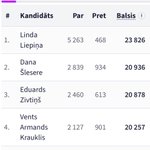



Lai @valstsmezi un @CSDD_LV nejustos tik bēdīgi… Cits princips, bet sekas vēl dramatiskākas.
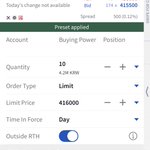
Tiek ziņots, ka Revolutam ransom ir kkur 10,000 bitcoin apmērā (~660m EUR).
techradar.com/pro/security/r…

Read this.
Probably the most valuable thing you read the whole week.

The most surprising thing about this chart is not that the average retail investor is down nearly 13% in a year when many headline indices have performed reasonably well. The surprising part is that this pattern repeats itself across almost every major market cycle.
Retail investors do not lose money because they lack intelligence. They lose money because they systematically buy narratives instead of cash flows, momentum instead of valuation and excitement instead of probabilities.
That is why the average portfolio often bears little resemblance to the index. Market-cap weighted indices naturally allocate more capital toward companies whose earnings and market values continue growing. Retail portfolios, however, are often concentrated in whatever is trending on social media, discussed on Reddit, promoted by influencers or viewed as "the next NVIDIA." The result is that retail investors frequently end up owning the most crowded trades at the richest valuations.
Ironically, the stocks people are most excited to buy are often the ones that already embed the highest expectations.
Another structural problem is concentration. Many retail investors own five to ten individual stocks that they believe have the potential to become the next ten-bagger. Unfortunately, the probability distribution works against them. Even if one position performs exceptionally well, one or two catastrophic losers can overwhelm the gains because high-beta portfolios compound losses much faster than diversified portfolios compound gains.
Behavioral finance also plays an enormous role. Professional investors typically begin with a valuation framework and then determine whether expectations are too optimistic or too pessimistic. Retail investors frequently reverse that process. They fall in love with a story first and only afterwards look for reasons to justify the investment. Confirmation bias then reinforces every bullish headline while dismissing evidence that contradicts the original thesis.
There is also a timing problem that receives far less attention. Retail investors tend to buy after strong performance because rising prices create confidence and social validation. Conversely, they often sell after significant declines because losses create fear. In other words, they systematically buy when expected returns have fallen and sell when expected returns have improved.
This behavior creates a negative feedback loop. The better a stock performs, the more capital retail investors allocate toward it. The worse it performs, the more likely they are to capitulate near the bottom. Professional investors attempt to exploit precisely this behavioral asymmetry.
There is another lesson hidden in this chart. The average retail portfolio is not necessarily a reflection of the average company. It is a reflection of the average stock selection process.
If investors disproportionately chase speculative software companies, unprofitable AI names, meme stocks, leveraged ETFs or fashionable themes while underweighting profitable compounders with durable earnings growth, it is entirely possible to lose money despite a healthy broader market.
This is one reason why investing is often counterintuitive. The objective is not to buy the company everyone is talking about. The objective is to buy the company whose future is better than what the market has already priced in.
Ultimately, the market is an expectations machine rather than a popularity contest. Great companies can produce poor investment returns if expectations become unrealistic, while boring companies can generate exceptional returns if expectations are excessively pessimistic. The average retail investor often confuses a good business with a good investment, and that distinction has probably destroyed more wealth than almost any other mistake in investing.
Šis ir reāli mīļi pret aptiekām 😂
👏👏👏 PSKUS, Dumpim, @veselibasmin. Šim ir potenciāls!
lsm.lv/raksts/zinas/latvija/…

My investment framework is largely based on Terry Smith’s teachings (among others), but seeing him deviate and give in to investor pressure is painful to watch.


ESG: cost of doing business. Ja šķiet, ka tas paies garām un Tevi neskars, padomā vēlreiz.
lsm.lv/raksts/zinas/ekonomik…

JanisC retweeted

GOV: We have a housing crisis. Prices are too high.
ME: I agree. Supply is too low.
GOV: So we have a plan. We’re going to subsidize demand.
ME: …What does that mean?
GOV: We’re going to give people money to buy houses.
ME: But there aren't enough houses.
GOV: Right. So we’ll help them bid harder.
ME: If you have 10 people fighting for 1 house, and you give them all cash... the price just goes up.
GOV: Then we’ll give them more cash.
ME: That’s not a solution. That’s inflation.
GOV: It’s "First Time Homebuyer Assistance."
ME: Okay, let’s back up. Why are houses so expensive in the first place?
GOV: Because we made them the perfect investment vehicle.
ME: How?
GOV: First, the 30-year fixed mortgage.
ME: That’s standard, right?
GOV: Only in America. In other countries, rates float. Here, you can lock in a low rate for three decades.
ME: Why would a bank take that risk? If inflation goes up, they lose money.
GOV: Banks don’t take the risk. They sell the loan to us.
ME: To the government?
GOV: To Fannie Mae and Freddie Mac. We guarantee the liquidity.
ME: So the taxpayer subsidizes the risk so I can have cheap leverage?
GOV: Correct.
ME: And then I get to deduct the interest?
GOV: Only on the first $750,000 of debt.
ME: That seems... high.
GOV: It used to be a million. We trimmed it.
ME: But wait. If I rent, can I deduct my rent?
GOV: No.
ME: If I buy a small business, can I deduct the interest on the loan?
GOV: It’s complicated.
ME: But if I buy a giant house, I definitely can?
GOV: Absolutely. We wrote it into the tax code.
ME: So you’re paying me to borrow money to buy a bigger house than I need.
GOV: We’re "incentivizing ownership."
ME: What happens when I sell?
GOV: The Capital Gains Exclusion!
ME: How does that work?
GOV: If you sell a stock for a $500,000 profit, you pay taxes.
ME: Roughly 20%.
GOV: If you sell your house for a $500,000 profit?
ME: What do I pay?
GOV: Zero.
ME: Zero tax?
GOV: As long as you lived there for two years.
ME: So housing is the only asset class where I get subsidized 30-year leverage and tax-free profits?
GOV: Pretty sweet deal, right?
ME: So you turned shelter into a speculative financial asset.
GOV: We call it "Generational Wealth."
ME: Okay, so demand is juiced to the moon. Can we at least build more supply to bring prices down?
GOV: Oh, absolutely not.
ME: Why?
GOV: Zoning.
ME: I own land. Can I build a duplex?
GOV: Illegal. Single-family only.
ME: Can I build a granny flat?
GOV: Only if you provide two parking spots and pass a shadow study.
ME: So you made it illegal to build cheaper housing?
GOV: We protect "Neighborhood Character."
ME: But you spend billions on roads and utilities for the suburbs.
GOV: Infrastructure investment.
ME: So you subsidize the expensive sprawl, but ban the cheap density?
GOV: Now you’re getting it.
ME: This system seems designed to keep prices high.
GOV: It is.
ME: But you started this conversation by saying we have an "Affordability Crisis."
GOV: We do. Prices are too high!
ME: So we should lower them?
GOV: No! We can’t lower prices.
ME: Why not?
GOV: Because then the voters lose their "Generational Wealth."
ME: So we need high prices for the voters... and low prices for the buyers?
GOV: Exactly.
ME: That’s a paradox.
GOV: It’s politics.
ME: So what is your actual plan?
GOV: We’re going to give first-time buyers $25,000.
ME: Okay. I’m a seller. I list my house for $400,000.
GOV: Uh huh.
ME: I know every buyer just got a free $25,000 from the government.
GOV: Right.
ME: What do I do?
GOV: You... keep the price the same?
ME: I raise the price to $425,000.
GOV: You wouldn't.
ME: I absolutely would. The buyer can afford it now.
GOV: But that just transfers the subsidy from the poor buyer to the rich seller!
ME: Econ 101.
GOV: We don’t think that will happen.
ME: Just like you didn’t think $7,500 EV credits would make Ford raise the price of the F-150 Lightning by exactly $7,500?
GOV: That was a coincidence.
ME: You are trapping us in a box.
GOV: It’s not a box.
ME: What is it?
GOV: It’s a Single Family Home with a 2.5% mortgage rate that you can never afford to sell.
ME: ...
GOV: Welcome to the American Dream.

Thank you to @veritasium, @ZEISS_Group and @ASMLcompany for this video. And thank you to every single physicist and engineer who dreamed of it and then actually built it!
youtu.be/MiUHjLxm3V0?si=uIjd…

lsm.lv/raksts/zinas/ekonomik…
Šo vajadzētu @IZM_gov_lv apmaksāt, attiecīgi samazinot skolu finansējumu. Ja jau neiemācija skolā…
Bet vispār valstij jau tāpēc arī nav naudas, jo tiek veidotas un apmaksātas jaunas un jaunas muļķības. @EvikaSilina @Finmin @Broks @guntarsv @AijaBrikse

JanisC retweeted

Seeing how the USA now hellbent on emulating their newfound ally of Russia, both at home and abroad, I find myself obliged to repost my dive into Russia's posh cities, just to give your average MAGA a glimpse into the greatness Trump is sure to bring about! Do enjoy!🧵

JanisC retweeted
With Russian bots and propagandists again spamming all of the internet with the same three fancy looking places in Moscow and St. Petersburg, I figured it'd be a good time to write a continuation to my travel guide to Russia.
Welcome to vol. 2 of "Posh Russian cities"! Enjoy!🧵

Jauns gads, tie paši izaicinājumi. Biļešu pirkšanas stresa ziņā @jrt_lv nobāl.
Bērniem mācīties peldēt @olimpiskais pēc šodienas 10:01 diemžēl vairs nebūs iespējams.
P.S. Visu saprotu, baseins nav bezizmēra. Žēl, ka to tik maz 🙁
Efektīvākais veids, kā sajusties kā uzvarētājam? Spēt nopirkt bērnam peldēšanas abonementu brīvdienu rītiem @olimpiskais 💪💪💪
AirBaltic lielā problēma ir likviditāte, ne solvency. Maksātspējas problēmu var pastiept, izstiept, restrukturizēt. Likviditātes problēmai ir reāls beigu datums. Un €50m kuponi to datumu nozīmīgi tuvina. lsm.lv/raksts/zinas/ekonomik…

What a treat to see @rainerhersch in Cesis tonight! Thanks Juris Zagars & Cesu Makslas Festivals!
Ignitis. Var, protams, turpināt muldēt kā Zariņa govs.

Finanšu paradokss Latvijā, kuru nekad nesapratīs neviens finanšu eksperts, mācies kaut pasaules labākajā augstskolā.
Paradokss saucas #tupaks.
Tātad. Ekonomisti zin, ka valsts nav labākais saimnieks. Privātais saimnieko labāk. Jebkur un jebkuros laikos. Visus uzņēmumus, kuri darbojas konkurentā tirgū, valstis pamatā privatizē. Šāda pieeja ir vispārakceptēta, iekļauta OECD, SVF, Pasaules bankas un ES rekomendācijās, ekonomikas mācību grāmatās.
Izņēmumi? Izņēmumu nav. Neprivatizē vai nav vēlams privatizēt to, kur konkurenta tirgus nav. Vai nu nav privātas intereses (sabiedriskais transports, kur ir tikai zaudējumi), vai nu konkurences nav citu iemeslu dēļ - piemēram, enerģētikā, kas ir mēroga bizness un optimāli strādā ‘viens liels uzņēmums’. Mazā valstī kā Latvijā tāds ir Latvenergo. Dabīgs monopols. Monopolu nav jēgas privatizēt, cenas no tā nesamazināsies, jo nebūs konkurences. Jēgas no biržas arī nekādas.
Igauņi pamēģināja, palaida biržā savu energomilzi, saprata kļūdu, un tagad plāno akcijas atpirkt atpakaļ un nemāžoties ar biržu.
Kā pie mums?
Valstij pieder telko uzņēmumi TET un LMT. Telekomunikāciju sektorā konkurence ir, nekādas vajadzības valstij darboties šajā segmentā nav. Bet. Mūsu valdība ir izdomājuši šos uzņēmumus pārpirkt pilnībā un ar to neslēpti lepojas.
Savukārt, Latvenergo, tirgu dominējošo enerģētikas milzi, kas ir ievērojams budžetu sildošs naudas avots, to tagad gribēja laist privātā tirgū.
Viss otrādi. Paradokss #tupaks.
Kad Kriķis runā, tad labāk paklausīties. @IZM_gov_lv iespējams, nav labākā politika vākt balsis ministra partijai Oprah’s stilā (you get a car, you get a car, everybody’s getting a new car!), bet pārdomāt mācību plānu. lsm.lv/raksts/zinas/latvija/…

Kad Latvijas CB būs spējīga realizēt tādu pašu kreatīvu reitingošanu kā Francijas CB? @rutkaste Francija panāca REĀLU sme/corpo lending relief. Nevis stulbošanos ar kaut kādiem hipo likmju salīdzināšanas tūļiem.


Tikai Latvijā var iet ar saukli “pērc [dārgu] vietējo!” un pēc tam sūdzēties, ka viss ir dārgi 😂
Veiciet ekonomiski racionālākās izvēles (cena-kvalitāte) un būsiet pārsteigti par to ietekmi uz cenām. Cenas primāri nosaka ražotāji un patērētājs kopā, ne mazumtirgotājs.

Pierunāšana un draudi, lai pārtikas cenas kļūtu zemākas ift.tt/w9jmyxT

