

Topics usually covered: Software Engineering, Computer Graphics, Philosophy, Theology, Game Development.
Lund, Sweden
Joined December 2008
- Tweets41.5K
- Following709
- Followers1K
- Likes17.6K







Chris Green retweeted

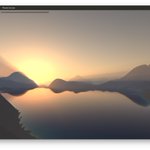
The amount of new tech I have never seen before in a video game thats in this image is quite fun.
* Volumetric data structure that can run purely functional programs inside itself
* Vertex sdf shadows (with a paper imo)
* Volumetric plants growing from volumetric water
* Terrain manipulation at instant speeds
* Water simulation at realtime very cheaply
#DygdDev #GameDev #IndieDev


Chris Green retweeted

Can we please get a setting on Twitter to remove the huge volume of fictional soap opera micro-novella content?
It’s probably all AI generated anyway, not reflective of actual human experience or true life.
Chris Green retweeted

Just so everybody gets a clear image about this.
If the board removes him as CEO, several clear boundaries apply:
• Every share Jensen Huang already owns outright is his legal property. He retains full voting rights for those shares and can hold them, borrow against them, or dump them on the open market whenever he chooses (subject only to standard SEC insider trading blackout windows if he remains on the board, or Rule 144 volume limits if he steps down completely).
• The only shares a board can claw back or cancel upon termination are unvested performance stock units (PSUs) or restricted stock units (RSUs) that have not yet met their time or performance milestones. Given that Jensen co-founded Nvidia in 1993 and holds roughly 3.5% of the company outright, the vast majority of his multi-billion-dollar stake is long since vested.
• Because he is Nvidia's largest individual shareholder, firing him against his will creates an immediate existential headache for the board. As an outside shareholder, he could launch a proxy fight to replace the board directors at the next annual meeting, start a rival silicon venture and poach Nvidia's top CUDA and architecture leads, or threaten to liquidate tens of billions of dollars in stock, cratering the share price for institutional investors.
In short, firing a founder who owns over $100 billion in vested stock does not strip him of power; it just turns him into an activist shareholder with infinite capital and zero fiduciary obligations to protect the board.


Chris Green retweeted

Sam Altman' and Dario Amodei's worst nightmare.

BREAKING: Revolut moved ~2,000 engineers onto self-hosted GLM for coding and pushed Claude Code and Codex to the exception list.
Per David Abitbol, who leads AI ops there: 56 Nvidia B200s, a blended 30 cents per million tokens, roughly a tenth of what they paid Anthropic and OpenAI. Engineering lead time improved 70%.
Here's the part that matters: the gains showed up when tokens stopped being rationed. Engineers quit saving AI for the hard tickets and pointed it at everything.
Frontier models become the exception, open weights become the default. That's a pricing problem for every lab heading to IPO.
h/t @OliverMolander
Would you move your team off frontier APIs if the bill dropped 90%?


Chris Green retweeted

Take this another N steps and you'll find everyone with IQ over 120 being employed to talk to LLMs


Chris Green retweeted

a couple weeks ago I posted about how bone grows into titanium implants because cells can't find the boundary
turns out there's a catch engineers have been trying to solve for years:
titanium is too stiff (~110 GPa vs spongy bone's 0.02–3.7 GPa)
so the metal takes all the load, and the real bone around it actually weakens because physics says "why maintain structure that isn't carrying stress?" (stress shielding)
enter selective laser melted Zn-1Mg-0.1Sr gyroid scaffolds:
→ mathematically generated TPMS gyroid lattice (70% porous, 550 μm pores)
→ elastic modulus tuned right down to 2.3 GPa so it flexes like real cancellous bone
→ alloying zinc with 1% Mg + 0.1% Sr precipitates Mg2Zn11 & SrZn13 intermetallics, more than doubling strength over pure zinc (33.7 MPa)
→ degrades at 0.36 mm/year with zero hydrogen gas pockets
and the wildest part
as it dissolves, it turns its own surface into calcium-phosphate & zinc-phosphate minerals while feeding Zn2+ and Sr2+ ions that make bone-forming cells grow faster
titanium tricks the skeleton into adopting permanent metal
this thing holds the load, feeds the bone to rebuild itself, and vanishes when the job is done.
radical engineering.


today while talkin to my friend (who’s a doctor) I learned something really crazy
That the titanium implants don't just sit in bone they actually bone grows into them
the oxide layer on titanium surface is chemically close enough to biological tissue that cells can't find the boundary so they erase it
osseointegration isn't the implant holding on it's biology deciding the metal belongs there
the skeleton adopts the foreign object as its own
Cyborg vibes


Chris Green retweeted

One of the most valuable things a developer can say is:
"Why are we doing it this way?"
Not to be difficult.
But because sometimes an entire team is solving a problem that doesn't need to exist.
Chris Green retweeted

It’s funny as a 90 second video, but it’s really debilitating when this is your life 24/7


Chris Green retweeted

Once shadowed a surgeon and he told me what surgeries he was doing so I watched YouTube videos and looked them up in textbooks. I asked him why he did one (it was no longer recommended had a 14% success rate) and he got pissed and told me the patient wanted him to do something.
I’m not really worried about ai alignment as much tbh
Chris Green retweeted

Did someone solve problems you knew about, without your prior approval? You may be entitled to compensation
Chris Green retweeted

It's somewhat under-discussed *why* OpenAI released only around ~400 math results.
The purpose of this exercise was not to "destroy math research" (or whatever it is that some people want you to believe). OpenAI just wanted to test its internal model on some hard math, and it turned out that anything less than the hardest open problems no longer suffices for this purpose. This is why all non-Millennium-Prize solutions were reached in a single-agent setting after 3 hours of thinking: OpenAI was literally just testing its model on these questions, similarly to how I run prinzbench.
Once OpenAI had the solutions (which were a side effect of sorts of benchmarking its model), a question arose as to what exactly should be done with these solutions, which are genuine advances in the field of mathematics. OpenAI - correctly - decided to make them public.
It seems clear that many other problems in the set of ~4,000 are very likely solvable by this model with more compute than just ~3 hours of Pro-level thinking. Whenever a more powerful checkpoint of this model is ready to be tested, OpenAI will likely have even more to share.

Most of the recent math results were not reached by a swarm, the way Navier–Stokes was. I think that part got lost in the excitement around the release. OpenAI's unnamed internal model, which I'm going to call Aeon, reached most of them in one shot, from a single prompt, with no interruptions. This model did not even exist before the end of August, and it is still training. Notice how the returns are not dropping off? That chart is from a month ago. It is a log scale. What does Aeon look like now?
On average, each result used three hours of thinking. Aeon was given 4000 problems to work on by OpenAI. How many more have been solved in the last three days? That number is not zero.
It's like hearing notes in a song that is slowly rising. I don't think Pacing the Frontier was just about Hugging Face or hacking. They've seen how close we are to closing the loop, and as the hour draws near, their resolve begins to quaver. The last piece was model creativity, and I think that threshold was crossed internally by Anthropic and OpenAI in September. You see it in Opus 5.5, which gets it from Fable 5.5. You see it in the math results from Aeon.
All that was needed to start the event was the ability for models to think of novel ways to improve themselves. That was the last piece. This is directly analogous to the ability to think of strange, alien ways to solve math problems: solutions so inhuman that they are difficult to express in existing human terms, so the proof winds up incomprehensible. I think these same kinds of alien solutions are now being applied to model improvements internally. That's what all this recent consternation is really about. They see the invisible frontier. And they see what is about to happen.
