
Growth at Great Question | Previously Founder of Respondent, Ex UXR at Meta
Glasgow ✈️ Prev. MEL, NYC, LON
Joined April 2012
- Tweets1K
- Following632
- Followers2K
- Likes3.5K






business tip.
INSTEAD OF SAYING
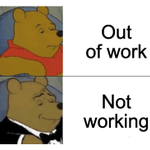
“i do research”: esoteric, does not sound productive
SAY
“i make confident decisions on critical strategic challenges”: impactful, a real go-getter, crucial to the business
1
4
171

Harri Thomas retweeted

I've been so impressed with @greatquestionco and all the great features they've been adding—the best two-way mirror session tool.


Excited to join @greatquestionco - onwards!

Welcome @harri_thomas to @greatquestionco !
Three years in the making.
For those who don't know Harri he is the former co-founder of B2B recruitment platform Respondent, and has been a long-time GQ supporter & investor.
Things are heating up!
A compelling argument against UX research goes something like "Every time you get feedback, you become slightly more mainstream, slightly more aligned with the zeitgeist and slightly less unique".
True.
But users value utility over uniqueness (most of the time). Also true.
1
2
131
My number one UX Research tip will always be:
"Add 'none of the above' to your survey response options"
1
1
111
'And here's the kicker,' 'in a nutshell,' and 'charting the course' are like the secret handshakes of ChatGPT writers.
2
97
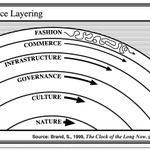
Each layer moves faster than the one below it.
Aiming to influence culture is a decades or years long pursuit. But if you start with fashion and commerce, you can work your way deeper, and deeper.
- diagram from Stewart Brand

1
85


"I feel constant pressure, almost entirely of my own making, to be more driven, to aspire to larger public work, something grander, more life-changing, more important." - notes from a Handyman.
plough.com/en/topics/life/wo…

2024 Pinterest Trends: Real Conversations, Deep Connections.
Connecting with close friends around important topics set to be trending in 2024
Sound familiar?
🐘 Leading with insight.
business.pinterest.com/en-gb…

1
91
For consumer co's, the delta between what we're seeing in IPO's and the early stage funding environment is peaking.
It's tough to reconcile that consumer co's are the biggest achievers, but struggle the most to secure funding when they need it. Time to #makeconsumersexyagain?

Some thoughts (from a biased VC consumer internet investor, prev PE SaaS investor) on why the IPO market been willing to take consumer companies public, but not SaaS:
The vast majority of recent/rumoured IPOs of VC/PE cos have been consumer (internet):
• Cava
• Skims
• SHEIN
• Reddit
• Instacart
• Birkenstock
• Golden Goose
The key non-consumer were:
• ARM
• Klaviyo (consumer adjacent)
Compare that to what VCs are funding (90%+ SaaS) and what PE firms are saying (“we’re focusing on recurring revenue B2B models in this market”) and something doesn’t add up.
Why are the public markets open to consumer but not SaaS?
Three reasons afaict: (1) profitability, (2) cap table and (3) macro
1. Profitability
Consumer companies are often accused of having bad unit economics, because of having to acquire each customer individually, at low AOVs vs enterprise ACVs.
This is, in many cases, wrong.
Sure, consumer companies have to acquire customers individually, but they do not have to employ the sales teams that SaaS companies require. Sales and marketing cost is a manageable direct expense (to Meta), not headcount.
Many successful enterprise SaaS companies have multiple year CAC paybacks… the best consumer companies are gross profitable on first order. This, plus cost of engineering sales solutions makes growth often a lot more expensive for a SaaS company. SaaS companies have incredible operating leverage and are structured to be profitable far into the future, whereas consumer companies can often be profitable *now*.
This has pretty much frozen most SaaS companies out from the public markets.
2. Cap table
SaaS got overheated in the bull market, more so than most consumer.
Investors justified 100x+ SaaS ARR multiples based on defensibility of revenue, gross margin and high growth. The tragedy is that those VC investments themselves shut the IPO door, because of the difficulty of managing a down-IPO.
Yes, a lot of consumer companies have shares marked at valuations too high as well. But generally the weaker ones died, and the stronger ones were less overvalued and grew closer to their valuations. Instacart was an obvious exception, but they got it over the line because they were profitable (see above) and the founders and early investors could still make a profit.
The same applied to PE. Public comps seemed to justify astronomical SaaS pricing, whereas the key consumer (internet) comps are large global platforms which moved a lot less. Consumer was only moderately overpriced in 2021. Investors can now IPO for profit.
3. Macro
Business customers have shareholders; consumer customers don’t.
When rates go up, businesses prefer short-term profit over long-term investment, so (among other things) they cut SaaS spend. This is what caused the “SaaS winter”.
Most consumers, otoh, don’t give a F about rates. People with variable mortgages and car payments will get squeezed a bit, but they don’t feel their personal equity being reduced in the same way. They still have $500 for a ripped, stained pair of Golden Goose shoes, and they don’t have a Board telling them to buy Macy’s sneakers, some scissors and a Sharpie instead.
US consumer spending is increasing ~5% YoY, that’s 3 trillion dollars of *new* consumption for consumer companies to win.
…
That’s my $0.02 of these strange IPO conditions. It’s a total imbalance between what VC/PE firms are saying (“ we don’t do consumer”) and the actual DPI that’s getting paid out.
So… which will change first: the IPO markets, or private market investors’ minds?
2
225
