





Ric retweeted

Esto es una locura
Anthropic ha compartido un prompt para Fable 5.2 que puede diseñarte un equipo de agentes de IA para automatizar tu trabajo
Tú le dices qué trabajo quieres automatizar
Él define los agentes, escribe sus prompts y organiza cómo trabajan juntos.
Hasta te prepara un plan de 7 días para ponerlo en marcha
Dale esta imagen a tu Claude y pruébalo:


Ric retweeted
ESTE DOCUMENTO DE ANTHROPIC TE VA A CONSEGUIR UN ASCENSO
La forma más rápida de ascender es automatizar el trabajo que haces hoy
Esta guía técnica oficial de Anthropic explica cómo enseñarle a Claude a ejecutar tus tareas del día a día
Crea Skills personalizadas para que la IA se encargue del trabajo pesado:
→ convierte tus procesos habituales en instrucciones reutilizables
→ deja que el agente ejecute tareas en segundo plano
→ conéctalo a tus herramientas locales mediante servidores MCP
Delega las tareas repetitivas y dedica tu tiempo al trabajo que te puede conseguir ese ascenso
Aquí tienes la guía para hacerlo paso a paso👇
Ric retweeted

🚨 Claude ya te enseña inglés a tu nivel y a cualquier hora, como un profesor particular que cobra 21 € la hora.
Abre un chat nuevo y usa estos 7 prompts:
Ric retweeted

我觉得这篇文章最值得关注的,不是作者用了多强的模型,也不是他配置了多少 Agent,而是他对整个软件开发工作流的理解,已经和很多人完全不在一个层面上了。
现在很多人用 Codex、Claude Code,还是传统的 Copilot 思维:给 AI 一个任务,等它写完代码,自己检查一下,发现问题再让它改,然后继续等。看起来是在用 Agent,实际上人依然是整个工作流的瓶颈。
而这篇文章提出的 15 条原则,本质上就是在重新分配人和 AI 的工作。
我觉得其中有几个认知非常值得展开。
第一,Prompt the What, not the How。
告诉 Agent 你最终想要什么,而不是告诉它每一步应该怎么做。
过去我们写 Prompt,恨不得把实现路径、技术栈、文件结构、执行步骤全部规定好。但模型能力越来越强之后,过度干预反而可能限制它探索更优解的空间。
真正应该明确的是目标、约束、验收标准,而不是把自己脑子里那套未必最优的实现方式强加给 Agent。
当然,这不意味着随便扔一句帮我做个商业级系统就能万事大吉。业务边界、性能要求、成本约束、交付标准,依然要定义清楚。
第二,Don't iterate with the agent. Let it build tools to iterate。
这一条我觉得特别牛逼。
大部分人现在还是在和 Agent 一轮轮试错。一个网页不好看,让它修改;修改完还是不好看,再修改。一个接口性能不好,先让它优化 A,发现没效果,再试 B。
为什么一定要这样?
为什么不能直接让 Agent 生成 20 种设计方案,建立一个可视化对比页面,让人一次性选择?
为什么不能让它针对性能问题提出 4 种假设,分别设计实验,跑出数据,再决定采用哪种方案?
真正的提升不是让 AI 更快地帮你试错,而是让它建立一套可以自动试错、自动评估、自动筛选的系统。
第三,Ask for irrefutable proof。
这一条可能是目前 Agent Coding 最容易被忽略的东西。
我自己给企业做过 GEO、RAG、AI Workflow、数字人自动化项目,对这个问题感受特别深。
Agent 经常会告诉你:“已经修复完成”“系统可以正常运行”“功能已全部实现”。
但它说完成了和真正完成了,完全是两回事。
接口能不能真正调用?视频有没有生成出来?字幕有没有正确合成?换一个客户上传素材还能不能正常跑?出现异常能不能恢复?有没有真实的测试日志和可复现结果?
这些才是证据。
以后判断 Agent 有没有把任务做好,不应该看它写了多少代码、输出了多漂亮的总结,而应该看它拿出了什么能够独立验证的东西。
第四,Make the whole SDLC legible to the agent。
不要只让 Agent 能看代码,还要让它能运行项目、执行测试、读取日志、检查部署、观察真实运行结果。
一个只能读写代码的 Agent,和一个能够接触完整软件开发生命周期的 Agent,执行能力根本不是一个层级。
模型之所以经常一本正经地胡说,很大程度上是因为它没有办法验证自己的判断。
你不给它日志,不给它测试环境,不让它运行真实程序,它很多时候只能猜。
但这也不代表给 Agent 无限权限。生产环境、客户数据、正式发布这些高风险操作,依然需要权限控制和必要审批。
第五,Don't wait for your agents. Let them wait on you。
我觉得这是未来个人工作流最值得改变的地方。
现在大量人使用 AI,依然是同步聊天模式:提出问题、等待回答、检查结果、继续追问。
但如果每一个任务都需要人盯着,Agent 再强,你一天也只有 24 个小时。
真正应该做的是把任务完整地交出去,让 Agent 在隔离环境里自主执行、测试、重试、记录过程,完成之后提供证据,需要决策的时候再来找你。
定时任务、Heartbeat、异步执行、主动通知,这些东西可能比再增加十几个 Skill 更有价值。
第六,Eval agentic knowledge。
这一条也是很多人完全没意识到的问题。
现在大家都在疯狂积累 AGENTS.md、Skills、MCP、各种规则和工作流,但很少有人真正测试过:这些东西到底有没有提升任务成功率?
你给 Agent 塞了 30 个 Skill,它真的用了吗?
用了之后,正确率提高了多少?执行速度快了多少?成本降低了多少?
如果没有对照实验,没有客观指标,那所谓的工作流优化,很可能只是在不断增加复杂度。
AI 时代真正稀缺的不是会使用多少工具,而是能够设计系统、定义目标、建立反馈闭环的人。
以前我们把 AI 当工具,人负责执行,AI 帮忙提高效率。
现在正在逐渐变成:人负责提出问题、定义结果、判断取舍,Agent 负责探索方案、调用工具、执行任务、验证结果。
这里还有一个非常重要的变化,就是代码本身正在从最终的工作对象,逐渐变成实现业务目标的一种中间产物。
企业不会因为你写了十万行代码就付钱,也不会因为你接入了几十个 MCP 就觉得你的系统有价值。
它只关心你能不能解决真实问题,能不能稳定交付,能不能持续维护,能不能降低成本。
未来工程师之间拉开差距的未必是谁写代码最快,而是谁最擅长把一个复杂目标,拆成一套可以被 Agent 自主执行、验证、迭代和交付的系统。
以前是人围着代码转,现在是 Agent 围着目标执行,而人负责判断什么才是真正正确的结果。
这可能才是 Agent Coding 真正开始改变软件工程的地方。

Finally summarized what I've been sending to friends in DMs View article

Ric retweeted

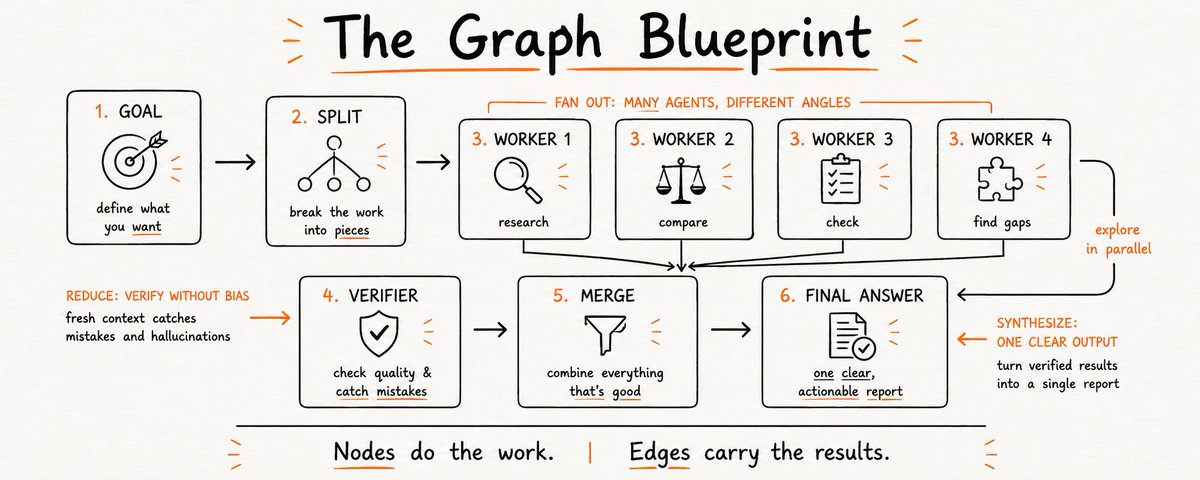
This is f*cking insane. Google just released a free 2-hour course on full Harness engineering, from 0% to 100%:
0:29 - Harness engineering from zero
11:08 - your first agent, built properly
28:08 - Eval engineering with a Chief of Staff agent
1:00:13 - Loop engineering
1:23:19 - a self-improving graph system that never stops
I've seen $500 courses that don't cover what it shows in the first 15 minutes.
Watch it, then go further with the guide below on building a system that improves itself.

Ric retweeted

Esto es auténticamente loco.
Ingeniero de Anthropic:
"No se supone que debas promptar a Opus 5.5.
Se supone que debes construir un sistema que se autoprompta. En Anthropic, el 90% de nuestros ingenieros ya han construido estos sistemas."
En solo 30 minutos, ella explica cómo Anthropic construye agentes de IA que recuerdan el contexto, aprenden de los errores, corrigen sus propios fallos y mejoran con cada ejecución.
Este es el cambio de simplemente usar IA a diseñar sistemas que funcionan de manera autónoma.
Honestamente, es mejor que la mayoría de los cursos de agentes de $1,000–$2,000 que he visto.

My passerby pulls my product out of its billboard image, and the lighting jumps to a completely different afternoon. I would prefer one time zone per ad.
I'm making this billboard reveal in CapCut PC, ending with the person using the product.
But the wide shot and close-up have noticeably different exposure.
I use the color adjustment controls to bring brightness and temperature closer, comparing both shots with my product reference.
Then I play the reach, reveal, and use in sequence, checking the product and skin tones.
Give this a try in CapCut PC when your shots look like different scenes.
tinyurl.com/2v23rn22
#capcutpc #capcutmarketing #capcutblackfriday #CapCutDidThat
Ric retweeted
Andrej Karpathy, miembro fundador de OpenAI, acaba de compartir un prompt para que Opus 5.5 termine cualquier tarea
Y es una auténtica locura
Envíaselo a Opus 5.5, ya me lo agradecerás:

Ric retweeted

THIS IS AN ACTUAL F*CKING GOLDMINE
Anthropic just shared one of the best tricks for Claude Code.
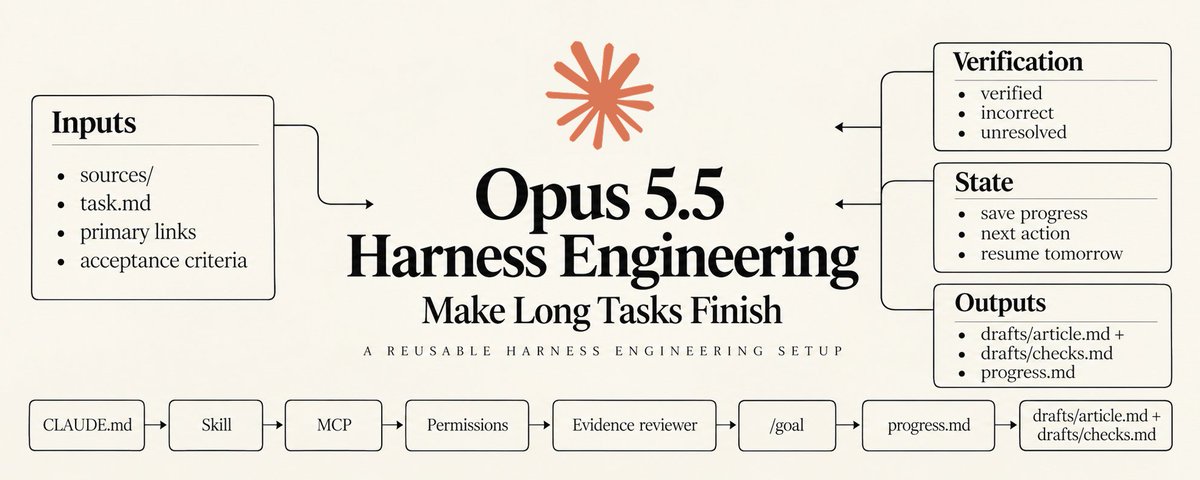
The idea: run Opus 5.5 and three Sonnet 5.5 subagents, each one keeping its own memory for the job it's best at.
Less repeated explaining, because every task lands on an agent that can reuse what it learned about your repo.
You just launch Claude Code like this:
claude --model opus
here's my split:
→ Opus 5.5 runs the session, plans the work and applies the final fixes
→ Sonnet 5.5 handles implementation, debugging and diff reviews in separate contexts
→ memory: project gives each subagent persistent notes that survive between sessions
→ you stop burning Opus 5.5 context on explaining the same repo conventions again
Opus 5.5 only steps in for the big calls at three moments:
→ before a plan locks
→ when the same error shows up twice
→ before calling it done
Sonnet 5.5 builds. Memory carries forward. Opus 5.5 reviews.
persistent memory takes the same idea one layer down: the findings you keep rediscovering (which module, which test, which fix actually worked) go into each agent's memory, and its next run starts with its saved memory index
the full tree
> Opus 5.5 runs the main session and coordinates the work
> builder implements features on Sonnet 5.5 and remembers repo conventions
> debugger fixes failures on Sonnet 5.5 and remembers verified root causes
> reviewer checks the diff on Sonnet 5.5 and remembers recurring review patterns
> Opus 5.5 reviews the synthesized diff before sign-off
> each worker keeps project-scoped memory and checks old notes against current code
paste the tree and this prompt into Claude Code ↓
"Reconfigure my Claude Code setup around this tree:
1. Run the main session on Opus 5.5. Verify both model aliases resolve to 5.5 on my provider.
2. Create three Sonnet 5.5 subagents in .claude/agents: builder (implements features), debugger (fixes failures), reviewer (checks the diff). Flag a restart if this agents directory is new.
3. Set memory: project on all three. Check that auto memory is enabled; ask before changing that setting.
4. Add one rule to CLAUDE.md: delegate implementation, debugging and diff reviews to these subagents to keep the main context small. Sequence dependent work.
5. Tell each agent to consult its memory before working and save only verified, reusable findings afterward. Keep MEMORY.md concise, link detailed notes, and recheck stale assumptions against the code.
Show me every change as a diff first. No edits until I say go."
↳ code.claude.com/docs/en/sub-…
save it, it'll come in handy.



Ric retweeted

🔴 NECESITO TU ATENCIÓN
Llevo una semana ayudando a Miriam en su caso de cáncer metastásico y quiero compartir la metodología que he estado usando porque es absolutamente replicable.
Pienso que, con suerte, puede ser ÚTIL A OTRAS PERSONAS con cáncer (o con cualquier otra enfermedad).
Los resultados que hemos conseguido no son un milagro, pero pensamos que son realmente útiles y pueden significar una diferencia crucial en un caso médico de vida o muerte.
Aquí va paso a paso el método:
1/ Usar los modelos más avanzados del momento (por desgracia de pago, y no son baratos, opino que Sanidad Pública debería invertir en esto):
- ChatGPT Pro + Extended (40min de pensamiento aprox por llamada)
- Claude Opus 4.6 MAX
Pendientes de probar a fondo:
- Perplexity Sonar Pro
- Notebook LM
2/ Dárselo MUY MASCADO a la IA todo el historial. Esto parece una tontería pero es muy importante.
- Lo primero que pido, con Claude Cowork que tiene acceso al disco duro, es que entre en la carpeta en la que está TODO EL HISTORIAL (pueden ser más de 100 pdfs) y lo unifique todo en:
- Un único PDF (puede ser de más de 1000 páginas o lo que sea necesario)
- Un único txt legible, que debe hacer correctamente usando un script con OCR y luego comprobar con lupa que está bien hecho.
Insisto: no saltar al siguiente paso antes de tener muy bien hecho lo anterior, sobre todo el txt.
3/ Una vez tenemos lo anterior utilizar este prompt junto con el txt y el PDF como archivos de entrada y lanzarlo en AMBOS modelos (y en más si es posible) a la vez.
👉 Os lo dejo aquí, este prompt es increíble complejo/avanzado: dropbox.com/scl/fi/f5luli81h… Está pensado para el caso concreto de Miriam, pero con los modelos del punto 1/ podrías adaptarlo a tu caso particular sin problemas.
4/ La PUNTA DE FLECHA enfrentando un modelo al otro: esta metodología no la he escuchado a nadie, pero funciona increíblemente bien. La sensación es la de ir afilando una estaca hasta que adquiere una punta reluciente.
Funciona así: con paciencia y en sucesivas iteraciones (aconsejo mínimo 5 veces, y en en cuenta que si ChatGPT tarda 40min te va a llevar un buen rato) enfrenta el resultado (el PDF) de un modelo a otro. Con un prompt sencillo del estilo:
"Otro comité de expertos opina esto. ¿Cómo lo ves? Si estás de acuerdo o lo contrario dime por qué, y genera un nuevo PDF si lo ves preciso".
El resultado se lo cruzas al modelo contrario. Así, en sucesivas iteraciones, búsquedas de internet, papers, etc. irán encontrando y afilando más cosas.
¿Cuándo acabar? Cuando AMBOS modelos digan que está perfecto y no puedan mejorar más el trabajo del contrario. Esto es tan absurdamente rompedor que pienso que los resultados de TODOS los modelos actuales mejorarían si siguieran esta metodología (apoyándose en una espiral rollo "adversarial model". No entiendo por qué nadie se ha dado cuenta de esto, si lo ha hecho, por qué no se le da más bombo. Funciona impresionantemente bien en cualquier ámbito, inclusive programación y matemáticas.
Es mas, mi teoría es que esto podría hacerse todavía mejor haciéndolo no solo con dos modelos: sino con una mayor combinatoria, añadiendo quizás Perplexity Sonar Pro, etc.
RESULTADOS
Increíbles. Obviamente no puedo saber si mejores que el mejor de los comités científico-sanitarios del mundo, pero le están dando a Miriam una nueva dimensión del caso, tests adicionales que hacer, posibles pruebas, etc.
Obviamente la IA milagros no hace, pero pienso que puede ya, a día de hoy, ayudar a muchos pacientes. Y Sanidad Pública debería invertir mucho, pero mucho, en esto.
Voy a preguntarle a Miriam si puedo poner el PDF completo de resultados más avanzado que conseguimos, para que os hagáis una idea de su calidad. Ya me ha dado más o menos permiso, pero quiero asegurarme 100%.


Ric retweeted

🚨 DEEPSEEK HA CREADO UN PROGRAMADOR QUE TRABAJA SOLO.
Han liberado un agente de IA que se conecta a GitHub, recibe tareas de programación y trabaja de forma autónoma hasta entregar los cambios.
Se llama DSH SuperAgent y funciona así:
✓ Escucha solicitudes y eventos de GitHub
✓ Comprueba quién está autorizado para darle tareas
✓ Ejecuta cada trabajo en una sesión independiente
✓ Trabaja en segundo plano hasta completar la tarea
✓ Responde en GitHub con el resultado o un Pull Request
Lo más interesante es que está diseñado para necesitar la menor intervención humana posible.
El agente se encarga del trabajo y solo solicita ayuda cuando realmente hace falta.
Por ahora es un prototipo de investigación, no una herramienta preparada para producción.
Es completamente open-source, tiene licencia MIT y ya supera las 15.000 stars en GitHub.
Repo 👇

Ric retweeted

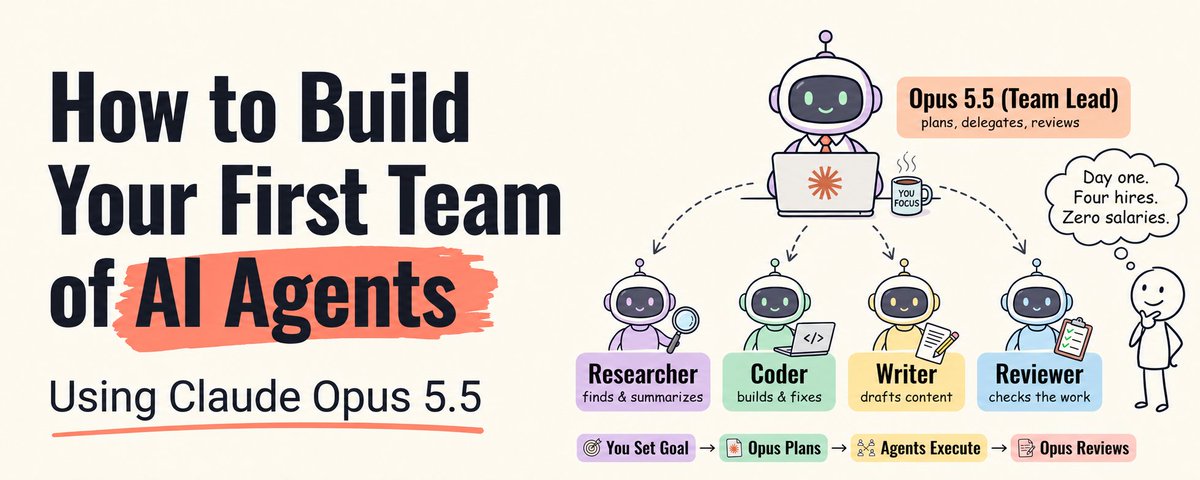
Paste this into Claude Opus 5.5 tonight, you will thank me later...
it will build your first team of AI agents from scratch with agents, prompts, workflows, and everything for you
Steal this before everyone starts using it:



Ric retweeted

天呐,Claude code女神、教母级的Cat Wu 也从 Anthropic 离职了???
Cat Wu作为一手操刀 Claude Code 的产品负责人,她离开时写的这段话,是我最近看过关于人机协作最性感、也最真诚的一段自白😭
两年前,Claude Code 还只是 Anthropic 内部一个不起眼的实验品,
她盯了几十个小时没写一行代码搭出强化学习环境,跑通那一秒她决定加入,而那也是我们所有人命运齿轮转动的瞬间。
当整个环境最终跑通的那一瞬间,她彻底被迷住了,决定一头扎进这个团队。
这几乎是我们每一个真正被 AI 击中的人,都经历过的那个决定性瞬间。
最耐人寻味的是她记录的这几年人机关系的微观演进:
刚发布 Claude Code 的时候,绝大多数开发者连每一次终端权限弹窗都要战战兢兢地手动确认,只敢把最边角的活交给它,比如答答疑、写写单元测试。
而到今天,成千上万人的默认姿态,已经是直接打开全自动授权,让 AI 在后台调度多个会话和项目,人退到更宏观的位置去把控目标、验收交付。
很多人以为做 AI 产品的秘诀是堆算力和功能。但她在播客里聊过一个极度清醒的原则:
当模型本身越来越强时,早期为了辅助弱模型而搭建的所有复杂界面和步骤,都会变成沉重的负债,顶级的团队要敢于一件件亲手把它们拆掉。
从谨小慎微的手动确认,到坦然自若的彻底托付;从一行行敲代码的工匠,到设定航向的领航员。
她用两年时间定义了一款改变无数人工作流的产品,
但最打动我的,依然是她两年前坐在终端前、一行代码不写却看着奇迹发生的那几十个小时。
技术在以天为单位疯狂重构,但真正让人着迷的,永远是人在某个微小瞬间被点燃的纯粹好奇心。
原推出处和她聊产品演进的完整脉络放一楼。

Friday was my last day at Anthropic.
Two years ago, when Claude Code was a small internal tool, I asked it to build an RL env. I steered it for tens of hours but never manually wrote a line of code. It worked, I was hooked, and I joined the team.
When we first launched, most people approved every permission prompt by hand and mostly used Claude to answer questions and write tests.
Today, the default is trusting Claude's judgment to auto-approve. Claude does large migrations and builds new products.
Helping build Claude Code into an industry-defining product has been the journey of a lifetime.
Thank you to the incredible team behind Claude Code, Cowork, and Tag. These products are the sum of thousands of great ideas from you. I'll miss working with you all.
Thank you to our users for embracing a new way of working. Your constant feedback shaped so much of what we shipped and your stories made the work so meaningful.
Excited to see what you all make next!
Ric retweeted

这太他妈疯狂了。Demis Hassabis 花了 16 年打造 DeepMind 并获得了诺贝尔奖
上周,他把对未来 5 年的所有洞见浓缩成一场免费的 1 小时演讲
他解释了谁能在即将到来的变革中生存,谁不能
Chatbots → Agents → Workflows → Automated Departments → One-Person Companies
一个真正理解 AI 的人将超越整个初创团队的表现
人们花 15K 美元参加那些教的东西比这少得多的训练营
你可能现在没有 1 小时时间
别让这个从你的动态里消失
收藏起来,今晚看
Ric retweeted

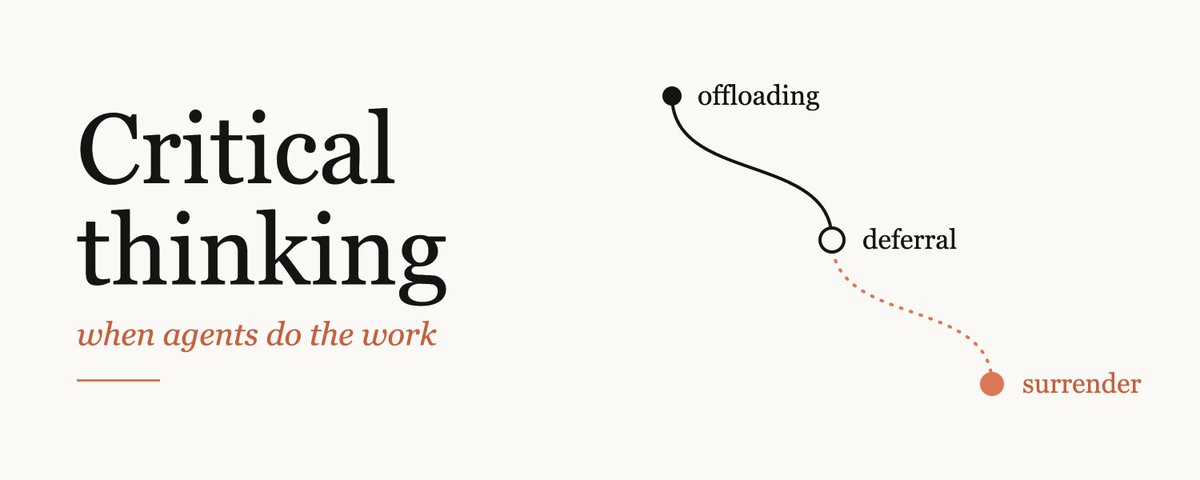
Creo que cualquier ingeniero de software debería leer esto, especialmente en estos tiempos.
Hay una línea muy delgada entre delegar trabajo a la IA y terminar delegando también tu propio criterio.
Al final del día, el criterio es buena parte de lo que nos hace ingenieros.

Ric retweeted

CON ESTAS 6 LÍNEAS EN TU CLAUDE.md, CLAUDE CODE DEJA DE QUEMARTE TOKENS
Buena parte de lo que pagas no se va en escribir código. Se va en que Claude lea archivos que no necesita, repita lo que ya te ha dicho y arrastre contexto que ya no sirve.
Tiempo necesario: 1 minuto
Acciones: pegarlas al final de tu CLAUDE.md
Lo que cambia:
→ Busca antes de leerse archivos enteros
→ Usa subagentes para explorar y te trae solo el resumen
→ Te enseña el diff, no el archivo completo
→ No repite lo que ya habéis decidido
→ Te avisa cuando toca compactar o empezar de cero
→ Respuestas cortas por defecto
Mismo Claude. Menos tokens por tarea.
Te dejo las 6 líneas en el primer comentario
Ric retweeted

Holy f*ck, SpaceXAI engineer:
"If your agent can't send you a video of its work, it didn't do the work"
"I fire off 30+ agents from my iPhone, close my laptop and go for a walk"
In a 21-minute demo, she shows how she went from 3 weeks per feature to shipping one in 1 hour
Ticket → Plan → Subagents → Self-Testing → Video Proof
Prompting was the old workflow, agents that prove their own work are the next one
Worth more than any $4,000 AI coding bootcamp
Bookmark and watch it today

Ric retweeted

Don't waste 2 years learning to become an AI agentic engineer in 2026.
Andrew Ng, the godfather of AI, gave the complete playbook to become one from scratch.
1 hour course. Free:
• 00:00 - AI agent basics
• 12:12 - AI Agentic workflows & design patterns
• 53:27 - Practical tips for building AI agents
• 1:20:30 - self-improving AI agent loops
• 1:30:19 - multi-agent AI systems
I watched it last night.
Halfway through, I realized I could get into Anthropic in weeks, not years.
Bookmark now. Watch it. Then build your own AI agent