

Chief Climate Economist at the World Bank. Opinions are my own.
Joined October 2011
- Tweets2.1K
- Following591
- Followers3.1K
- Likes901




Pinned Tweet
New paper in Nature on the implications of ending poverty on climate change, w/ a more realistic approach than existing lit. Good news: even with the most conservative assumptions, ending extreme poverty can be done without compromising climate goals. nature.com/articles/s41586-0…
stephane hallegatte retweeted

Bold take from @TheEconomist in last issue:
“Solar cells will in all likelihood be the single biggest source of electrical power on the planet by the mid 2030s.”

stephane hallegatte retweeted

#Adaptation finance is about more than dollar inflows, although this is vital. It’s about making sure that all investments protect people – esp the most vulnerable – from #climate impacts now and in the future. Blog by @hallegatte Jia Li &me. blogs.worldbank.org/en/clima… @WBG_Climate

Climate change adaptation requires more rapid development, more resilient development, and targeted adaptation. But climate finance numbers only capture the latter. How does the picture change with a broader perspective? New post w @FerzinaBanaji, Jia Li.
blogs.worldbank.org/en/clima…
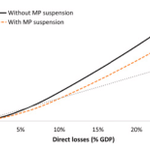
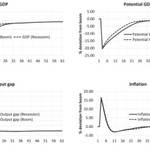
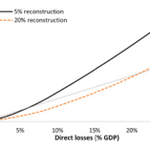
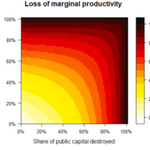
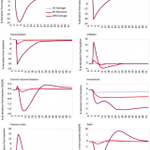
A great pleasure to see our paper on the macroeconomic modeling of natural disasters published in Economic Modelling. The paper extends the @WorldBank Macrostructural Model to capture key transmission channels of disasters and their immediate aftermath.
authors.elsevier.com/c/1jFB9…
5 - The welfare impact of a disaster also depends on the ability of the economy to reallocate resources toward reconstruction, and the response of monetary policy (delaying monetary policy response makes the reconstruction faster and reduces total costs).

stephane hallegatte retweeted

NEWS >> In 2023, carbon pricing revenues reached a record $104 billion but more needs to be done.
Check out the just-released @WorldBank “State and Trends of Carbon Pricing 2024” report to learn more: wrld.bg/cVOe50ROGOc #PriceOnCarbon

After a very collaborative development of the Resilience Rating System methodologies, we piloted it on $2.9 billion in World Bank projects. It shows how considering risk and resilience helps design and implement better projects that deliver more and better development gains.

stephane hallegatte retweeted

@hallegatte of the @WorldBank discusses the relationship between fostering #development and #resilience. They are not mutually exclusive, and should feed into the goal of reducing climate risk factors like poverty.

Really interesting work, and very aligned with some of our most recent work, counting people at high risk from climate change. Have a look!

🔔🔔New paper alert!!🔔🔔
"Integrating social vulnerability into high-resolution global flood risk mapping"
in @NatureComms w/ @agyemangfelix @laurence_hawker & PI Jeff Neal. Open access here:
nature.com/articles/s41467-0…
A 🧵 (1/15)

Our preliminary analysis, to be updated soon, is here, and we collect feedback!
openknowledge.worldbank.org/…

Apparently pre-paying your car rental with @Avis does not mean you’ll have a car. If it’s important, better to go with the competition…
stephane hallegatte retweeted

Lower #inequality: A critical measure to align development and #ClimateGoals
Philip Wollburg @worldbankdata, @hallegatte @GFDRR, Daniel Gerszon Mahler @worldbankdata
ow.ly/I6o750Qtv9z

See our @cepr_org column on the interplay between poverty, inequality, and climate emissions!

Climate Rescue or poverty reduction?
🔗 cepr.org/voxeu/columns/lower… cc: @wb_research @hallegatte @cepr_org


Un séquençage intelligent de réformes institutionnelles, de programmes d’investissements et de réformes sociales ne ralentit pas l’action climatique – tribune dans @lemondefr, tiré du rapport “Within Reach: the political economy of decarbonization” lemonde.fr/idees/article/202…

stephane hallegatte retweeted

Missed Devex’s recent discussion with the World Bank? Dive into the heart of the climate crisis and political economy of climate transformation with Dr. @hallegatte of the @WorldBank and @raj_devex of @Devex.
#DevexEvent #ClimatePlus @ #COP28 #LivablePlanet with @WBG_Climate