





Pinned Tweet
I’ve written an editorial in The Conversation with Canadian astronomer and professor Sam Lawler — take a look below!

Cultural, spiritual, and most environmental impacts aren't taken into account when launching thousands of satellites. @gregoryradisic @BondUniversity theconversation.com/too-many…

1
1
480


Gregory Radisic 🇨🇦 retweeted

The Government of Canada announced that Alexander MacDonald has been appointed President of the Canadian Space Agency and will join us on November 16, 2026. We look forward to welcoming him!🚀 canada.ca/en/innovation-scie…

ALT Aerial view of the CSA building.
Gregory Radisic 🇨🇦 retweeted

A joint commitment to multilateralism, international law, peace and prosperity. Read it here: pm.gc.ca/en/news/statements/…


Grateful to Tereza Pultarova for interviewing me for this Space.com article. 🌕🚀

We need rules to prevent space companies from dumping their old rockets onto the moon's surface in the future, experts say. space.com/astronomy/moon/wil…

131
Gregory Radisic 🇨🇦 retweeted

What would 500,000 orbital data center satellites look like from the ground? I used two different brightness models. At sunset, one gives 66,300 visible satellites vs. 11,500 for the other. An hour and a half later, one has 28,300 visible satellites vs. zero for the other.
That's quite a difference!
I ran the same proposed SpaceX constellation through the two brightness models. The satellites, the orbits, the viewing site, and the times are all the same. Only the brightness model changes.
🟠 Unmitigated reference
🔵 Optimistic mitigated reference
Right at sunset: 66,300 vs. 11,500
30 minutes later: 55,100 vs. 6,000
60 minutes later: 41,700 vs. 1,700
90 minutes later: 28,300 vs. 0
For comparison, applying the same visibility threshold and atmospheric extinction model gives about 1,600 stars visible from that site. So even the optimistic case shows visible satellites outnumbering visible stars, a critical threshold to keep in mind.
The 🟠 orange model is the Lambertian-sphere reference from Boley, Lawler, and Rein (2026).
The 🔵 blue model uses actual measured on-orbit photometry of Starlink Gen2 Mini in brightness mitigation mode, from Mallama et al. (2023), scaled to the roughly 6x larger area of AI1, the proposed satellite for "Starmind". It's an optimistic case since it assumes the mitigation can apply to a larger and different spacecraft.
These models aren't predictions, and they aren't strict upper and lower bounds. The large gap between them is kind of the point. Unless and until we know more about the brightness of the Starmind AI1 satellite, this is what we've got.
The simulation is only the sun-synchronous half of SpaceX’s million-satellite FCC filing: 500,000 satellites at altitudes from 565 to 1,002 km. The other approximately 500,000 satellites in the filing aren't shown; they're at lower orbital inclinations.
@SpaceX says it intends to develop "industry-leading brightness mitigations," and I hope they do.
Methods, code, assumptions, FAQ, and sources are in the first comment below.
I was quoted by @Newsweek on the growing concerns around space-based mirrors and Reflect Orbital’s plans to reflect sunlight back to Earth.
We need to start asking who gets to decide how these technologies affect the night sky…
Read the article: newsweek.com/concerns-space-…

2
94
It was a pleasure appearing on Australian national news — on Special Broadcasting Service (SBS) Australia and Channel 10 — to discuss why stronger international coordination and regulation will be increasingly important as lunar activity accelerates. 🚀🌝

2
1
116
I wrote about why this impact, and the attention surrounding it, could ultimately help accelerate the development of lunar law in my Op-Ed for Astronomy Magazine!
🌚 Check it out here:
astronomy.com/space-explorat…


On Wednesday one of these will crash into the Moon.
It's a @SpaceX Falcon 9 upper stage rocket & tank, used to propel lunar landers last year. It will hit near Einstein Crater at 5400 mph/8700 kph, blasting a crater 90ft/27m across, 16ft/5m deep.
Total, the Moon has been hit by 800+ human-made objects, but that's dwarfed by the natural impacts: tens of thousands of similar new meteor craters every year.
The Moon has no life or ecosystem to disrupt, but as we start landing more, we need to better track what we're doing: @openlunar has the world-leading Lunar Ledger (lunarledger.space/), doing just that.

1
172
Gregory Radisic 🇨🇦 retweeted

Fifty-five years ago today, #Apollo 15 launched for the #Moon. As we celebrate that extraordinary mission, we are reminded that the lunar surface already holds a rich record of human exploration, from scientific instruments and operational equipment to commemorative objects, bootprints and sites of enduring historical significance.
As activities expand beyond Earth orbit and onto the lunar surface, a new informational challenge is emerging. The Moon is no longer an unexplored environment. The need for practical information-sharing is becoming increasingly urgent as governmental and commercial lunar missions grow in number, geographic concentration and operational complexity. Future operators may conduct landing, surface mobility, communications, scientific and infrastructure activities in areas where previous missions have left operational equipment, scientific experiments, commemorative objects and sites of enduring historical significance.
Earlier this month, we were honored to submit a written consultation to the (take a deep breath, it's a long title) @UN Working Group on the Status and Application of the Five United Nations Treaties on Outer Space of the Legal Subcommittee of the Committee on the Peaceful Uses of Outer Space on the Topic of Information Sharing on Space Activities and Implementation of Article XI of the Outer Space Treaty.
You can read our full submission, prepared on our behalf by Michelle L.D. Hanlon, Marlène M. Losier, PhD, JD, Anne-Sophie MARTIN, Ph.D and Gregory Radisic, LLM here: forallmoonkind.org/wp-conten…

A SpaceX rocket is about to crash into the Moon. Bad news for the Moon, but (perhaps) good news for the development of space law?
Thanks to The Conversation Australia + NZ for inviting me to write this story. 🚀 🌖
As the Moon starts getting crowded, questions of safety and responsibility are becoming hard to ignore. @gregoryradisic @BondUniversity theconversation.com/an-aband…
2
331
The collision itself isn't the biggest concern. Permanent alteration of the Moon is becoming inevitable. The real challenge is what it reveals about the growing need for governance mechanisms to coordinate those alterations.
1
23
Honoured to address the United Nations Committee on the Peaceful Uses of Outer Space (UNCOPUOS) on behalf of @ForAllMoonkind! 🌖 🚀


These new types of objects raise governance questions for transparency, coordination, heritage protection, and the future application of the Outer Space Treaty.

1
1
45

Gregory Radisic 🇨🇦 retweeted
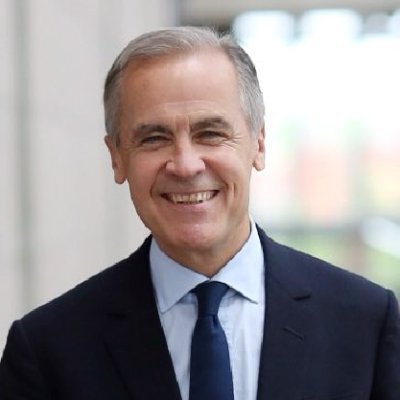
Canada has always been a nation of risk-takers and explorers.
An honour to welcome Jeremy Hansen, Jenni Gibbons, and the entire Artemis II crew to Ottawa today.

ALT Prime Minister Carney meets with the Artemis II Crew at the Canadian Museum of Nature in Ottawa.
Gregory Radisic 🇨🇦 retweeted

The National Space Operations Centre has released the March report on the threats from space-related hazards. 🛰️ 🌍
In March, there were:
➡️ 72 uncontrolled re-entries
➡️ 1,847 in-space collision warnings
➡️ 241 newly registered objects in orbit.
👉 orlo.uk/4nGQQ