

Advancing space settlement, exploration, and development to build a spacefaring civilization — together 🚀
Joined December 2007
- Tweets11.2K
- Following752
- Followers22.7K
- Likes8.3K







Pinned Tweet
Our future beyond Earth won't happen by accident. It's being built right now.
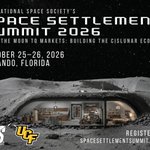
Join NSS on Oct 25–26 in Orlando for the 2026 Space Settlement Summit— Settling the Moon: From the Moon to Markets, Building the Cislunar Economy.
Experience two full days of interactive workshops on lunar infrastructure, governance, and economic development, and kick off @UCF's #SpaceWeek 2026 alongside @TheEconomist.
Registration is open, and space is limited!
For more info, visit: lnkd.in/eb7AcuTJ

Today marks the anniversary of Cassini-Huygens’ launch. After a seven-year journey, Cassini became the first spacecraft to orbit Saturn and spent 13 years studying the planet, its rings, and moons, while Huygens later landed on Titan.
Cassini’s mission ended in 2017 when NASA deliberately sent it into Saturn to avoid contaminating potentially habitable moons like Enceladus or Titan. It transmitted data until the very end.
Cassini never shot continuous footage of Saturn. What you’re seeing is real Cassini imagery, with still photos sequenced into time-lapses.
NASA’s archive contains nearly 396,000 raw Cassini images, including more than 153,000 of Saturn.
National Space Society retweeted

I'm thrilled to be moderating two panels at Economist Enterprise's 4th annual Space Economy Summit in Orlando later this month. @nss @tariqjmalik @twit
invt.io/1lxbmabs64y

National Space Society retweeted

PERSEVERANCE MARS ROVER SETS DISTANCE RECORD
@MarsInstitute @SETIInstitute @KeplerUni @CeresRobotics @Nasa @NASAJPL @NASAAmes @nss

The future of #space is already taking shape, and these rising leaders are helping build it! 🚀
Introducing the inaugural NSS #30Under30 Class of 2026! Join us in celebrating 30 outstanding individuals under 30 who are making meaningful contributions to #spaceexploration and development.
Meet the honorees and discover how they’re helping shape our future in space: tinyurl.com/3rmmyrbr

National Space Society retweeted

Congratulations to @POTUS and @mkratsios47 on an outstanding Golden Age of Science Summit.
It was a day packed with announcements, important discussions, and recognition of some of our nation’s greatest scientific and technological minds. NASA signed an agreement with @ENERGY and @SecretaryWright to advance nuclear power and propulsion in space, and participated in discussions on American leadership in space, expanding opportunities for emerging researchers, and leveraging the Genesis Mission to accelerate scientific discovery.
This is the Golden Age and we are moving at a pace not seen since Apollo. In the years ahead, we will launch more flagship science missions, return astronauts to the Moon, build a Moon Base, and usher in the Nuclear NASA.


National Space Society retweeted
This is the most exciting time at NASA since the Kennedy era.
@POTUS has given us the mission: return to the Moon, build the Moon Base, pioneer nuclear spaceflight, advance extraordinary science, and win the new space race.
It was great to see so many of those builders, scientists, and technologists recognized at the Golden Age of Science summit this week.
The President recognizes that American leadership requires taking on the big, bold endeavors that define American exceptionalism and empower the people with the talent and determination to turn those ambitious objectives into reality.
National Space Society retweeted

What Happened To @Nokia's 4G Network On The #Moon? By Briley Kenney in @BGR
bgr.com/2278227/nokia-4g-net… #Lunapolitics 🇫🇮


National Space Society retweeted

NASA Seeks US Industry Plans for Commercial Space Stations
NASA is advancing American leadership in space by taking the next step toward a future where commercial space stations lead the way in low Earth orbit. On Friday, the agency released its final Request for Proposals [sam.gov/workspace/contract/o…] inviting industry to submit plans for the next generation of commercial space stations.
“In alignment with the President’s National Space Policy, NASA is committed to maintaining a sustained American presence in low Earth orbit long after the International Space Station retires,” said NASA Administrator Jared Isaacman. “We will continue to need a place to conduct research, develop technologies, train crews, and prepare for missions to the Moon and Mars. Commercial space stations may provide that capability while creating new opportunities for American industry and allowing NASA to concentrate more of our resources on the near-impossible missions ahead.”
Building on the agency’s Ignition event earlier this year, NASA regularly has engaged with private industry to shape the agency’s future direction in low Earth orbit. This included publishing two Requests for Information [sam.gov/workspace/contract/o…] in March to gather industry’s perspective on low Earth orbit destinations and transportation. The agency also published a draft Request for Proposals in July, followed by an industry day and one-on-one meetings that allowed interested companies to review and comment on the planned acquisition approach.
“We’ve made it clear that NASA will never give up its presence in low Earth orbit,” said Isaacman. “Since Ignition, we have spent a lot of time listening to industry and working through what it will take to make this transition successful. The opportunity is significant, but the economics ultimately have to work. We want to see credible plans, strong technical execution, and companies prepared to invest in destinations that can serve NASA while developing additional customers and markets of their own.”
Proposals are due Tuesday, Dec. 8, with contract awards expected in spring 2027.
Under the solicitation, NASA outlines requirements for companies interested in designing, building, testing, certifying, and operating commercial low Earth orbit destinations capable of providing end-to-end destination and transportation services for human spaceflight use.
NASA intends to award firm-fixed-price, multi-award, indefinite-delivery/indefinite-quantity contracts supporting development, certification, and services for continued low Earth orbit research and exploration. This will allow NASA to select two or more contractors through early development, followed by a competitive task order for final design, test, and evaluation, as well as certification and services from one or more contractors.
Learn more about NASA’s missions on the agency’s website: #NASA @NASA nasa.gov/. .
National Space Society retweeted
From the earliest works of Jules Verne and H.G. Wells to the best of contemporary space science fiction, Tariq and I dive deep into our favorite space sci-fi across the ages! @NSS @twit @SPACEdotcom twit.tv/shows/this-week-in-s…

NSS honors the life and legacy of pioneering software engineer Margaret Hamilton, who recently passed away at age 90.
Hamilton led the team that developed onboard flight software for NASA’s Apollo program, helping American astronauts reach the Moon and return safely to Earth. She also helped establish software engineering as a discipline.
At MIT’s Instrumentation Laboratory, Hamilton was a working mother who often brought her daughter to the office. Her team’s work guided both the Apollo Command Modules and Lunar Modules, helping make the program’s historic achievements possible.
“Margaret Hamilton’s pioneering work helped carry humanity to the Moon and laid the foundation for modern spaceflight. Her remarkable legacy will endure in the missions and generations she inspired,” said Karlton Johnson, CEO of the NSS.
One of the most dramatic demonstrations of her team’s work came during Apollo 11’s lunar descent. As Neil Armstrong and Buzz Aldrin approached the surface, computer alarms signaled an overload that threatened the landing.
The software was designed to set aside less essential tasks and prioritize those critical to a safe touchdown. That capability helped the astronauts land on the Moon on July 20, 1969.
After her work on Apollo, Hamilton founded two software companies. In 2016, President Barack Obama awarded her the Presidential Medal of Freedom.
Her legacy lives on in the history of lunar exploration —and in the generations she has and will continue to inspire.

What do NSS members envision for the future of space, and how can those ideas shape what comes next? 🚀
Join the National Space Society for “Shaping the Future: NSS Membership Insights & Space Policy in Action,” a virtual Town Hall exploring member priorities and their role in guiding NSS programs, policy, and advocacy.
Hear from NSS Senior Vice President and Chief Operating Officer Dale Skran and NSS Policy Committee Chair Grant Henriksen as they share findings from the 2026 NSS Membership Survey and discuss the path ahead for space exploration, development, and settlement.
Bring your questions for a discussion with NSS leadership!
📅 Thursday, October 8, 2026
🕗 8:00–9:15 p.m. ET
🎤 Moderated by Space Forum host Burt Dicht
Your perspective matters. Join the conversation and help shape the future.
RSVP: tinyurl.com/yc4bdv8m
#nss #space #uspolicy

A notable milestone for reusable launch systems, and for the growing global space economy.
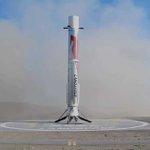
On its second flight, LandSpace’s Zhuque-3 reusable rocket successfully delivered the Honghu 03 satellite to its designated orbit and returned its first-stage booster to a landing pad in northwest China.
The mission marks several firsts: China’s first successful on-land booster recovery; its first successful recovery of an orbital-class launch vehicle first stage using landing legs; and the first successful orbital-launch booster recovery by a private Chinese company. It is also the second successful Chinese orbital-booster recovery overall.
Reusable launch vehicles are not simply impressive demonstrations. By helping reduce the cost and increase the cadence of access to space, they can enable the commercial services, research, infrastructure, and resource development needed for a lasting human presence beyond Earth.
(Photo credit: LandSpace)
#spaceexploration #commercialspace #space #spacedesign #rocketscience

Crew-13 has arrived at the International Space Station following a fast-track journey that showcases the strength of international cooperation in space.
The mission launched today from Cape Canaveral Space Force Station aboard a Falcon 9 rocket, with NASA astronauts Jessica Watkins and Luke Delaney, Canadian Space Agency astronaut Joshua Kutryk, and Roscosmos cosmonaut Sergey Teteryatnikov.
Traveling aboard SpaceX’s Dragon spacecraft Grace, the crew docked at the station’s Harmony module about 7 hours and 50 minutes after liftoff. The rapid rendezvous demonstrates the mature capabilities of commercial crew transportation that helps sustain continuous human presence and vital scientific work in low Earth orbit. They are expected to stay at the station for six months.
This is the 13th SpaceX crew-rotation mission to the ISS under NASA’s Commercial Crew Program. During their stay, the crew will conduct research, test technology, and maintain the orbiting laboratory. Their research includes studies of stem-cell-derived tissues that could support work on heart disease and Parkinson’s disease, crop production for future long-duration exploration, managing blood-flow changes in space, and more.
The ISS is a one-of-a-kind microgravity laboratory where international teams advance science, test technologies, expand commercial activity in orbit, and gain knowledge needed for future missions to the Moon and Mars.
With crew members from the United States, Canada, and Russia, Crew-13 is another powerful example of what we can accomplish when we explore together.
Read more from NSS Space Coast Correspondent Burt Dicht’s blog post about the mission: tinyurl.com/th8eazyk


National Space Society retweeted
This week it's Rod and Tariq working through the most important space headlines--Starship flight 14, Isaacman's China concerns, Starliner is back, and much more. @twit @nss @tariqjmalik
twit.tv/shows/this-week-in-s…

On its 14th flight, SpaceX's Starship completed orbital insertion and deployed 26 Starlink V3 satellites, a milestone the program has been building toward across every previous test. The team brought the ship home early out of caution after an engine issue during ascent, and it still splashed down on target in the Pacific.
Why it matters: the lander NASA plans to use for Artemis is built on this same vehicle. Proving Starship can reliably reach orbit is a key step toward the Artemis III docking test planned for late 2027 and, after that, astronauts back on the Moon.
#Starship #SpaceX #SpaceExploration
National Space Society retweeted



