

Analytics and attribution for onchain apps.
Joined November 2023
- Tweets1.5K
- Following542
- Followers507
- Likes1.8K




Pinned Tweet
What if you could ask your data anything, right from Claude, Codex, or Cursor? The Formo MCP is live. The onchain growth stack, now for agents.
Quick thing worth knowing about funnel conversion rates.
The window you set changes the number significantly.
Someone visits Monday, thinks about it, comes back Friday, connects their wallet, and signs a transaction the week after.
Whether that counts as a conversion is entirely a function of how your window is set.

DeFi teams are flying blind. Most analytics can't see wallets. Formo shows you the path from first visit to revenue.
Attribution, funnels, wallet intelligence, and Ask AI. Analytics and attribution for onchain apps: formo.so
Product growth is shown through data, but what data, to be exact?
Building onchain requires numbers that tell you if people are actually using your product
1/5
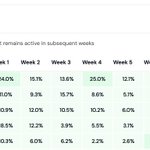
Retention cohorts show you who sticks around.
Measure week-over-week retention and the time it takes a new user to perform a second meaningful action. This is key to understanding long-term value.
4/5
How it works: add the Formo MCP to your AI client. Ask about channels, funnels, churn, or wallets. Formo brings your marketing attribution and product context into every answer, with tables and charts. Setup: docs.formo.so/mcp
Analytics and attribution for onchain apps, with account intelligence built in: formo.so

Wait, so you can filter your users by first-touch AND last-touch attribution separately now?
Source first-touch, source last-touch, medium, UTM, referral. All of it.
So the campaign that introduced a wallet three weeks ago has a clear link, without guess work.
Yeah, that's on the Users page now.

We kept seeing the same thing when talking to DeFi growth teams.
→ They knew exactly what they wanted to see in their data.
→ They just could not get to it without filing a request or learning SQL first.
So we made Ask AI available from anywhere in the dashboard.
Describe the chart; it builds it; you save it.
The question that used to wait until someone had bandwidth now just gets answered.

When we built the retention chart, we kept running into the same problem.
Page view retention and transaction retention tell completely different stories about the same product.
So we made the event selectable.
You pick it; the cohort table rebuilds around it.
Ship a new feature and want to know if users are coming back to use it specifically; you can measure that directly now.

One thing we noticed watching people use analytics tools is that the questions they ask are shaped by how painful it is to adjust their filters.
When changing a device filter means deleting and rebuilding, people stop at Desktop. Not because Desktop is the right cut. Because it is the one they already have.
You can now click directly on any active filter and change the value.

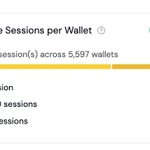
We showed the session frequency chart to a few teams before shipping it.
Most of them went quiet for a bit after looking at it.
One team had assumed their core users were coming back three or four times a week.
The chart showed twice a month for most cohorts, with a small group of power users skewing the average up.
They had been optimizing for the wrong people the whole time.
Session frequency chart is now in @getFormo.

A growth lead at a DeFi protocol spent 20 minutes figuring out how one wallet found them. The activity was there. The referrer was in a different view entirely.
Session referrer is now in the wallet profile activity feed. Open a profile, and the full journey is just there.

We were talking to a DeFi team who wanted to reach their highest value @ethena users. They pulled everyone who held Ethena and got a list of a few thousand wallets.
That list included people with $20 in there from two years ago.
Balance is usually what separates your actual target from everyone adjacent to it.
You can now filter by token and app amounts on the Users page.
Ethena users above $1,000. @aave depositors above $10,000. Whatever range makes sense.

A wallet holding $50 in @ethena and a wallet holding $50,000 in Ethena are not the same audience.
Most teams treat them the same because filtering by balance was not straightforward.
So we built it into the Users page.
Set a threshold, pull the group, and you have a segment that actually reflects who you are trying to reach. Users of Ethena with more than $1,000. @aave depositors above $10,000.

Most DeFi teams segment by token holdings or chain. It is a reasonable place to start.
The problem is two wallets with the same net worth can have had completely different experiences with your app. One came from a campaign, visited your core feature three times, and dropped off right before transacting. The other connected once six weeks ago and has not been back.
Sending them the same campaign means you have no read on why either of them behaved the way they did.
We spent a long time thinking about how to make this useful. Behavioural segments let you combine onchain actions, in-app events, and wallet properties in one filter. Users who visited /swap 3 times from a specific UTM and never transacted. Wallets with $10k+ in Ethena who rejected a transaction this week.
It is on the Users page if you want to try it.
