

We deliver a real, human, emotional, immersive connection to work, by designing a more meaningful culture.
Miami Beach, FL
Joined September 2009
- Tweets11.3K
- Following14.8K
- Followers70.2K
- Likes18.5K





If you're a leader lucky enough to have people who believe deeply in what they're doing, your job isn't to squeeze every last drop out of that belief. It's to build an organization worthy of it. bit.ly/4jpvxuG

Arab philosopher and historian Ibn Khaldun has a pro tip for any business owners out there: Don’t let success make your team soft. bit.ly/4jmiSIZ

You think humans only seek status when they're avoiding fear? Does that mean everyone who wants a promotion is doing so because they are afraid of stagnation, not because they are excited about growth? Not sure we agree.
Without the meaning chain, there is no kill chain. More on what we mean here: bit.ly/4dGXUAV

Interesting to think that someone can be apathetic about the leader but obsessed with the work. Wonder how many folks are stuck in that scenario. Or vice versa. Seems rare to find folks who are obsessed with both.
Authority and influence are two very different status games.
Authority comes from rank. People listen to you because you have a fancy title. Influence comes from admiration. People listen to you because you’ve earned their attention, not because they are obligated to give it to you.
That’s a far more powerful position to be in. Bosses tell you what to do. Role models make you WANT to do it. And change only lasts if people are motivated to do it, not mandated.

One of our favorite Gapingvoidisms is "design for devotion." You can provide all the professional development training under the sun but it won't beat a culture where every person in it is devoted to the mission. That dedication is unbeatable.
Interesting point. What about the employees who aren't sure/couldn't care if the leader wins or loses, they just love the work. Do those people exist anymore?
Not 100% true. It's entirely possible to take notes during a workshop on captivating communicators and then immediately have a smidge more charisma in your next meeting. Happens all the time. The challenge is that most people think one workshop is enough. Most accept the fact that we need to exercise every day to build muscle, but they seem to forget the mind requires just as much continuous training.
When your labor belongs to someone else, it can start to feel like your life does too. One of the best remedies to this ache comes from @RitzCarlton: bit.ly/3Uiz185

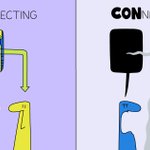
Today’s blog connects the dots between @priyaparker’s two books, The Art of Gathering and The Art of Fighting. In our view, the art of fighting IS the art of gathering. More here: bit.ly/3UdpDCC

The placebo effect works with words too. When a doctor says, “You're going to be fine,” your body has a reason to relax. But if they say, “It's not looking good,” your nervous system prepares for the worst.
Bosses are the doctors in this analogy. Their words calm a room or send it into a panic. They have the power to make a challenge feel like an opportunity or an impending disaster.
More leaders need to understand that optimism will never change a diagnosis, but it can change how people respond to it.
Most companies discover culture problems the way homeowners discover termites: after something starts collapsing.
CEOs, we know you’re busy. But you better carve out time for your people. Ignore their subtle signs long enough and eventually you’ll have to rebuild the whole house.

7 Quiet Signs Your Company Culture Is in Trouble
Read more: entrepreneur.com/building-a-…

Conveniently for any leader trying to transform their organization, behavior is contagious.
One person changes their mindset. Someone notices how that shifts in their behavior and thinks, huh, I like that. I want to be more like that. Someone else notices and joins in. Next thing you know, you have an entirely different culture. Sometimes planting one tiny seed changes the whole garden.

Most people try to change their behavior by white-knuckling it. Grit your teeth. Push through. Try harder next time.
The research says that's backwards.
Behavior isn't primarily driven by willpower. It's driven by what you believe about yourself, what you believe about the task, and what you believe about your capacity to sit with discomfort.
Carol Dweck's work on mindset showed that people who believed willpower was a limited resource actually behaved as if it were — running out of steam, losing control. People who believed it wasn't, didn't. Same brain. Different belief. Different outcome.
That's the leverage point.
You don't change behavior by fighting yourself. You change it by examining the beliefs that make the old behavior feel necessary in the first place. The urge to check the phone, skip the workout, break the promise — those aren't willpower failures. They're attempts to escape a feeling.
Change the belief about the feeling, and the behavior follows.
Beliefs aren't facts. They're tools. And when you understand how they work, you can set them aside when they're unhelpful and replace them with better ones.

Let’s be honest. Positive people are pretty annoying, right?
Who the hell do they think they are? Don’t they know how hard life is? How tiring it is? How much it takes from us? And they have the audacity to be optimistic?
Wankers.
Though there’s one wanker in particular we’ve got our eye on: bit.ly/4zFYOpZ


Provided your initial mental model isn’t horribly divorced from reality, the more you fail, the closer you get to succeeding. Proof: bit.ly/4zgXCJf

Politics is a people's business. The real magic often happens outside of the chamber. It happens in the corridors, over lunch, maybe over brandy and cigars after a weekend game of tennis in the Hamptons. If the chamber is the court, these are the locker rooms. But that’s where games are actually won. bit.ly/4i0zDbn
