

The first accurate and detailed maps of the Milky Way and ways to promote and visualize them (including VR). Also follow me on @galaxy_map@mastodon.social
8277 +/- 9 pc from Sgr A*
Joined May 2010
- Tweets15.7K
- Following779
- Followers5K
- Likes5.6K




Your staff are refusing to fix the glitch - or to issue a refund either. This is not the right way to treat your customers.
Makes me wonder if AI could do a proper full sky mosaic of the WISE infrared survey. That is pretty well complete but no one seems to have ever calibrated the data for a detailed mosaic (as was done for Spitzer).

An astrophysicist worked with Claude Science to create the first complete ultraviolet map of the sky. Astronomers have already created complete sky maps from radio to gamma rays. But large regions of the sky have never been observed in UV.
In today’s science blog, Brice Ménard explains how he guided Claude to find existing datasets, combine them, and fill in the gaps with statistical inference. The work would have taken humans weeks of work, but, with Claude, just took a few days while Ménard worked on other projects.
The resulting map is a useful teaching tool and an example of exactly the sort of slow, low-priority work which scientists never quite get around to, but which AI now makes feasible.
Read more: anthropic.com/research/the-m…

When I was young, Thurston's geometrization conjecture for 3D manifolds was the most exciting part of mathematics. Maybe it still is. I don't have enough geometric imagination to fully understand the whole thing but its formalization in Lean is an important step.


Anyone interested in manifolds knows that 2D closed manifolds (surfaces) can be constructed by attaching handles and crosscaps to a sphere. The geometrization conjecture shows that 3D closed manifolds can also be constructed by gluing 8 different "prime" manifold types together.
I'm now up to about 50 people signed up for the Atlas of the Milky Way Kickstarter. Would still like many more before I launch it.
Please sign up here: kevinjardine.dev/signup/
Would love promotion suggestions now that I have a nice profile page here:
kevinjardine.dev/profile

I've updated my profile page with an endorsement from Anthony Brown, chair of the Gaia Mission Data Processing and Analysis Consortium:
kevinjardine.dev/profile/
Galaxy Map (@[email protected]) retweeted

I have extracted the field containing what can be considered one of the most important stars: the Cepheid variable BASW 1 (M31-V1).
It is the star that Edwin Hubble photographed and identified in 1923 at Mount Wilson and which he labeled "VAR!" once he realized it was a Cepheid.

Sounds like the European Space Agency's Herschel Mission with a bigger mirror. But will it do a full galactic plane survey like Herschel's Hi-GAL?

Exciting news for astronomy in Pasadena! NASA has selected PRIMA, the PRobe far-Infrared Mission for Astrophysics, to move forward in development. Congratulations to the entire PRIMA team, including our colleagues at NASA JPL and IPAC here in Pasadena!
nasa.gov/news-release/nasa-s…

Huh. A shame. Perhaps China will need to build its own Thirty Metre Telescope to fill the gap?

So the Thirty Meter Telescope project has rejected the offer of 1 billion (!) Euros to build it on La Palma without giving any explanation: iac.es/en/outreach/news/iac-… and see also lavozcanaria.com/en/la-palma… and alohastatedaily.com/2026/09/… and diariodeavisos.elespanol.com… - is the TMT toast now?

Galaxy Map (@[email protected]) retweeted

Connect in <72 hrs! Thread of misc. Phoenix things that I missed or wanted to clarify:
- To my knowledge, it does not support Touch Pro controllers. Meta no longer sells them.
I've only seen Phoenix working with Quest 3 (Touch Plus) controllers, which tracked as expected.
1/7

Galaxy Map (@[email protected]) retweeted

Le mathématicien et sculpteur japonais Kokichi Sugihara a créé une flèche qui ne pointe jamais vers la gauche.
Elle est pourtant imprimée en 3D : ses formes sont conçues pour tromper notre cerveau 🧠
Galaxy Map (@[email protected]) retweeted
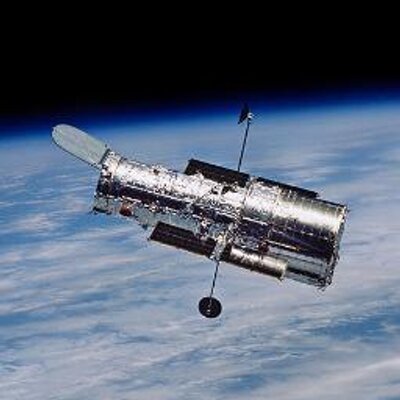
The next big thing in astronomy launches in just a couple weeks!
The @NASARoman Space Telescope's wide, infrared vision will build upon and complement Hubble's capabilities.
Find out how the two missions differ and how they'll work together here: go.nasa.gov/4x2GCpu
Please share your favorite space map images. I'd love to be inspired.
#astronomy #cartography
Later this year I hope to launch a Kickstarter to fund the Atlas of the Milky Way.
I've created a signup page here: kevinjardine.dev/signup
I've now added a profile with more information:
kevinjardine.dev/profile
Please promote.

Galaxy Map (@[email protected]) retweeted
A cosmic "lighthouse" calls the center of the Crab Nebula home.
Known as a pulsar, this rapidly spinning neutron star sends off beams of radiation that sweep through space.
Learn more for Lighthouse Day: go.nasa.gov/4yVcihM

ALT Colorful nebula in space with a white haze throughout that is more concentrated in the center with a rippling effect. Colorful gas filaments appear to splash outward from the nebula center, colored yellow, magenta, and blue. A faint black border with right angles at the corners of the images show where the telescope’s field of view stopsdotted line with right angles shows the borders of the telescope’s image. Small white stars dot the background.
Galaxy Map (@[email protected]) retweeted

The announced closure of the UK's largest telescope at Jodrell Bank is only a small part of the cuts in UK physics

Galaxy Map (@[email protected]) retweeted

The Pacman nebula, taken last night with the Dwarf Mini smart telescope 😍

Galaxy Map (@[email protected]) retweeted
M8, The Lagoon Nebula (NGC 6523), contains several Bok globules (dark, collapsing clouds of protostellar material), the most prominent of which have been catalogued as B88, B89 and B296.
127ED f/9

Galaxy Map (@[email protected]) retweeted

The Cocoon Nebula ✨
The Cocoon is primarily an emission nebula, surrounded by a faint reflection nebula and embedded within a long, dark lane of interstellar dust.
You can probably tell from the diffraction spikes around the brighter stars that I used a reflector telescope for this image instead of one of my usual refractors.
I love the way those stars shine in this field, along with the subtle color differences between the hot blue stars and the warmer golden ones.
I captured this data last fall during a stretch of clear weather, but with Cygnus now returning to the evening sky, it felt like the perfect time to share it.
For this image, I captured 120-second exposures through each LRGB filter, along with several longer H-alpha exposures to strengthen the glowing hydrogen around the nebula.
Image Details:
30 x 120 seconds (Each LRGB Filter)
24 x 300 seconds (H-Alpha)
6 Hours Total Exposure
Equipment Used (picture in comments) 🤓
Camera: bit.ly/4nPzzeF
Telescope: bit.ly/4fuaJxZ
Mount: bit.ly/4fAWbvQ

ALT The Cocoon Nebula