

Trevor Jones 🌌 I Take Pictures of Space from my Backyard. YouTube: https://xitter.cf/t.co/mBLbCa0Mhj
Niagara, Ontario
Joined July 2015
- Tweets8K
- Following1.8K
- Followers69.6K
- Likes17.8K


The Helix Nebula 🫠
This is my latest version of this incredible planetary nebula in the constellation Aquarius.
Capturing this nebula from the backyard is very difficult, as it skirts the southern horizon, barely clearing the treeline.
I took this image over two nights, collecting just 5 hours of total exposure time with a color camera and a dual-band filter.
This particular camera/telescope combo has produced some of my favorite images over the last 2 years, especially with that L-eXtreme filter.
October is a great month to go after this one with your camera and telescope, as long as it's not too low for you!
Image Details:
60 x 300s (5 Hours Total)
Equipment Used:
Telescope: bit.ly/4ipkyQR
Camera: bit.ly/4eCCYLE
Filter: bit.ly/4ylsTtP
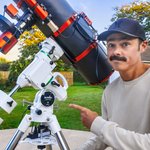
(picture of my setup in the comments)

ALT The Helix Nebula

🔭AstroBackyard retweeted

Mars this morning, captured under average seeing. Sinus Meridiani is central with Syrtis Major on the day/night terminator. The north polar cap is also nicely seen.
24" Dob, Uranus-M/C cameras at 9000mm f/15. (R)OSC, ~45 mins of data.


🔭AstroBackyard retweeted

Here it is! Freshly finished, The Ghost Nebula IC63 in Cassiopeia, along with IC 59 below it. Together between Friday and Saturday night, I put 7hrs on it from a bortle 4 location 🌌
I meant to have it sooner, but I was trying something new, and it ended up being a waste of time 😂

ALT IC 63 and IC 59 with Gamma Cassiopeiae Star
I captured this planetary nebula from my backyard last year, collecting a whopping 13 hours of total exposure time.
Cataloged as Sharpless 188 (Sh2-188), it’s a relatively small target in Cassiopeia, and easy to overlook next to the constellation’s much larger nebulae.
For this image, I used the ZWO ASI585MC Air, a ‘smart camera’ that combines a color imaging camera, an autoguiding sensor, and a Wi-Fi controller in one. (I run this one constantly) 🤓
One of my favorite things about astrophotography is discovering little gems like this hiding in the night sky!
About the Camera: bit.ly/3TS9e6x

ALT The Shrimp Nebula
New Telescope Alert! ⚠️
I've been testing the Askar N160 for the past 3 months, and it's sparked that astro-fire in my veins again.
Because this little light bucket is so fast (F/3.4), I've been mainly using it for LIVE STACKING broadband targets using 60-second exposures.
You heard that right... 🤓
I'm basically treating this setup like a totally overpowered smart telescope, and the results have been exciting. (teaser pic in the comments)
The whole thing weighs like 22 pounds, and I can get a 6-inch aperture monster running in minutes. It's super finicky with spacing and collimation - but I think I've got it dialed in now.
I'll explain everything in my latest video on Friday - and I think you are really going to like this one!
BUILD THIS RIG:
Camera: bit.ly/4zdwmv8
Telescope: bit.ly/47pJLoh
Mount: bit.ly/4yb9UBY

ALT New Telescope


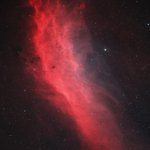
The California Nebula 📸
Here's an astrophotography target you can start this month! It's rising higher into the eastern sky each night.
This intense emission nebula lives in the constellation Perseus - and the Pleiades star cluster is not far behind.
This is my latest attempt at NGC 1499 using an ultra-portable camera and telescope rig in the backyard over 2 nights.
As always, I'd love to see your latest image of the California Nebula in the comments 🤓
Equipment Used:
Camera: bit.ly/4cqRi61
Telescope: bit.ly/4dIky9s
Mount: bit.ly/4csp0bn
Total Exposure: 9 Hours

ALT The California Nebula
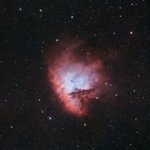
Pacman Nebula - SEESTAR EDITION! 📷
It still blows my mind that results like this are possible with a smart telescope in the backyard.
This is a simple autostack (done in the Seestar) of 312 images of NGC 281 using the built-in LP filter. (30 seconds each)
I processed the stack in Photoshop and PixInsight using my usual workflow, and ended up with this.
I will say - using EQ mode is an absolute must for deep projects like this. It makes a huge difference.
Not bad for an all-in-one device I plunked down on a random clear night. What a time to be alive! 😆
My Full Review: astrobackyard.com/seestar-s5…

ALT The Pacman Nebula
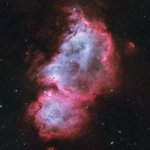
The Soul Nebula 📷
Here's my latest picture of the spectacular 'Soul Nebula' in the constellation Cassiopeia.
This dynamic emission nebula is the Heart Nebula's nearest neighbor (it's just out of frame)
Next month, Cassiopeia rises high into the sky and is easily recognizable by its distinct 'W' star pattern.
You'll find the Soul Nebula bordering the constellation Perseus, very close to the iconic double star cluster in that region.
It's one of the best astrophotography targets in the entire sky, and October is a great month to capture it!
Photo Details:
336 x 5 minutes (28 hours total exposure) 🫠
Captured over 8 nights
Stacked in PI, Processed in PS and PI
Camera: bit.ly/43Xvu18
Telescope: bit.ly/42KlNAD
Filter bit.ly/3EnvQ3t

ALT The Soul Nebula in Cassiopeia
Do Traditional Astrophotography Mounts Still Matter? 🤔
My 6-Month Review of the Sky-Watcher HEQ5-R Pro: youtu.be/_xrPt5XbQT4

ALT Astrophotography Mount Review (Sky-Watcher HEQ5-R Pro)
The Wizard Nebula 🧙♂️
Here's a great target for your camera and telescope this month: NGC 7380!
It's a bright emission nebula with an embedded star cluster located roughly 8,000 light-years from Earth.
I captured this image of the Wizard Nebula with my reflector telescope in the backyard last September - and it's my best yet.
The telescope I used has a focal length of 800mm, which seems to be 'just right' for a target of this size.
This is my longest-ever exposure on the Wizard, totaling 18 hours from my backyard in the city.
For absolutely everything you could possibly want to know about photographing the Wizard Nebula, I put together a complete guide in the comments. 🤓
Image Details:
72 x 300s HA
72 x 300s OIII
72 x 300s SII
18 Hours Total
Equipment Used:
Camera: bit.ly/4nPzzeF
Telescope: bit.ly/4fuaJxZ
Mount: bit.ly/4fAWbvQ

ALT The Wizard Nebula

The Triangulum Galaxy 📷
September is the perfect month to photograph the Triangulum Galaxy (if you're in the Northern Hemisphere!)
I captured this image of M33 with my refractor telescope from this year's Starfest Star Party.
At about 3 million light-years away, the Triangulum Galaxy can be seen with the naked eye, but only under pristine dark skies!
For this image, I captured images in broadband light (no filter) over the course of 2 nights at my campsite (picture in thread)
Image Details:
150 x 180 seconds (7 Hours, 30 minutes total)
Equipment Used:
Camera: bit.ly/3CaQWUI
Telescope: bit.ly/4shlAjE
Mount: bit.ly/4qIlq4e

ALT Triangulum Galaxy

Is the new Seestar S50 Pro actually worth the higher price? 🤔
I put it through a full astrophotography test - with deep-sky image examples, raw data comparisons, real-world pros and cons, and a close look at where it improves on the original S50.
This may be the most in-depth Seestar S50 Pro review online. If you’re considering buying one or wondering whether it’s worth upgrading) start here:
astrobackyard.com/seestar-s5…

The Andromeda Galaxy!
This is my latest image of this stunning spiral galaxy, taken with a 'smart telescope' in the backyard.
This is the galaxy that got me hooked on astrophotography 16 years ago. It's big, beautiful, and accessible using modest gear.
I took this earlier this month using the Seestar S50 Pro - a new smart telescope that reminds me how far this hobby has come since 2010.
This telescope costs $899 (for now)
Do results like this justify that price? 🤔
You can definitely photograph Andromeda for less - but perhaps not this easily...
In-Depth Review for Nerds Only: astrobackyard.com/seestar-s5…

ALT The Andromeda Galaxy