

Social interactions & cognition, causal inference, cognitive modeling & machine learning, complex systems, language, neuropsychiatric conditions. He/They
Aarhus
Joined November 2008
- Tweets17.4K
- Following3.1K
- Followers4.1K
- Likes19.1K





Pinned Tweet
Should we use findings from previous studies and meta-analyses to shape our statistical inferences (aka informed priors)? What are the advantages and issues? Strap on for a loooong thread (link to a video of the talk at the end) 1/

Riccardo Fusaroli retweeted

Phonological systems first emerged (and are maintained) through an interplay between biology, physics, and culture = can be construed as cognitive tools
onlinelibrary.wiley.com/doi/…

Riccardo Fusaroli retweeted

New #rstats blog up!
solomonkurz.netlify.app/blog…...
This is the second post in the series where we use {brms} to learn {Stan} code. This time we review matrix notation, model matrices, and a new class of distribution functions in Stan.

New #rstats blog up!
solomonkurz.netlify.app/blog…
This is the first in a brief series where we use {brms} to learn {Stan} code.
Many thanks to @fusaroli and @stephenjwild for their helpful reviews.

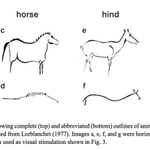
Key finding 2: complete outlines were consistently better than abbreviated ones (showing just head-neck-dorsal line) for both recognition and aesthetic appeal. 6/
We weave in multiple threads of evidence and suggestions from other domains (practicing what we argued in link.springer.com/article/10…) & theorize that these choices involved the complex interplay of perceptual, technical (production), and cultural factors. 8/


Why does Western paleolithic cave art strongly prefer animal side views and often abbreviations? Our new @ERC_eSYMb preprint (osf.io/preprints/psyarxiv/4x… w Pagnotta, Psujek, Mendoza Straffon & @kristian_tylen) uses cogsci experiments to challenges long-held assumptions. 1/

Traditional views would say that side views are superior to all others to convey the info necessary to recognize animal species, while abbreviated outlines could emphasize on salient features (recognizability) & have > aesthetic appreciation). 4/
Inspired by ecological psychology, we tested how different viewing angles (frontal, rear, side, oblique) and outline styles (complete vs. abbreviated) affect both animal recognition and aesthetic appreciation among modern viewers. 3/

TL;DR: side-views contain > information for recognizing the animal than front & rear views & are easier to draw than oblique views; abbreviations are harder to parse & < appreciated, but might have been faster to produce in low light & easy to interpret if part of the culture. 2/
Riccardo Fusaroli retweeted

From my colleagues Kyle Harper & David Wolpert at @sfiscience:
Position for two-year postdoc with background in computer science interested in working with social scientists/historians to study social evolution through computational lens. Details here: santafe.edu/about/jobs/postd…
Riccardo Fusaroli retweeted

🦦 Feed your intellectual curiosity & challenge your limits at SFI’s Undergraduate Complexity Research program. Pursue new research directions and walk away with an unforgettable, transformative experience. Apply by January 14: apply-sfi.smapply.org/prog/u…

Persimmon fruits don’t pay back the labor used to collect them, so they linger neglected against the sunset

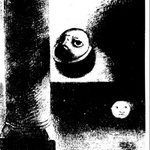
found my old high school final paper on the notion of uncertainty across art history (impressionism, but also Odilon Redon), physics (Heisenberg), literature (the dream of Ulysses in Pascoli's poetry) and philosophy (from Kant to Nietzsche). No wonder I ended up a Bayesian...

Riccardo Fusaroli retweeted

The acoustic features of linguistic prosody that are consistently affected in Parkinson’s disease are identified in new #JSLHR article.
on.asha.org/3S6NrUj
@SIGPerspectives @CSDisseminate #SLPeeps #slp2b #Parkinsons

ALT ""
Philosophy & folk-theories of science started on physics & controlled exp. What would happened if we had built it on historical & explicitly fragmentary sciences? In this paper we explore how theories are built & improved in the study of the evolution of cognition & communication

✨ New paper ✨
@mariekewoe, @fusaroli, Rich, P. et al. Lessons for Theory from Scientific Domains Where Evidence is Sparse or Indirect. @CompBrainBeh (2024). doi.org/10.1007/s42113-024-0…
Riccardo Fusaroli retweeted

In case you missed it, last October our paper "ELLIPS: An Ethics-Centered Approach to Research on LLM-Based Inference of Psychiatric Conditions" was accepted @AIESConf. Let's dive into its details.

ALT Poster of the paper "ELLIPS: An Ethics-Centered Approach to Research on LL-Based Inference of Psychiatric Conditions"