

Breaking down today's top DTC / Direct Response Funnels, from first click to last upsell. 👉 Subscribe at https://xitter.cf/t.co/YUdkknY9vX
Joined June 2024
- Tweets1.9K
- Following74
- Followers2.8K
- Likes1.2K





Pinned Tweet
Groundingwell is running 48 advertorials right now.
We put together a dashboard showing you all of them
(plus the Meta + YouTube ads they're using to scale this advertorials + listicles right now)
Like + Comment "Groundingwell" and we'll send you the link
(must be following to receive DM)
18 top meta hooks running now - epic share thanks @jforjacob !
here is the list printed out if you find the image too blurry:
Dramatize the Problem — Dramatize the need for your product. Exaggerate the problem and the frustration that comes with it.
Motion Tricks — Elevate transitions and action effects to capture attention in a relevant way.
Podcast — Build trust and credibility in the first second. Use an “expert voice” to pitch your product.
Reminder — Write a “Reminder” caption to create urgency before key events (sales, seasonal occasions, holidays, etc.).
The Absurd Alternative — Show an absurd alternative for how people currently solve the problem (and the outcome).
In Real Life — Present the product/gameplay in a way users aren’t used to seeing it. (Great for gaming: “What would this look like IRL?”)
Reaction in Action — Show the reaction when using (or not using) the product. Green screen reacting to an ad also works.
Question — Pitch the product by answering a relevant question in the first second.
Evolution — Show how the product changes its users — real results or a slightly exaggerated before/after.
Shocking Effect — Show the product or consumer in an extreme, out-of-the-norm way. Create a relevant “wait, what?” moment.
On Trend (FOMO) — Create FOMO by showing people hyped up while reviewing or using the product.
Teaser Hook — Share intriguing information… but not all of it. Leave them wanting more.
Emphasize the Solution — Create a quick “magic moment” that visualizes the product working and its effect.
Negative Hook — Start with a negative statement to grab attention, then flip into the pitch.
Make Me Laugh — Use humor. Keep it short, sketchy, native, and to the point.
Satisfying Intro — Use a sensorial/action scene that visualizes the need or benefit. Add captions to stay on brief.
Destroy / Toss & Burn — Destruction is a strong thumb-stopper. Think about what you can destroy (keep it relevant to the product).
Skeptical Voice — Start by questioning the product or the need. Makes the ad feel more relatable and lowers resistance.


Every winning angle Grüns finds, they spin up a new angle-congruent lander with @replohq & let er rip

"Winners don't just test ads. They rebuild the entire experience around each winning message."
^ Biggest takeaway from @myfirstmilpod interview w/ Grüns founder @chadjanis on how he grew Grüns & sold to Unilever for $1.2B in <3 years.
"...The system: test hundreds of ads per month to find the "unlock." Once an angle sticks (gut health, energy, focus), rebuild everything around it."
Want to see this strategy in action?
We built this dashboard showing you every Meta + YouTube ad + Lander combo Grüns is running right now in Q2 2026.
You'll see:
* Meta Ad Whitelisting: 77 unique FB pages
* 74 unique landing page angles
* 954 Meta ads
* 331 live YouTube Ads
See the ad + landing page combos they're running across Meta + YouTube right now
(link in comments - no optin required)
"...The system: test hundreds of ads per month to find the "unlock." Once an angle sticks (gut health, energy, focus), rebuild everything around it."

.@chadjanis sold his 3-year-old company to Unilever for $1.2B. Here's what he did that most brands don't:
Most brands send every ad to the same generic homepage. That's why they bleed cash.
Chad builds an entire world around every winning ad angle.
The system: test hundreds of ads per month to find the "unlock." Once an angle sticks (gut health, energy, focus), rebuild everything around it.
If someone clicks a "gut health" ad:
Landing page = 100% gut health
A popup asks about their gut concerns
Emails/SMS = tailored to gut health
His team: 30 people. 5-6 creative strategists, 4-5 media buyers, 3 on retention.
The tool: Replo (Shopify plugin). Chad says "they don't charge enough. You can build a new funnel in a day."
Winners don't just test ads. They rebuild the entire experience around each winning message.
Message-match is the difference between $10M and $1.2B.
@thesamparr @ShaanVP
"Winners don't just test ads. They rebuild the entire experience around each winning message."
^ Biggest takeaway from @myfirstmilpod interview w/ Grüns founder @chadjanis on how he grew Grüns & sold to Unilever for $1.2B in <3 years.
"...The system: test hundreds of ads per month to find the "unlock." Once an angle sticks (gut health, energy, focus), rebuild everything around it."
Want to see this strategy in action?
We built this dashboard showing you every Meta + YouTube ad + Lander combo Grüns is running right now in Q2 2026.
You'll see:
* Meta Ad Whitelisting: 77 unique FB pages
* 74 unique landing page angles
* 954 Meta ads
* 331 live YouTube Ads
See the ad + landing page combos they're running across Meta + YouTube right now
(link in comments - no optin required)
Grüns Ad + Landing Page Dashboard link (no email required): lab.funneloftheweek.com/grun…
"Winners don't just test ads. They rebuild the entire experience around each winning message."
^ Biggest takeaway from @myfirstmilpod interview w/ Grüns founder @chadjanis on how he grew Grüns & sold to Unilever for $1.2B in <3 years.
"...The system: test hundreds of ads per month to find the "unlock." Once an angle sticks (gut health, energy, focus), rebuild everything around it."
Want to see this strategy in action?
We built this dashboard showing you every Meta + YouTube ad + Lander combo Grüns is running right now in Q2 2026.
You'll see:
* Meta Ad Whitelisting: 77 unique FB pages
* 74 unique landing page angles
* 954 Meta ads
* 331 live YouTube Ads
See the ad + landing page combos they're running across Meta + YouTube right now
(link in comments - no optin required)
love this approach, going to apply to next ad dashboard

how to use competitor ad libraries to never run out of angles ever again (send this to ur creative strategist)
> pick 5 competitors in ur niche running 100+ ads each
> scrape their entire ad libraries
> rank every ad by copy count — copy count = how many duplicate versions exist of the same ad. high copy count = winner being scaled
> transcribe every video with copy count above 5. these are the proven hooks
> extract: angle, messaging format and mechanism
> u now have a database of every battle-tested angle in ur category, free
> remix the angles ur competitors have validated but haven't yet expressed in 25 messaging formats
> each remix lands in a different Andromeda segment they don't occupy yet
this is how u stop guessing and start operating on validated demand.
signed from the temple of scale,
argon

Funnel of the Week retweeted

Trying to increase AOV / RPS is great
But there is a high chance it will proportionately (or more) increase CAC, drive up CPM and shrink your TAM
I've always preferred to go the other way
Lower AOV to maximize Meta TAM and then work on making CAC/LTV math work

Been really focused on increasing revenue per session this year and it backfired hard.
We did a lot of CRO work and offer testing and were able to increase our AOV significantly, which also increased our RPS.
But here’s what also happened:
Our CAC rose a lot in the same period.
Our frequency went up, because there are just fewer people who can buy at higher price points.
And (I think) Meta started optimizing for people who spend more, which made the addressable audience even smaller.
This made it harder to scale.
I haven’t seen many people talk about this dynamic, but it’s a good reminder that it’s dangerous to look at metrics in isolation.
When doing CRO work, optimizing RPS alone is fundamentally flawed (most CRO agencies won’t tell you this) - because your CAC rises at the same time and your addressable market shrinks.
You need to look at the whole system.
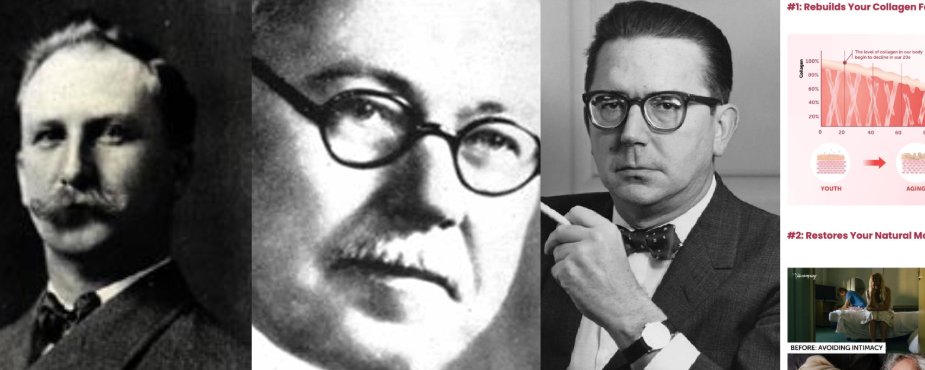
Every top listicle advertorial running on Meta right now is using a 121-year-old direct response playbook.
John E. Kennedy wrote it in 1904. Called it "reason why" advertising.
Hopkins measured it. Reeves formalized it. Schwartz named the mechanism. Bencivenga stacked the proof.
The format changed. The principle didn't.
Before you publish your next listicle, run this 6-point audit:
> Does every reason name a specific mechanism?
> Does every reason have its own proof?
> Does the ad give a different reason than the landing page?
> Does the offer itself have a reason?
> Do all the reasons serve one idea?
> Could you run different reasons for different people?
If any answer is no, you're leaving money on the table Kennedy spotted in a Chicago saloon 121 years ago.
Full teardown of 150+ listicles in the article.

We buy & document top-performing DTC funnels each week, showing you the entire path from first click to last upsell.
Check out the Resilia full funnel breakdown (everything from first click to last upsell) inside the Funnel of the Week Members Area, including...
* Full Funnel Walkthrough through every step of the funnel live — from ad click to post-purchase
* Traffic + Positioning - pulling data from Meta, Google & more
* Cart + checkout flow
* Upsell Funnel - Full OTO upsell stack
Go here to learn more about Funnel of the Week: funneloftheweek.com/

* Multi-FB Page Ad / Lander Breakdown + Dashboard *
It's a simple product - oil of oregano with black seed oil softgels - but DTC supplement Resilia is printing $$$ using this multi-page Meta traffic setup right now.
We built an interactive dashboard showing you the all the ads + landing pages they're running right now, so you can model this approach for your own campaigns:
(All filterable by FB page source PLUS all the YouTube ads they're using to drive $250k/mo spend on that channel alone)
Want access?
Just comment "RESILIA" and we'll send the link.
(Must be following to receive DM - and RT for priority delivery)
We buy & document top-performing DTC funnels each week, showing you the entire path from first click to last upsell.
Check out the funnel breakdowns (everything from first click to last upsell) inside the Funnel of the Week Members Area, including...
* Full Funnel Walkthrough through every step of the funnel live — from ad click to post-purchase
* Traffic + Positioning - pulling data from Meta, Google & more
* Cart + checkout flow
* Upsell Funnel - Full OTO upsell stack
Go here to learn more about Funnel of the Week: funneloftheweek.com/
this is completely insane! can't wait to try this model
the fact they are analyzing/correlating w brain activity is nuts.
we did something more primitive a few years back looking at emotional detection via ekman's micro-expressions
semi-relevant backstory
a few years ago we ran a bunch of tests on a solid set of ads we were running with $10M+ in adspend, using ai facial recognition model + live subjects (via amz mechanical turk) and found some interesting patterns
(thanks to @tawny_ai for partnering on this study - you guys are the best)
tldr: our best performing ad had the most quantitatively BORING hook
(does this mean that's always going to win? of course not. but interesting nonetheless)
The experiment setup:
We were having success with one offer where we had built and tested around 200 different YouTube ads, and spent over $10 million usd in YouTube adspend.
* We wanted to take a closer look at 9 of these ads (with a combined $8+ million usd adspend between them).
* Our winning ad in this group had over $3 million usd spent alone
* All ads in this cohort were the same “core” ad, with a different 5-20 sec initial intro on each
* Despite these similarities, performance between these ads varied widely, and we wanted to understand why.
The Experiment:
Audience: ~1000 unique participants, similar in age/gender/location to our best ad audiences (approx ~110 viewers per ad)
Environment: users were on their home laptop environment, where we record & measure emotional / attentional response via their webcam (with consent).
The Questions:
Is there a specific emotional “signature” for our best performing YouTube ad intro? How does this compare to the other ads? What insights can emotional recognition tell us about what makes a high-performing YouTube ad intro?
The Results:
Before we move on, what is your guess on what emotion would drive the best YouTube ad intro?
This Emotional Recognition model evaluates emotion primarily on 2 axes: VALENCE & AROUSAL
Valence: Valence describes on a continuous scale whether the emotion is "negative“, “unpleasant” or "positive“, “pleasant”.
Arousal: Arousal indicates whether a person is more unaroused/relaxed or more aroused/excited.
So let’s start with Arousal.
Did our ads make viewers more excited or more bored? How about our best ad?
our best ad actually moved the audience the 2nd least vs. baseline in terms of arousal.
So our best ad = our 2nd most “boring” ad?
What’s going on here?
Not too much variation happening here on the sympathy-happiness axis, let's move on...
Next: what about the emotion of “surprise?”
A shocking, suprising hook seems like it might work, right?
Unfortunately, no breakthrough with this.
Our best ad is firmly the median value here, with as many ads with higher surprise value as there are lower
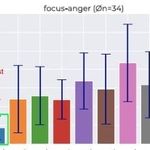
Moving on, here’s where things start to get interesting, on the focus-anger axis:
Our best ad has the lowest value here, by far.
So our best ad has the intro that makes the viewer the least angry or frustrated?
Interesting.
Let’s take a more comprehensive look at the data across all the ads in our study to see if there is indeed a correlation between performance and these values and ad performance generally:
To sum it up, for these ads we studied for this particular offer:
📷 Focus-anger measurement correlates negatively with performance…
📷 While the neutral, indifference-sadness measurement correlates positively with it…
Which means, in the case of this particular study on this particular offer:
* The less annoying and less confusing (and even the more boring) the YouTube ad intro is, the better the performance.


How To Replace Your Drip Sequence With AI - just checked out this epic article from @samwoods (link in comments)
"Flows account for just 5.3% of email volume but generate nearly 41% of total email revenue.
Most operations spend the bulk of their email effort on the 94.7% that produces the least return.
The behavior-triggered sequences running quietly in the background are where almost half the money lives.
This issue is the playbook for shifting your email architecture from scheduled to responsive."

