




François Chollet retweeted

I nominate this for best tweet of the last 2 years.
Read until the end

Flashback to June 14, 2024.
At the time, frontier AI models have zero fluid intelligence. They score around 5% on ARC 1. They can't reliably add two numbers. They make laughable logic errors every other prompt. Reasoning models don't exist. Coding agents don't exist. Claude Code doesn't exist. "Code gen" is a complete joke. Scaling up next-token prediction based on web text data is hitting a wall.
What if a time traveler told you that, by November 2026...
• AI models would have human-like fluid intelligence, thanks to a new paradigm: test-time induction (modern reasoning models).
• Not only would ARC 1 be saturated, but unreleased benchmarks 10x harder (ARC 2) and 100x harder (ARC 3) would be saturated too.
• Nearly all code would be written by AI, and models could one-shot complex codebases flawlessly.
• AI models would be solving multiple Millennium Prize problems.
• OpenAI's valuation would be 15x higher, and Anthropic's would be 85x higher.
And on top of all that...
• Nvidia would still hold ~80% of the AI compute market.
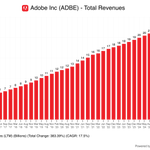
• Nvidia would have grown its revenue and earnings 4.5x.
• Nvidia would still be growing 75% a year.
• Nvidia would have even higher operating margins (67% vs. 65% back then).
Based on that information, straight from the future, would you have bought NVDA?
If you answered yes -- congrats. Today, 2.5 years later, you'd be down 5% on your investment (even more after inflation).
François Chollet retweeted

Announcing ⚡⚡
1) New records on ARC-AGI public eval !!
2) A new sample-efficiency benchmark
70% on ARC-1 with just 19M params (15% on ARC-2)
49% with just 1M params!!
(Latter beats TRM's 45% with ~400x fewer params)
Trained from scratch on only 1,307 ARC puzzles.
Just ~$13 to train
No text, no LLMs
🧵
François Chollet retweeted

ARC Prize Research Summit - @stephen_wolfram
On AI discoveries and the computational foundations of new knowledge
François Chollet retweeted

We had Minecraft legend @SethBling represent humanity on our new benchmark.
He was #1 until Astra 6.2 launched yesterday.
Introducing KradleBench: evals in live, multi-agent worlds
François Chollet retweeted
Sufficiently advanced agentic coding is essentially machine learning: the engineer sets up the optimization goal as well as some constraints on the search space (the spec and its tests), then an optimization process (coding agents) iterates until the goal is reached.
The result is a blackbox model (the generated codebase): an artifact that performs the task, that you deploy without ever inspecting its internal logic, just as we ignore individual weights in a neural network.
This implies that all classic issues encountered in ML will soon become problems for agentic coding: overfitting to the spec, Clever Hans shortcuts that don't generalize outside the tests, data leakage, concept drift, etc.
I would also ask: what will be the Keras of agentic coding? What will be the optimal set of high-level abstractions that allow humans to steer codebase 'training' with minimal cognitive overhead?
François Chollet retweeted
Gemini 4 Carbon from @Google on ARC-AGI (Verified):
- ARC-AGI-3: 99.1%, $4.6K (provider adapter), 65.1%, $7.2K (standard harness)
- ARC-AGI-2: 94.2%, $0.38/task
- ARC-AGI-1: 98.5%, $0.16/task
Carbon beat its predecessor Argon by 18% points on ARC-AGI-3 in the standard harness.

François Chollet retweeted
Plotting ARC-AGI model scores reveals a strong relationship across all three benchmarks.
For example, the power curve v2 = v1^4.53 explains about 98% of the variation in ARC-AGI-2 scores. Models tied on ARC-AGI-1 can still differ by over 20 percentage points on ARC-AGI-2.

François Chollet retweeted

Workers in six occupations do 79 tasks the government's official occupational taxonomy has yet to add. That work is worth about $140B a year in wages.
That taxonomy is called O*NET, the U.S. Department of Labor's database of the tasks each occupation involves. Workers use it to help with job transitions, and economists use it to estimate which jobs AI will change. If the lists are incomplete, so are the estimates.
Today we're releasing TaskNet, an open-source task catalog built on O*NET and updated for how AI is changing work.
Built with researchers from Stanford, the O*NET Resource Center, and NBER. Thank you to @robinsonaisaac @erikbryn @diyi_yang @jennjwang @andreas_h0wpt @Digeconlab @stanfordnlp @stanfordhai @stanfordAIlab for contributing to this work.
Read the blog: mercor.com/blog/introducing-…

François Chollet retweeted

Introducing SKY-001, the first Engineering World Model.
On CAD and BIM tasks, it beats GPT-6 Astra and every frontier model we tested:
-> 51-125x faster
- > 150-210x cheaper
-> Higher IOU than all frontier models
SKY-001 lets you dream a physical object before you build it.
18 months of work. Built by the team out of Maluuba's deep learning lab (acq. by @MSRResearch).
The first ‘AI General Engineer’ will be the backbone for Autonomous Manufacturing.
François Chollet retweeted
DeepSeek V4.1 Flash from @deepseek_ai on ARC-AGI (Verified):
- ARC-AGI-3: 3.3%, $878 (provider adapter harness), 0.9%, $1.2k (standard harness)
DeepSeek V4.1 Flash is the first model we've evaluated on ARC-AGI-3 to score above 3% for under $1k in total evaluation cost.

François Chollet retweeted
Announcing ARC Prize Research Summit 2026 Keynote Speaker
Kenneth Stanley
@kenneth0stanley is a pioneer in neuroevolution and open-ended AI, co-creator of NEAT and novelty search, and co-author of “Why Greatness Cannot Be Planned.”

François Chollet retweeted
Announcing ARC Prize Research Summit 2026 Research Speaker
Kevin Murphy
@sirbayes is a research scientist at Google DeepMind and author of the “Probabilistic Machine Learning” textbooks, developing AI that learns causal world models through experimentation.

François Chollet retweeted
Announcing ARC Prize Research Summit 2026 Keynote Speaker
Stephen Wolfram
@stephen_wolfram is the creator of Mathematica, Wolfram|Alpha, founder of Wolfram Research, and author of “A New Kind of Science,” exploring how simple rules produce complex behavior.


François Chollet retweeted

I'm pretty much on board with @fchollet here. I'd add a little more nuance, since we can't be 💯 certain. But he gives the right intuitions for why current AI is vanishingly unlikely to be conscious, and he's absolutely right about the dystopian outcomes that would follow from treating it as if it is.
I make the broader case against conscious AI in this @NoemaMag essay noemamag.com/the-mythology-o…, and in long form in this @BBSJournal collection DOI.org/10.1017/S0140525X250… (with arguments from all sides in the commentaries) 👇🏽

The notion that current AI models are sentient and can suffer, combined with the foolish idea that suffering can be mathematically quantified and weighted between humans and non-humans, could lead us down an incredibly dark and dystopian path.
But before it gets to that point, it will rightfully be met with immense backlash from team humans.
François Chollet retweeted

1/9 Local communication in NCAs can produce a visual "chain of thought".
For example, in mazes, NCAs explore paths in parallel and backtrack from dead ends, much like slime molds 🍄, and in ARC-AGI-1, colors and shapes are gradually moved across the grid to solve tasks!
François Chollet retweeted

Lots of discussion out there about our next model(!), so I wanted to give an early look as soon as possible. Introducing Gemini 4 Argon!
It shows frontier performance in complex workflows, cyber defense and software engineering. Teams are using it extensively at Google, from coding to quantum computing, great feedback.
Here’s a look at the benchmarks:

François Chollet retweeted

Astra scored 99.9% on ARC-AGI-3. What does that actually mean?
We built an interactive way to explore @arcprize's ARC-AGI-3. Play one of the games that models are tested on, then read Astra's notes from its own run.
intelligence.mts.now/benchma…

François Chollet retweeted

Join the Keras community meeting this Friday, October 2, 10 AM PST where we present latest developments in the Keras ecosystem. The meeting is open to anyone. Please use this link meet.google.com/gva-bbpr-twe to join.
François Chollet retweeted
GPT-6 Sol from @OpenAI on ARC-AGI (Verified):
- ARC-AGI-3: 4.6%, $5.6K (standard harness), 23.0%, $8.7K (provider adapter harness)
- ARC-AGI-2: 89.6%, $0.44/task
- ARC-AGI-1: 95.5%, $0.14/task
Sol reaches 23.0% on ARC-AGI-3, vs Luna's 0.59% and Astra's 99.9%.
