

@evolbrain
Account based inUnited States
About this account
- Account based in
- United States
- Connected via
- Web
Account-level information from X, not a live location or the device used for a specific post.
Science: Evolution of brain & behavior, gene regulation. Occasional writer: biology & society, literature. First-gen. 🏳️🌈 Find me elsewhere, same username.
Austin, TX
Joined May 2013
- Tweets10.1K
- Following1.9K
- Followers2.4K
- Likes17.1K




Steven Phelps retweeted

Ma tendresse il a fallu que je l'invente, ce qui m'autorise à vous en offrir la part que vous aimerez.
Michel Foucault

Steven Phelps retweeted

Talarico is really good. He’s going to be a heck of a presidential candidate someday if he pulls off a win in Texas
Steven Phelps retweeted

re-read I Have No Mouth and I Must Scream last night and honestly 98% of the story is in the title
now if you want something *actually* banally terrifying about AI, read Lena by QNTM qntm.org/mmacevedo

Steven Phelps retweeted

My time at the Gates Foundation/IDM recently wrapped up! I'm looking for senior/staff roles in AI for science, probabilistic inference, or scientific software — in Seattle or the SF Bay Area.
Also open to consulting.
Here's what I've been working on:
Steven Phelps retweeted

Scott & Fuller largest ever experiment on dog behavior Piece spotlights eugenic framing but Scott changed his mind. He said "genetics does not put behavior in a straitjacket" & study is remembered for showing importance of env in behavior development bbc.com/future/article/20261…

Steven Phelps retweeted

We congratulate Anne Carson, winner of the 2026 Nobel Prize in Literature. Carson is a contributing editor at Granta and a regular writer for the magazine. In celebration, we have lifted the paywall on all her contributions to our pages.
granta.com/contributor/anne-…


Steven Phelps retweeted

"we show populations evolving under stronger sexual selection carry fewer inferred deleterious mutations and, importantly, that the amount of these deleterious mutations present predicts population extinction risk." pnas.org/doi/abs/10.1073/pna…

Why are people so troubled by subjective experience? Everyone wants it to be a mind dust. Honestly, consciousness is not that special.

At least since I wrote How the Mind Works, I've long been a strong proponent of the computational theory of intelligence, but I've always acknowledged that it cannot explain subjective, phenomenal, 1st-person experience. Neither can any other scientific theory, but Seth makes a good case that our biological makeup is relevant.
This is a category error. It is mysterious because folks want consciousness to be material, when instead it is pattern. This is why mind-body dualism is attractive. Mind and body are not the same kind.
Steven Phelps retweeted

I had not realised before that the Bronze Age Collapse was literally *caused* by iron.
Bronze age powers like the Egyptians, Hittites and Babylonians used bronze weapons, made by combining copper and tin. Tin was so scarce that only the richest and most powerful groups could access it and the bronze weapons it allowed. (Tin was so rare that it was being transported from Cornwall to the Middle East more than 1000 years BC.) The scarcity of tin gave these empires a near-monopoly on violence.
Iron weapons are not actually any better than bronze ones – they're not stronger or easier to work with, as I'd assumed. They're just much, much easier to mass produce once you have bloomeries, which are the first furnaces that were hot enough to melt iron in a way that made them useable for weapons.
Bloomeries meant that iron ore, which was widespread, could be used to make weapons anywhere. That led to warlords, bandits and city-states rising in a massive decentralization of military power, which the Bronze Age empires were unable to resist.
After the invention of the bloomery, skeletons show a measurable increase in weapon-inflicted injuries. 'Destruction layers' with bones and signs of burning have been found from this time at archaeological sites including Troy. Ancient writers – including Herodotus, Ovid, and the writers of the Old Testament – believed the invention of iron had unleashed a new age of violence.
New at Works in Progress, WEAPONS OF MASS DECENTRALIZATION: how iron itself brought about the Bronze Age Collapse. And what technologies could do the same today?
worksinprogress.co/issue/wea…

Steven Phelps retweeted

Cooperative theories of morality straightforwardly explain what you ought to do, and accurately describe people's moral intuitions. Altruistic theories, like utilitarianism, make incoherent and implausible demands, and then have to fudge it with endless ad hoc 'constraints' etc

Steven Phelps retweeted

Your dog carries your stress in its body for months. A 2019 study in Scientific Reports measured cortisol in the hair of 58 dogs and their owners over a full year and found that the two rose and fell together. When you are stressed, your dog is stressed. When you calm down, so does it.
The synchrony was not driven by walks, weather, or the dog's own life events. It was driven by the owner. Dogs whose owners scored higher on personality measures of anxiety showed higher cortisol year-round. The dog's body was tracking the owner's emotional state over months, not moments.
The bond between a human and a dog is not a one-way relationship where the human provides and the dog receives. The dog is absorbing the household's emotional weather and carrying it in its endocrine system. Your bad month is its bad month.
This is what 15,000 years of co-evolution looks like. The dog did not just learn to read your face. It learned to sync its chemistry to yours, and the hair on its back is keeping a record of how you have been feeling since the last time it was groomed.
The next time someone says "it's just a dog," the cortisol data says otherwise. The dog is a mirror with a heartbeat, and the reflection goes deeper than behaviour. pubmed.ncbi.nlm.nih.gov/3117…

Steven Phelps retweeted

Spoiler alert: you have two brains. The front of your brain and the back of your brain were never the same organ. They start as two different cells, in two different places, and they have been separate lineages for something like 550 million years.
doi.org/10.1038/s41593-026-0…

Steven Phelps retweeted
Young indri lemurs learn to sing like human children do. The characteristics that are similar between humans and the indris are called nonlinear phenomena (NLP) and included cracks, jumps in pitch, and rough, noisy sounds
bbc.com/news/articles/cn91xv…

Steven Phelps retweeted

NEW PREPRINT!
An evo-devo look at how new cerebellar nuclei are made. Spoiler: region-specific excitatory progenitors in the early rhombic lip drive it; inhibitory neurons fill in later. Check it out if you care about evolution or cerebellar development: tinyurl.com/CNdevelopment

Steven Phelps retweeted
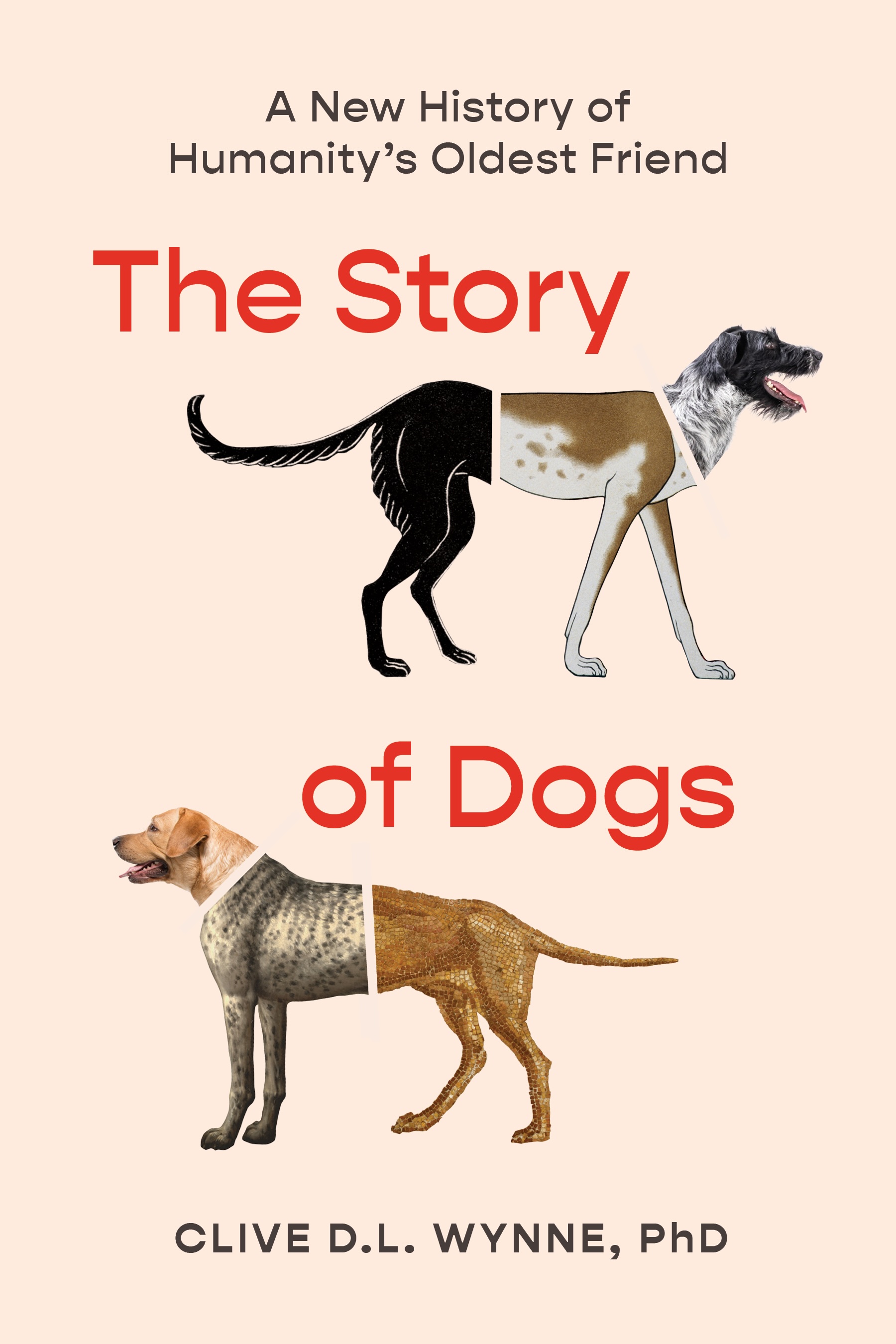
Just in time for my birthday @BNBuzz are offering 25% off pre-orders of THE STORY OF DOGS (other books too). You need to be a B&N member (doesn't cost anything) & use code PREORDER25. The offer opens today & ends on my birthday. Copy will arrive Feb 9. #bnpreorder #DogHistory
This line of argument imagines consciousness as a physical thing, like William James' facetious mind dust. If you accept that it is a pattern or process, these arguments vanish, and the capacity for consciousness in another medium is not a problem.

One of the arguments against AI consciousness: consciousness can't be simulated on a computer. Simulation ≠ consciousness. A GPU modeling photosynthesis produces no glucose or a simulated black hole doesn't mean that reality will be sucked into it. Wondering how you would refute that kind of argument?