

True believer: educational opportunity and economic mobility. Independent consultant. Formerly @AmericaSucceeds. #edpolicy #edreform (all tweets are my own)
Denver, CO
Joined February 2011
- Tweets13.6K
- Following1.1K
- Followers2.3K
- Likes35.4K





Pinned Tweet
"The tax credit should be talked about because it puts tutoring and a stable future within reach of a family worried about whether their kids will be set up to succeed in a changing economy. The tools to get there were never the point. The promise to families was."
@DFER_News
Eric Lerum retweeted

Fascinating article, making policy Q explicit:
Trap poor families in schools they don't want to send their kids to (but can't afford to move to different attendance area), to boost enrollment and keep those buildings open, or give them options they want?
sfstandard.com/2026/10/09/sf…


Me too

Cannot wait to hear Sold A Story 2 when it comes out
youtube.com/watch?v=4YDq-AB_…


I don't know if it's lack of curiosity, imagination, or math skills...but how the framing of this piece paints public schools as the disadvantaged party in the new tax credit scholarship scheme verges on (is?) journalistic malpractice. The slant in this is crazy & out of touch.

The Trump administration has taken a major step toward launching the nation’s first federally funded school voucher program, set to steer billions of tax dollars to private schools — but also, perhaps, to public school students. wapo.st/4dKBwq8

Any research on specific things that more funding could cover, like tutoring or enrichment activities or better instructional materials?
Eric Lerum retweeted

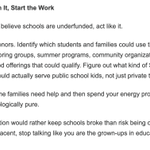
A week later, I'm still thinking about NHJ's article on NYC schools. It was courageous but a huge missed opportunity to call for real reform.
She blames school choice, inequality, segregation, the wealthy and herself. But she seems reluctant to criticize the actors and policies implicated by the failures she documents, perhaps because those conclusions would be uncomfortable for many of her ideological allies.
- She describes absentee teachers, poor instruction, unresponsive administrators, and students who graduate without mastering the material. But she never calls for greater accountability at the district, school, principal, and teacher levels.
- She documents teachers failing to fulfill basic responsibilities but doesn't explore whether tenure and other employment protections allow chronic teacher absenteeism and poor performance to persist.
- She laments the concentration of disadvantaged students but doesn't consider whether NYCPS should consolidate under-enrolled schools, thus allowing more resources towards instruction and increasing socioeconomic diversity.
- She describes her daughter earning As in honors classes despite substantial gaps in her knowledge. Yet she doesn't consider the value of standardized testing as a check on grade inflation and identifying learning gaps before they compound.
- She describes how experienced teachers choose to work in better schools but doesn't salute the districts that have had “reform superintendents” like DC, Dallas, Denver, and Houston that have used cash bonuses to incentivize the best teachers to work in the most disadvantaged schools.
- She notes that eliminating homework harmed her daughter, but doesn't examine how the movement against homework is largely driven by equity advocates who argue that it can turn unequal home circumstances into unequal academic outcomes.
- She condemns school choice yet uses it to secure a better school fit for her daughter, without noting it’s the only realistic escape valve for families who can’t move or afford private school.
- She describes the “impossible balancing act” of teaching students at vastly different levels but doesn't explore how academic tracking can help students at both ends of the academic spectrum.
- She describes disruptive students who harm the classroom environment but doesn’t ask for stronger disciplinary actions to protect other students.
- She documents a school that lowered academic expectations in pursuit of equity but doesn't acknowledge how doing so perpetuates the very achievement gaps those policies seek to eliminate.
Hannah-Jones’ story was powerful. She supplied the evidence for a broad examination of why schools are failing disadvantaged students. It could have been the strongest call in a generation for urban school district reform.
Segregation and poverty are real obstacles. But they cannot become explanations that absolve everyone else of responsibility. We can’t wait to solve all societal issues before demanding higher performing schools.
Eric Lerum retweeted

I am not sure @nhannahjones appreciates just how much she inadvertently gives cover to an unacceptable status quo in education. Today via @eduwonk:
eduwonk.com/2026/09/an-educa…

Eric Lerum retweeted

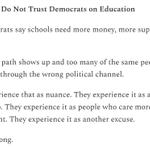
Standardized tests protect children and their families from being misled by a bureaucracy more interested in moving kids through the system than ensuring they have learned anything.
How so many on the left were convinced the tests were the problem deserves more attention.


Eric Lerum retweeted
If you read two things, here's a good second bet from @RaviMGupta
realravigupta.substack.com/p…

Eric Lerum retweeted
Kids aren't fish, and basic math and literacy aren't tree-climbing.
Outstanding pushback from @ChadAldeman on New York’s Regents debate.

Eric Lerum retweeted
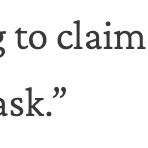
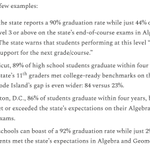
Problem: high schools graduate students who lack basic reading and math skills
Solution: require students to demonstrate basic proficiency before graduating or advancing
Problem: parents, schools and politicians don't like resulting increase in students held back or not graduating
Solution: state ends proficiency testing for graduation and promotion
Problem: high schools graduate students who lack basic reading and math skills

I'm not sure what would lead anyone close to our education system to think this, but to be clear, that is – unfortunately, in fact – a whole lot to ask...


Eric Lerum retweeted

Agreed! My take: charliebaroneedu.substack.co…

Schools Have a Motivation Problem — AI Is Making It Impossible to Ignore
the74million.org/article/sch…


