
I am a West African journalist living and working in Paris, France. I specialised in Central and West African Politics and Economy.
Bonneuil sur Marne, France
Joined October 2009
- Tweets24.7K
- Following1.8K
- Followers7.4K
- Likes4.1K


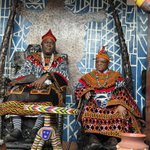




This photograph was taken at the farewell ceremony for Richard Bale, then Canada’s High Commissioner to Cameroon. In my view, Mr Bale was one of the finest Canadian diplomats to have served in Cameroon in recent years. He understood the subtleties of power and the workings of the Cameroonian authorities. Wherever he may be today, I wish him well. He made a contribution that Cameroonians familiar with it will never forget.
Photo credit: @sydneybissona2022

Thank you, Mimi, for highlighting this debate. My point is that community dialogue cannot, on its own, resolve the Anglophone crisis. It can help rebuild trust and reconcile communities while broader political dialogue addresses the underlying grievances. These efforts should reinforce each other. The launches in Buea and Bamenda began a process that must now reach villages through safe, inclusive and meaningful participation.

The Prime Minister and Head of Government, Dr Joseph Dion Ngute, last week wrapped up the community dialogue amid the ongoing conflict in the Northwest and Southwest regions.
This dialogue sparked debate among the Anglophone community, as many remain divided about it.
In an essay, Prof. Willibroad Nze-Ngwa categorically stated that it cannot resolve the crisis and that only a national political dialogue can resolve it.
According to Nze-Ngwa, community dialogue must address historical grievances, reunification, constitutional arrangements, bilingualism, institutional equity, political representation, inclusive governance, security, and disarmament, among other issues.
However, in a response to Nze-Ngwa, Elie Smith, who works closely with the Prime Minister’s Office, argued that the community dialogue was not meant to solve the Anglophone crisis.
To Smith, it was never intended to resolve the Anglophone crisis in its entirety. He said its immediate objective was to restore peace, rebuild trust, promote reconciliation, and strengthen social cohesion within communities devastated by nearly ten years of conflict.
#MMINews

COMMUNITY DIALOGUE AND THE ANGLOPHONE CRISIS: A RESPECTFUL RESPONSE TO PROFESSOR WILLIBROAD DZE-NGWA eliesmith.blogspot.com/2026/… – at Equatorial Guinea
Live from Bamenda: Participants Arrive for Community Dialogue
The Bamenda Congress Hall is steadily filling up this morning, 15th October, ahead of the launch of Community Dialogue for the North West Region by the Prime Minister, Head of Government.
As participants take their seats, the task before us is clear: to listen to one another, discuss our concerns openly and seek practical ways towards lasting peace. “Is ten years not enough?” the Prime Minister asked yesterday. That question remains at the heart of today’s gathering. @AmelieTulet @BBCNews @BBCBreaking @lemondefr @MattWoods_UK @BerghofFnd

“Is Ten Years Not Enough?” Prime Minister Calls for Peace Ahead of Bamenda Community Dialogue
On the eve of the launch of Community Dialogue for the North West Region, scheduled for tomorrow, 15th October, the Prime Minister, Head of Government, is in Bamenda, where he inspected ongoing construction works and visited the Palace of the Fon of Mankon.
Recalling his visit a year ago, the Prime Minister expressed admiration for the positive changes taking place in the regional capital. He said President Paul Biya had heard the cries of the people of the North West in general and Bamenda in particular.
The Prime Minister explained that, while today’s visit focused on inspecting ongoing works, tomorrow’s discussions would address the crisis and explore how, collectively, we can find ways to bring it to an end. He posed a question that deserves reflection from us all: “Is ten years not enough?”


Today, for reasons I cannot quite explain, my thoughts turned to Napoleon Bonaparte and the bloody battlefield of Waterloo on 18th June 1815. Tens of thousands of soldiers were killed or wounded in a single day. It made me reflect on the terrible human cost of one man’s ambition.
I also thought of Dominique Marie François René Galouzeau de Villepin, the former French Prime Minister and author of Les Cent-Jours ou l’esprit de sacrifice. I recalled a view attributed to him: had Napoleon won at Waterloo, France and the French language would have dominated Europe.
It is a striking thought about how differently history might have unfolded. As I shared these reflections with a friend, she remarked: “Thank God the British, Prussians, Dutch, Belgians and their allies stopped Napoleon at Waterloo.”

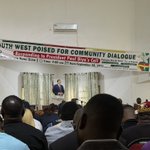
The Governor of the South west region opening Community Dialogue called for by @PR_Paul_BIYA in Buea and chaired by @joDionNgute
Governor Okalia Bilai: Communities Hold the Key to Ending the Conflict
Speaking at the opening of the South West Region’s Community Dialogue today at the Mountain Hotel in Buea, Governor Bernard Okalia Bilai said dialogue within communities was the only way to end the conflict affecting the North West and South West Regions.
He recalled that he had warned of the possible consequences when the crisis began, but said his remarks had been misconstrued. Across the South West Region’s six divisions and villages, he added, people know what is happening in their communities and who is involved. For the Governor, that local knowledge is why communities must be central to the search for peace. #pprd #cameroon #SWR @RFI @RFIAfrique @BBCAfrica @TV5MONDEAfrique @LeMonde_Afrique @SABCNews @joDionNgute @sydneybisona @Chelsea35298858 @ChamVictorBama1

Today, the Prime Minister, Head of Government, Chief Dr Joseph Dion Ngute, is on the ground assessing critical points along the Yaoundé–Douala corridor, one of the country’s most strategic transport arteries.
The field assessment comes as urgent interventions are under way to address severely degraded sections of the National Road No. 3 and improve traffic conditions for motorists and transport operators.
The Prime Minister’s presence on the ground underscores the Government’s attention to the state of this vital corridor, which connects Cameroon’s political capital to its economic hub and carries significant passenger and freight traffic.
Philippe, I watched this interview and was impressed by your deep understanding of Cameroon and the realities on the ground. Your measured perspective offered a refreshing contrast to your host’s more strongly held views. You also made an important point about Cameroon’s mineral resources: their potential should not be exaggerated as though minerals alone can transform our economy. What Africa needs is a more prosperous continent, stronger democracy, more jobs and greater opportunities for its people.
For Cameroon, dialogue must become a national imperative, not simply a slogan. We need the courage to sit around the same table, including with those whose views we strongly disagree with, listen to one another and address our differences honestly. We cannot resolve a complex national crisis through confrontation alone. We need sustained, inclusive and meaningful dialogue that can rebuild trust, address legitimate grievances and help us find a peaceful and lasting way forward for Cameroon. – at Equatorial Guinea

In such cases, i become a Marxist materialist. Language (or ethnicity, religion...) often instrumentalised to hide underlying root causes of conflict: lack of decent jobs, of development perspectives, of hope.
Reconnect, dialogue, build trust, give hope.
youtu.be/Dbd7hHl4ePU?si=BzCM…

ELIE SMITH retweeted

In such cases, i become a Marxist materialist. Language (or ethnicity, religion...) often instrumentalised to hide underlying root causes of conflict: lack of decent jobs, of development perspectives, of hope.
Reconnect, dialogue, build trust, give hope.
youtu.be/Dbd7hHl4ePU?si=BzCM…
If We Can Keep It: An American Warning with Lessons for Cameroon and Africa eliesmith.blogspot.com/2026/…

Today at the Yaoundé Golf and Country Club. I teed off with some difficulty, but when you truly love a sport, simply stepping onto the fairway gives you renewed energy and extra motivation to keep going.
@elie73smith – at Equatorial Guinea


A brilliant return to the stage, Matt! Taking on 5/4 and a 16-bar solo after some time away is no small feat. Michelle, Hervé and the band certainly know how to keep Yaoundé’s Friday nights alive. I’ll be there next Friday to enjoy the music! @HILTONYAOUNDE – at Equatorial Guinea

Me: “does the first song after a while not playing really have to be in 5/4?”
The band: “Take a 16 bar solo”.
Happily the rest was easier…
If you’re in Yaoundé on a Friday night, check out Michelle, Hervé and the band at the @HiltonHonors 11th floor!
Cher Jean-Marc, félicitations pour cette remarquable mission accomplie. Je sais également que vous avez effectué un excellent travail en RDC, un pays que j’ai couvert comme journaliste lorsque j’étais basé à Brazzaville, avec de fréquents déplacements à Kinshasa et à Goma, dans l’Est, pour réaliser des reportages. La RDC est un pays immense et fascinant qui, malheureusement, n’a pas toujours eu, depuis son indépendance, la chance de bénéficier de dirigeants à la hauteur de son formidable potentiel.
Au Cameroun, j’ai particulièrement apprécié l’intérêt sincère que vous avez porté aux Camerounais de toutes les couches sociales, ainsi que votre disponibilité et votre sens de l’écoute. Votre passage aura laissé d’excellents souvenirs. Je vous souhaite plein succès dans ce nouveau chapitre ! – at Equatorial Guinea

Clap de fin de ma mission d’ambassadeur de l’Union européenne 🇪🇺 en RDC🇨🇩(2019/2023), puis au Cameroun🇨🇲 et en Guinée équatoriale🇬🇶 (2023/2026).
Un métier formidable et le sentiment d’y avoir beaucoup appris au contact de collègues compétents et passionnés
lnkd.in/p/ehrtieek

Today marks 25 years since the terrorist attacks of 11th September 2001.
On that fateful day, I was at Canal France International (CFI), where I worked, at 15 Rue Cognacq-Jay in Paris. I was with my colleagues Heidi Hammel and Boniface Morutampnzi, waiting for Andy Bodfish and Wayne Boyce to join us for a discussion about our work in football commentary.
At the time, I had the privilege of commentating on UEFA Champions League and CAF Champions League matches, before CFI eventually lost the broadcasting rights.
Then came the horrifying images from New York. We watched the events unfold live on CNN as though we were watching a film. It was surreal and almost impossible to believe,but, tragically, it was real.
The attack on the Twin Towers, and the other attacks carried out that day, was cruel, audacious and profoundly shocking. It was an assault on innocent lives and the values of civilisation, and it changed the world forever.
Twenty-five years later, I still remember exactly where I was and who was with me. We must never forget those who lost their lives, their grieving families, and the courageous first responders who risked everything to save others. May the souls of all the innocent victims continue to rest in peace.
@WayneBoyce @AndyBodfish @BonifaceMURUTAM
The “Trump Dividend”: Public Policy or Vote, Buying?
At the Republican convention in Dallas, President Donald Trump made an extraordinary promise: if Republicans retain control of both the House of Representatives and the Senate in the November midterm elections, every adult American citizen will receive $5,000. He called it the “Trump Dividend.” “If the Republicans win, you win with us, and you get $5,000,” he declared.
The terminology is politically clever. By describing the payment as a dividend, Trump seeks to portray Americans as shareholders receiving their portion of the country’s economic success. But unlike a corporate dividend, this money would come from public resources and would require congressional approval.
The announcement therefore raises an unavoidable question: is the “Trump Dividend” not tantamount to vote, buying? Legally, it may not satisfy the strict American definition of electoral bribery. Vote-buying generally involves offering money directly to an individual in exchange for that person’s vote. Trump’s proposal is presented as a nationwide government programme, without requiring anyone to demonstrate how they voted.
Political parties also routinely promise tax reductions, subsidies, salary increases and other economic benefits during election campaigns. Such proposals are generally regarded as legitimate political platforms. However, the wording and timing of Trump’s promise cross a troubling ethical line. He did not merely announce an economic policy. He explicitly made the $5,000 payment conditional upon Republicans winning both chambers of Congress.
The message could hardly be clearer: vote Republican, secure a Republican Congress and receive $5,000. Moreover, the proposed dividend,estimated to cost more than $1 trillion,would not come from Trump’s personal fortune or Republican Party funds. It would ultimately be financed through public resources.
The issue, therefore, goes beyond whether the promise can technically be prosecuted as vote-buying. It concerns the integrity of democratic competition and the danger of transforming elections into financial transactions between politicians and voters. Trump may call it a dividend. Legally, it may qualify as a campaign promise. Politically and morally, however, it bears an uncomfortable resemblance to an attempt to purchase electoral support with public money.