Economist. Proud Inter supporter. IVF dad.
Milan, Italy
Joined February 2012
- Tweets539
- Following183
- Followers1.4K
- Likes1.4K




Edoardo Teso retweeted

Bocconi Economics is hiring!
Two tenure-track Assistant Professor positions for JUNIOR candidates (PhD students or PhD on/after Sept 1, 2023). All fields, start Fall 2027, 8-year tenure-track contract.
Deadline: November 15, 2026
Links below 👇 #EconJobMarket #EconTwitter

ALT Aerial view of Milan at sunset, with the Alps on the horizon and Bocconi University's campus in the foreground.
Edoardo Teso retweeted
I'm going to throw up a question about the investigation of the Hugging Face incident. When you do an investigation of any dangerous incident, one key element to examine is human error. But the Model Evaluation and Threat Research (METR) institution didn't do that. They seemed only interested in what the agents were doing. That is, they anthromorphized the agents, while turning the humans into non-player characters.
Did OpenAI researchers and executives know the risks they were taking and take steps to manage them? What kinds of human discussions were happening internally around these models? How did they mitigate these risks internally? Did they discuss legal liability? Was the board or were executives involved?
These are the kinds of questions to ask if you are a real regulator. I don't see where or if METR asked them. Mostly they footnoted that these questions are 'out of scope.' They saw this project as a technical inquiry into the capabilities of intelligent models, not as an analysis of a dangerous accident. They interviewed eight researchers. Any executives? Any board members or lawyers?
From the Silicon Valley Bank fiasco to the Space Shuttle explosion to the 737 Max, we've always realize that human behavior is the foundation of how complex systems behave. That is true here too. I don't see any analysis of the actual people at OpenAI making decisions about the tools used for hacking.
Am I missing something?
Edoardo Teso retweeted
Bocconi Economics is hiring!
First up:
Two tenure-track Assistant Professor positions for EXPERIENCED candidates (PhD before Sept 1, 2023). All fields, start Fall 2027, 6-year tenure-track contract.
Deadline: Oct 5, 2026
Links below 👇 #EconJobMarket

ALT Students walking under the cantilevered concrete entrance of Bocconi University's Milan campus, with the "Bocconi/departments/research centers" signage overhead.
Edoardo Teso retweeted

New CEPR Discussion Paper - DP21805
Political Capture and Bureaucratic Behavior. Evidence from Mafia-Infiltrated Municipalities
Maria Carreri @mariacarreri @Unibocconi, Davide Cipullo, Marco Le Moglie @Unicatt_en, Alberto Perego @Unibocconi
ow.ly/ZYsQ50Zy5QH
#CEPR_PoE #EconTwitter

“We’re giving the chief a chance to say: nothing in Citizens United says anything about whether you can limit the size of contributions, and of course you can limit the size of contributions.”
Extremely important case 👇

Edoardo Teso retweeted

New paper in @JEEA_News with @LuisRMartinezA!
Fiscal rules have quietly become a central feature of local governments around the world.
But do they improve government or simply impose politically costly austerity?
We study one such reform in Colombia. 🧵
academic.oup.com/jeea/articl…

Edoardo Teso retweeted

David Gilmour casually playing Wish You Were Here on the original guitar it was written on.
Then he proceeds to tell the story of how it was created.
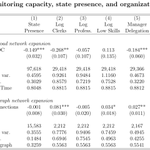
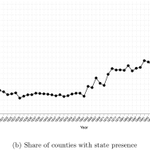
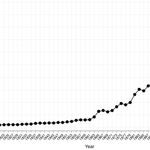
Seven years after we started collecting the data, I'm very happy to see this paper finally out! I hope the dataset proves useful to researchers interested in the development of the U.S. federal state.

The expansion of the railroad network was a crucial driver of growth and organizational change of the federal bureaucracy in the XIX century U.S. Decrease in the costs of monitoring bureaucrats was a key mechanism
New paper by @edoardoteso & @mastrorocconick
#REStud
#EconX


Userò questo tweet per illustrare ai miei studenti del primo anno come NON usare questo tipo di identità


Edoardo Teso retweeted

A post about Pope Leo XIV's encyclical on AI. Why the Pope is right, but perhaps not right enough.
Artificial intelligence is reshaping the world in front of our eyes: how we communicate, how we access information, how we work, how income and status are distributed among us, and soon how we fight and kill each other. Yet the public conversation about AI remains stuck on the minutiae of competition between labs, or on a false dichotomy between AI as a “stochastic parrot” with no real capabilities and AI as an alien superintelligence poised to take command of humanity.
The more important questions are about what we want from AI, and whether our current mindset, institutions, and control mechanisms are equal to the task of steering it toward our welfare.
It is refreshing, then, that a bold and powerful voice has weighed into this debate: Pope Leo XIV. As an economist who has long argued that technology is a matter of choice rather than fate, I find Leo’s intervention welcome and, on most points, on target. But on the most consequential question of what AI should actually be designed to do, Leo stops short.
Secular readers may bristle at the encyclical’s opening invocation of the Tower of Babel. They would be mistaken to stop reading there. Leo goes much further than most pundits, journalists and policymakers in the United States by recognizing that what happens to AI, and hence to humanity, is a under our control. There are multiple possible paths for AI, and which one we take will have sweeping consequences. He is also ahead of many commentators when he writes forcefully and unequivocally that “technology is never neutral, because it takes on the characteristics of those who devise, finance, regulate, and use it.”
These were the central themes of the book I wrote with Simon Johnson, Power and Progress: Our Thousand-Year Struggle over Technology and Prosperity. It is heartening to hear them taken up by a voice with Leo's reach.
The Pope is also right to question the current trajectory of AI in warfare and law enforcement. What was taboo only a few years ago – AI-driven mass surveillance, algorithms selecting targets for killing – has become routine. Many in Silicon Valley are now calling openly for a new military-algorithmic complex centered on AI as an instrument of American hard power. Leo captures something deep and too often ignored: “Any technology that facilitates attacks without seeing the face of human beings lowers the moral threshold of conflict.”
His call for the “disarmament of AI” follows directly from these observations. As he explains, disarming AI means “freeing it from the mentality of ‘armed’ competition, which today is not limited simply to the military context, but is also an economic and cognitive phenomenon.” His moral clarity in stating that “there is no algorithm that can make war morally acceptable” should be a warning to technologists rushing to design new weapons of mass destruction.
Underneath these specific concerns lies a more fundamental claim: that what is technically feasible is not the same as what is good for humanity, and that the difference depends on who controls the technology and what ideology and interests guide them.
Leo edges toward what I take to be the most important point about AI's future when he observes that “while AI promises to boost productivity by taking over mundane tasks, it frequently forces workers to adapt to the speed and demands of machines, rather than designing machines to work with those who work.”
But here he does not go far enough. He stops short of questioning the prevailing design philosophy of AI itself: a philosophy centered on mimicking human capabilities and automating human tasks, with the ultimate goal of artificial general intelligence (AGI) that can do everything a person can.
This philosophy rests on a mistake. It assumes that artificial intelligence and humanintelligence are fundamentally similar, and therefore machines should naturally take over whatever humans currently do. Yet these intelligences are fundamentally different.
Humans are “one-shot” learners. We form hypotheses from a few examples, mentally simulate possibilities, and refine our understanding through a social process of trial and error. This is how children learn language - imitating a few words, generalizing, and adjusting based on how others respond. We are not, however, very good at absorbing massive volumes of information or sifting through unstructured data for relevant patterns.
AI models are almost the opposite. They thrive on enormous training sets and excel at pattern recognition at scale. But they have, as yet, no genuine creativity, no real-world embodiment, and no capacity for trial-and-error learning grounded in interaction with the physical and social world.
When two things are different – you shouldn’t, and typically you couldn’t – use one to mimic the other. If you did, you would end up with suboptimal, disappointing results. It would have been a colossal mistake, and the Chicago Bulls’s legendary coach Phil Jackson would have gone down in the annals of basketball as one of the worst coaches in history, if he decided in the 1990s that because Michael Jordan was the better player, Jordan should mimic everything that Scottie Pippen and Dennis Rodman were doing in the team. The team went from championship to championship because these players worked together and complemented each other.
The same applies to AI and human skills.
The more productive path is complementarity – using AI to do what humans cannot, so that humans can do what they do best. An electrician aided by AI diagnostics, a nurse supported by AI in interpreting symptoms, a teacher using AI to personalize instruction for each student; these are the contours of a different AI future, one that raises rather than displaces human capability.
Optimists and industry insiders will respond that automation-first AI can still benefit everyone, provided redistributive policy keeps pace. But this argument has a poor track record. Forty years of digital automation have already concentrated gains at the top, hollowed out middle-skill work, and produced disappointing aggregate productivity growth. There is little reason to expect that an even more powerful round of automation, deployed by even more concentrated firms, will end differently. We can and must demand a different design.
The global stakes from the future of AI are even larger than those we can see around us in the United States. For the developing world, where billions still depend on the prospect of decent jobs as a path out of poverty, an automation-centric AI agenda is not merely suboptimal. It is simply transferring to foreclose the most important route to broad-based prosperity.
The biggest failing of today's AI industry is its refusal to recognize any of this. It is guided instead by an ideology of control (the industry’s own over humanity) and by a conviction that machines are uniformly better than humans.
As Leo rightly notes, this failure is enabled by the fact that a handful of companies now command the future of AI.
What we need is a combination of moral clarity and a serious, society-wide debate about what AI can do and what we want it to do. That debate must move beyond exhortation toward concrete choices: antitrust action against the dominant platforms, public investment in human-complementary AI, regulation of surveillance and autonomous weapons, and meaningful rights for workers and citizens over the data on which these systems are built.
The Pope's intervention makes such a debate a little more likely today than it was before.
It is now up to the rest of us to carry it further than he was willing to go.
Edoardo Teso retweeted

Una famiglia uccisa dall'esercito israeliano in Cisgiordania, a Tubas. Madre, padre, due figli piccoli, altri due feriti.
Ha ragione Motasem A Dalloul: "Niente di strano... non importa a nessuno...niente titoli di giornale"

Nothing odd.. Mo one cares.. No headlines..
IOF have executed Palestinian parents and two children in occupied West Bank city to Tubas:
1- father: Ali Bani Oudeh, 37. He was shot in the head, face, chest and left hand.
2- mother: Waad Bani Oudeh, 35. She was shot in the head and face.
3- Mohammad Ali Bani Oudeh, 5. He was shot in the head and face.
4- Othman Ali Bani Oudeh, 7. He was shot in the head and face.
Two other children were wounded..

Edoardo Teso retweeted

Studying delegation and principal-agent frictions in the development of new federal regulations in the United States, from Luca Bellodi, Massimo Morelli, @jspenkuch, @edoardoteso, Matia Vannoni, and @guoxu_econ nber.org/papers/w34932

Edoardo Teso retweeted

📢 CEPR Upcoming Conference
NOVAFRICA is proud to co-host the #2026CEPREconomySymposium will take place on
March 20–21 at @NovaSBE , Lisbon, Portugal.
Scholars from leading institutions will discuss key topics in political economy.
Information here: tinyurl.com/2rwpy7mh


Edoardo Teso retweeted

This essay “The Last Temptation of Claude” by Harry Law is excellent.
This part stuck out: de skilling doesn’t just happen. People dont make one choice—it’s hundreds and thousands of little choices. Off load a memo, off load a section of the paper, etc. they all seem small but then you wake up one day and hey that thing that used to be easy is now quite hard, or even impossible.
The temptation is real, so as with all temptation, it’s important to be deliberate and have rules. Everyone will be different, I have mine (write everything on my own, read old fiction)—but they might sound dumb or not work for others.
open.substack.com/pub/cosmos…

Edoardo Teso retweeted

Forthcoming article "Fiscal Rules, Austerity in Public Administration, and Political Accountability: Evidence from a Natural Experiment in Colombia” by @mariacarreri and @LuisRMartinezA
@EEANews @OUPAcademic
doi.org/10.1093/jeea/jvaf046

Edoardo Teso retweeted
AND IT IS OUT!
We have had enough reports saying Europe is stagnating. Change is not possible if we do not change the way the EU works. With Bengt Holmstrom and @competitionprof , I argue the EU should focus on prosperity and stop regulating everything.
constitutionofinnovation.eu/

Edoardo Teso retweeted

Bocconi Economics is hiring!! 2 junior positions open this year.
Super environment, great colleagues, great students, great city, great outdoors. Love it!!
Apply!!
@Unibocconi @Bocconi