
Indonesian dilettante. Macro, monetary, int'l econs, dev't econs, history, and more. My opinions are just that, not my employer's nor investment advice
Jakarta
Joined November 2019
- Tweets3.9K
- Following624
- Followers6.6K
- Likes414



Barra Mamia retweeted

Most people look back after 5 years and wonder why their friendships, fitness, or businesses fell apart.
It’s not because they failed. It’s because they ignored physics.

Barra Mamia retweeted

Chau Ngo has a wonderful take on AI in mathematics. I believe the same about economics.
The profession has placed a very large premium on technical competence over the last three decades or so: for example, the ability to prove the existence of an equilibrium in a complex model, the asymptotic convergence of an estimator, or an understanding of the subtleties of numerical algorithms. I believe that, given the technology available circa 2000 or 2020, this was the optimal decision to push our field ahead (although I need to recognize that, having benefited personally from such a large premium, I am not completely unbiased).
But the world has changed. Thanks to AI, you no longer need an extraordinary ability in stochastic limit theory or functional analysis to answer important questions. What you need is an extraordinary ability to ask important questions and, even more importantly, to understand the implications of the answers.
Do not get me wrong: you will still need to have an adequate command of stochastic limit theory or functional analysis. But think about English: without being able to speak English, you will not succeed in the profession, but you only need to be adequate (have you heard my accent?), not to reach Stephen Fry’s outstanding mastery of the language.
Both undergraduate and graduate education in economics need to be reshaped drastically. The journals’ editorial lines and the peer review system need to change. And how we decide who gets tenure, prizes, and other forms of professional recognition needs to evolve.
I don’t have the answers to how we should do this. But I know that we must definitely not follow the reaction of many in the mathematics community. The Association for Human Mathematics is a pitiful and, I am afraid to say, shameful revolt against reality that confirms the suspicion among many outside academia that we have become an isolated, self-indulgent guild more bent on rent seeking and virtue signaling than on the search for truth.
And, like Ngo, I am extremely optimistic. I truly believe that over the next ten years or so, economics will progress like never before. I am incredibly excited to be alive at this moment. I understand, though, why many graduate students or assistant professors might feel uneasy about the landscape. But the historical record shows that if we handle the transition properly, there will be plenty of gains from the new technology to share.
Thanks to @stablequan for posting Ngo’s note. I borrowed it from him.

Barra Mamia retweeted

if you are interested in social science questions but don't like math or coding. it is now the perfect time to try to be an economist. it is the best time in the past 20 years

Chau Ngo has a wonderful take on AI in mathematics. I believe the same about economics.
The profession has placed a very large premium on technical competence over the last three decades or so: for example, the ability to prove the existence of an equilibrium in a complex model, the asymptotic convergence of an estimator, or an understanding of the subtleties of numerical algorithms. I believe that, given the technology available circa 2000 or 2020, this was the optimal decision to push our field ahead (although I need to recognize that, having benefited personally from such a large premium, I am not completely unbiased).
But the world has changed. Thanks to AI, you no longer need an extraordinary ability in stochastic limit theory or functional analysis to answer important questions. What you need is an extraordinary ability to ask important questions and, even more importantly, to understand the implications of the answers.
Do not get me wrong: you will still need to have an adequate command of stochastic limit theory or functional analysis. But think about English: without being able to speak English, you will not succeed in the profession, but you only need to be adequate (have you heard my accent?), not to reach Stephen Fry’s outstanding mastery of the language.
Both undergraduate and graduate education in economics need to be reshaped drastically. The journals’ editorial lines and the peer review system need to change. And how we decide who gets tenure, prizes, and other forms of professional recognition needs to evolve.
I don’t have the answers to how we should do this. But I know that we must definitely not follow the reaction of many in the mathematics community. The Association for Human Mathematics is a pitiful and, I am afraid to say, shameful revolt against reality that confirms the suspicion among many outside academia that we have become an isolated, self-indulgent guild more bent on rent seeking and virtue signaling than on the search for truth.
And, like Ngo, I am extremely optimistic. I truly believe that over the next ten years or so, economics will progress like never before. I am incredibly excited to be alive at this moment. I understand, though, why many graduate students or assistant professors might feel uneasy about the landscape. But the historical record shows that if we handle the transition properly, there will be plenty of gains from the new technology to share.
Thanks to @stablequan for posting Ngo’s note. I borrowed it from him.
Barra Mamia retweeted

O gráfico do Financial Times mostra os países ricos sufocados pelo gasto com idosos, mas esconde o principal: eles estão quebrando porque insistiram no modelo errado de previdência.
Quando colocamos Brasil, Suécia, Austrália, Holanda e Chile na mesma mesa (como lembrou o @SchumpExplains), o jogo muda completamente.
Para quem não é da área, a diferença é simples:
1. Repartição (Brasil, França, EUA, Japão) = Caixa d'água sem reserva
O dinheiro descontado do seu salário hoje não é guardado: vai direto pagar quem já parou. Quando havia 8 jovens para cada idoso, funcionava.
Hoje, com famílias menores e gente vivendo até os 90 anos, a conta estoura. O governo só tem duas saídas: aumentar impostos ou cortar investimentos (obras, hospitais, escolas).
• França e Itália já gastam 13,7% a 16% do PIB só com pensões públicas.
• O Brasil, ainda demograficamente jovem comparado à Europa, já gasta quase 12% do PIB — um padrão de país rico envelhecido que trava nosso crescimento.
2. Capitalização (Austrália, Chile, Holanda) = Cofre individual
O dinheiro vai para uma conta no seu nome, é investido na economia e rende juros compostos por décadas. Na aposentadoria, você saca o seu próprio patrimônio, não o imposto do jovem que acabou de entrar no mercado.
• Austrália: Acumulou poupança privada acima de 130% do PIB, tirou Nota A no Global Pension Index 2026 e mantém o gasto público com aposentadorias abaixo de 4% do PIB.
• Holanda e Dinamarca (1º e 2º lugares no mundo em 2026): Combinam um piso básico estatal com fundos capitalizados que somam 150,9% do PIB (Holanda) e 198% do PIB (Dinamarca). Como os idosos vivem do retorno desses ativos, o orçamento do governo fica livre para investir.
• Chile: Derrubou o gasto público previdenciário para menos de 4% do PIB com a capitalização e criou um mercado de capitais forte, reforçando recentemente um piso solidário (PGU) para os mais pobres sem destruir a poupança individual.
3. Modelo Híbrido com trava automática (Suécia)
Nos anos 1990, a Suécia viu que ia quebrar e reformou tudo. Misturou capitalização financeira com uma trava matemática: se a população envelhece ou a economia desacelera, o reajuste das pensões freia sozinho para nunca gerar rombo no Tesouro. Segundo a OCDE, é um dos raríssimos países ricos onde o gasto público com aposentadorias vai cair até 2050.
Conclusão:
O problema que trava o Brasil e a Europa não é "cobrar pouco imposto". É matemática demográfica.
Na repartição, o envelhecimento vira um buraco negro fiscal. Na capitalização e nos modelos híbridos bem desenhados, cada geração financia a si mesma e deixa o Estado livre para investir no futuro.
Fontes: OCDE (Pensions at a Glance 2025 / Pension Markets in Focus 2025), Marsh & CFA Institute (Global Pension Index 2026) e Tesouro Nacional.
🤖 Made with AI


Seria interessante ver a Austrália e Chile, e suas respectivas previdências baseadas e capitalização
Readers added context they thought people might want to know
O gráfico não é o original do Financial Times, mas uma adaptação no estilo FT com dados ilustrativos incorretos para o Chile e países adicionados. Segundo a OCDE, o gasto público com pensões no Chile é de 3,7% do PIB.
x.com/lugaricano/sta…
oecd.org/content/dam/oe…
oecd.org/en/data/dashbo…
popadex.com/blog/pension-s…
Barra Mamia retweeted

Política industrial NÃO gera desenvolvimento necessariamente. Falar que todo país se desenvolveu fazendo política industrial é o mesmo que falar que todo mundo que morreu bebeu água na semana em que morreu, todos os países fazem em menor ou maior grau política industrial.
Para uma política industrial dar certo, ela precisa de instituições específicas, contexto específico e muita, muita sorte. Literalmente muita sorte. Querem um exemplo? Boa parte da industrialização francesa se deve ao fato da Inglaterra ter bloqueado a França durante as Guerras Napoleônicas, o que permitiu que a França tivesse que substituir importações enquanto gastava os tubos em produção industrial e, POR SORTE, a guerra acabou antes do tipping point de captura institucional, com os ingleses levantando o bloqueio aeaweb.org/articles?id=10.12… Como que se reproduz isso? Não se reproduz. Sorte desse tipo não se reproduz.
Tem casos que misturam conjunturas super específicas e não reproduzíveis para a política industrial dar certo. É o caso da Coreia do Sul. Por alguma razão histórica ultra específica, os japoneses ao colonizarem a Coreia entre 1910 e 1945 não só destruíram quase todas as elites pré-coloniais cambridge.org/core/books/abs… como fizeram políticas de acesso à educação e incentivaram uma ideologia nacional de estudo
digitalcommons.usf.edu/cgi/v… tandfonline.com/doi/pdf/10.1…
Isso permitiu que a ditadura (e é ditadura mesmo, brutal, pique violência da ditadura na Argentina para baixo) não tivesse elites fortes a direcionando economicamente, o que permitiu que Park Chung-hee pudesse efetivamente direcionar os chaebols dentro da sua paranoia militarista de soberania nathanlane.info/research/man… com uma população profundamente capacitada tecnicamente global-developments.org/p/no… e com dinheiro praticamente infinito dos EUA durante a Guerra do Vietnã nathanlane.info/research/geo…, partindo de um contexto de baixíssima desigualdade de riqueza piketty.pse.ens.fr/files/Yan… e renda prod.wid.world/www-site/uplo…
Isso não é reproduzível no Brasil.
E tem os casos em que a política industrial existiu, mas o crescimento veio APESAR da política industrial, vide o caso dos Estados Unidos da América nber.org/papers/w7639
Precisa de capacidade estatal (não temos), instituições fortes que impeçam captura pelas elites industriais (não temos) e capacidade técnica dentro do Estado para desenvolver a indústria (também não temos). O Brasil é mais protecionista que TODOS os tigres asiáticos desde 1840 pelo menos, inclusive, e não teve o mesmo tipo de desenvolvimento industrial cambridge.org/core/journals/…
O Brasil desembolsou via BNDES tanto, ou mais, quanto o ápice do desenvolvimentismo dos anos 70 para a indústria no governo Dilma e a indústria NÃO veio. Entre 2010 e 2022, portanto antes da NIB, o Brasil foi um dos países que mais adotou instrumentos de política industrial no mundo, com certeza muito mais do que seus pares e, surpresa, a indústria não deslanchou!
Isso para não falar o óbvio, industrialização teve um papel no século XIX, outro no século XX e, tudo indica, no século XXI não vai ser mais um mecanismo de transformação social como foi no passado porque, simplesmente, o processo de produção industrial de fronteira tecnológica, hoje, cada vez menos depende do trabalho e da escala. No caso do Brasil, por exemplo, parece que o setor de serviços está mais relacionado ao potencial de crescimento da economia hoje m-schwartzman.github.io/Matt…
Então, a gente tem que pensar macrodevelopment para além do processo de industrialização porque isso não funciona mais. indevelopmentmag.com/can-we-…
Por fim, parem, por favor (eu realmente imploro) de ler bobajada ahistórica como Ha-Joon Chang markkoyama.com/p/the-state-a…
eh.net/book_reviews/kicking-…
cambridgepoliticalaffairs.co…


Barra Mamia retweeted

Margin debt as a share of money supply is hovering at record highs: ~60.2% of currency in circulation (most liquid money) and ~6.2% of M2 (incl. less liquid money) as of Oct. Leverage risk is real.

Barra Mamia retweeted

Such interesting observations. The best way of understanding power in SE Asia - and the obstacles to further development - is to think of them 1st as oligarchies. But those in Vietnam are a bit different iseas.edu.sg/articles-commen…

Barra Mamia retweeted

If you read early modern texts, from diverse cultures, it's strikingly how differently they reason.
Rather than base claims in logic and empiricism, they used to reason from authority,
Eg "Aquinas says.. or Tertullian writes...", as if their proclamation were sufficient basis for moral righteousness and emulation.
Given that the past was patriarchal, this epistemology made any form of social reform, including feminist critique, illegitimate.
This is probably the major reason why religious orthodoxy impedes social change.

Barra Mamia retweeted

In China, I heard an opinion
When doing a purge, Xi Jinping accuses his victims of “corruption”. Which is not a real reason, of course. Everyone is doing corruption
BUT
It is much preferable to him accusing them of something else, like “treason” or “espionage”
Barra Mamia retweeted

Most of Central America is now comprised of zombie economies caught in the Remittance Trap
Allowing (and facilitating) continued mass migration to the U.S. creates a vicious circle of economic stagnation and emigration, leaving them worse off
A resource curse of population

ALT International Fund for Agricultural Development Sending Money Home 2026
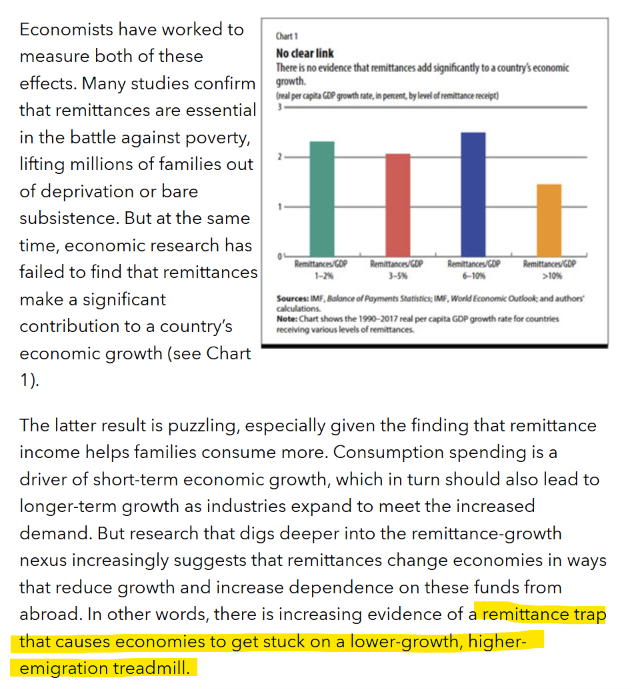
ALT Is There a Remittance Trap? https://www.imf.org/en/publications/fandd/issues/2018/09/is-there-a-remittance-trap-chami

ALT Are Remittances Good for Labor Markets in LICs, MICs and Fragile States? IMF Working Paper 2018
Barra Mamia retweeted

GS: We Can Explain Almost the Entire US Inflation Overshoot by Tariffs and the War in Iran

Barra Mamia retweeted

overheard from friends talking about AI in China, and it’s very alarming
- AI short films went massive in China market because of how good the video models are now
- the first wave of people who mastered using AI to generate short films and comics made quite some money because they could produce a lot more content than traditional workflows
- but within just a few months, everybody and their mom could make equally good short films because all the expertise could be written in a markdown file
- when everyone’s more productive, no one actually has an advantage and it’s a race to the bottom. very quickly it became impossible to make money, and everyone’s busier than they were without AI
- the only one making money now is companies like bytedance who owns user demand and distribution. they sell ads to creators who pay to get traffic, and eventually ad spend became 80% of those creators’ operating expense, while AI tokens is less than 5%
so what are the problems here?
1. there’s no moat if you are creating anything with AI
if a human is really good at something, and it’s hard to find more humans who can do the same, they can leverage the scarcity of their skill to get paid very well
but if AI is good at something, it will be infinitely replicated, so there’s no scarcity hence you can’t really expect a sustainable business by creating anything with AI
2. more creators created more content people actually liked. that’s a good thing
but the economical benefit of that all got absorbed by the distribution platforms
there’s a famous chinese poem 遍身罗绮者,不是养蚕人 - it basically says people who dress well aren’t the people making dresses. that’s exactly what’s happening here
if our society doesn’t figure out a better way to distribute wealth, AI will help billionaires become trillionaires while average people become more exhausted than ever
Barra Mamia retweeted

I'm noticing a general trend where AI only looks unique and exceptional if you plot things against time. But time is a stupid proxy that hides what's actually driving growth (investment). Plot against money spent and AI looks just like everything else.


Barra Mamia retweeted
Insightful analysis by Kotkin on why Russia collapsed (hint: not "pope, nationalism, dissidents, economic collapse, Afghanistan, the military-industrial complex, or Reagan) and what China's CCP has done to avoid the fate of the Soviet Union.
What a pleasure it is going to be to read him every month at @wip_mag . worksinprogress.co/issue/sov…

Barra Mamia retweeted

CHINA’S INDUSTRIAL SUPPLY CHAIN IS EXPERIENCING A BRUTAL PRICING-POWER DIVIDE.
China’s raw-material producer inflation has accelerated to 11.6% year-over-year, while processing-industry inflation stands at just 3.5%.
That is an extraordinary 8.1-percentage-point gap.
The historical comparison is revealing.
During the 2021 commodity boom, raw-material inflation exceeded 25%, while processing inflation peaked near 11%.
Following a prolonged deflationary period in 2023–2025, upstream inflation has returned aggressively.
But downstream pricing power has not recovered proportionately.
October’s widening negative processing-minus-raw-material spread signals intensifying pressure on manufacturing margins.
YCC Capital believes the implications extend across chemicals, machinery, industrial equipment, and export manufacturing.
Companies purchasing expensive inputs while competing in price-sensitive markets face deteriorating profitability.
China’s factory-price rebound is not a broad industrial recovery. It is a redistribution of profits toward upstream suppliers.

Barra Mamia retweeted

Martin Malia on Soviet economies: "Contrary to the declared goals of the regime, it was the opposite of a system of production to create abundance for the eventual satisfaction of the needs of the population; it was a system of general squeeze of the population to produce capital goods for the creation of industrial power, in order to produce ever more capital goods with which to produce still further industrial might, and ultimately to produce armaments."

Barra Mamia retweeted

High-income workers are fleeing Europe.
Economic theory tells us that the more
mobile a factor of production becomes,
the lower its optimal tax rate. This is why taxes on capital, which is relatively mobile, tend to be lower than taxes on labor, which historically has been less mobile.
However, as the chart below shows, as elite human capital has become more footloose, high taxes have become increasingly counterproductive.
This is a huge existential problem for European welfare states, which have traditionally relied on heavily taxing their most productive workers.

Barra Mamia retweeted

Hiç abartmıyorum, bu makale iktisat tarihinin ulaşabileceği zirveyi temsil ediyor. Makalede Pirenne tezi, 500 bin para sikkesinin coğrafi dolaşımı üzerinden test ediliyor. Makalenin en önemli bulgusu ise aşağıdaki iki görselde açıkça görülüyor: İslam fetihleri öncesi ve sonrası dönemde sikke akışlarının nasıl değiştiğini gösteren son derece etkileyici iki figür:


@johannesmboehm and Chaney combine data on half a million ancient coins with a model of trade and money to reconstruct trade and consumption from AD 325 to 950. The estimates show economic activity shifting away from the Mediterranean from the 6th century.
econometricsociety.org/publi…

Barra Mamia retweeted

중국은 대졸자 1,270만 명이 쏟아져 석사가 배달을 뛰고, 한국은 신입 사다리가 좁아져 250만 명이 취업 고배를 마시고 있고, 일본은 일할 사람이 너무 없어서 회사가 망하는 중.
비행기로 두 시간 거리인 한·중·일 세 나라의 청년들이 지금 마주하고 있는 취업 시장의 현실은, 같은 시대가 맞나 싶을 정도로 극명하게 갈라져 있음.
1. 중국: 매년 대졸자 1,270만 명이 쏟아지는 무한 경쟁과 300만 명이 몰리는 공무원 시험
- 최근 한 커뮤니티에 올라온 중국 청년의 하소연은 현지 분위기를 그대로 보여줌. "월세도 겨우 메우는 박봉을 주면서 오전 9시부터 밤 9시까지 주 6일(996) 일하라고 한다. 불평 한마디 하면 뒤에서 줄 서 있는 절박한 신입으로 바로 교체된다. 평범한 자리 하나를 두고 수백 명이 싸우고, 석사 학위를 따고도 음식 배달을 하거나 부모님 집에 얹혀사는 형편이다. 사람을 완전히 일회용 소모품처럼 다룬다."
- 과장이 아니라 실제 통계가 이 말을 그대로 뒷받침함. 중국 교육부 기준 대학 졸업생 수는 2025년 1,222만 명에 이어 올해(2026년) 1,270만 명으로 또다시 사상 최대치를 갈아치웠음. 한국 한 해 출생아 수의 약 50배에 달하는 대졸자가 매년 한꺼번에 쏟아져 나오는 셈임.
- 부동산 침체와 내수 부진으로 민간 기업 채용이 얼어붙으면서, 재학생을 빼고 집계한 청년(16~24세) 실업률조차 올해 여름 졸업 시즌에 18.9%(9월 18.0%)까지 올랐음. 여기에 35세가 넘으면 해고 대상이 되고 재취업도 막히는 이른바 '35세의 저주' 공포까지 겹치자, 안정적인 일자리를 찾아 국가공무원 시험(궈카오) 자격 심사를 통과한 인원만 지난해 역대 최다인 371만 8,000명(평균 경쟁률 98:1)을 찍었고 올해도 302만 5,000명이 몰렸음.
- 이 경쟁에서 밀려난 고학력 청년들이 배달 플랫폼 라이더로 뛰거나, 부모에게 생활비를 받으며 집안일과 돌봄을 맡는 '전업자녀', 혹은 공사 중단된 부도 아파트(란웨이러우)처럼 비싼 학비를 들여 졸업하고도 갈 곳이 없어 방치됐다는 뜻의 '란웨이와(부실 자녀)'라는 신조어로 스스로를 부르고 있음.
2. 한국: 쉬었음 청년이라고 불리는 250만 명의 명암
- 한국은 중국처럼 인구가 넘쳐나는 구조가 아닌데도, 기업들의 극단적인 '경력직 선호'와 '일자리 양극화'가 맞물리며 청년들이 구직 시장에서 설 자리를 잃어가고 있음.
- 정기 신입 공채가 사라지고 수시 채용이 자리 잡으면서 기업들은 당장 현업에 투입할 수 있는 경력직이나 실무 경험이 있는 '중고 신입'만 찾고 있음. 게다가 과거 신입사원을 뽑아 가르치던 자료 조사, 초안 작성, 기초 코딩 같은 주니어 업무를 AI가 빠르게 잠식하면서 신입이 경력을 쌓을 첫 칸 사다리가 갈수록 좁아지는 중.
- 전체 일자리에서 대기업·공공기관 정규직 비중이 10%대 초반에 불과한 상황에서 이 바늘구멍을 뚫지 못하면 임금과 처우 격차가 워낙 크다 보니, 박봉에 여러 사람 몫을 해내는 소모품으로 갈려 나가느니 구직을 미루거나 포기하는 청년들이 적지 않음.
- 실제로 통계청 기준 청년층(15~29세) 취업자는 47개월 연속 감소했고, 대한민국 전체 '그냥 쉬었음' 인구는 250만 명(그중 15~29세 청년층 36만 4,000명, 30대 포함 시 70만 명 안팎)을 넘어섰으며, 단기 알바·구직 단념·취업 준비 등을 합쳐 온전한 일자리를 얻지 못한 채 표류하는 광의의 청년층 역시 250만 명 안팎으로 추산됨.
- 이런 상황이 길어지자 눈높이를 낮춰 중소기업으로 눈을 돌리는 구직자들도 늘어났으나, 막상 그나마 다닐 만한 중소·강소기업들은 뽑는 인원 자체가 한두 명 수준으로 지극히 제한적인 데다 지원자가 한꺼번에 몰리면서 중소기업조차 수십 대 일에서 수백 대 일의 경쟁률이 벌어지고 있는 중.
- 게다가 중소기업 역시 신입을 뽑아 가르칠 여유가 없다 보니 당장 실무에 투입할 경력직이나 한 사람이 여러 직무를 다 해내는 올라운더만 찾고 있어, 눈높이를 낮춰도 신입이 비집고 들어갈 틈이 없기는 마찬가지임.
3. 일본: 졸업생 1명당 갈 회사가 1.6곳인 '구직자 우위' 시장… 그러나 그 이면의 줄도산과 퇴사 대행
- 반면 바다 건너 일본은 저출산·고령화로 일할 젊은 인구가 급감하면서 한국·중국과는 정반대의 '초(超)구직자 우위 시장'이 펼쳐지고 있음.
- 일본 후생노동성·문부과학성 발표 기준 취업 희망 대졸자의 취업률은 98.0%(여성 98.7% 역대 최고)에 달하고, 리크루트웍스 연구소가 집계한 대졸 구인배율 역시 1.62~1.66배로 학생 1명당 일자리가 1.6개 이상 열려 있음. 신입사원을 뺏기지 않으려고 주요 기업들이 앞다퉈 대졸 초임을 인상하며 모시기 전쟁을 벌이는 중임.
- 하지만 일본이라고 마냥 유토피아인 건 아님. 대기업들의 임금 인상 속도를 따라가지 못한 중소·영세기업들이 사람을 못 구하거나 인건비를 감당하지 못해 문을 닫는 '인력 부족 도산'이 2025년 연간 427건으로 사상 처음 400건을 넘기며 역대 최다를 기록했고 올해도 최다 페이스를 이어가고 있음.
- 또 갈 수 있는 회사는 많지만 엔저와 고물가로 실질임금 체감은 여전히 팍팍하다 보니, 신입사원 일부가 입사 직후 회사가 마음에 안 들면 직접 사표를 내는 대신 돈을 내고 '퇴사 대행 서비스'를 이용해 회사를 그만두고 다른 곳으로 옮기는 사례가 늘며 화제가 되고 있음.
같은 시간대, 바로 옆에 붙어 있는 세 나라인데 중국은 '사람이 너무 많아서' 서로를 갈아 넣는 무한 경쟁이 벌어지고, 한국은 '중간 사다리와 신입 자리가 좁아져서' 진입 자체가 막히고 있고, 일본은 '사람이 너무 없어서' 중소기업이 무너지는 전혀 다른 풍경이 펼쳐지고 있고,
일부에서는 한국도 저출산으로 청년 인구가 줄어들고 있으니 조금만 지나면 일본처럼 자연스럽게 취업이 잘되는 시대가 올 거라 기대하기도 하지만 이미 AI로 주니어 업무를 대체하고 한 사람에게 여러 직무를 맡기는 구조에 익숙해진 기업들이 다시 예전처럼 대규모 신입을 뽑아 차근차근 키워줄 가능성은 현저히 낮음.
안 그래도 부의 양극화가 갈수록 심해지고 있는 가운데, 사회에 첫발을 내딛고 종잣돈을 모아야 할 일자리 사다리마저 이렇게 무너지면 앞으로 그 양극화는 훨씬 더 극단적으로 벌어질 수밖에 없음.
소수의 자리만 남고 대다수가 진입조차 못 하는 구조가 굳어지면서, 더 나아가서는 단순히 '좋은 직장에 가느냐 마느냐'의 문제를 넘어 평범하게 일해서 내 한 몸 생계를 온전히 유지할 수 있는 사람들의 자리 자체가 점점 줄어드는 시대로 가고 있는지도 모르겠음.
Sad day
I learned a lot from his talks & online lectures
RIP Perry Mehrling

Perry Mehrling, RIP.
According to the History of Economics Society, Perry Mehrling died "Monday night from injury sustained in a fall several days earlier." He was Professor of International Political Economy at Boston University and, previously, longtime Professor of Economics at Barnard College. He was a highly esteemed historian of economics.
Here is his homepage:
sites.bu.edu/perry/
His last book: "Money and Empire: Charles P. Kindleberger and the Dollar System"
amzn.to/47RVhJ2
"Charles Kindleberger ranks as one of the twentieth century's best known and most influential international economists. This book traces the evolution of his thinking in the context of a 'key-currency' approach to the rise of the dollar system, here revealed as the indispensable framework for global economic development since World War II. Unlike most of his colleagues, Kindleberger was deeply interested in history, and his economics brimmed with real people and institutional details. His research at the New York Fed and BIS during the Great Depression, his wartime intelligence work, and his role in administering the Marshall Plan gave him deep insight into how the international financial system really operated. A biography of both the dollar and a man, this book is also the story of the development of ideas about how money works. It throws revealing light on the underlying economic forces and political obstacles shaping our globalized world."
Charles Goodhart: "The discipline of economics is balanced, somewhat unsteadily, between two legs, with the skill of the historian on one side and of the mathematical modeler on the other. In the second half of the 20th century, the tide flowed strongly to elevate the second leg and to diminish the first. In this delightful biography of Charlie Kindleberger, a charming and loveable man, Perry Mehrling shows how Charlie, in his chosen role, as an international monetary economist, fought against that tide, often unsuccessfully. Perry writes so beautifully that one would only need a smattering of economics to enjoy the tale; while if one is interested in the history of economic thought in international monetary economics, then this book is, of course, a must read.'
amzn.to/47RVhJ2

2
620