

SWE || Geophysicist || Drummer
Lagos, Nigeria
Joined September 2015
- Tweets4.8K
- Following670
- Followers1.6K
- Likes12.3K



eazyisreal retweeted

A little over 3 months ago, we shipped @gathr_hq, and we've since crossed 80,000+ tracked visitors, 1,000+ signups and 200+ donors.🤯
We've also more than 2x'd our Q4 bets on revenue and processing margin, putting us ahead of where we initially modelled we'd be at this stage.


eazyisreal retweeted

I can't f*cking believe Anthropic open-sourced the cheat codes for Claude Code and people are still doing it by hand
here are the cheat codes:
-> skills (by anthropics)
github.com/anthropics/skills
the official skills repo from Anthropic, with clean examples of how a real skill is built
-> claude code action (by anthropics)
github.com/anthropics/claude…
mention @claude in any PR or issue and it answers, writes the fix on a new branch and signs its commits
-> claude code security review (by anthropics)
github.com/anthropics/claude…
scans every pull request diff for vulnerabilities and filters out the noisy findings
-> claude agent sdk python (by anthropics)
github.com/anthropics/claude…
run Claude Code from your own Python app, with custom tools and hooks
-> claude cookbooks (by anthropics)
github.com/anthropics/claude…
runnable notebooks for RAG, tool use, classification and structured output
pick one, add it to your repo tonight
bookmark it before it gets buried

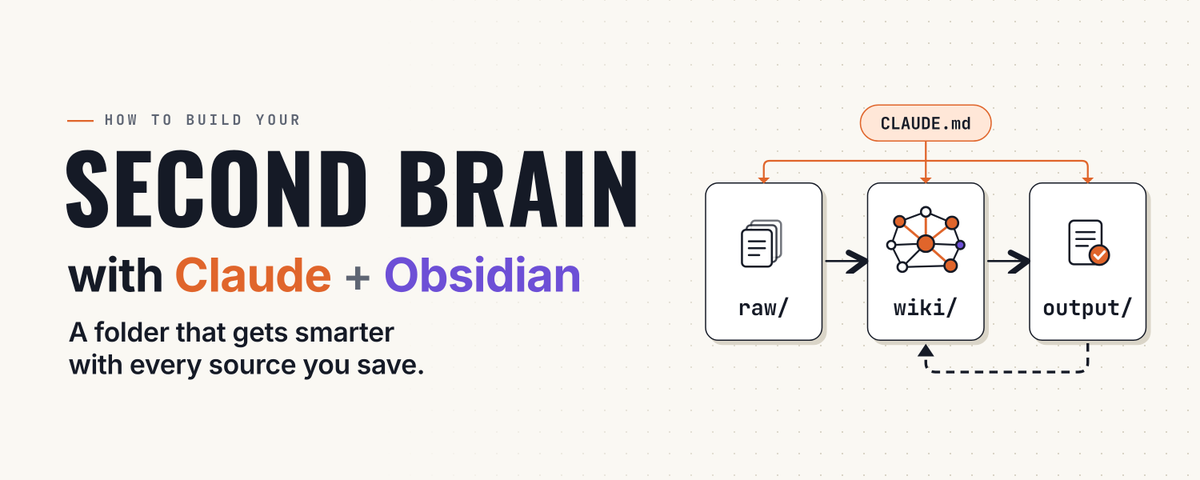


eazyisreal retweeted

THIS IS ACTUAL F*CKING GOLD
Anthropic just shared one of the best tricks for Claude Code.
The idea: run Sonnet, Haiku and Opus 5.5 together, each one doing only the job it's best at.
Opus-level judgment on every big call, without paying Opus rates for every routine turn.
You just launch Claude Code like this:
claude --model sonnet --advisor opus
here's the split:
→ Sonnet 5.5 runs the session and writes the code
→ Haiku 5.5 explores files and docs in parallel
→ Opus 5.5 stays on call as advisor for the big calls
→ you stop spending Opus on work that doesn't need it
Opus only steps in at three moments:
→ before a plan locks
→ when the same error shows up twice
→ before calling it done
Sonnet builds. Haiku explores. Opus reviews.
JEV engineering is the same move one layer down: the forks that need no thinker (which file, which tool, retry or stop) go to JEV in milliseconds, and the big models only see the ones that split
the full tree
> Sonnet 5.5 runs the main session and edits code
> search maps the repo on Haiku 5.5
> grep finds call sites on Haiku 5.5
> docs pulls the API reference on Haiku 5.5
> Opus 5.5 on call as advisor, reads the whole transcript when consulted
> JEV routes micro-forks in milliseconds
paste the tree and this prompt into Claude Code ↓
"Rebuild my Claude Code setup around this tree:
1. Run the main session on Sonnet 5.5 with Opus 5.5 as advisor.
2. Create three read-only Haiku 5.5 subagents: search (maps the repo), grep (finds call sites), docs (pulls the API reference).
3. Add one rule to CLAUDE.md: consult the advisor before locking a plan, after the same error twice, and before calling a task done.
4. Route fast deterministic forks (tool choice, path selection, retries) through JEV.
Show me every change as a diff first. No edits until I say go."
↳ code.claude.com/docs/en/advi…
save it, you'll use this every single day.


eazyisreal retweeted

For people who keep asking what to build in AI Security Engineering.
➣ Build your own Multi-Turn Jailbreak Fuzzer
(stateful context grooming + Crescendo payloads + bypass scoring)
➣ Build your own MCP Tool Poisoning Shield
(JSON-RPC sanitization + Pydantic validation + confused-deputy blocking)
➣ Build your own PII Unmasking Proxy
(deterministic UUID swap + pre-flight masking + post-flight restoration)
➣ Build your own RAG Poison Detector
(chunk hash verification + citation spoofing detection + shadow-context flagging)
➣ Build your own Grammar-Constrained Output Cage
(CFG decoding + regex-enforced schemas + executable-code blocking)
➣ Build your own Delegated Agent OAuth Broker
(scoped JWTs + time-limited tokens + least-privilege handoffs)
➣ Build your own Automated Red Team CI Gate
(PyRIT payloads + jailbreak-rate thresholds + merge blocking)
➣ Build your own Semantic API Rate-Limiter
(embedding similarity scoring + scrape-pattern detection + extraction blocking)
➣ Build your own Computer-Use Pixel Auditor
(invisible UI detection + Set-of-Mark spoofing + click-target validation)
➣ Build your own Inter-Agent Sanitization Bus
(cross-agent injection filtering + markdown stripping + trust-boundary enforcement)
➣ Build your own Vector Memory Integrity Scanner
(sleeper-payload detection + episodic anomaly flagging + backdoor scrubbing)
➣ Build your own Cryptographic Trajectory Ledger
(append-only hash chains + prompt/context/tool recording + tamper-proof replay)
➣ Build your own AI Supply Chain Scanner
(hallucinated dependency detection + MCP server auditing + AI-generated SBOMs)
➣ Build your own Activation Patching Safety Dashboard
(logit lens probing + deception-circuit discovery + sycophancy neutralization)
➣ Build your own Exploit Chain Teardown Engine
(vulnerability reproduction + mitigation mapping + CVE-style disclosure)
Pick 3. Build them from scratch. Document every decision.
Most people trust the system prompt.
Builders enforce constraints at the token level.
Bookmark this. You'll need it.
eazyisreal retweeted
If you learn AI Security Engineering, you will never be unemployed again.
I’ll do this.
Stage 1: AI Attack Surfaces & Threat Modeling
- Learn: OWASP Top 10 for LLMs, STRIDE for AI, the "Confused Deputy" problem in agentic workflows & data flow mapping.
- Practice: Draw a complete threat model for an AI agent that reads emails and writes to a CRM, identifying every indirect injection and data exfiltration vector.
- Why: You cannot secure an agentic workflow if you don't understand how an attacker can hijack the agent's legitimate privileges.
Stage 2: Advanced Prompt Injection & Jailbreaking
- Learn: Direct vs. Indirect injection, Crescendo attacks (multi-turn grooming), payload splitting and encoding evasion (Base64, ROT13).
- Practice: Build an automated harness that successfully bypasses a commercial LLM's system prompt using a multi-turn Crescendo strategy.
- Why: Basic "ignore previous instructions" filters are trivial to bypass. Modern attacks groom the model's context over multiple turns.
Stage 3: Agentic Security & MCP Tool Poisoning
- Learn: Model Context Protocol (MCP) security, JSON-RPC sanitization, shadow tool execution and least-privilege scoping for agents.
- Practice: Write an MCP server that strictly validates incoming tool parameters via Pydantic and blocks "confused deputy" attacks where a user prompt tries to access admin tools.
- Why: Agents are only as secure as the tools they call. Tool poisoning is the SQL Injection of the Agentic Era.
Stage 4: RAG Security & Data Poisoning
- Learn: Vector DB access control, citation spoofing, shadow context injection and row-level security for semantic search.
- Practice: Inject a "poisoned" document into a RAG pipeline that forces the LLM to output a specific malicious URL when queried about company policy.
- Why: If an attacker can slip a poisoned document into your knowledge base, they own every answer the AI generates.
Stage 5: PII, Privacy & Cryptographic Guardrails
- Learn: Deterministic masking, UUID swapping, differential privacy and pre-flight/post-flight unmasking proxies.
- Practice: Build a middleware proxy that intercepts user prompts, swaps SSNs and credit cards for UUIDs before the LLM sees them and restores them post-generation.
- Why: Compliance teams will kill any AI product that sends raw customer PII to a third-party frontier API.
Stage 6: Identity, Auth & Delegated Access for Agents
- Learn: OAuth2 for machine identities, scoped JWTs, human-in-the-loop (HITL) approval gates and agent-to-agent (A2A) trust boundaries.
- Practice: Build an auth broker where an AI agent acts on a user's behalf using a heavily scoped, time-limited OAuth token, rather than holding the user's raw password.
- Why: Agents need hands but they should never hold the master keys to the enterprise.
Stage 7: Output Validation & Grammar-Constrained Guardrails
- Learn: CFG (Context-Free Grammar) decoding, NeMo Guardrails, output sanitization and regex-enforced JSON schemas.
- Practice: Implement a guardrail layer that physically prevents the LLM from generating markdown links or executable code blocks in its final output.
- Why: You cannot rely on the system prompt to "please don't output bad things." You must enforce it at the token-decoding level.
Stage 8: Automated Red Teaming & Fuzzing
- Learn: Microsoft PyRIT, Garak, LLM-based fuzzing, adversarial dataset generation and CI/CD security gates.
- Practice: Build a CI pipeline using PyRIT that automatically attacks your agent with 1,000 adversarial payloads on every PR, blocking merges if the jailbreak rate exceeds 1%.
- Why: Manual red teaming doesn't scale. You need automated, continuous adversarial fuzzing integrated directly into your deployment pipeline.
Stage 9: Model Extraction & IP Protection
- Learn: Membership inference attacks, model inversion, API rate-limiting by semantic similarity and output watermarking.
- Practice: Build an API gateway that detects and blocks scraping bots trying to extract your fine-tuned model's weights via thousands of systematic, low-temperature queries.
- Why: Your fine-tuned model's weights are your IP. Competitors will try to distill your model through the public API.
Stage 10: Mechanistic Interpretability & Alignment Safety
- Learn: Activation patching, logit lens, circuit discovery, detecting reward hacking and tools like TransformerLens.
- Practice: Locate the specific attention heads in an open-source model responsible for "deception" or "sycophancy" and patch their activations to neutralize the behavior.
- Why: You cannot fix hidden biases or misalignment if you treat the neural network as a black box.
Stage 11: Compliance, Auditing & Governance
- Learn: EU AI Act requirements, NIST AI RMF, immutable audit trails, SOC2 for AI and bias testing frameworks.
- Practice: Build an immutable, append-only audit log that records the exact prompt, retrieved context, tool calls and final output for every single agent action.
- Why: When an AI agent makes a mistake that causes financial or legal damage, the enterprise must be able to prove exactly why it happened.
Stage 12: Public CVEs, Teardowns & Portfolios
- Learn: Responsible disclosure, writing security advisories, publishing threat models and bug bounty hunting for AI.
- Practice: Find a vulnerability in an open-source AI framework (like LangChain or an MCP server), responsibly disclose it and publish a teardown of the exploit chain.
- Why: AI Security is a brand new field. Publishing novel attack vectors and defenses makes you the undisputed authority in the space.
Bookmark and Repost!
eazyisreal retweeted

I highly recommend:
github.com/affaan-m/ecc

eazyisreal retweeted

Speaking at KCD tomorrow, and willing to wear your company's tee throughout if you can cover the cost of some routine tests of people.
20k per person of 100 people would be 2m
@chowdeck
Doing this because the entire fake everything makes me weary of liver and kidney issues

Dolce far niente 🇮🇹
The sweetness of doing nothing. The art of enjoying a moment without feeling guilty about being unproductive.
87


eazyisreal retweeted

There’s literally nothing you cannot learn, you can learn how to draw, how to fuck, or even how to dance.
Forget talent, just learn it if you don’t know it.
eazyisreal retweeted
If you learn Forward Deployed Engineering, you will never be unemployed again.
I’d do this.
Stage 1: Enterprise Identity & Access (The Gatekeeper)
- Learn: OAuth2, SAML, OIDC, SCIM provisioning, Row-Level Security (RLS) and multi-tenant data isolation.
- Practice: Build an auth bridge connecting your AI app to a simulated customer's Okta/Azure AD, ensuring User A can only query data their specific RBAC role permits.
- Why: No SSO and strict data isolation means no enterprise contract. Security review is the first gate.
Stage 2: Air-Gapped & VPC Deployments (The Environment)
- Learn: Kubernetes (K8s), Helm, Terraform, private container registries, air-gapped networking and egress filtering.
- Practice: Script a one-click Terraform/Helm deployment of your entire AI stack into a simulated customer VPC with zero egress to the public internet.
- Why: Banks, hospitals and governments don't let your AI talk to the public cloud. You must deploy in their basement.
Stage 3: Legacy Data Extraction & ETL (The Fuel)
- Learn: OCR, unstructured PDF parsing, mainframe DB connectors, Apache Airflow, dbt and data reconciliation.
- Practice: Build a pipeline that ingests 10 years of messy, scanned customer invoices and turns them into a clean, queryable hybrid (vector + relational) store.
- Why: Enterprise AI starves without clean data. The customer's data will always be a mess.
Stage 4: Secure RAG & Permission-Filtered Retrieval (The Brain)
- Learn: Hybrid search, document-level access control, citation grounding, metadata tagging and abstention logic.
- Practice: Build a RAG pipeline where the LLM dynamically filters out retrieved chunks that the specific user asking the question doesn't have clearance to see.
- Why: An AI that leaks HR salaries or M&A docs to a junior employee is an immediate breach of contract.
Stage 5: MCP & Legacy System Integration (The Hands)
- Learn: Model Context Protocol (MCP), SOAP/REST translation, web scraping, headless browsers and API rate-limit handling.
- Practice: Build an MCP server that lets an LLM safely query and write to the customer's 15-year-old on-prem SAP or Oracle instance without exposing raw credentials.
- Why: Agents are useless if they can't touch the customer's actual systems of record.
Stage 6: AI Guardrails & PII Redaction (The Shield)
- Learn: NER (Named Entity Recognition), deterministic regex filtering, LLM output validation, UUID masking, and audit logging.
- Practice: Build a middleware proxy that intercepts LLM inputs/outputs, masks SSNs and credit cards with UUIDs before they hit the model, and restores them post-generation.
- Why: Compliance teams will kill the deal if a single PII token hits an external frontier API.
Stage 7: Human-in-the-Loop (HITL) Workflows (The Trust)
- Learn: Temporal {dot} io, webhook routing, state machines, durable execution and UI approval gates.
- Practice: Build a workflow where the AI drafts a $50k purchase order, but physically pauses execution until a human manager clicks "Approve" in Slack or Teams.
- Why: Enterprises adopt AI only when humans remain legally accountable for the final action.
Stage 8: Edge & On-Prem Inference (The Silicon)
- Learn: vLLM, TensorRT-LLM, Ollama, GPU partitioning (MIG), and local quantized models (AWQ/GGUF).
- Practice: Deploy a quantized 8B model on a single customer-owned GPU node to handle highly sensitive triage locally without network latency.
- Why: Sometimes the data is too hot to move. You must bring the model to the data.
Stage 9: Observability & Customer Health (The Pulse)
- Learn: OpenTelemetry, Langfuse, custom Grafana dashboards, usage telemetry and cost-attribution.
- Practice: Build a "Customer Health" dashboard showing the exact cost-savings, time-saved and token-spend the AI has generated for their specific team this month.
- Why: If the customer doesn't see the ROI quantified, they will churn at renewal.
Stage 10: Evals on Customer Data (The Proof)
- Learn: Golden dataset creation, trajectory grading, shadow testing, and LLM-as-a-judge calibration.
- Practice: Take 100 real past customer support tickets, run them through your agent in shadow mode, and prove to the VP of Support that it resolved 80% accurately.
- Why: Generic benchmarks mean nothing to a buyer. You must prove the AI works on *their* messy data.
Stage 11: Technical Discovery & Scoping (The Translation)
- Learn: Stakeholder interviewing, architecture diagramming, SOW (Statement of Work) writing and expectation management.
- Practice: Translate a vague "we want AI for supply chain" executive request into a scoped, 4-week technical deployment plan with defined, measurable success metrics.
- Why: FDEs are the translators between revenue (Sales) and reality (Engineering).
Stage 12: The Handoff & Self-Serve Admin (The Scale)
- Learn: Technical writing, runbooks, admin portals, automated onboarding and chaos testing.
- Practice: Write a deployment runbook and build an admin UI so the customer's internal IT team can manage the AI stack, update prompts and view logs without calling you.
- Why: Your leverage is measured by how little the customer needs you for day-to-day operations.
AI labs build the engine. FDEs build the roads.
The modern Forward Deployed Engineer builds the secure, durable nervous system that connects frontier intelligence to legacy reality.
Bookmark and Repost!

eazyisreal retweeted
Thinking of making a community where we summit essays of things we have learned or deeply thought about, the essay would have to be hand written, and a room can be made out of the essay
eazyisreal retweeted

Check this GitHub first: github.com/AndrewStetsenko/t…

eazyisreal retweeted
As a Backend Engineer in the AI era, you must build these projects.
1.) High-Concurrency HTTP Server
Build: Go or Rust server handling 10k+ concurrent connections with graceful shutdown and backpressure.
Why: Concurrency architecture is the one thing AI cannot design for you.
2.) Multi-Tenant Hybrid Search Database
Build: Postgres with Row-Level Security + pgvector + BM25 hybrid ranking across isolated tenants.
Why: Structured data and semantic embeddings now share one query engine.
3.) Event-Sourced Order Pipeline
Build: Kafka or NATS pipeline with immutable events, dead-letter queues, exactly-once semantics.
Why: AI workloads are slow and async. The main thread must never block.
4.) Durable Onboarding Workflow
Build: 3-day Temporal workflow with checkpoints, retries and human approval steps.
Why: Background jobs are for emails. Durable execution is for multi-step agents.
5.) AI Gateway with Semantic Cache
Build: Proxy that caches similar prompts via embeddings, enforces token budgets and fails over to a cheaper model on 503s.
Why: The gateway protects your margins and your uptime from flaky, expensive LLM APIs.
6.) PII-Redacting Auth Middleware
Build: OAuth2/OIDC provider plus middleware that masks PII before logging and restricts AI agents to read-only DB roles.
Why: When agents can write to your database, a prompt injection is a data breach.
7.) Real-Time Streaming Dashboard
Build: SSE/WebSocket dashboard streaming LLM tokens and database updates simultaneously with backpressure.
Why: Time-To-First-Token and perceived latency are the new UX standards.
8.) Correlated Tracing Pipeline
Build: OpenTelemetry + Langfuse pipeline linking each HTTP request to the exact LLM prompt and DB query it triggered.
Why: You cannot debug a hallucination without replaying the exact context the model saw.
9.) Ephemeral Environment Provisioner
Build: Terraform or Pulumi scripts spinning up a complete isolated staging environment for every pull request.
Why: Manual deployments are a liability. Infrastructure must be version-controlled and reproducible.
10.) Queue-Based Autoscaler
Build: KEDA autoscaler spinning nodes up on Kafka queue depth and down when empty with spot-instance fallback.
Why: Backend engineers now own the cloud bill. Idle resources burn runway.
11.) Globally Distributed Rate Limiter
Build: Redis-backed distributed rate limiter that survives network partitions gracefully.
Why: Architecture must degrade gracefully not cascade into total outage.
12.) Chaos Engineering Suite
Build: Fault-injection harness (latency, replica kills, partitions) with SLO burn dashboards.
Why: Resiliency is proven under failure not in diagrams.
13.) Webhook Reconciliation Engine
Build: Idempotent event processor with exponential backoff, dead-letter queues and replay tooling.
Why: Real integrations fail constantly. Reconciliation is what makes them trustworthy.
14.) Cost-per-Request FinOps Dashboard
Build: Per-tenant, per-endpoint, per-LLM-call cost rollups with anomaly alerts.
Why: Visibility is control. You cannot optimize what you cannot attribute.
15.) Public Architecture Teardown
Build: 3 published deep-dives with system diagrams, ADRs and latency/cost benchmarks.
Why: Senior engineers are hired for their judgment not their syntax.
Systems that prove you can scale, secure & ship when agents touch your stack.
Most people watch tutorials. Builders ship systems.
Bookmark & Repost.

If I had 6 months to become a Backend Engineer in the AI era.
I’d do this.
Stage 1: Core Languages and Concurrency
- Learn: Go, Rust or advanced Python. Goroutines, async/await, memory management, thread safety.
- Practice: Build a high-throughput HTTP server from scratch handling 10k+ concurrent connections.
- Why: AI generates code but you must architect the concurrency models that don't crash under load.
Stage 2: Modern Databases and Vector Stores
- Learn: PostgreSQL (deeply), pgvector, ClickHouse for analytics, Redis for caching, partitioning, indexing strategies.
- Practice: Build a multi-tenant database with Row-Level Security (RLS) and hybrid search (BM25 + vector).
- Why: Structured data and semantic embeddings now live in the same query engine.
Stage 3: Event-Driven Architecture
- Learn: Kafka, NATS or RabbitMQ. Pub/Sub patterns, event sourcing, dead-letter queues, exactly-once processing.
- Practice: Build an order-processing pipeline where every state change is an immutable event.
- Why: AI workloads are slow and asynchronous. You cannot block the main thread waiting for an LLM.
Stage 4: Durable Execution and Workflows
- Learn: Temporal or Inngest. State machines, saga patterns, infinite retries, checkpointing.
- Practice: Build a 3-day automated onboarding workflow that survives server restarts and API timeouts.
- Why: Background jobs are for emails. Durable execution is for multi-step AI agents.
Stage 5: AI Gateways and Semantic Caching
- Learn: API rate limiting, token budgeting, semantic caching (embedding similarity), fallback routing.
- Practice: Build a proxy that caches identical LLM prompts and automatically fails over to a cheaper model if the primary API 503s.
- Why: LLM APIs are expensive and flaky. The gateway protects your margins and your uptime.
Stage 6: Identity, Security and Zero Trust
- Learn: OAuth2, OIDC, JWTs, PII redaction, agent sandboxing, least-privilege access.
- Practice: Build an auth middleware that masks PII before it hits your logs and restricts AI agents to read-only DB roles.
- Why: When AI agents can write to your database, a bad prompt injection is a data breach.
Stage 7: Streaming and Real-Time Protocols
- Learn: Server-Sent Events (SSE), WebSockets, gRPC streams, WebRTC, backpressure handling.
- Practice: Build a real-time collaborative dashboard that streams LLM token generation and database updates simultaneously.
- Why: Time-To-First-Token (TTFT) and perceived latency are the new UX standards.
Stage 8: Full-Stack Observability
- Learn: OpenTelemetry, Prometheus, Grafana, Langfuse. Distributed tracing, custom metrics, log aggregation.
- Practice: Build a tracing pipeline that correlates a user's HTTP request with the exact LLM prompt and database query it triggered.
- Why: You cannot debug an AI hallucination if you can't replay the exact context the model saw.
Stage 9: Infrastructure as Code (IaC) and CI/CD
- Learn: Terraform or Pulumi, Docker, Kubernetes basics, GitHub Actions, ephemeral environments.
- Practice: Write scripts that spin up a complete, isolated staging environment for every pull request automatically.
- Why: Manual deployments are a liability. Infrastructure must be version-controlled and reproducible.
Stage 10: Cloud FinOps and Autoscaling
- Learn: Queue-based autoscaling (KEDA), spot instances, cost allocation tags, resource limits.
- Practice: Build an autoscaler that spins up GPU/CPU nodes based on Kafka queue depth and shuts them down when empty.
- Why: Backend engineers are now responsible for the cloud bill. Idle resources burn runway.
Stage 11: System Design and Resiliency
- Learn: Circuit breakers, bulkheads, rate limiting, chaos engineering, CAP theorem, distributed locks.
- Practice: Design a globally distributed rate-limiter using Redis that handles network partitions gracefully.
- Why: Systems fail. Your architecture must degrade gracefully not cascade into a total outage.
Stage 12: Public Portfolio and Teardowns
- Learn: Writing architecture decision records (ADRs), drawing system diagrams, benchmarking.
- Practice: Publish 3 deep-dive articles on how you scaled a specific bottleneck (e.g., "How I reduced DB latency by 80%").
- Why: Senior engineers are hired for their judgment not just their syntax.
CRUD is dead. AI writes the boilerplate.
The modern backend engineer builds the nervous system for global scale and autonomous agents.
Bookmark and Repost!


