#EASSIregional Strengthening capacity of women &civil society organisations in governance, leadership, economic empowerment, policy advocacy&conflict resolution

Plot 3565, Kulambiro-Kisaasi
Joined August 2015
A meeting held at the Fairway Hotel in Kampala marked a major push for Ugandan legal reform as EASSI joined forces with the DVA Coalition and the UWOPA Executive. The organisers CEDOVIP, Akina Mama wa Afrika, and UWONET, focused on a strategy for accelerating three critical gender justice frameworks: the Marriage Bill (stalled for 64 years), the Sexual Offences Bill, and the Human Assisted Reproductive Technologies Bill.
1
2
58
Marking 16 years since Uganda ratified the Maputo Protocol, the Solidarity for African Women’s Rights (SOAWR) coalition, the Uganda Women’s Network (UWONET), and the Eastern African Sub-Regional Support Initiative for the Advancement of Women (EASSI) have issued a powerful joint call to action. Despite over a decade and a half of commitments, significant legal gaps continue to compromise the safety, health, and economic equity of Ugandan women and girls. Following intense high-level deliberations, these leading gender rights organizations released a strategic six-point roadmap demanding urgent national law reforms, the removal of restrictive health barriers, and a unified grassroots movement to dismantle systemic patriarchy. To accelerate the realization of gender justice, the coalition recommends the following immediate actions: 1. Fully Domesticate the Maputo Protocol: The Government of Uganda must immediately enact national laws and policies to fulfill its promises to women and girls. Immediate legislative priorities include reforming marriage laws to guarantee marriage equity, regulating assisted reproductive technologies, and enacting a dedicated law that establishes survivor-centered approaches for survivors of sexual violence. 2. Lift Restrictions on Reproductive Rights: The government must lift its long-standing reservations on Article 14. These restrictions currently limit a woman's right to control her fertility and deny access to safe, legal abortion even in critical cases of maternal illness, fetal abnormalities, and sexual violence. Removing these barriers is a vital step toward protecting bodily autonomy. 3. Take the Protocol to the Grassroots: Civil society organizations must step up public sensitization on the Maputo Protocol. By embedding its core provisions directly into community programs, advocates can empower citizens at the grassroots level to demand that local duty-bearers fully implement these human rights standards. 4. Defend Rights at the African Union Level: The African Union must ensure all upcoming treaties align seamlessly with the Maputo Protocol to amplify, rather than diminish, its progressive mandates. Crucially, upcoming conventions such as the AU Convention on the Elimination of Violence Against Women and Girls (AU-CEVAWG) and the Draft African Charter on Sovereignty and Family Values must not water down existing protections. 5. Uproot Harmful Patriarchal Norms: Stakeholders must deepen their work around transforming negative socio-cultural norms. True change requires moving beyond legal frameworks alone, adopting multifaceted methodologies that actively dismantle patriarchy and harmful cultural practices across societies. 6. Consolidate a Unified Women's Movement Agenda: The broader women’s movement must immediately develop a synchronized, state-targeted advocacy agenda to maintain unwavering, collective pressure on the government for the total domestication of the Protocol.
1
3
102
The Eastern African Sub-Regional Support Initiative for the Advancement of Women (EASSI) Lunga Lunga Office has launched a capacity-building program for the blue economy in Likoni, Mombasa County. The training had 37 (19 of them women) participants selected from five Beach Management Units (BMUs) in Mombasa County-including Mama Karangas, fishermen, fish traders, mentors, champions, and BMU executive representatives. By bridging governance and commerce, the framework directly addresses structural vulnerabilities in the artisanal maritime sector. The training held on 5th-6th October at Likoni, focused on three core pillars: slashing post-harvest losses, expanding cross-market trade channels, and optimizing micro-enterprise incomes within the regional fisheries value chain. #eassi@30
2
6
101
#eassi@30 The Eastern African Sun Regional Initiative for Advancement of Women (EASSI), participated in a Regional Market Access B2B Forum and Women & Youth Cross-Border Fish Trade Meeting The meeting held on 23rd to 24th September was at Alison Hotel in Jinja, and organized by Kilimo Trust together with the program other implementing partners-MicroSave Consulting (MSC)and Lattice Aquaculture Limited with funding from Master Card Foundation in partnership with African Continental Free Trade Area (AfCFTA) through TradeMark Africa The Workshop was organized under the Women and Youth Economic Empowerment in Fisheries Through Inclusive Market Access (WYEEFIMA) program whose objective is to increase access to inclusive and higher value markets for women and youth in the fisheries sector in the East African Community. The organizers had a number of objectives including the strengthening of buyer-seller linkages through business-to-business matchmaking; sharing practical experiences and cross border fish trade; addressing barriers affecting the participation of women, youth and persons with disabilities in regional fish trade; enhancing access to high value national and regional markets; improving trade facilitation, logistics and understanding of simplified cross border procedures. The organizers used a number of approaches including focus group discussions, plenary presentations and an excursion to Busia-Uganda, Busia Kenya fish markets and at the Women Cross Border Traders’ (WCBTs) cooperative of Kenya where the traders conduct activities aim at adding value to the fish products
3
190
EASSI Eastern Africa Sub Region retweeted
Our Programmes Officer for Value Chain Development, @OjiamboD shares insights from the recent Fish B2B Workshop held in Jinja, Uganda, under the Women and Youth Economic Empowerment in Fisheries through Inclusive Market Access (WYEEFIMA) programme. The programme aims to create decent jobs and reduce economic inequalities by improving women’s and young people’s access to inclusive, higher-value markets in the fisheries sector. It is led by the @AfCFTA Secretariat and @TradeMarkAfrica and implemented by @kilimoEAC with support from the @MastercardFdn
1
1
6
208
EASSI Eastern Africa Sub Region retweeted
Speak up when someone crosses the line. Every time, everywhere. Let’s not allow silence to be compliance to a culture of violence. #EndGBV #NoExcuse
110
246
21
522
46,045
The Eastern African Sub-Regional Initiative on the Advancement of Women (EASSI) has participated in a training workshop for Gender Data and Citizen Generated Data Management at Eliana Hotel in Ntinda. The half-day event organized by Uganda Women’s Network (UWONET)T emphasized the importance of Citizen-Generated Data in strengthening internal decision-making and contributing to national and global reporting. Member organizations were encouraged to share their current data collection practices, identify capacity gaps, and discuss the CGD capacity-building agenda, including concrete organizational commitments to strengthen the production and use of Citizen-Generated Data. The Eastern African Sub-Regional Initiative for the Advancement of Women (EASSI) held a Capacity Building Workshop for Cooperatives in the Goli border, Nebbi district from September 28th to 29th, 2026. Implemented under the Women and Youth Economic Empowerment in Fisheries through Inclusive Market Access Program (WYFEEMA), the workshop brought together 50 participants, including 42 women and eight men from local cooperatives (Arua, Nebbi, and Goli). Participants were equipped with the essential knowledge and practical skills required to conduct safe, dignified, and transparent trade, ultimately positioning them to actively participate in cross border markets. The training curriculum was carefully designed to address the foundational gaps that often limit small-scale cross-border traders. Participants received comprehensive instruction in transparent governance, business management, and financial literacy. To ensure sustainable long-term growth, the workshop focused on critical market-entry skills, including product value addition, packaging, branding, and marketing. Beyond operational skills, the program emphasized structural advancement by training participants on how to access formal credit from financial institutions and establish robust market linkages through safe-trade-centres. By targeting the fish sector, this program directly empowers women and youth to secure dignified employment and successfully access the expansive African Continental Free Trade Area (AfCFTA) markets for fish and value-added products. This impactful workshop represents just one component of EASSI's long-standing footprint in the region. Funded through a strategic partnership between Trademark Africa, the Mastercard Foundation, and the AfCFTA Secretariat, the initiative leverages thirty years of institutional experience. For three decades, EASSI has worked across the Great Horn of Eastern Africa (GHEA)to support women farmers, entrepreneurs, and cross-border traders. This sustained engagement has led to the creation of resilient women's trading cooperatives and interconnected cross-border networks. To date, EASSI has established women’s trading cooperatives across 20 borders in Eastern Africa, allowing members to trade dynamically amongst themselves and network across national boundaries. Central to EASSI's ongoing scaling strategy is the data-driven approach to advocacy and empowerment - a comprehensive database tracking over 25,000 Women Cross-Border Traders (WCBTs). It is through this network, that EASSI actively amplifies its regional impact, providing women and girls with the precise knowledge, technical skills, and financial resources needed to dismantle patriarchal and cultural barriers. These deeply entrenched social forces have historically restricted women from fully participating in national and cross-national business. By addressing these challenges, EASSI reaffirms that women's social, economic, and political empowerment are more than social justice concerns, but a critical barrier at local, national and international levels.
2
180
The Eastern African Sub-Regional Initiative on the Advancement of Women (EASSI) has participated in a training workshop for Gender Data and Citizen Generated Data Management at Eliana Hotel in Ntinda. The half-day event organized by Uganda Women’s Network (UWONET)T emphasized the importance of Citizen-Generated Data in strengthening internal decision-making and contributing to national and global reporting. Member organizations were encouraged to share their current data collection practices, identify capacity gaps, discuss the CGD capacity-building agenda, and strengthen the production and use of Citizen-Generated Data.
3
78
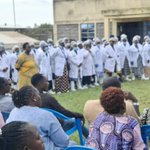
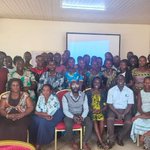
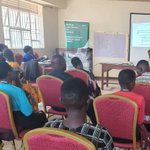
The Easter African Sub-Regional Initiative on the Advancement of Women (EASSI) conducted a two-day Capacity Building Workshop for Cooperatives in Goli catchment area on 28th -29thSeptember 2026. The course had 50 participants (eight of them male), drawn from cooperatives in Goli catchment area who were equipped with knowledge and skills of safe, dignified and transparent trade, under the Women and Youth Empowerment in Fisheries Program. Participants were skilled in transparent governance, business management, and financial literacy, establishing market linkages through safe trade contre, access to credit from financial institutions; value addition, packing, branding and marketing. This program is funded by Trademark Africa, Mastercard Foundation and African Continental Free Trade Area Secretariat which empowers women and youth to contribute to safe and dignified jobs and access to AfCFTA markets for fish and value-added products.
2
77
The Eastern African Sub-Regional Support Initiative for Advancement of Women (EASSI)participated in a high-level national dialogue hosted by the Women's Probono Initiative (WPI) marking 16 years since Uganda ratified the Maputo Protocol. While delegates celebrated significant legislative progress made since 22 July 2010, they raised strong alarms over critical accountability gaps. Participants observed that Uganda is lagging behind in state reporting, having submitted only one progress report in 2012. EASSI and fellow advocates warned that this reporting lag, combined with a persistent failure to achieve full domestication of the Protocol, severely slows down the fight against gender-based violence and restricts women's full bodily autonomy. The meeting culminated in a joint communique demanding immediate state action to clear the reporting backlog and fully domesticate the landmark treaty.
5
74
The Eastern African Sub-Regional Support Initiative for Advancement of Women (EASSI)participated in a high-level national dialogue hosted by the Women's Probono Initiative (WPI) marking 16 years since Uganda ratified the Maputo Protocol. While delegates celebrated significant legislative progress made since 22 July 2010, they raised strong concerns over critical accountability gaps. Participants observed that Uganda is lagging behind in state reporting, having submitted only one progress report in 2012. EASSI and fellow advocates warned that this reporting lag, combined with a persistent failure to achieve full domestication of the Protocol, severely slows down the fight against gender-based violence and restricts women's full bodily autonomy. The meeting culminated in a joint communique demanding immediate state action to clear the reporting backlog and fully domesticate the landmark treaty.
1
1
52