



Hakr.RBT retweeted

BREAKING: AI Agents attacked critical Infrastructure of various India-based entities.
As AI Agents take over the internet, the necessity of putting effective guardrails in front of mission critical resources is paramount.
This is what we have been building with @Agent_DNA
Learn more: agentdna.io
Read the news: indianexpress.com/article/ex…
4/
Other chains : Create global state then find ways to partition it.
@RubixChain : Keep state independent & connect only when needed.
This is why the Rubix architecture looks less like a giant computer and more like the Internet.
rubix.net/
1/
What if a blockchain didn’t need one global sequence for everything?
What if digital systems looked more like a graph where independent objects evolve locally and only causally related events need to intersect?
That’s the intuition behind @RubixChain : The Graph of Everything.
6/
Payments are one edge in that graph.
Agent actions are another (Check @Agent_DNA ).
Asset transfers. Agentic transactions. Identity delegation. Different systems become connected interactions in the same verifiable fabric @RubixChain .
Hakr.RBT retweeted
are you sure you trust your AI agents with everything? 🥲
Stories of AI agents causing chaos in production systems are nothing new.
These aren't your usual automations. They can make decisions dynamically, take actions, and adapt to what they encounter.
#AIAgents #AgenticAI
Agentic commerce needs the full stack: @AgentDNA for the secure handshake, Rubix Smart Contracts for business logic and Rubix Pay for settlement.
All in one singular graph network @RubixChain

AI 🤝 AgentDNA 🤝 Rubix
Its now well proven agents will interact with other agents in an open and decentralized space. Agentic commerce will be big, but need to sort control first. Precisely why we developed @Agent_DNA to position @RubixChain as TYE chain for agents. @BlackRock


SIEM when Agents hit the road.
We need real time , irrefutable in device detectors , not external monitoring. @Agent_DNA
Absolutely @naval. Enforce controls and supply chain checks or else liable. @Agent_DNA helps in detecting swarms going untrusted at machine scale.
Hakr.RBT retweeted

The first two known exploits against live ZK circuits just happened, and they weren't subtle underconstrained bugs.
They were Groth16 verifiers deployed without completing the trusted setup ceremony. One was white-hat rescued for ~$1.5M, the other drained for 5 ETH.
🧵
Web3 scale champions always compared them to Visa/ MC. The reality is V&MC dont have s/w tps.They grow horizontally on demand. Traditional monolthic designs be it in web2/web3 will always have a software limit. what web3 need is horizontal scale - only provided by @RubixChain
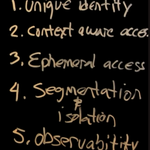
Authentication is the real bottleneck for Agentic payments - p2p is the solution.
Centralized auth gateways process ~ 100 bn logins a day.
#Visa processes 674 mn txns per day.
Even if agents do 100 mn tps (#Stripe estimates upto 1 bn), need 8.64 trillion auth requests!
Centralized systems will not meet agentic scale, let alone blockchains like #Ethereum, #Solana or #Base (which are slower than centralized systems). Only p2p systems can handle agentic scale. Which is why @Agent_DNA is built for p2p auth, leveraging the p2p graph network of @RubixChain
1. Typical SSO redirect based login takes 0.5s to 2 seconds . If your model follow this,
The math is
At 100M actions/sec with 0.8s validation time:
Validations needed = requests PS × time
= 100M×0.8
= 80M concurrent auth req
No centralized IAM cluster can handle that.
Authentication is the real bottleneck for Agentic payments - p2p is the solution.
Centralized auth gateways process ~ 100 bn logins a day.
#Visa processes 674 mn txns per day.
Even if agents do 100 mn tps (#Stripe estimates upto 1 bn), need 8.64 trillion auth requests!
Centralized systems will not meet agentic scale, let alone blockchains like #Ethereum, #Solana or #Base (which are slower than centralized systems). Only p2p systems can handle agentic scale. Which is why @Agent_DNA is built for p2p auth, leveraging the p2p graph network of @RubixChain
2. 0.8s avg is not the only problem.It's also p99 latency. Humans rarely reach p99 stage because their behavior creates organic load distribution.They dont retry right away.Agents behave differently. It operate continuously&retry instantly meaning p99 is inevitable
3. This is where @Agent_DNA becomes cruical for Agentic commerce.It cannot depend on central auth with large p99 latency. Auth must be p2p not dependent on global RT. @Agent_DNA replaces login bottleneck with distributed trust graph using underlying @RubixChain tech