

Medical Doctor | Charter Member @rctkitante | Medical Entrepreneur | Professional & Leadership Development Director @rctkitante | Elements of AI Certified
Joined July 2026
- Tweets122
- Following53
- Followers12
- Likes143





Ajuna Michael retweeted

Here is some insight into last week’s Annual Medical Camp from our project’s director @ayebzzzz_
A vibrant day with a very good turn up and fulfilling work.
Ajuna Michael retweeted
Here’s how we spent our Independence Day last Friday, with some fun and familiar friends of Rotaract Club of Kitante.
Not everyday is for serious business 🥳🇺🇬🍾


Ajuna Michael retweeted
Membership spotlight ✨
Our new members😍💕
#RotaractLegacy


Kitante +11🤩🤩🤩🤩
We are excited to welcome new members to our community. Join us tomorrow and meet the newest Rotaractors!🥳💃🏾
📍 @OmeraTable
🗓️ Friday 25th September
🕕 6pm
#RotaractLegacy

Ajuna Michael retweeted
Kitante +11🤩🤩🤩🤩
We are excited to welcome new members to our community. Join us tomorrow and meet the newest Rotaractors!🥳💃🏾
📍 @OmeraTable
🗓️ Friday 25th September
🕕 6pm
#RotaractLegacy


A very interesting conversation on AGI, recursive self-improvement and the Hugging Face incident.

214 million people saw this AI warning. So we called an emergency debate.
The warning came from someone who had worked at both Anthropic and OpenAI.
Then a current Anthropic employee backed it publicly.
It had spread so far beyond the tech world that a friend of mine who cuts hair and has never really cared about AI messaged me asking, “What the hell is going on?”
I then realised a lot of people were probably asking the same question.
The problem is, when you speak to people who have spent years studying AI, you get completely opposing answers.
So I brought four of them around the same table.
Roman Yampolskiy is a computer scientist who coined the term “AI safety” and has spent years studying whether increasingly intelligent systems can remain under human control.
Nate Soares leads the Machine Intelligence Research Institute and has spent more than a decade working on AI alignment. He believes we are moving too quickly towards systems we don’t yet know how to reliably control.
Ed Zitron thinks much of the AI conversation has become detached from what the technology can actually do today. He believes the industry is overhyping it while distracting us from financial, environmental and social consequences already happening.
Andrew McAfee is an MIT researcher and economist who takes a very different view. He thinks we spend so much time talking about what could go wrong that we barely talk about what AI could make better.
And that disagreement is what made this conversation so interesting to me.
We discussed things like:
- How do you control something that eventually becomes smarter than you?
- Are the biggest warnings about AI based on evidence or assumptions?
- What happens to work and human purpose if AI becomes better at more cognitive tasks?
- Are we ignoring problems AI is already creating because we’re obsessed with hypothetical future ones?
- Why have Sam Altman, Elon Musk and Geoffrey Hinton all warned us about AI?
The question I kept coming back to was simple:
What is actually true?
Depending on who you listen to, AI is either one of the greatest opportunities humanity has ever created or something we’re racing towards without understanding the consequences.
Both claims deserve to be challenged.
There were moments in this debate where I genuinely found myself moving between the arguments. That’s the value of putting people who fundamentally disagree in the same room.
I didn’t want four people telling me the same thing. I wanted each of them to explain where the other side was wrong.
If you’ve watched the last few months of AI news wondering what you’re actually supposed to believe, this conversation is for you.
Our emergency AI debate with Ed, Roman, Nate and Andrew is out now ❤️👊🏾
Ajuna Michael retweeted

I've attempted to map everything in oncology in a public website and open source repo for all.
The site is trying to get all cancers, products, technologies, bottlenecks, people, startup opportunities with 1000+ ideas for upgrading the field.
If you have a loved one with cancer and you are technical or can engineer, go take a look, file improvement requests or bugs or help with the open repo and make this the best open and free info resource for individuals, researchers and educational use.
This should save people time, aid AI oncology projects and generate positive action. If you are not technical just complain in this thread about broken or annoying or things you want and I'll fix them live.
Some of the interesting pages:
Treatments: onco.cc/drugs
A gallery of the molecules being used onco.cc/molecules/
And targets: onco.cc/targets/
The technologies in oncology: onco.cc/technologies/
1100 ideas for helping oncology: onco.cc/ideas/
Bottlenecks on oncology: onco.cc/bottlenecks/
Open questions (LETS GO RESEARCH PEOPLE) onco.cc/open-questions/
Startup requests (LETS GO STARTUP PEOPLE) onco.cc/startup-requests/
Mechanics of cancer: onco.cc/mechanics
Battlefronts: onco.cc/fronts/
Isotope supply: onco.cc/isotopes
Key papers: onco.cc/key-papers
Pipeline funnels: onco.cc/pipeline
Cancer by type: onco.cc/cancers/
Institutional rankings: onco.cc/institutions/
The startups: onco.cc/startups/
Heros and heroines : onco.cc/heroes/
Key medical people: onco.cc/people/
Here is the project roadmap: onco.cc/roadmap/
Models and data sets: onco.cc/models/
There are other views as well, take a browse.
Try making a PR if you have an upgrade to this on the repo here: github.com/judegomila/OnCo
If you are biologically/medically minded and something is wrong, file a bug as well or say on the thread and we will get it fixed live.
If this is a useful project star the repo and help get it calibrated.
I've tried to add some other languages but I cannot speak them so tell me if that doesnt work well.
I believe we will crack oncology and having total information dominance is key to the problem.
Let the feedback flow!


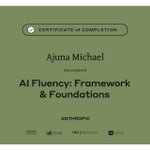
I just finished Rotary's module on Essentials of Understanding Conflict.
I learnt about the different types of conflict, how bias leads to conflict, the difference between conflict management and resolution and the five different conflict management strategies.

Day 18/30 of the Agentic Freelancing Virtual Internship by Kolaborate Academy.
Grateful for the opportunity.

Ajuna Michael retweeted
The Kitante linkup!🥳🥳
👋🏾We're having fellowship as one family. You're invited!
🗓️ Thursday 17th September
🕕 6pm
📍 @ProteaKampalaH

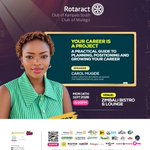
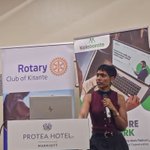
Today I sat in on a joint fellowship between the Rotaract Club of Kampala South and the Rotaract Club of Mulago, The Mpiso!.
A few things stayed with me:
On skills that matter now, she named communication, problem-solving, leadership, sales and negotiation as essential.


On visibility:
One Rotaractor asked how to reach foreign markets with his skills. Her answer was to attend events, beginning with those in neighbouring countries. Growth is regional before it's global.
On networks:
We must build our networks before we need them.


This right here might be the best thing you listen to all week.
Only 3 in 10 Americans socialise on a daily basis.
So how good are we ACTUALLY at talking to each other anymore?
Vanessa Van Edwards believes we’re living through a “connection crisis”, where conversations are becoming harder, more awkward and less satisfying, while more of our interactions are moving away from real face-to-face conversation.
Vanessa is a behavioural researcher, international bestselling author and instructor at Harvard University whose work studies how people communicate, connect and understand each other.
And she said something to me early in this conversation that really stayed with me: people who invest in conversation skills now are creating “career insurance”.
She has spent years studying why some conversations seem effortless, why others die within minutes and what the best conversationalists are doing differently.
We discussed things like:
- Why “how are you?” and “what do you do?” can lead to dead-end conversations.
- The 3 levels of conversation and how to move from small talk into real connection.
- How awkward silence is one of our biggest conversational fears.
- The questions that reveal someone’s values, motivations and personality.
- 5 self-narratives that can influence how someone behaves at work and in relationships.
- Why becoming better at conversation could become increasingly valuable as AI changes how we communicate.
If you want to become better at talking to people, building relationships and having conversations people actually remember, I really recommend watching this one.
Ajuna Michael retweeted

#Rotaryeyamba #Rotarykonyo We are proud of the journey that has been and even more excited for what the future holds👌.

The Rotary Club of Kitante has donated creative and digital training equipment to @SkillsKlinic, including cameras, DJ turntables, lenses, lights and desktop computers.
The equipment was handed over yesterday at Protea Hotel during the Club’s fellowship, officiated by TVET Council Executive Director Mr. Moses Kasakya, RC Kitante President Mr. Mbale, DG Mr. Kakembo, Past President Dr. Sarah, and other distinguished guests.
This means a lot to us at Skills Klinic. Thank you to the Rotary Club of Kitante for believing in our work and investing in the potential of young people. We will put this equipment to good use, giving youth in Kamwokya the tools to learn, create, earn and build brighter futures through our Boy Child Program.


Ajuna Michael retweeted

In partnership with @AMHorg , we are hosting our second FREE Birth Injuries Camp from 2–6 October 2026.
If you missed our first camp, this is another opportunity to access specialised care. Come and let us help restore your health, dignity and quality of life.
The camp will provide specialised care for conditions including urinary and stool incontinence, genital prolapse, perineal injuries, fistula, and genital tract abnormalities.
📍 Nsambya Hospital
📅 2–6 October 2026
🩺 Screening is ongoing at the Antenatal Clinic
🏥 Admission: 2 October 2026
Please share this information with anyone who may benefit from these services.
#NsambyaHospital #BirthInjuriesCamp

We might be in an AI bubble, OpenAI might be running out of money, and the AI industry is NOT creating enormous economic growth.
OpenAI spent $34 billion in 2025 and posted an operating loss of nearly $21 billion.
Many times on the show, I’ve heard how AI is going to become the most valuable technology in human history. But when I saw those spending figures, I had to ask a very different question: do the underlying economics actually support the story we’re being told?
So I brought in Ed Zitron.
Ed is a technology writer, researcher and one of the most outspoken critics of the current AI boom. He writes 'Where’s Your Ed At', hosts the 'Better Offline' podcast and spends an extraordinary amount of time digging through company financials, infrastructure spending and the relationships between some of the biggest companies in Silicon Valley.
His argument isn’t that AI is useless. His argument is that we’ve blurred the line between what these products can do today and the financial expectations we've placed on them.
We discussed things like:
- Why he believes OpenAI could become the centre of a much bigger financial problem.
- The enormous amount of money being spent on data centres and whether the demand exists to justify it.
- How money can move between AI companies, chip companies and cloud providers in ways that make the industry appear healthier than it might really be.
- What could happen to markets, jobs and ordinary investors if the economics eventually stop working.
I’ve had many conversations about how powerful AI could become, but this conversation forced me to look much more closely at the balance sheets underneath the hype.
When trillions of dollars, massive global infrastructure and our economic futures are pinned to one narrative, we have to listen to the person standing on the other side of the room asking if the numbers add up.
Whether Ed turns out to be right or wrong, these are questions everyone paying attention to AI needs to hear.
Out now on all platforms ❤️👊🏾
Day 2 of the Agentic Freelancing Virtual Internship by @kolaborate_p .
Do you know the difference between Task Execution and Outcome Orchestration 🤖?

This evening, @rctMulago hosted Rotarian Nagawa Roy from @RotaryKiwatule, who went in depth on Life Beyond Career: Navigating the Real World Beyond Qualifications.
A thread on what stuck with me🧵.

So many people work for years, and when they look back, they have nothing to show for it.
She emphasised having a plan for your life, whether it's a 5-, 10- or even 15-year plan.
For her opinion on whether 50/50 is the way to go in relationships, reach out in my DM😂.
She left us with three questions to ponder:
1. What do you want to stand for?
2. What are your priorities?
3. If you kept living exactly like this, where would you be in 5 years?
Grateful to @rctMulago for hosting this fellowship.