
Physician ,hospitalist ,tweets are not medical advice and only my opinions
Overland Park, KS
Joined April 2009
- Tweets2.1K
- Following1.2K
- Followers319
- Likes5.5K




rahul kapur retweeted

Must be a lot of women in that stadium with exposed shoulders because our kicking game seems really off.
rahul kapur retweeted

Ozempic melts your muscle, they said.
Meanwhile the SELECT trial found a 20% drop in heart attacks, strokes, and cardiovascular death in over 17,000 people with obesity who didn't even have diabetes.
Kevin Hall's data shows the lean mass lost on these drugs sits at the same 20 to 30% ratio you'd see with keto, fasting, or bariatric surgery. Not unique. Not dangerous.
The headline that got the clicks wasn't the one that saves lives.
rahul kapur retweeted

The University of Arkansas just launched the 1st U.S. based injectable BPC-157 Randomized Controlled Trial for tissue healing.
They’re studying post-rotator cuff surgery healing through objective measures like strength testing, MRI, and range of motion. Also patient reported questionnaires on recovery (PROMs).
This is what the science community and physicians needed.
Enrollment starts Early 2027.
First data likely to be seen Early 2028.
I will keep you updated.
clinicaltrials.gov/study/NCT…
#bpc #bpc157 #peptide #peptides #science #research

rahul kapur retweeted
I’m a Mizzou fan. But I went to school out east and came home. Diana taught there though while we lived in CoMO for the 4 years I was SoS. Honestly prior to that I was only a marginal fan but 4 years in CoMO radicalized me 😂

rahul kapur retweeted
Congratulations to Secretary Hoskins on having avoided being detained for contempt by the Missouri Supreme Court by deciding to do his job and follow the law.
Always good to see a fellow Missouri Secretary of State succeed!
rahul kapur retweeted
Atrial Fibrillation
AMAZING . FINALLY
*Losing weight does NOT decrease the risk of A fib
*Obesity has NOT correlation with A fib
CAFFEINE (COFFEE) does NOT INCREASE atrial fibrilllation
rahul kapur retweeted
Alpha -Gal syndrome
Two years ago, we had not even heard of it now it's everywhere
rahul kapur retweeted

Taxi driver in New York asked me if I knew Stefanos Tsitsipas.
I said, "We're very close."
He said, "Good. Tell him to stop taking bathroom breaks like he's searching for Narnia."
I pulled my hood up and pretended I was a tourist from Oslo.
rahul kapur retweeted

From the master - as often more pertinent questions than answers

Hi all,
The Lp(a) HORIZON trial has released topline data and, quite shockingly, missed its primary endpoint.
In other words, lowering Lp(a) in patients with prior MI, stroke or peripheral arterial disease, who were otherwise very well treated for LDL-C, blood pressure, diabetes and other risk factors, did not reduce the primary cardiovascular endpoint.
We obviously need to see the full data before making firm conclusions, and I don’t want to speculate too much without the details.
But this is a big enough result that it is worth summarizing what we know, what we don’t know, and what this may mean for our patients after 20+ years of trying to test the “Lp(a) hypothesis.”
What we know:
1-There are hundreds if not thousands of genetic, epidemiologic and Mendelian-randomization studies showing that elevated Lp(a) is associated with MI, stroke, peripheral arterial disease and aortic stenosis. That body of evidence is very strong.
2-However, much of those data come from community-based populations, often before the era of intensive LDL-C lowering and modern secondary prevention.
3-There has been much less information about how much residual risk Lp(a) carries in someone who has already had an event and is then treated very aggressively.
4-HORIZON may have had some of the best-treated patients of any recent cardiovascular outcomes trial.
Baseline LDL-C was about 65 mg/dL, a measured LDL-C contains the cholesterol carried on Lp(a), so in reality, 15-20 points lower.
5-In patients with very high Lp(a), if you correct LDL-C for Lp(a)-cholesterol, the actual LDL-C carried by LDL particles may have been closer to 45–50 mg/dL, perhaps even lower in some patients.
6-This raises a very basic question:
Can you still demonstrate a major incremental benefit from lowering another apoB-containing particle when the underlying LDL burden has already been driven this low?
What we don’t know:
1-What was the actual corrected LDL-C in these patients? I think it would be extremely informative to directly measure Lp(a)-C and calculate corrected LDL-C. This may tell us a lot about the biological setting in which pelacarsen was being tested.
2- What was the OxPL status? Our prior work has suggested that much of the pro-inflammatory biology associated with Lp(a) is related to its enrichment in oxidized phospholipids. Did OxPL fall? Did patients with higher OxPL derive more benefit? Was Lp(a) concentration actually identifying the patients with the most pathogenic particles?
3- Did we measure the right component of Lp(a) for trial inclusion? We generally measure molar particle concentration. But is molar concentration itself the main driver of risk, or is it partly a surrogate for what the particle carries? Cholesterol? Triglycerides? Oxidized phospholipids? Other proteins? Could two patients with the same Lp(a) concentration have very different Lp(a)-mediated risk? I think this question deserves much more attention.
3- Were the genetic data telling us exactly what we thought they were telling us? The genetic data are extremely compelling, but genetics reflect lifelong exposure. A clinical trial treats patients late in life, often after decades of arterial injury and after an event has already occurred. Those are not necessarily the same experiment. Could there also be some unrecognized biology linked to the LPA locus that we have not completely accounted for? That possibility should at least be considered.
3- Does very low LDL-C modify the Lp(a) risk relationship? Maybe Lp(a) is particularly important when LDL-C is higher, but its contribution becomes smaller once LDL-C is driven to very low levels. Again, we need the data.
4- Does aspirin or other antiplatelet therapy reduce part of the risk associated with Lp(a)? Lp(a) has potentially important prothrombotic effects. Almost everyone in a trial like HORIZON is receiving contemporary antiplatelet therapy. Could that blunt one component of the risk associated with Lp(a)?
5- Why are these patients still having events? This may be one of the most interesting questions of all. These are patients with LDL-C around 65 mg/dL, and perhaps corrected LDL-C substantially lower, yet cardiovascular events continue to occur. What is driving that residual risk? Inflammation? Thrombosis? Plaque burden that is already too advanced? Other lipoprotein characteristics? Something we are not measuring?
6- Do we need to re-examine some basic assumptions about atherosclerosis? We have spent decades focusing heavily on the quantity of circulating lipoproteins. But perhaps lipoproteins are relatively benign until they undergo biological modification in the artery wall. Oxidation may be one of those key modifications. For some patients, the answer may be to remove more particles from the circulation. For others, perhaps the better approach is to prevent their oxidation or block the downstream biological effects of oxidized lipids. The recent difficulties with anti-inflammatory approaches, including IL-6 inhibition, make these mechanistic questions even more interesting.
7- Was there something specific about pelacarsen, the degree or timing of Lp(a) lowering, advanced disease, trial duration, background therapy or patient selection that mitigated a potential benefit? We simply don’t know yet. That is why the detailed results will be so important.
What does this mean for patients today?
If you have already had an MI, stroke or PAD, the immediate lesson is very clear:
1- Get all of your established risk factors treated aggressively.
2- Get LDL-C/apoB very low.
3- Control blood pressure.
4- Control diabetes.
5- Don’t smoke.
6- Use appropriate antiplatelet and other guideline-directed therapies.
HORIZON shows us what modern secondary prevention should look like.
If you have elevated Lp(a) but have never had an event, the genetic and epidemiologic data still suggest increased lifetime risk.
Until the other 4 outcome trials read out, I would continue to treat every modifiable risk factor aggressively.
We should wait for those trials before drawing broad conclusions about the entire field.
I think the story of Lp(a) therapy is beginning, not ending.
We also need to show tremendous respect and gratitude to the patients who participated in HORIZON and to the investigators and companies that invested enormous resources to actually test the Lp(a) hypothesis, to the ultimate benefit to peole with elevated Lp(a) to best guide how to manage risk.
More to come as we go forward.
rahul kapur retweeted

Highly trained doctor who can recite the treatment for every strange helminth disease known to man makes less than manager at In n Out.

This infectious disease physician in Illinois made $150,000 last year.
• $150,000 base
• $0 bonus
• 30-hour workweek
• 2 weeks PTO
• 4/5 job satisfaction
Private practice. Twenty years of experience.
That's $96/hour. The same rate as a first-year dentist on the platform. Two decades in. Would you take this deal?

rahul kapur retweeted

Shoutout to @esaagar for being so anti gambling
Name and shame influencers taking $$$ from these companies as they spread degeneracy


rahul kapur retweeted
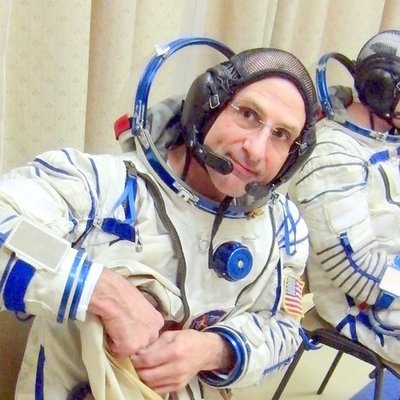
I finally have all 1.2 million raw image files from my latest mission to ISS! Here is a sample of one of my favorite Milky Way photos, taken from the Cupola with Nikon Z9, Arri Zeiss 15mm lens, T1.8 with custom sidereal drive that cancelled out star motion relative to our orbit.

rahul kapur retweeted

Incredible thread.
Silver Fox drops a master class, I can't describe how generous this is, this is knowledge you'd normally have to pay thousands for
And he just posted it


rahul kapur retweeted

Okay, since you asked, here’s my American opinion.
Soccer will never be as popular in America as football for 3 reasons:
1. The Fake Injuries
Players are incentivized to flop because the other team is more likely to get a penalty.
In football, it is the opposite. If a player has a real injury, play toughs it out and plays through it, it is seen as heroic.
Americans like toughness and grit.
2. Chance Goals
Many goals are scored by chance as opposed to skill. The chaos at the net when the ball is near is remarkable. Defenders blocking the goalie’s line of sight. The ball bouncing and ricocheting off of random body parts often determines if the ball goes in the net or out of bounds.
In football, there are some elements of chance, but because players are allowed to use their hands, the points are primarily scored based on skill. Less is left to chance.
Americans like control.
3. Low Scoring
In football, it is still challenging to score, but it happens much more often. Also, every play has a chance for gratification and excitement: a first down, a big catch, a big hit, a sack, an interception, etc
American like constant excitement.


rahul kapur retweeted

🚨 Arsene Wenger on Lionel Messi's hat-trick and becoming the World Cup's all time leading goalscorer:
🗣“What we witnessed today goes beyond another record. It is the continuation of a career that has consistently redefined the standards of excellence in football.
It wasn't simply a hat-trick,it was the quality of the goals, the intelligence behind every decision, and the efficiency with which Messi influenced the game. Those are the qualities that separate truly exceptional players from the rest.
For many years people have tried to compare Messi with other great footballers, but there comes a point where comparisons lose their meaning. He has built a legacy that stands on its own.
What fascinates me most is his evolution. I genuinely don't know whether the young Messi, with his explosive pace and dribbling, was better than the experienced Messi we see today, who controls every moment of the game with his intelligence and understanding. Very few players improve with age the way he has.
The emotion after his second goal revealed another side of his greatness. It reminded everyone of the difficult journey he has had with Argentina,the disappointments, the criticism, and the perseverance that eventually led to glory. That emotional connection with his country continues to drive him.
To score his first World Cup hat trick while becoming the tournament's all time leading goalscorer is an extraordinary achievement. It is another milestone in a career that already seemed impossible to improve.
Perhaps the most remarkable aspect is his longevity. He finished the 2022 World Cup by lifting the trophy after scoring twice in the final, and he has opened the 2026 tournament with a hattrick. At almost 39 years of age, he continues to perform with the same clarity, technical quality, and love for the game that defined him in his twenties.
That is the mark of a truly timeless footballer.”


rahul kapur retweeted

• Ice water and ceiling fans do not contain respiratory viruses. A sore throat is an infection. But your environment drastically alters your body's local defense system.
• When your throat is exposed to freezing water or chilled AC air, the blood vessels in your pharynx instantly constrict to conserve heat. Less blood flow means fewer white blood cells (your immune soldiers) are actively patrolling the area.
• Fans and ACs strip moisture from the air, drying out the protective mucosal layer in your respiratory tract. Normally, this sticky mucus traps pathogens. A dry throat is an undefended throat.
• Here is the clinical secret: you constantly have low levels of bacteria and viruses already residing in your upper airway. Usually, your immune system keeps them completely in check. But the moment cold and dryness temporarily drop your local defenses, these resident bugs rapidly multiply.
• The Golden Rule: Cold water doesn't give you a virus; it temporarily disarms your throat's security system, giving the viruses already waiting at the gates the perfect opportunity to attack.
👉Hi, I am Dr. Priyam. I break down complex medical science and advocate for Evidence-Based Medicine. Follow me for more clinical truths.