


Origo Toro retweeted

🗺️🔥🛩️📸Ja kāds nav pamanījis, tad izrādās, ka 1944.g. attēliem palielināts pārklājums, mazām teritorijām ir arī 1936.g. kadastra aerofoto un vēl citi jaunumi un papildinājumi
vesture.dodies.lv/#m=7/56.84…

Origo Toro retweeted

A new visualization has been released on @mediazzzona’s 200x map: showing not only where Russian soldiers came from, but also where they died.
200.zona.media/
Quite a sight. It even shows the distance each of the dead travelled from their hometown to the place where they were killed. At least 1,000 km in many cases.
“You wanted this land so badly. Well, now become one with it.” (c)
Just imagine sending nearly a thousand men to die for a three-street village. Hundreds of times.
Glad I donate to Mediazona, even if it’s only a little.
Origo Toro retweeted

Latvijas dabas likums: visas absurdākās "ekonomikas attīstīšanas" idejas galu galā neizbēgami noved pie kāda sankcionēta Krievijas pilsoņa. ir.lv/politika/sankcioneta-k…

Origo Toro retweeted

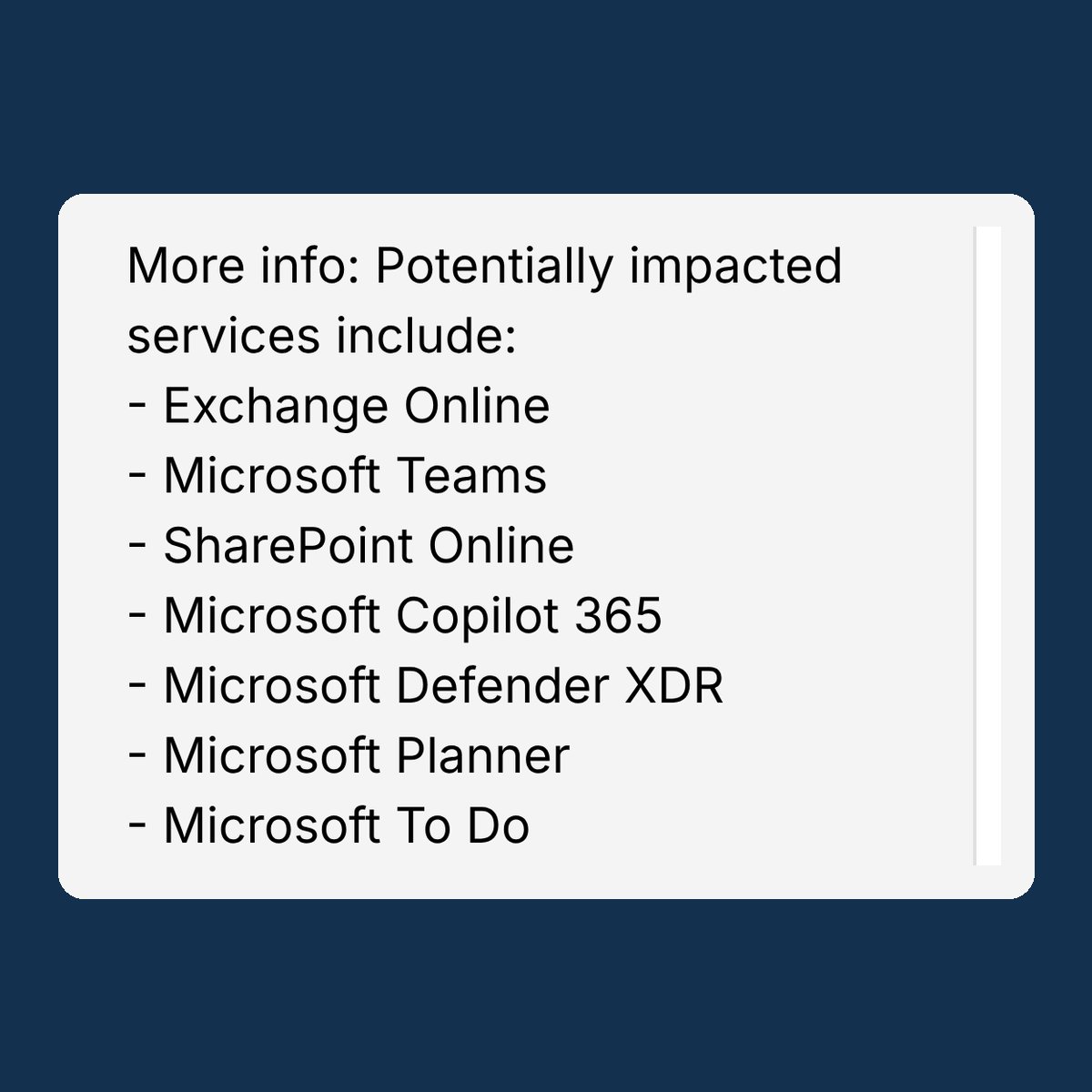
‼️ UPDATE: Microsoft's outage now reaches far beyond Outlook. Teams, SharePoint, Copilot and even its Defender XDR security platform are hit.
Consumers can't reach their OneDrive storage or Office on the web either, TechCrunch reports.
Microsoft first blamed elevated load. Now it says a large number of its servers became unexpectedly unavailable, dumping their load onto the rest. It hasn't said why.
It is restarting the servers with a fix in place, investigating why they show high processor use, and has paused all deployments.



Origo Toro retweeted

Since apparently we can post up to 20 photos/videos now here are a bunch of mine


Origo Toro retweeted

One of the most intense and profound moments in history. 11am on the 11th November 1918 when the guns fell silent. This should be shown in every school.
Origo Toro retweeted

"Interesants" lēmums glabāt sensitīvus datus 4 gadus datubāzē, kura bija publiski(?) pieejama. Lai izrakstītu rēķinus par nosūtītājām īsziņām, nav nepieciešams glabāt pilnu īsziņas tekstu.
"Telekomunikāciju pakalpojumu sniedzēja "CSCTelecom" Latvijas filiāle atstāja neaizsargātu datubāzi, kurā bija vairāk nekā 125 miljoni īsziņu (SMS). Nopludinātie ieraksti aptver laika posmu no 2022. gada oktobra līdz 2026. gada septembrim un tika atjaunināti reāllaikā - tas nozīmē, ka uzbrucēji varēja pārtvert autentifikācijas kodus, paroļu atiestatīšanas saites un privātu informāciju, vēl pirms to ieraudzīja paši saņēmēji."
cybernews.com/security/csc-t…

Origo Toro retweeted

🆕 New CVE
Jumis: authentication bypass in SQL Server admin login (CVE-2026-59105)
Remote attackers can log in without credentials, then read or change every customer database and run OS commands.
Patch → TJ7.0.141.36
cve.now/CVE-2026-59105?utm_s…



Origo Toro retweeted

I was one of the only foreign journalists present at this evening's clash at the National Guard facility in a suburb outside Kyiv. Here's what you need to understand. Long and difficult thread.


Origo Toro retweeted

Every Indian needs to know about this because it is a massive deal for how we trust anything on the internet.
Let me explain.
When you open your bank's website, there's a small padlock next to the web address. That padlock means two things.
First, that you're talking to your real bank.
And second that nobody can read what you type, like your password.
So how does your browser know the website is real?
It checks the website's certificate. Think of it like an ID card for a website.
Your Aadhaar is trusted because the government issued it. A website's ID card is trusted because a certificate authority issued it.
A certificate authority, or CA, is a company that browsers like Chrome, Firefox and Safari already trust. If a CA says "yes, this really is this bank's website," your browser believes it and shows the padlock.
eMudhra is an Indian CA. It's a big one, with more than 60 million certificates issued over the years.
So how does a CA sign these ID cards?
Every CA has a secret number called a private key. It uses that number to put a stamp on each certificate.
Your browser checks the stamp to confirm it really came from that CA.
The whole system only works if that number is impossible to guess.
For the type of key in this story, it's supposed to be around 116 digits long.
Every computer on Earth working together for billions of years wouldn't be able to guess a number like that, just because of the sheer combinations that exist.
But here's what happened.
On October 17, Mozilla got a report that the private keys behind eight eMudhra certificates had been compromised.
The report came through a person called Wayne on Google's Chrome team.
The keys weren't 116 digits long.
All eight keys were smaller than 256. Security researcher Scott Helme found that one of them was just the number 4. Others were 66, 155, 156, 230 and 237.
So anyone could break them by trying 256 numbers. A basic laptop does that in less than a second.
Mozilla didn't need to know how Wayne did it. Its own team recovered the keys within two hours. Since then, several other people have found them on their own too.
To understand the gravity of the problem, a bad actor could make fake ID cards for any website they want.
Your bank, your email, a government portal.
Browsers that trusted eMudhra would have checked the fake stamp and shown the padlock like everything was fine.
If someone could get between you and the internet, say on public Wi-Fi, they could show you a fake site with a real-looking padlock and read or change what you send.
eMudhra says a script used during its key creation process back in April 2025 had a flaw. It made a second, much weaker set of keys, and those were used by mistake to create the certificates.
That means these weak keys were there for about a year and a half before anyone caught it. eMudhra says the person who found it may have used AI-assisted techniques.
The good news is that the response was fast.
Mozilla received the report at 8:06 pm UTC on October 17 and had pushed a block to Firefox users by 10:59 pm.
Google, Apple and Microsoft have also blocked these certificates for their users.
eMudhra revoked all eight the next morning and stopped issuing new certificates from the affected root.
Mozilla is now removing that root certificate from Firefox's trusted list altogether.
But there's still a lot of clean-up to do.
Browsers are mostly covered. But plenty of apps, servers and backend systems don't check these block lists. They need software updates to stop trusting the bad certificates, and some of those updates are still pending.
Real websites that used eMudhra are also affected. Yash Kadakia, founder of Security Brigade, estimates around 30,000 legitimate certificates will need to be moved over. A lot of those are likely Indian businesses and services.
See, we're moving our whole lives online, UPI, banking, tax filing, DigiLocker, government services.
All of it rests on this invisible layer of trust.
So, when an Indian company that's trusted by every major browser makes a mistake this basic, it hurts how the world sees Indian digital infrastructure.
This has happened before, and it went very badly.
In 2011, a Dutch CA called DigiNotar was hacked, and fake Google certificates were used to spy on people in Iran.
Browsers stopped trusting it completely, and the company shut down soon after.
For now, here's what you can do. Keep your browser and apps updated on your phone and laptop.
Be careful on public Wi-Fi. Type your bank's website address yourself instead of clicking links.
eMudhra still owes India a clear, public explanation of how a key that protects millions of people ended up being the number 4.


Origo Toro retweeted

🚨 THE INTERNET BROKE TODAY 🚨
Oct 21, 2026 will go down in history
1. eMudhra : Private key was literally "4". 8 keys forged ANY website for 17 months. 60M+ certs at risk.
2. SBI CONFIRMED. 3,897 customers' mobile, DOB, address + loan data found on dark web.
3. Rajasthan Police 🇮🇳ALLEGED hack. Group claims 70,000 identity records + 59,460 numbers for sale. Unverified.
4. php2shell [9.2] Unauth RCE in PHP. 70% of the web. WordPress, Drupal, Laravel. CISA: Patch or GO OFFLINE.
5. GitLab [10.0/10] PERFECT SCORE. Unauth RCE, no login needed.
6. Node.js [CVE-2026-111497] Brotli decoder RCE + TLS bypass. 10 CVEs patched today. Also blocked eMudhra.
7. Railway BREACHED TODAY. Env variables decrypted. Your API keys & DB passwords exposed. Rotate all.
8. OpenCode BREACHED. OpenAI, Anthropic, Google API keys exposed for Console users. Distillation attack. Bills run up in $$$$.
9. LiteLLM PyPI v1.107.0 was MALWARE today morning. Steals credentials + backdoor.
10. Plex2Shell ACTIVELY EXPLOITED. Hackers installing cryptominers LIVE. CISA KEV, deadline Oct 23.
AI found the bugs. AI is exploiting them. Humans can't patch fast enough.
Patch. Rotate. Revoke. Update.
RT to save someone's server ♻️
#CyberSecurity #DataBreach #India #php2shell
Origo Toro retweeted

More private keys by the Indian certificate authority have been discovered. These are all small numbers.
People are suspecting that they interpreted 384 bit keys to mean that they should pick numbers from 1-384 to use as their private keys.


Origo Toro retweeted

Crazy 72 hours in security. Three major incidents dropped back-to-back: eMudhra, PingCAP (TiDB Cloud), and PHP.
Here is the short version of what happened and who got hit.
1. eMudhra (Trusted CA compromise)
eMudhra generated 8 intermediate CA certificates in April 2025 (cross-signed by Sectigo). A bug in their HSM key-wrapping test script created a second set of P-384 keys where the private keys were single-byte numbers under 256. Operators picked the wrong key labels and signed them into real CA certs.
One of the intermediate CA private keys was literally the number 4.
The other seven: 56, 66, 115, 155, 156, 230, 237.
Three weeks later (May 2025), their CRL signatures started failing because the CRL signer was using the real keys instead of the weak ones. Instead of asking why the keys didn't match, someone switched the CRL signer to the weak keys and closed the ticket.
• Browsers are safe: Chrome, Firefox, Apple, and Microsoft already blocked them, and zero rogue certs hit CT logs.
• Servers are not: curl, Python (certifi), Go binaries, and Docker base images don't check CRLs. Update ca-certificates, certifi, and Go (1.27.3 / 1.26.10).
• 10-second check on any server:
curl dv-g3b-emudhra.we-have-a-pro…
(TLS error = safe. 200 OK = still vulnerable.)
2. PingCAP / TiDB Cloud (10.6 TB breach)
Attackers found GCP and Azure credentials committed inside PingCAP's own repos. They set up a replication feed of TiDB Cloud's production control plane and exported the entire database every 6 hours for 22 straight days. 88 full exports, zero alerts. 200 GB is already out on torrents.
Beyond the 413 private repos and 20.6M customer SQL queries logged from their web SQL Editor, PingCAP engineers were pasting customer secrets into Jira tickets.
Who is affected in the leaked records:
• Live credentials exposed in support tickets:
- Pinterest: AWS keys for their pingcap-logs S3 bucket
- CardX / Silverlake (NPCI-linked env): AWS admin key in a backup log with full access to 258 external S3 buckets
- DeBank: 38 presigned S3 URLs
- An unnamed AI/dev platform: a 314 MB slow-query log attached to a ticket containing 8,027 live customer secrets (an AWS root key, a GitHub admin PAT over 1,701 repos, 7,485 AWS STS tokens, and 192 OpenAI/Anthropic/Gemini keys)
• Tenants with infra metadata, VPC CIDRs, app-server IPs, or contract pricing exposed:
- Tech: Atlassian, Databricks, Airbnb, Baidu, LINE, Nylas, Persona, PatSnap
- E-comm & Travel: Booking.com, Shopee, Flipkart, Mercari, ZOZO, AEON, Delhivery, Klook
- Gaming: Capcom, Square Enix, Konami, Bandai Namco, Cygames, Colopl, DMM
- Finance: PayPay, SoftBank, SBI, SB Payment Service, Fujitsu, TOPPAN, Bank of China, China Life
- Crypto: Bitget (said only public trade logs were on it and they already left), Pionex, DigiPlus, NFTscan, Chainbase
• Developer profiles leaked (from a purchased reo.dev table in PingCAP's BigQuery):
- 24,900 personal emails + GitHub/LinkedIn profiles of engineers at Tencent (3,327), Huawei (2,726), ByteDance (2,475), AIG (2,140), Mastercard, Flipkart, and bKash.
If you use TiDB Cloud: rotate your console API keys, DB passwords, and anything you ever pasted into a support ticket.
3. PHP "PHP2Shell" (CVE-2026-109618 & CVE-2026-109619)
Two CVSS 9.2 pre-auth RCEs leaked yesterday ahead of today's 14:00 UTC patch.
Public writeups trace it to a heap Use-After-Free in PHP's native C multipart/form-data session upload-progress handler (ext/session/session.c).
Because C-level multipart parsing runs before line 1 of index.php:
• App auth, Laravel/WordPress middleware, and file_uploads = Off do not stop it.
• Only PHP 8.2–8.5 get official patches today (59% of PHP servers on Shodan are on EOL <= 8.1).
• Until you patch php-fpm: lock php_admin_flag[session.upload_progress.enabled] = off and block unexpected multipart requests at Nginx/Apache/Cloudflare.

Origo Toro retweeted

A casino installed a smart fish tank in the lobby.
Beautiful thing. Automated feeding. Temperature control. Remote monitoring.
Connected to the internet. Obviously.
Hackers found it.
Exploited it.
Downloaded the high-roller database.
10 gigabytes.
Sent it to Finland.
Using audio and video protocols so it looked like normal streaming traffic.
The fish tank sat in the lobby maintaining water chemistry while stealing credit card numbers.
The casino isolated the fish tank on its own VPN.
Separate network. Segregated. Off limits to everything.
Hackers didn't care. Broke through the isolation anyway.
Once inside the fish tank's system. They pivoted to the main network.
Quietly pulled data. Methodically.
10 gigabytes over time so nobody noticed.
Nobody monitors fish tank outbound traffic.
Why would they.
It's a fish tank.
When Darktrace finally investigated they saw it immediately.
The fish tank sending massive amounts of data to an external IP.
Using protocols designed for audio. Not data.
Clear exfiltration.
The only device in the entire casino that ever communicated with that Finland server.
A fish tank.
Not a computer. Not compromised credentials. Not a malware-laden email.
A networked aquarium.
The lesson everyone learned: IoT devices are security theater.
You can secure them. Lock them down. Isolate them.
They're still connected to something. Still vulnerable to something.
And something will find them.
Even if that something is just checking if a fish tank is running the default password.


Origo Toro retweeted

Incredible reporting from Lilith. For the first time a lot of the shady gambling operators in Curacao can now be unmasked.

Starting today, you can investigate for yourself who owns and operates casinos in Curaçao. I’ve just released part of the data from the Curaçao Gaming Authority.
casinosecrets.lol/