
Author of Asynchronous Programming in Rust
Joined February 2012
- Tweets125
- Following56
- Followers341
- Likes150




Carl Fredrik Samson retweeted

Excited to share Google's memory safety strategy! We're working to build safer software by migrating to memory-safe languages like Rust as well as hardening our existing C++: security.googleblog.com/2024….
We'll be sharing more details in upcoming posts.


Carl Fredrik Samson retweeted

Admittedly, I barely know anything about (space) flight and rockets, so this might be common knowledge, but control software having to account for fuel sloshing around is impressive.
news.ycombinator.com/item?id…

Carl Fredrik Samson retweeted

🦀🪟 Really exciting to see that Microsoft is not only shipping Rust in the kernel, but also considers their use of Rust a major security feature worthy of being one of the highlights in their update announcement. ✨

ALT Screenshot of the Security section of "Inside this update" on Microsoft Support. The relevant part is marked in pink: "Rust in the Windows kernel: a robust programming language designed to enhance system security and performance."
Carl Fredrik Samson retweeted

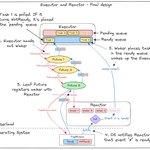
Just finished chapter 4 on asynchronous programming in Rust. Learned a ton about mio, epoll, syscalls, and Event queues, more on these here hackmd.io/@Abeeujah/By3cDUXA… . Feeling more confident in my understanding of low-level I/O! #rustlang #asynchronousprogramming #networking


Carl Fredrik Samson retweeted
Building scalable and efficient systems leveraging Rust's fearless concurrency 🦀 Thanks to @cf_samson awesome book, I've got a better grasp of interrupts, scheduling, threads, coroutines, and more. #RustLang #AsyncProgramming #Concurrency #TechGrowth #LearningJourney


Carl Fredrik Samson retweeted
When someone who's been interacting with #Linux for over 20 years starts talking, I listen.
A fascinating discussion that starts with #dbus and ends with thoughts on the future of utilities like #systemd and other systems software that should probably be written in #rustlang.
Last few touches to go, then the episode should appear in your podcast app later today. timclicks.dev/feed/podcast/c…

Carl Fredrik Samson retweeted

I am happy to report that, just like any modern Windows laptop, my Quest 3 will now also not stay asleep. It wakes up after like 20 minutes and drains the battery down to zero.
It is great that we are "harmonizing" all our technology so it behaves consistently and predictably.
Carl Fredrik Samson retweeted

On Monday, @bcantrill and I were joined by @k8em0 to discuss the largest global IT outage in history. It was an event as broadly impactful as it will be instructive. As Bryan noted, you can see all of computing from here, from crash dumps to antitrust.
youtu.be/5XTQd_MGkvM
Carl Fredrik Samson retweeted

The CrowdStrike BSOD fiasco is extraordinary in its scale and scope; on Monday's Oxide and Friends, @ahl and I will be joined by security researcher and @LutaSecurity CEO @k8em0 to help us sort through the many layers of this mess. Join us, 5p Pacific! discord.gg/QrcKGTTPrF?event=…

I'm in awe of the scale of the Crowdstrike / Windows BSOD issue.
Here are the most startling images I've seen morning.
Let's start with this: at 10pm PT yesterday, famous @troyhunt notices that something odd is happening to Windows systems:
xitter.cf/troyhunt/status/181417…
Carl Fredrik Samson retweeted

Asynchronous Programming in Rust のレビュー。
blog.ymgyt.io/entry/asynchro…
Carl Fredrik Samson retweeted
It's the Year of Zed on Linux on the Desktop!

Linux when? Linux now. 🎉🐧
For the last 6 months, our team and our open source community have been working hard to bring Zed to Linux.
As of today, we've released our first, official, stable build of Zed on Linux!
zed.dev/linux

Carl Fredrik Samson retweeted
Yesterday @mipsytipsy joined me and @bcantrill to talk about the idea of "innovation tokens"--a fixed budget for, so called, "innovative" projects.
youtube.com/watch?v=l5mNUDQK…


Carl Fredrik Samson retweeted
Working through @cf_samson's Asynchronous Programming in Rust and really loving how bottoms-up it is.
Previous chapter: building our own event queue.
This chapter: building our own fibers.
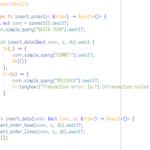
Screenshot: calling `hello` with our own stack.

Carl Fredrik Samson retweeted

I've started reading Asynchronous Programming in Rust (by @cf_samson), and I'm really digging it. It's a great book for programmers - like @m_ou_se's Rust Atomics and Locks, it's not really about Rust - it's about concrete details on the basics on how CPUs and OSs work.
Carl Fredrik Samson retweeted

As some of you may already know, I co-host the Rustacean Station podcast (rustacean-station.org/), especially the "What's New in Rust" episodes. And today, we're doing a *live marathon episode* to catch up on the past _seven_ Rust releases all in one go!
Carl Fredrik Samson retweeted

SawStop is an interesting analogy for cybersecurity regulation.
I once shoved my finger into a router (woodworking device that rounds edges). Luckily, the cutting edge hit the bone and kicked the finger back out, so I had only two deep cuts down to the bone without it having removed the tip of my finger.
So I can understand the following video showing sawblades are unsafe at any speed. There is no way to "safely" use them. Accidents can always happen faster than your reaction speed.
The following video shows SawStop in action: it's faster than human reaction time, instantly stopping the blade and saving the finger. This destroys the blade (and the SawStop module, but not the rest of the saw) in the process, but the blade does stop instantly.
The current controversy is that government wants to make the technology mandatory. Stupid people want it mandatory because it'll save fingers. But this is something the market can figure out (people can judge risk-vs-reward for themselves).
But smart people recognize that if you force the tech on all products, the tech becomes cheaper. In other words, people might not be willing to spend $500 extra for a saw, which is the price when only a few saws have it. But when all saws have it, mass production and competition means it'll only be $100 extra, and a lot more people will want it.
We have the same dumb/smart issues in cybersecurity policy. Dumb people want government to mandate things because they think it'll make things even more secure -- even though customers don't want it. Smart people argue that that making things ubiquitous lowers the price: that while most customers aren't willing to pay for the high-priced security options, mass adoption will make the price low enough that most all customers would want to pay for it.
This is especially true for things that have no marginal cost. In other words, while it's expense now, if adapted by everything, the marginal cost would be near $0.
A good example is ASLR for IoT devices, ASLR is a trivial technique that automatically blocks many bugs from being exploited by hackers. It's as simple as turning on a switch when building software, but rarely it can cause problems in the build process.
In the IoT market, it's often turned off, because many stages in the supply chain just don't want to be bothered with the small nuisances they'd have to fix.
If government mandated it, then the supply chain would fix the nuisances, and then everything would have this protection for essentially no marginal cost.
On the other hand, most of the policy proposals from dumb people have huge marginal costs. For example, one of the biggest proposals is that IoT devices need to be shipped without vulnerabilities and that their makers be responsible for providing regularly patches for when vulnerabilities are discovered.
It's an impractical policy. While many IoT vendors enable ASLR, nobody does the other thing, because the marginal cost is too high. All such a law does is remove smaller, innovative IoT devices from the market.
It's like how power supplies are separate devices. The cost of meeting government requirements is so high it's just easier for a company to buy a power supply from a third party than build their own. That's why Apple's "MacMini" has a built in power supply (they are a large company that can afford this regulatory expense), while competing x86/Windows mini-PCs have an external power supply.
I'm just riffing here. I love SawStop and would never get near a circular saw without it. As a developer, I know there are a ton of things that trivially make software safer with no marginal cost. But I generally oppose the bulk of cybersecurity government policy, which is stupidly misguided.
This Post is from an account that no longer exists. Learn more